















Housing in Malaysia 2026: types of hotels, prices and fees
Planning a trip to Malaysia and not sure how much to budget per night? The price range here is genuinely wide: a hostel bunk and an island bungalow can differ by a factor of ten. Getting the math wrong is costly, especially since some resorts on the east coast are completely closed in winter.
Below we break down all types of accommodation in Malaysia, real prices, check-in rules, and payment methods. You'll learn how to choose a neighborhood, what's included in the rate, and why the price on display doesn't match the bill at the front desk.
 AIIllustrative image: AI-generated
Ad: this article contains affiliate links, we earn a commission if you book through them, at no extra cost to you.
What to know about accommodation in Malaysia
💡 In short:
- Match the accommodation type to your route: in cities it's hotels and apartments, on islands bungalows and resorts, in the Borneo jungle lodges and longhouses.
- Calculate the final total, not the displayed rate: a service charge, service tax, and tourism tax are added on top.
- In the low season accommodation gets cheaper, but some resorts on the east coast are closed from November to March.
- Check the location on a map: a "beachfront" label doesn't always mean direct beach access.
- Read reviews about cleanliness and noise: room quality varies widely within the same segment.
- Accommodation tax: 10 RM per room per night is charged only to foreigners (as of 09/2026, verified on the official MyTTx portal).
Below we'll go through each point in more detail so you can build your trip budget without surprises.
What types of accommodation are available in Malaysia
You'll find lodging for any budget here, from a dorm bed to a villa with a pool. The price difference depends on the property type and its location. Below are the six formats you'll encounter most often.
Hostels
In major cities hostels are on almost every street, and they're the cheapest way to meet fellow travelers. In addition to shared dorms, many also have small private rooms: you get personal space while staying in a social setting. There's usually a common room, sometimes a kitchen.
- Who it's for: travelers on a tight budget and those looking to meet people.
- The catch: cheap dorms can be noisy, and there may be only one shower per floor.
Mid-range and boutique hotels
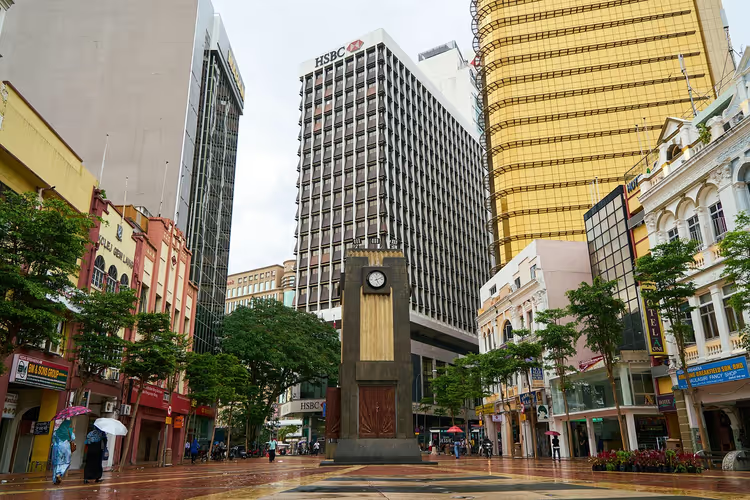
Most hotels in the country fall into the simple mid-range category, but they have everything a traveler needs. A room with a small bathroom and air conditioning, breakfast for an extra charge, a front desk open late. In some cities you'll find boutique hotels: they cost more, but they often occupy a beautiful historic building. A good example is the rates at The Chow Kit on Trip.com: a restored building in the Chow Kit neighborhood.
- Who it's for: those who want a clean room and a convenient location without paying for luxury.
- The catch: in popular months these hotels get booked up well in advance.
Resorts and luxury hotels
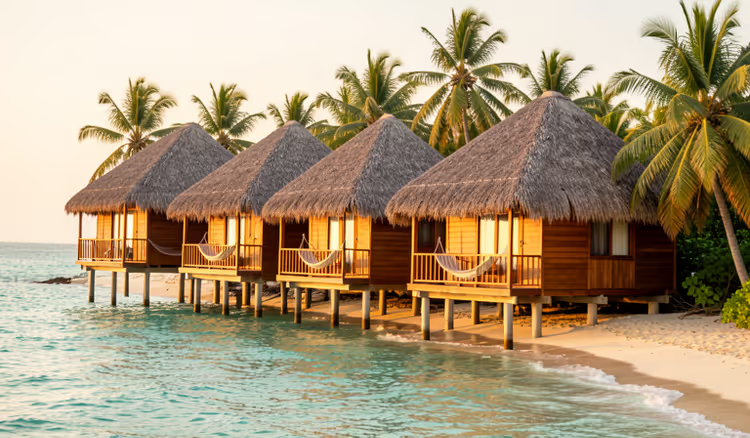
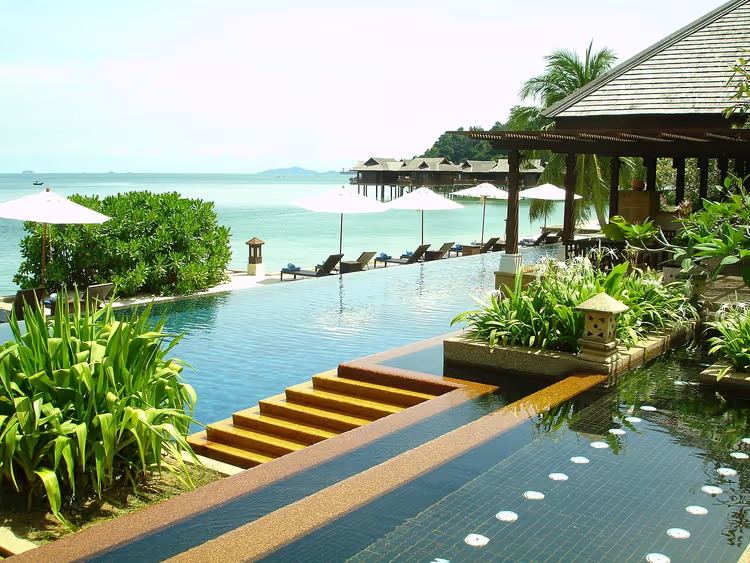
On islands and in secluded bays you'll find resorts from international chains. Four Seasons, Shangri-La, and Mandarin Oriental are all represented here, with styles ranging from classic to minimalist. The price depends directly on location: on Langkawi or Tioman you'll pay more for a sea view than for a room of the same class in Kuala Lumpur.
- Who it's for: couples and families who want a beach, a pool, and service.
- The catch: in high season these properties get booked several months ahead.
 © Azreey · CC BY-SAPhoto: Azreey, CC BY-SA (https://creativecommons.org/licenses/by-sa/3.0), Wikimedia Commons
Homestays
Homestays give you a chance to experience the country from the inside and don't cost much. Depending on the format, you'll have your own room or a shared space, but contact with the family is always there: home-cooked food, everyday details, sometimes shared outings. For those who want to understand local life, this is the best option.
- Who it's for: travelers who value contact with locals more than service.
- The catch: hosts' English can be basic, and air conditioning isn't available everywhere.
 © kaart5 @ Mapillary.com · CC BY-SAPhoto: kaart5 @ Mapillary.com, CC BY-SA (https://creativecommons.org/licenses/by-sa/4.0), Wikimedia Commons
Camping
Official campsites are available in national parks and in the states of Sabah and Sarawak on Borneo. A pitch is cheap or free, but you usually bring your own gear. Some campsites rent ready-made tents, and sometimes you can get a bungalow or chalet. Be careful with the word "chalet": it often hides a simple hut. On the plus side, in the best locations, like right by the sea, you can spend the night cheaply.
- Who it's for: those traveling with a tent and nature lovers.
- The catch: facilities are usually shared, and in the rain your comfort depends on your gear.
Longhouses in Borneo
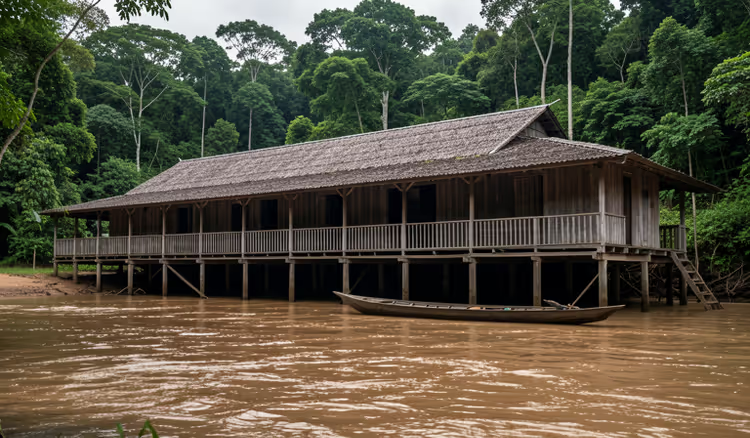
A longhouse is a traditional communal dwelling in Sarawak and Sabah. Today some of these houses welcome tourists, and local operators can help arrange an overnight stay. Comfort varies: in some places you sleep on a mattress on the floor, in others conditions are close to hotel standards.
- Who it's for: those who want to see the daily life of Borneo's indigenous peoples.
- The catch: facilities are shared, and internet access is almost nonexistent.
 AIIllustrative image: AI-generated
What to expect in Malaysian hotels
Local hotels are set up differently than you're used to, and it's not just about the price. Below are practical details worth knowing in advance. This way you'll get through check-in more smoothly and understand what to expect from the room, bathroom, and breakfast.
Check-in and deposit
At the front desk you'll be asked for your passport, and sometimes a credit card. Some hotels take a deposit at check-in or freeze an amount on your card; this type of hold is called an authorization hold. Refundable deposits are accepted in cash and returned at checkout if the room is left in the same condition. At chain hotels, the deposit is more often held on your card, and the money comes back automatically, sometimes after a few days.
The deposit amount depends on the hotel category and room type, so check it before booking. Sometimes the amount is higher than expected, and a noticeable chunk of your budget gets frozen on the card. If you're paying in cash, keep small bills on hand: large banknotes aren't always accepted.
Early check-in or late checkout often costs extra. At small hotels, checking in at night is more expensive because a staff member comes in for a shift just for you. Plan your transfer around the front desk's working hours, otherwise you'll pay extra for the inconvenient timing. It's best to confirm your check-in time in writing in advance.
Each hotel sets its own rules for unmarried couples. If both partners are non-Muslim, the law doesn't prohibit them from staying in the same room. So ask the hotel in advance whether they'll let you share a room.
What's in the room
Even in a basic room you'll find bottled water and a kettle with tea or instant coffee. A small fridge is also common, though you wouldn't call it a minibar. In the heat it's useful: drinks stay cold, and fruit doesn't spoil within a day.
Air conditioning is almost everywhere, but in cheap rooms it sometimes hums loudly. There are usually few outlets, so a power strip comes in handy if you're charging a phone, camera, and laptop at the same time. Don't leave food uncovered: insects in Asia are active year-round and are drawn to fruit and anything sweet.
An iron and hair dryer are usually available at the front desk rather than kept in the room, so ask for them right at check-in. Washing machines are found in hostels and apartments, while hotels more often offer paid laundry with same-day service. At expensive hotels, the setup adds a minibar, robe, and slippers, but you're already paying for those in the rate. A safe isn't available everywhere, so if you need one, check the amenities list before booking, not on arrival.
Bathroom
In older buildings and on the islands, toilet paper goes in the bin, not the toilet, otherwise the pipes clog. Most hotels have Western-style toilets; in homestays and jungle areas you'll find squat toilets. There's almost always a bidet sprayer nearby, and hotels and guesthouses usually provide toilet paper.
The shower itself is located right over the toilet or in the middle of the bathroom; a separate stall and bathtub are found in expensive hotels. After a shower the floor stays wet, so slippers here aren't a luxury, they're a necessity. Bring your own and keep a towel within reach, otherwise you'll flood the whole space.
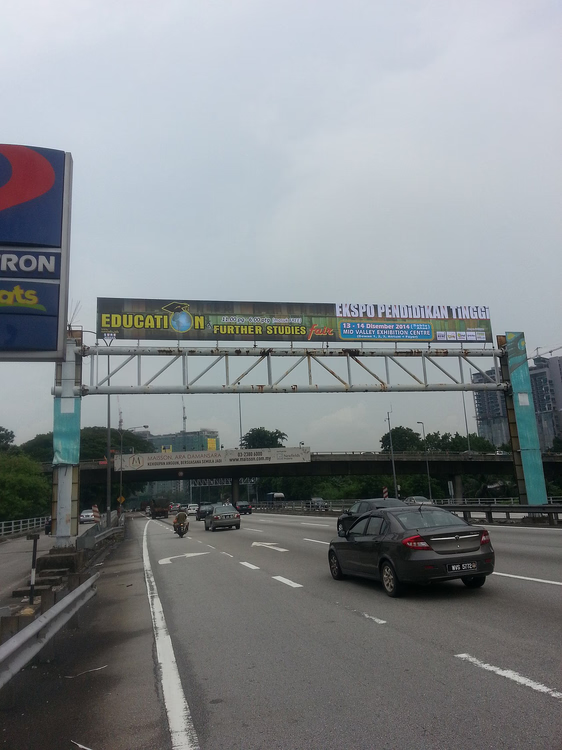 © Jerry Lim · CC BY-SAPhoto: Jerry Lim, CC BY-SA (https://creativecommons.org/licenses/by-sa/3.0), Wikimedia Commons
Getting used to this setup is easy if you bring the right small items. A separate drying rack and a towel next to the shower are rare. So slippers, a hook for your toiletry bag, and a small towel save you time and stress. Soap and shampoo in budget hotels come in dispensers, and in hostels they're often not provided at all.
Wi-Fi and mobile internet
Wi-Fi in hotels is usually free and works fine. The farther you are from the city and the smaller the property, the slower the connection. At small guesthouses on the islands, speed drops in the evening when all the guests go online.
If speed matters to you, buy a local SIM card on arrival or set up an eSIM before your trip. On open hotel networks, don't enter card details without protection: intercepting traffic there isn't hard, so turn on a VPN for important transactions. For work calls, have mobile internet as a backup; it's more reliable than hotel Wi-Fi.
Breakfast and local cuisine
Breakfast depends on the hotel and is often not included in the rate. Nasi lemak, eggs, and toast with kaya are available almost everywhere, while chain hotels have a wider buffet that includes European dishes. If breakfast costs extra, it's cheaper and tastier to eat at a nearby cafe.
Dairy and cheese products are rare in local cuisine; you'll only find them at international hotel buffets. But at street cafes you'll try dishes that aren't on hotel menus. Check breakfast hours: at small hotels it's served in a narrow window starting early in the morning.
Cleanliness and insects
At small hotels, cleanliness sometimes leaves something to be desired, and bedbugs occasionally appear. Before booking, read guest reviews on Google Maps and on the Trip.com booking site. Recent comments show the real condition of the room better than photos.
On the islands and in parks, get used to geckos and insects. Geckos are actually helpful; they eat mosquitoes. On Tioman, keep the door and balcony tightly closed, otherwise monkeys will come into the room. In the jungle, check your shoes and backpack: small insects like to hide there.
Traveling during Ramadan
During Ramadan, some hotel restaurants are closed during the day, and you'll have to make do with room service. This mostly applies to the conservative states of Kelantan and Terengganu. In major cities, cafes for tourists operate as usual.
On the other hand, in the evening many hotels set up a large buffet for breaking the fast after sunset, and it's a memorable experience. At most hotels, durian is banned year-round. If you're bringing one with you, check the rules at the front desk in advance.
What to bring with you
When packing for the east coast, add mosquito protection to your suitcase. Check whether the room has a net over the bed. If not, a small travel net you can hang yourself will come in handy. At expensive hotels you'll be given a spray or plug-in repellent; at small ones you'll need to look after yourself.
Hotels provide water for free, but usually in plastic bottles. It's more eco-friendly to bring your own bottle with a filter: in many places you can fill it with purified water. This way you cut down on plastic and won't be left without water in the mountains or on the beach. The filter is also useful for tap water in remote areas.
Towels at cheap hostels are thin, so bring your own quick-dry towel. It doubles as a beach mat and a sun cover-up. Add shower slippers, a toiletry bag with a hook, hand sanitizer, and your own toilet paper to the kit. With this set, no bathroom will faze you.
Take care of mobile internet separately. To avoid roaming charges, set up a SIM or eSIM for Malaysia before you fly. The country uses type G outlets, so a European plug won't fit. Bring an adapter in advance: spare adapters at the front desk are scarce, and you can't buy one everywhere locally.
During the rainy season, a compact raincoat comes in handy. Hotels have umbrellas, but they're useless in the wind, especially on a hike. For trekking in national parks, bring sturdy shoes and spare socks: trails are slippery after rain.
Bring a first aid kit with basic items: fever reducer, anti-diarrheal medication, bandages, and antiseptic. Bring prescription medications with a surplus and the receipt. In small towns, pharmacies close early, and the medicine you need may not be available. Sunscreen is more expensive in resort towns, so buy it in advance.
Don't overpack: in the tropics, clothes dry slowly, and hotel laundry costs money. Two sets of light clothing and one warm layer for air conditioning are enough. Sunscreen and a hat are essential; the sun here is strong year-round. For markets and mosques, a shoulder wrap is useful, and keep small change in a separate coin purse.
How safe is accommodation in Malaysia
Hotels in Malaysia are considered safe, but a lot depends on the area. In eastern Sabah you should be more careful, and in some parts of Kuala Lumpur tourists get overcharged. If you're traveling alone, read reviews in advance: between the lines you can see how guests rated the atmosphere and safety. In case your trip gets canceled, compare the terms of travel insurance.
Keep valuables in the safe and store copies of your documents in the cloud. Some hotels add security guards and cameras, which you can see in the description before booking. Fire safety is another argument for lower floors: you'll get out faster if there's smoke. In older buildings, a door stop from the inside helps.
Read reviews not only about cleanliness but also about the staff. Guests often write how conflicts were resolved and whether the deposit was returned without arguments. Such details are only visible in recent comments, so look at reviews from the last few months.
Check with the hotel whether there's a 24-hour front desk and security. In small guesthouses the door may be locked at night, and it's worth finding out in advance so you don't end up locked out. Ask how to reach staff at night and whether there's an emergency phone number.
Drugs are strictly prohibited in Malaysia, don't take risks. When paying by card, don't let it out of your sight and check your statement: cases of card data theft in international hotels have been recorded. In cheap guesthouses, carry money in a waist bag and don't leave electronics visible near the window.
How much does accommodation cost in Malaysia
Accommodation prices in Malaysia remain among the most affordable in the region, although the hotel association warns of a possible increase. Below are benchmarks by segment so you understand the range of prices and don't overpay.
A bed in a dorm is the cheapest option. In Kuala Lumpur it costs slightly more than in smaller towns. A private single room is more expensive, but the bathroom is often shared, and this option suits those who want quiet for little money.
For a double room with air conditioning and a private bathroom you pay a moderate amount, and for a small studio usually a bit more. Rooms from private hosts can cost less, but according to reviews, quality and cleanliness vary the most there.
Good guesthouses, boutique and mid-range hotels cost several times more than a hostel, but they offer more comfort. Rooms here are usually compact, but come with air conditioning, hot water and breakfast for an extra charge.
Beyond that, prices rise without a ceiling: at chains like Four Seasons or Shangri-La they go into the luxury segment. In tourist hubs like Langkawi and in hard-to-reach areas, accommodation is usually more expensive because supply is limited. In high season on Langkawi and Tioman, available rooms are scarce and rates go up, while in winter it's better to go to the west coast, where resorts operate year-round.
In Sarawak and Sabah lodges, the price sometimes already includes meals and the national park fee. Check this in advance: the final amount may differ from the price on the platform. A single supplement is rarely charged; the surcharge appears at dive centers and all-inclusive resorts.
The price also depends on the view. For a sea view or a view of the Petronas Towers you pay more, while a window facing an inner courtyard costs less. If your budget is tight, save on the view, not on air conditioning: without it, sleeping in the heat is hard.
Getting to the hotel becomes a separate expense. If your accommodation is far from the center, you pay for taxis every day, and the savings on the room disappear. So consider not only the rate but also the commute. In Kuala Lumpur and Penang, it's convenient to stay near a metro line or a bus hub.
Budget by day. A week in a hostel, a few nights in a mid-range hotel and a finale in a resort room often cost less than the whole trip in one class. That way you'll see the country in different ways and spend less. Decide in advance where you're willing to save and where you want comfort.
Pay attention to the hotel's star rating. In Malaysia it doesn't always match European standards: three stars here often means a simple room with no frills. Look at photos and recent reviews, not just the category. In remote areas, lodges often sell packages with meals included, which is more convenient and sometimes cheaper.
Keep a small amount of cash for the first day. If the terminal doesn't work or the ATM on the island is empty, you'll still be able to check in and have dinner. Split larger amounts across two cards so you don't end up without money if one gets blocked.
A service charge of 10% and a service tax are almost always added to the room rate; since March 1, 2024, the tax is 8% instead of the previous 6% (as of 09/2026, Malaysia's official SST portal). Whether these amounts are included in the price or not is up to the hotel. Since 2017 there's also a tourism tax of 10 RM, about 2 € per room per night, and only foreigners pay it (as of 09/2026, MyTTx data). The tax is charged even for a dorm bed, and always on site.
You can check whether a hotel is officially listed in the registry of registered accommodation establishments on the MyGOV portal (as of 09/2026). Official status doesn't guarantee quality, but it protects you from unregistered properties. It's convenient to compare rates for your dates on Trip.com.
What affects the price
The final amount depends on location, season, length of stay and booking terms. Let's look at each factor separately.
Location. In big cities like Kuala Lumpur and George Town, prices are higher, and even the neighborhood changes the amount. Hotels near Sentral station are more expensive than in the Chow Kit area or Chinatown. On small islands, supply is limited, so the average price also rises. You pay more for a beachfront first line, and a promised "beachfront" is sometimes separated from the beach by a road, so check the map before booking. A water view or a view of the Petronas Towers also raises the rate.
Season. In low season you pay less than in high season. Rain is no reason to skip the trip: in the shoulder season prices drop. Avoid national holidays and Christmas breaks, when demand pushes rates up.
Monthly rental. If you're staying longer than a week, you can negotiate the price on site, especially in small guesthouses. For a long stay you sometimes get a discount, but then you'll have to pay upfront. When renting an apartment for a month, negotiate separately: daily cleaning and fresh towels disappear, but you save noticeably.
Best price guarantee and flexibility. Some hotels promise the best rate on their own website and refund the difference if you find it cheaper. Flexible cancellation costs more, so choose terms that fit your plan. Early booking with full payment usually gives the lowest rate.
How to pay for a hotel in Malaysia
On booking sites you enter your card details, but the actual payment often happens on site. Sometimes the hotel asks for a transfer in advance, but more often you pay at check-in. Check the payment method before your trip, especially at small properties.
Cards are accepted at most hotels, but small guesthouses prefer cash. On small islands, ATMs are rare or out of service, so bring extra cash. In remote villages the terminal may not work due to connectivity, and then you'll be left without options.
When paying by card, some hotels add a fee, and large chains are moving entirely to cashless payments. When the terminal offers to choose a currency, select ringgit: that way you avoid a bad exchange rate. As an alternative, you can transfer money to the hotel's account in ringgit via WISE and save on conversion.
If you pay on site, check in advance whether they accept cards at all. Hostels and guesthouses often ask for cash, and sometimes accept a transfer to a local account.
How to save on a hotel in Malaysia
Booking is more convenient on major platforms: they list hotels, apartments, homestays, and hostel beds. You set the dates and number of guests, see how the price changes by day, and compare room categories. Breakfast and cancellation policies are listed separately, so read the fine print before paying. You can compare options for your dates on the Trip.com hotel selection.
Platforms show not only the price but also demand history. If you book a hotel on weekdays, the rate is lower than on weekends. The same hotel shows different fees on different platforms, so check the final total at the payment step.
Guest reviews save you stress: people write about how hard the beds are and how noisy the street is under the windows.
Check the room price with and without breakfast: sometimes the buffet is already included in the rate and works out cheaper. Find out whether the tourist tax is included in the payment or collected on site. On platforms, filter by distance to the center, otherwise a cheap option may turn out to be an hour's drive from the area you need.
If you're loyal to a chain such as Accor, Marriott, or ONYX, check offers on its website and earn points. Direct bookings sometimes come with bonuses for dining and excursions. Loyalty programs work in Malaysia too, so they save regular guests a noticeable amount.
Family-run guesthouses have their own services, and some properties are rented through Airbnb, although in some buildings rentals are restricted. Very small guesthouses aren't sold through chains: people find them on Google Maps, Facebook, Instagram, or WhatsApp. These hosts respond quickly and often give the best price for a direct booking.
Booking directly with a small hotel is sometimes cheaper: the owner may offer a discount for a longer stay. Ask about this in messages, before confirming the booking. For longer trips, compare the weekly rate with the nightly rate; the difference can be substantial.
Watch for platform promotions: discounts on specific dates appear every week. Subscribing to a service's newsletter gives access to closed rates. Before paying, check the price on the hotel's own website; sometimes it's cheaper there than through an intermediary. Find out what's included in the rate: breakfast, transfer, and cleaning may be charged separately.
Compare not only hotels but also apartments. In Kuala Lumpur, an apartment with a kitchen for a week works out cheaper than a room if you're traveling as a family. In a hostel, on the other hand, you pay only for yourself. Choose the format based on your group size and trip length.
If you're traveling with a large group, look for apartments with several bedrooms. This kind of accommodation is cheaper per person than separate rooms and gives you a shared kitchen. Check the check-in rules and deposit amount: private apartments have stricter policies. Don't put off booking only in high season and during holidays; the rest of the time prices don't rise, and sometimes drop closer to the date.
It's worth comparing not only price but also location. A hotel near the metro saves time, and sometimes money on taxis. If you're going for several days, factor in the trip to the center: a cheap room in the suburbs can end up costing more.
Booking on the spot
Travelers used to look for lodging on arrival; now they more often book online, but the on-the-spot option hasn't disappeared. The advantages are obvious: an available room after lunch is sold cheaper, and you can negotiate the price with the front desk. You see the location, furniture, and cleanliness with your own eyes, which a website can't give you.
Still, book the first night in advance, especially if you're arriving late. Finding a hotel in the dark after a long journey is unpleasant, and with children it's twice as hard. Before the trip, research neighborhoods and typical prices, so you'll negotiate more confidently. During holidays and in remote areas there's little accommodation, so improvising there is risky.
How to book a hotel in advance
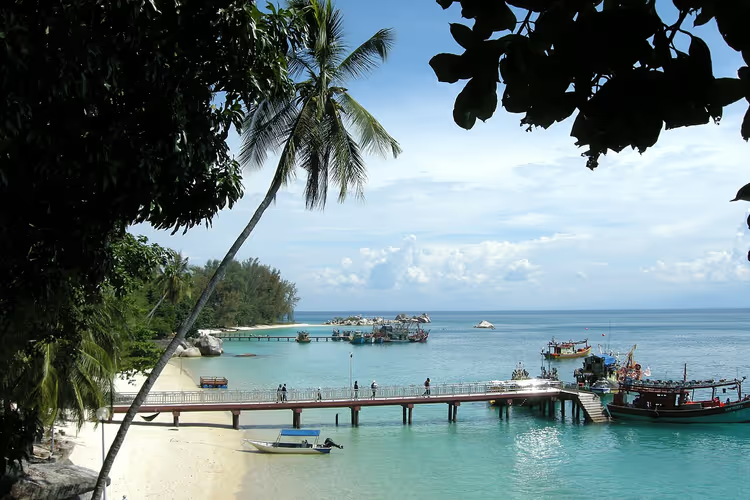
There's no hard deadline: some people plan six months ahead, while others value flexibility more. Just check which hotels are open during the rainy season on the east coast, for example on the Perhentian Islands: many close for the monsoon. In other regions, the off-season is calmer, and you can find a room even at the last minute.
Besides seasonal fluctuations, prices rise during major holidays. Because of the cultural diversity, this includes Christmas, Chinese New Year, Diwali, and local dates. During these periods, book in advance to get a good room at your chosen hotel.
If you're traveling in high season, book several months ahead. The rest of the time, a couple of weeks is enough. A flexible rate with free cancellation costs more, but it protects your plans if your flight is rescheduled.
 © Vyacheslav Argenberg · CC BYPhoto: Vyacheslav Argenberg, CC BY (https://creativecommons.org/licenses/by/4.0), Wikimedia Commons
Where to go: popular destinations
If you haven't decided yet where to stay, start with these destinations. Each has its own character and price level.
 © *angys* · CC BY-SAPhoto: *angys*, CC BY-SA (https://creativecommons.org/licenses/by-sa/4.0), Wikimedia Commons
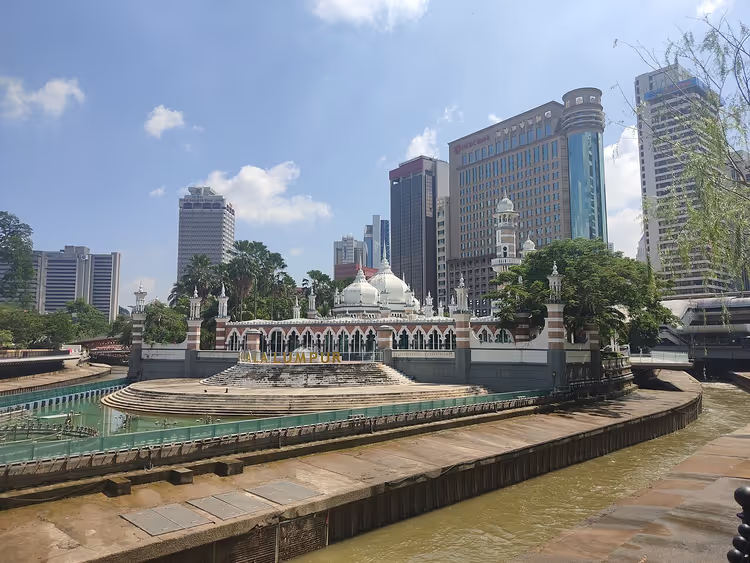
Kuala Lumpur
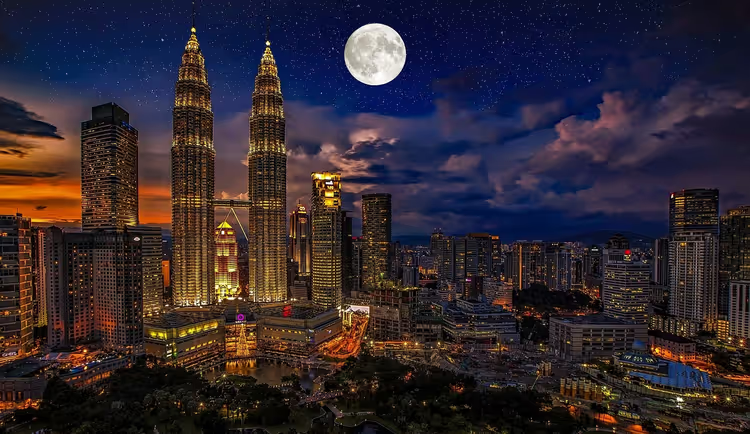
The capital offers the largest selection of accommodation in the country, from dorms to hotels in skyscrapers. It's convenient to stay near the metro and the Petronas Towers. Neighborhoods differ in price and atmosphere, so choose based on your itinerary. The Kuala Lumpur hotel selection on Trip.com will help you compare rates.
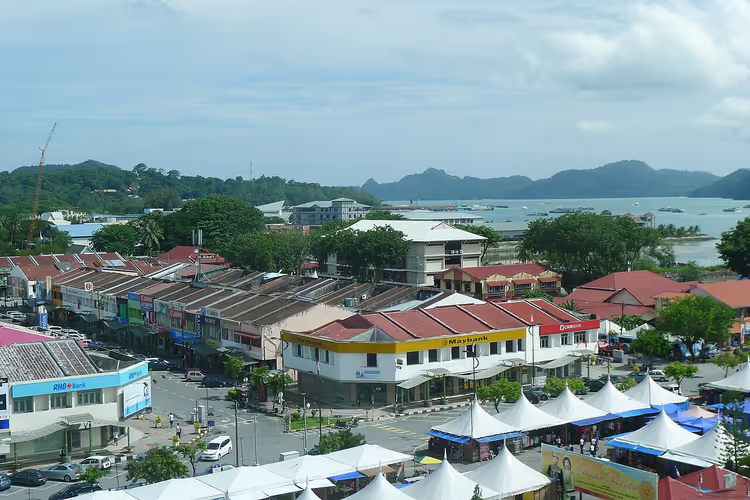
Langkawi
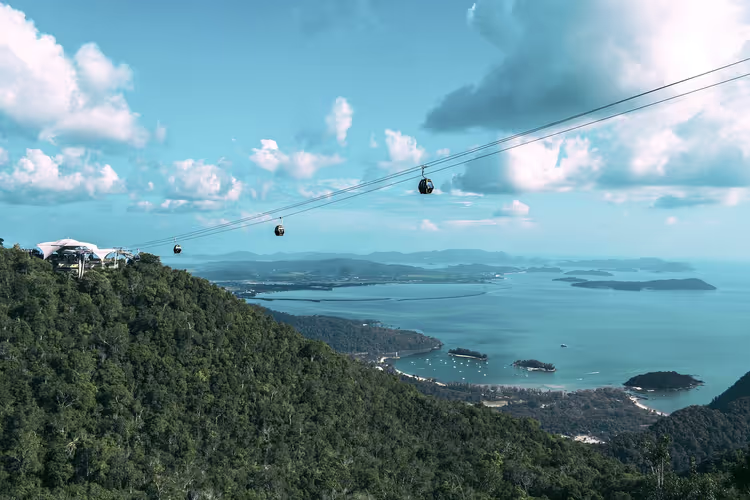
Langkawi is considered the main beach destination on the west coast. The island has several tourist centers, each with its own set of resorts. Look for quiet bays if you want a peaceful vacation.
 © Azreey · CC BY-SAPhoto: Azreey, CC BY-SA (https://creativecommons.org/licenses/by-sa/3.0), Wikimedia Commons
Penang and George Town
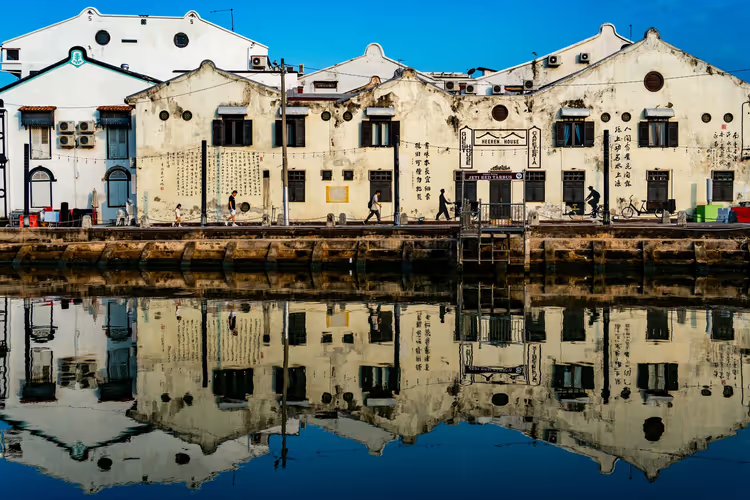
On Penang, there's accommodation for every budget, especially in historic George Town. Boutique hotels in old houses sit side by side with chain hotels. The city beach and street food add points to the destination.
 © philip.mallis · CC BY-SAPhoto: philip.mallis, CC BY-SA (https://creativecommons.org/licenses/by-sa/2.0), Wikimedia Commons
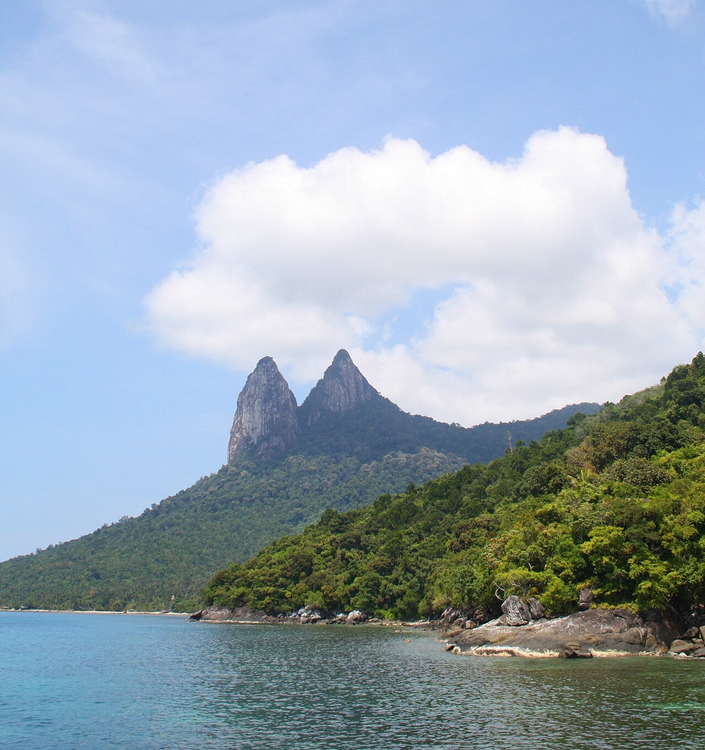
Tioman
Pulau Tioman lies off the east coast and suits a quiet beach vacation and diving. The hotel selection is more modest than on Langkawi, so don't put off booking in season.
 © Jorge Cancela · CC BYPhoto: Jorge Cancela, CC BY (https://creativecommons.org/licenses/by/2.0), Wikimedia Commons
Detailed destination guides
To get a handle on a specific city or island, open a dedicated article. In each one you'll find neighborhoods, specific hotels, and seasonal prices.
The guide "Kuala Lumpur: best hotels and places to stay" breaks down the capital's districts, from budget to premium.
The guide "Langkawi vacation: hotels and places to stay" shows the island's tourist hubs and helps you choose a bay.
The guide "Hotels and places to stay in Penang" covers Georgetown and offers options for every budget.
The guide "Tioman: best hotels and places to stay" is dedicated to the eastern island and its resorts.
If you've already settled on a destination, all that's left is to pick a specific hotel that fits your dates and budget.
Find hotels in Malaysia
Compare prices across booking sites and filter for rooms with free cancellation.
Compare prices on Trip.comThe widget loads once you give your consent.
⁉️🤔 Frequently asked questions
Is a deposit required at check-in?
Many hotels take a refundable cash deposit or place a hold on your card. The amount depends on the hotel category and is often higher at budget properties. Check the policy before booking so you don't have to hunt for an ATM when you arrive.
Is breakfast included in the price?
It depends on the hotel and the rate. Chain hotels often include breakfast, while guesthouses and hostels usually don't. Nasi lemak, eggs, and kaya toast are available at nearby cafes for less. Check the breakfast note in the room description.
Who pays the tourist tax?
Only foreign guests pay the tax. The rate is 10 RM per room per night, which is roughly 2 EUR (as of 09/2026, Malaysian customs data). Malaysian citizens and permanent residents are exempt.
Can you drink tap water?
Tap water is not recommended. Hotels provide bottled water for free, often in plastic bottles. A safer bet is to bring your own filter bottle and fill it with purified water. At cafes and restaurants, order drinking water separately.
How safe is it to leave belongings in the room?
Hotels in the country are considered safe, but it's better to keep valuables in the safe. Store copies of your documents in the cloud. Budget properties don't always have a safe, so carry valuables with you. The area matters too: be more careful in eastern Sabah and in parts of Kuala Lumpur.
In short: what's worth booking
Base your choice on your travel style. If you're traveling on a budget and don't mind noise, go for a dorm bed or a private room with a shared bathroom. If quiet and air conditioning matter, pick a double room with a private bathroom. For seaside romance, pay extra on Langkawi; for city energy and views, stay in Kuala Lumpur; and for a laid-back getaway with diving, look at Tioman.
Budget with a buffer: add the service charge, tax, and tourist tax to the rate. Book your first night in advance, then play it by ear.
Compare hotel prices in Malaysia on Trip.com to find an option that fits your budget and dates.
Add a travel eSIM to your booking and check your insurance terms, and your trip will go smoothly.

A small editorial team writing guides for independent travel. We travel ourselves, but we haven’t been everywhere, so we check prices, opening hours and how to get there against official sources.