
















Day trips from Barcelona: 20 cities, beaches and mountain villages
Barcelona takes all your time if you don't set boundaries. We've put together twenty destinations you can realistically leave for in the morning and come back from by evening. Among them are Roman towns, mountain villages, Costa Brava beaches, and even Andorra. Some spots are close to each other, others require a car.
Below you'll find twenty places with map distances, a short description, and practical details. The closest spots are within a half-hour ride, the farthest take a whole day. For each destination we've listed transport, tickets, and a hotel option.
Ad: this article contains affiliate links, we earn a commission if you book through them, at no extra cost to you.
Day trips from Barcelona
💡 In short:
- The closest are Badalona and Mataró, the farthest are Andorra and Zaragoza.
- Girona and Figueres are easy to reach by train, while Rupit and Aiguafreda require a car.
- Tickets and opening hours: 09/2026, verified on the official Montserrat website and the Dalí Museum website.
We've grouped the destinations by distance and transport so you can pick what fits your day. Some places are a half-hour train ride away, while others require a two-hour drive through the mountains. Some spots work for the beach, others are interesting for history and architecture. If you have only one free day, choose a spot close to the city so you don't waste time on the road. Each destination below has a short description and transport details.
1. Girona
Girona sits about 100 km northeast of Barcelona (on the map). The river divides the city into two parts: modern neighborhoods grew up on the left bank, while the historic center occupies the right. Fans of "Game of Thrones" will recognize Braavos in the local streets. The cathedral was built from the 11th to the 18th century, and today a museum operates inside.
The Arab baths were built about nine hundred years ago, and the pool with columns has survived to this day. The History Museum occupies fourteen exhibition halls with artifacts from different eras. The Museum of Jewish History shows the daily life of communities from the 9th to the 15th century, and the Art Museum houses paintings from several centuries in the Episcopal Palace.
- How to get there: train from Barcelona Sants station, just under an hour (on the map).
- Where to stay: hotels in Girona on Trip.com
2. Figueres
 © Photograph : Luidger · CC BY-SAPhoto: Photograph : Luidger, CC BY-SA (http://creativecommons.org/licenses/by-sa/3.0/), Wikimedia Commons
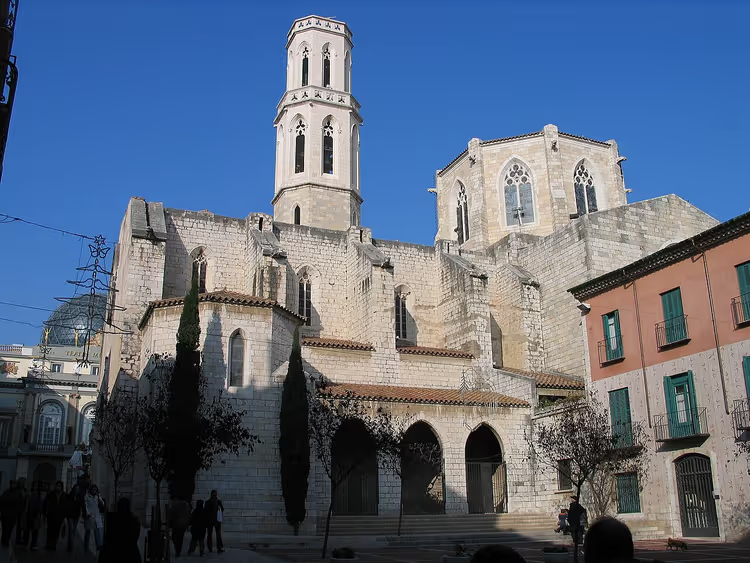
Figueres is tied to the name of Salvador Dalí: the artist was born here and is buried here. The city is about 117 km from Barcelona (on the map), and you can walk across the center in fifteen minutes. Figueres sits near the French border and is considered a wine-making center of the region.
Most tourists are drawn to the Dalí Theatre-Museum with the crypt where the artist's ashes are kept. Tickets and opening hours change by season, so check them on the official website (as of 09/2026, Dalí Foundation). Nearby is the Toy Museum of Catalonia with several thousand exhibits, and in the center you'll see the Church of Saint Peter and the Castell de Sant Ferran fortress.
- How to get there: train from Barcelona Sants to Figueres Vilafant station, about an hour (on the map).
- Where to stay: hotels in Figueres on Trip.com
3. Besalú
 © Alberto-g-rovi · CC BY-SAPhoto: Alberto-g-rovi, CC BY-SA (https://creativecommons.org/licenses/by-sa/3.0/es/deed.en), Wikimedia Commons
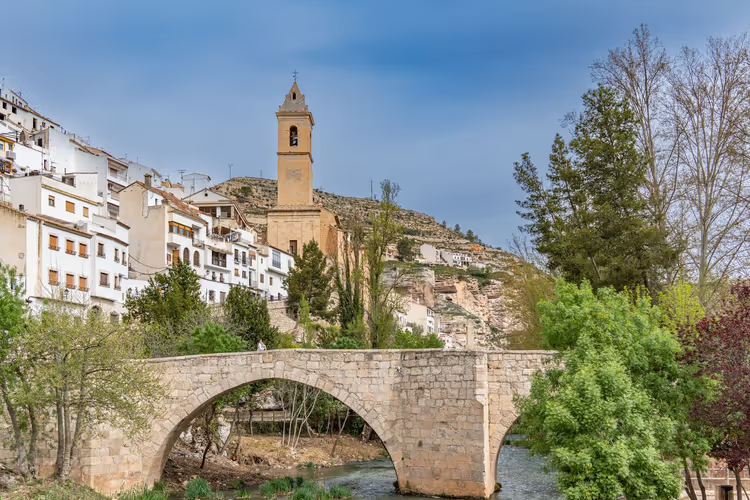
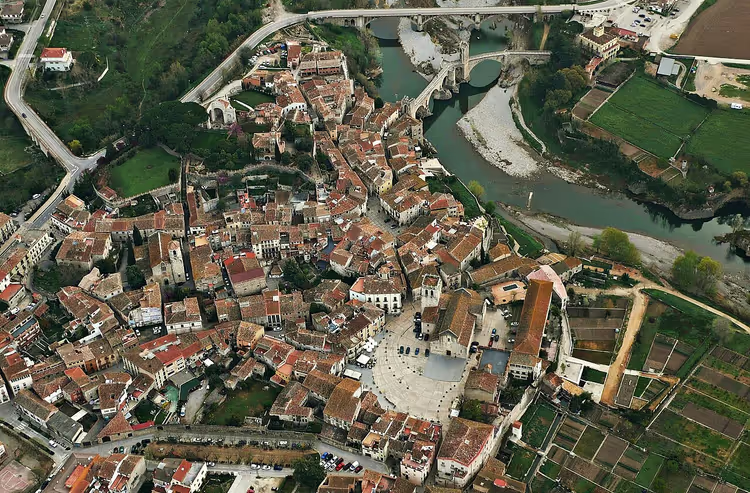
Besalú lies in the province of Girona, about an hour and a half from Barcelona (on the map). The town has about two and a half thousand residents. Stone towers rise above green hills, and the place's history began more than a thousand years ago with the construction of a castle.
The town's main landmark, an old bridge with seven arches, was built in the 12th century. It's the way you enter the historic center. The Museum of Miniatures has three sections: some exhibits are visible to the naked eye, others through a magnifying glass, and still others only under a microscope. The town also has the Church of Saint Peter, the Hospital of Saint Julian, an old mill, a watchtower, and the main square.
- How to get there: bus or car, about an hour and a half (on the map).
- Where to stay: hotels in Besalú on Trip.com
4. Rupit
 © LFLamb · CC BY-SAPhoto: LFLamb, CC BY-SA (https://creativecommons.org/licenses/by-sa/2.0/), Flickr
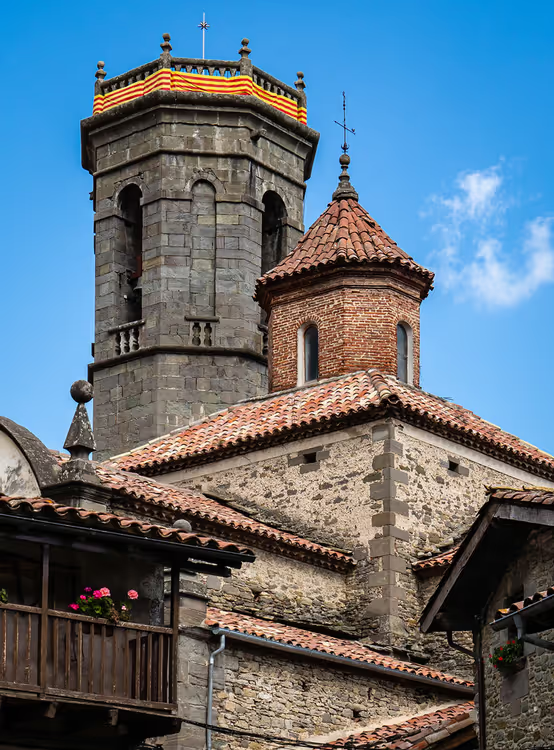
Rupit can only be reached by car, and the drive takes over two hours (on the map). The mountain town surrounded by forests was founded in the 12th century. A gorge cut the settlement off from the rest of the world, and even Napoleon chose not to storm it.
According to legend, in the Middle Ages half the residents were considered witches, so inquisitors were called in. Jews who refused to convert to Catholicism also fell under suspicion. Today about four hundred people live in Rupit, and there's a school, a kindergarten, shops, a church, and a court. The river divides the town into historic and modern parts.
- The catch: there is no public transport, you need your own car.
- Where to stay: hotels near Rupit on Trip.com
5. Castellfollit de la Roca
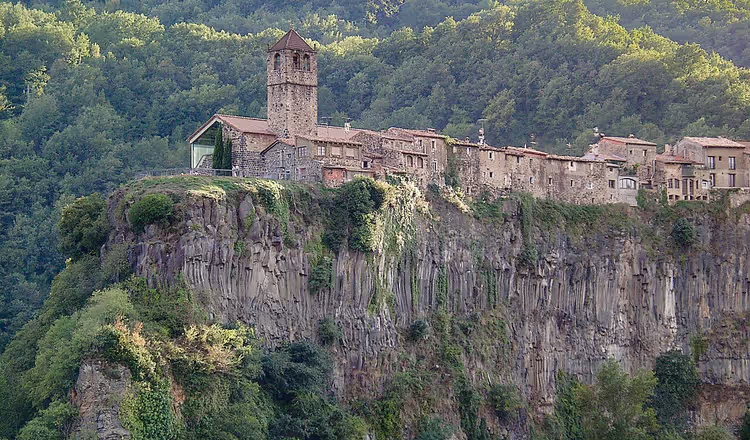 © Eckhard Henkel · CC BY-SAPhoto: Eckhard Henkel, CC BY-SA (https://creativecommons.org/licenses/by-sa/3.0/de/deed.en), Wikimedia Commons
Castellfollit de la Roca is about two hours away by car (according to the map). The first mentions of the town date back to the 12th century, when barons took over the rocky outcrop for family estates. The fortress wall at the top was destroyed by earthquakes in the 15th century.
The town lies in the volcanic region of Garrotxa, which has dozens of extinct volcanoes. Today about a thousand people live here, and there are almost no tourists. According to National Geographic, the town is among the ten settlements with the most beautiful views. Bring a blanket and a picnic basket.
- How to get there: only by car or with a guided tour (according to the map).
- Where to stay: hotels in Castellfollit de la Roca on Trip.com
6. Vic
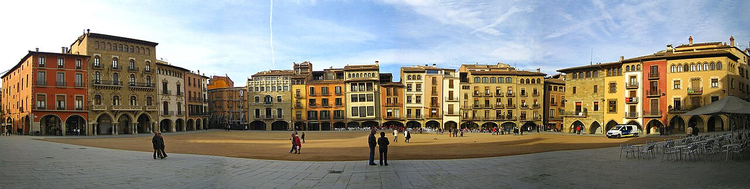
Vic is just over an hour away by car or train (according to the map). The city mixes modernism, baroque and renaissance styles, and it looks harmonious. The best time to visit is Tuesday or Saturday: twice a week a market unfolds on the main square.
Farmers, gardeners and artisans bring honey, embroidered linens and handmade goods here. Attractions include the Episcopal Museum, Placa Major square and a Romanesque tower about a thousand years old. In December, Vic hosts a medieval market with costumed performances.
- Who it's for: those who want to combine a market and an old town.
- Where to stay: hotels in Vic on Trip.com
7. Montserrat Monastery
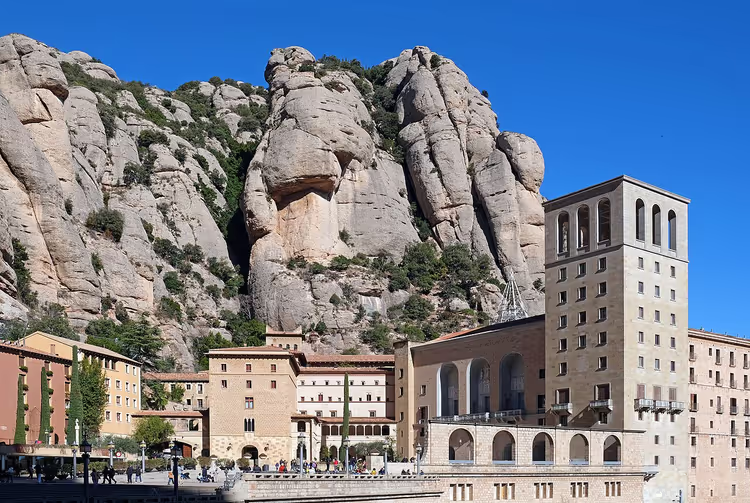 © kallerna · CC BY-SAPhoto: kallerna, CC BY-SA (https://creativecommons.org/licenses/by-sa/4.0), Wikimedia Commons
Montserrat Monastery is less than an hour's drive from Barcelona (according to the map). Both bus and train go there, but the bus runs once a day, so check the schedule in advance (as of 09/2026, official website). About a hundred monks live in the monastery.
The monastery has a museum with six collections: icons, paintings from the 13th to 18th centuries, and gold and silver jewelry. The Holy Cave of Santa Cova attracts pilgrims: according to legend, an image of the Virgin Mary appeared here in the late 9th century. Montserrat mountain is known to rock climbers, and the nature reserve has hiking trails of varying difficulty.
- How to get there: FGC train to Monistrol de Montserrat, then the rack railway (as of 09/2026, how to get to Montserrat).
- The catch: the bus runs once a day, and the place is popular and crowded.
- Where to stay: hotels near Montserrat on Trip.com
8. Badalona
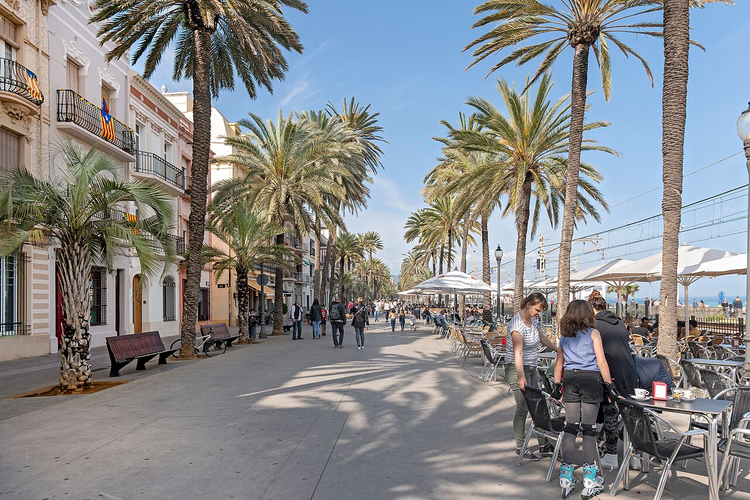 © Didier Descouens · CC BY-SAPhoto: Didier Descouens, CC BY-SA (https://creativecommons.org/licenses/by-sa/4.0), Wikimedia Commons
Badalona is just 10 km from Barcelona (according to the map), so many people consider it a city district. The main pride of the place is a six-kilometer sandy beach lined with low-rise buildings. The Romans settled here before our era, and their heritage is preserved in the city museum.
The museum displays ancient Roman baths, an aqueduct, an old dwelling and wall paintings. In Turo del Caritg park you can stroll among palm trees; it looks different by day and in the evening. Every year the Zorrilla theater hosts a short film screening, and city authorities plan to open a "City of Music".
- Who it's for: those who want the sea near Barcelona.
- Where to stay: hotels in Badalona on Trip.com
9. Mataró
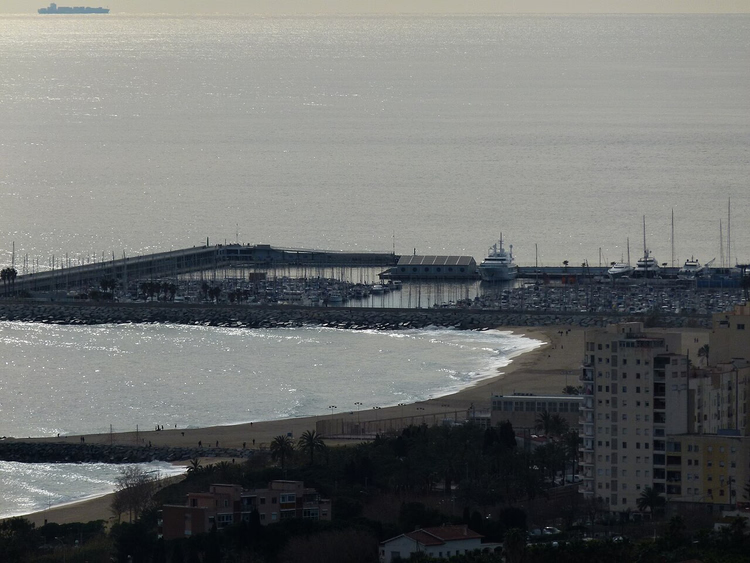 © Pere López Brosa · CC BY-SAPhoto: Pere López Brosa, CC BY-SA (https://creativecommons.org/licenses/by-sa/4.0), Wikimedia Commons
Mataró stretches along the coast 30 km from Barcelona (on the map). The beaches here are artificial, but clean and well maintained, so people come here to escape the city noise. The shore areas have everything you need, except the usual changing rooms.
The city's history is on display at the municipal museum, housed in a 16th-century building, and at the Basilica of Santa Maria with its neoclassical facade and baroque interior. A section of the 16th-century city wall survives on one of the streets. You'll also see the modernist houses Casa Coll i Regàs and Casa Perera.
- How to get there: train from Barcelona Sants, about half an hour (on the map).
- Where to stay: hotels in Mataró on Trip.com
10. Sitges
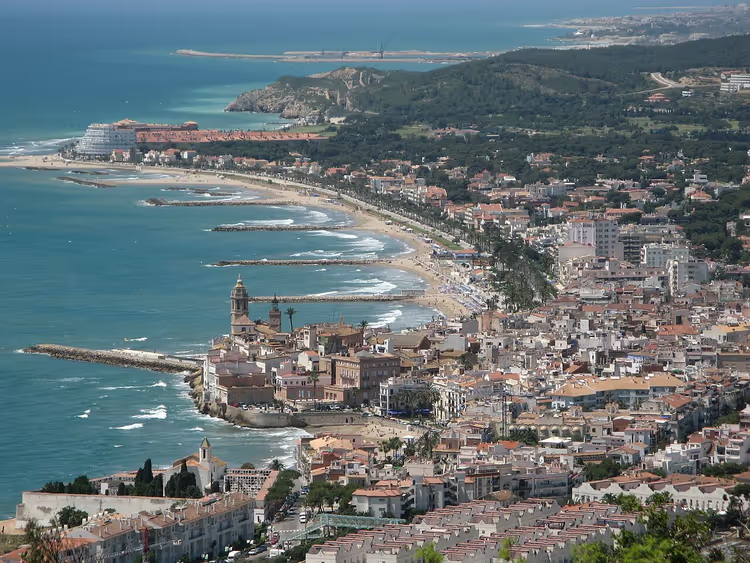 © Werner Lang (Wela49) · CC BY-SAPhoto: Werner Lang (Wela49), CC BY-SA (http://creativecommons.org/licenses/by-sa/3.0/), Wikimedia Commons
Sitges grew from a fishing village into a well-known resort. It gets more than three hundred sunny days a year. Sant Sebastià beach made the New York Times list of the best in Europe, and after that property prices in the town rose noticeably.
Parades, festivals and carnivals run year-round, and the bars along the shore stay open almost until dawn. If you want quiet, head inland. There you'll find museums, galleries, a chapel, churches and a palace.
- The catch: the center is noisy in summer, and accommodation is expensive.
- Where to stay: hotels in Sitges on Trip.com
11. Lloret de Mar
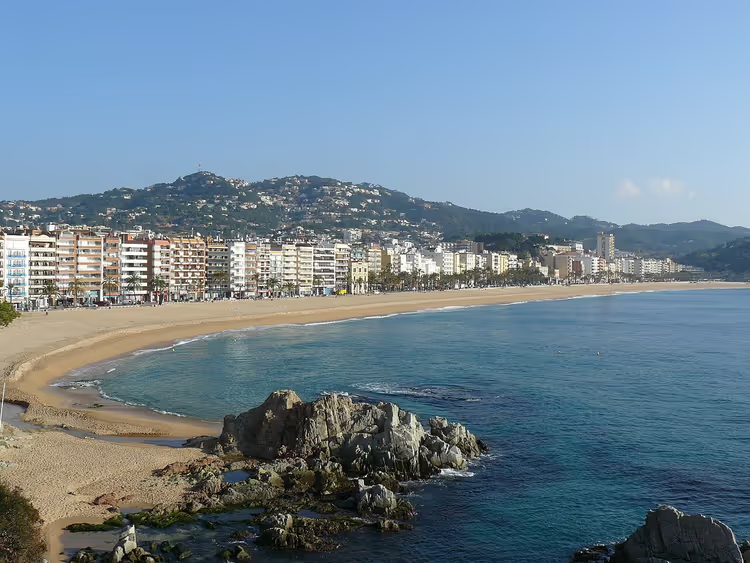 © Xavigivax · CC BY-SAPhoto: Xavigivax, CC BY-SA (https://creativecommons.org/licenses/by-sa/3.0), Wikimedia Commons
Lloret de Mar welcomes visitors year-round. From May to October it draws a young crowd: nightclubs, open-air bars and music until dawn. From November to April the resort shifts to a quieter pace, and the mild climate makes it comfortable even in winter.
There are plenty of sights too: an open-air necropolis museum, a large water park, a gnome park and the Santa Clotilde Gardens. The Cat House museum opened in the early 2000s and displays a collection spread across six rooms. The exhibits include drawings, sculptures, jewelry and figures made of crystal, wood and clay.
- The catch: the center is noisy in high season.
- Where to stay: hotels in Lloret de Mar on Trip.com
12. Cardona
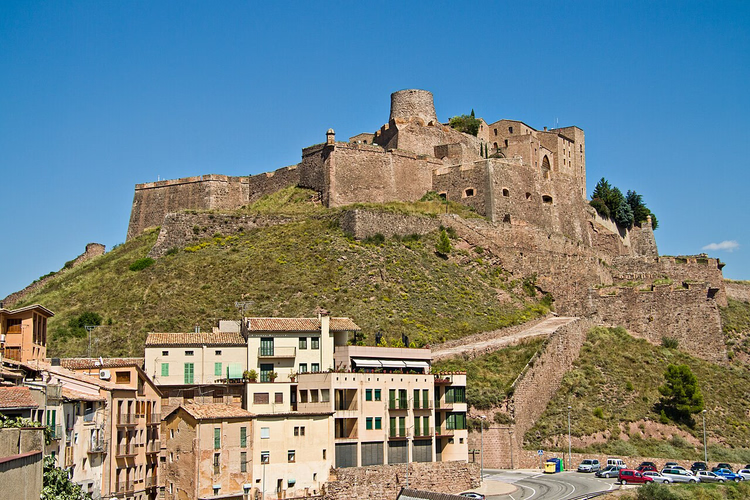 © Mikipons · CC BY-SAPhoto: Mikipons, CC BY-SA (https://creativecommons.org/licenses/by-sa/3.0/es/deed.en), Wikimedia Commons
Cardona lies 80 km from Barcelona (on the map). The castle on the hill once defended the area and gave warning of raids. The fortress has now been restored and turned into a hotel, where they tell the legend of room 712.
According to the stories, a ghost in a monk's robe wanders the corridors, and objects move on their own. Room 712 is not booked through the usual channels; you have to request it separately. Whether you believe the story or not is up to you.
- Where to stay: hotels in Cardona on Trip.com
13. Aiguafreda
 © Pere López Brosa · CC BY-SAPhoto: Pere López Brosa, CC BY-SA (https://creativecommons.org/licenses/by-sa/4.0), Wikimedia Commons
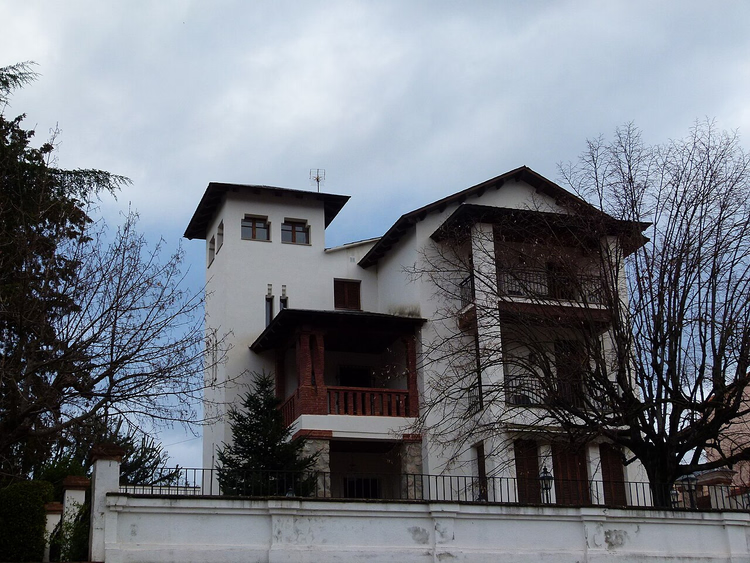
Aiguafreda sits just over 40 km from Barcelona (on the map). The road winds through switchbacks and forest, and then a hiking trail begins. The climb doesn't require special training, but stamina helps.
Old village houses appear at the start of the trail, and a large old mill stands right by the village itself. Griffon vultures often soar above the trails, so keep your distance from the nests. The nearest peak rises more than a thousand meters, and reaching the top is within the ability of a fit hiker (on the map).
- Who it's for: hikers and anyone seeking peace and quiet.
- The catch: you can't get there without a car.
- Where to stay: hotels near Aiguafreda on Trip.com
14. Tarragona
 © Fernando · CC BY-SAPhoto: Fernando, CC BY-SA (https://creativecommons.org/licenses/by-sa/4.0), Wikimedia Commons
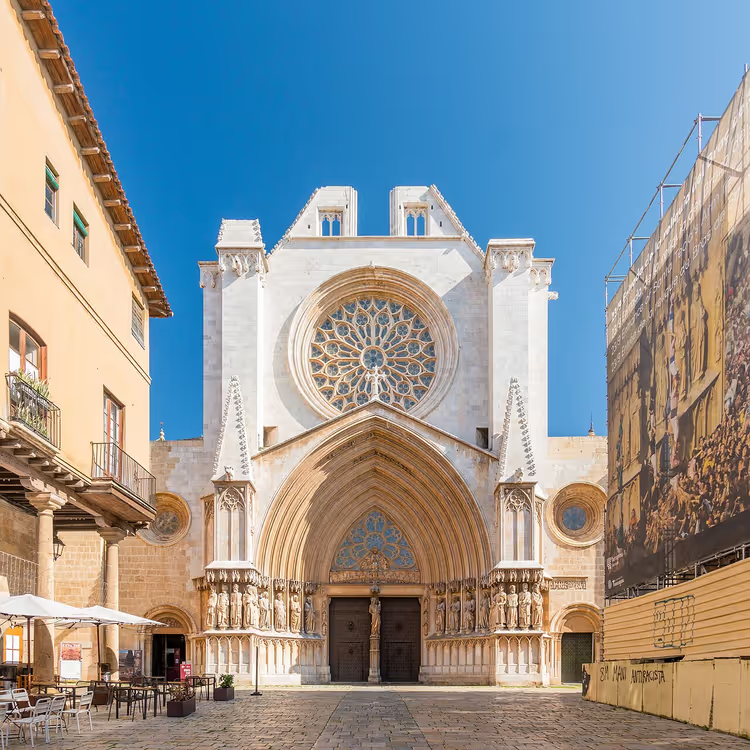
Tarragona combines beach time, history, and festivals. It is home to the largest Catholic cathedral in Catalonia, whose Gothic windows are visible from far away. Construction began in the 12th century and took about two hundred years.
The Tarraco arena once hosted fights, and after bullfighting was banned it now hosts concerts and festivals. Climbing up to the Mediterranean Balcony opens up a panorama of the coast, and according to local belief the cast-iron railing brings good luck. Don't miss the Central Market and the Castellers monument with its pyramid of human figures.
- Where to stay: hotels in Tarragona on Trip.com
15. Vilanova i la Geltrú
 © G.M. Kowalewska · CC BY-SAPhoto: G.M. Kowalewska, CC BY-SA (https://creativecommons.org/licenses/by-sa/3.0), Wikimedia Commons
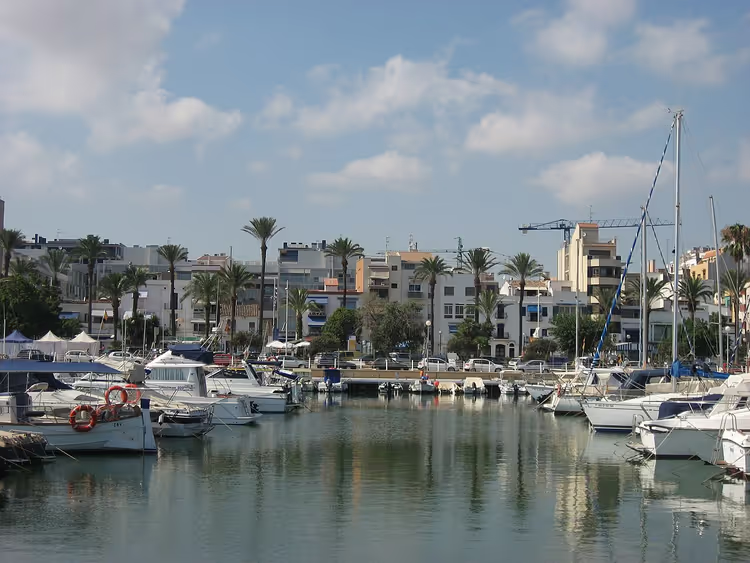
Vilanova i la Geltrú is 40 km from Barcelona (as the crow flies). The resort was founded in the 13th century and has since grown into a town with solid tourist infrastructure. There are plenty of restaurants, cafes, comfortable beach areas, and hotels for any budget.
At the railway museum you can see real trains, carriages, and steam locomotives from the inside. The Romantic Museum transports you to the atmosphere of the 17th and 18th centuries with drapes, stucco, and an old kitchen. It's also worth strolling along the main street, Rambla, stopping by the art museum, and walking to the medieval tower.
- Who it's for: those who want to stay by the sea for a few days.
- Where to stay: hotels in Vilanova i la Geltrú on Trip.com
16. Manresa
 © Catgirl · CC BY-SAPhoto: Catgirl, CC BY-SA (https://creativecommons.org/licenses/by-sa/4.0), Wikimedia Commons
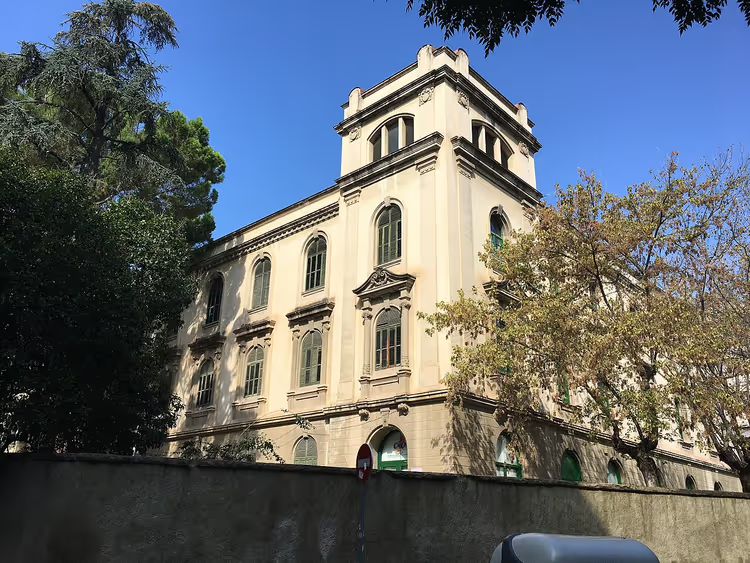
Manresa is 55 km from Barcelona (as the crow flies). A 13th-century stone bridge spans the river and has become the town's architectural calling card. The Basilica of Santa Maria de la Seu was built in the 14th century in the Gothic style and has been rebuilt several times since.
Interestingly, the church resembles Barcelona's Santa Maria del Mar: both projects were designed by the same architect. Pilgrims come to the Santa Cova cave, where a church and a souvenir shop operate. From Sant Domènec square you get a view of the town's historic buildings.
- Where to stay: hotels in Manresa on Trip.com
17. Valencia
 © Jcca76 · CC BY-SAPhoto: Jcca76, CC BY-SA (https://creativecommons.org/licenses/by-sa/4.0), Wikimedia Commons
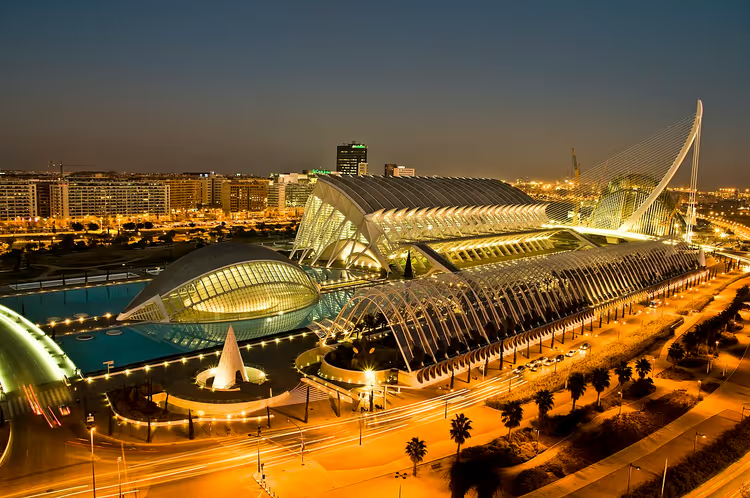
Valencia is farther than the other stops and requires a separate day (as the crow flies). The historic center concentrates the main attractions, and the city's symbol has become the futuristic complex City of Arts and Sciences. Inside you'll find an IMAX cinema, a theater, an oceanarium, a planetarium, a botanical garden, and a science museum.
At Valencia's Central Market you'll feel the local flavor; it's open Monday through Saturday. The Bioparc is divided into four zones: Madagascar, dry savanna, wet savanna, and equatorial forests of Africa. The zoo covers a huge area, and it's worth walking through the squares, the El Carmen district, and past the cathedrals.
- Who it's for: those ready to dedicate a full day to the city.
- Where to stay: hotels in Valencia on Trip.com
18. Salou
 © Javierme Javier Mediavilla Ezquibela · CC BYPhoto: Javierme Javier Mediavilla Ezquibela, CC BY (https://creativecommons.org/licenses/by/4.0), Wikimedia Commons
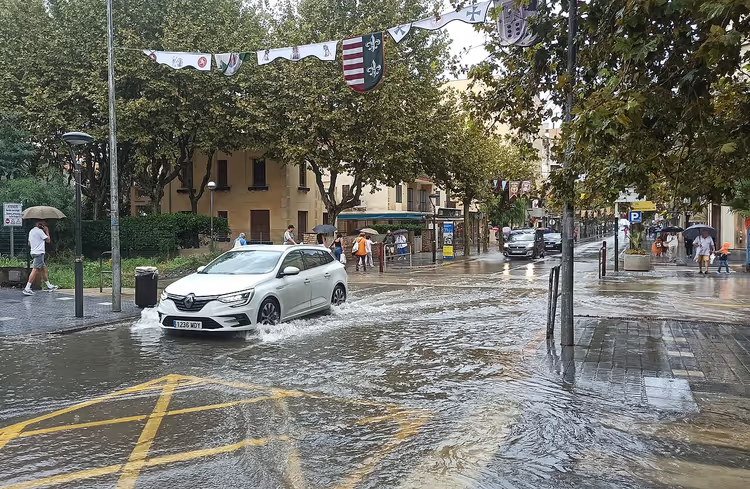
Salou has turned into a popular resort over the past few decades. In the evening, fountain shows are held here: dozens of multicolored jets rise into the sky to music. The PortAventura World amusement park is nearby.
Check ticket prices and park hours on the official website (as of 09/2026, PortAventura World). After the rides, you can stroll through the city park with its ponds and bridges or head to the King Jaume I promenade along the shore.
- Where to stay: hotels in Salou on Trip.com
19. Zaragoza
 © Rab Lawrence · CC BYPhoto: Rab Lawrence, CC BY (https://creativecommons.org/licenses/by/2.0), Wikimedia Commons
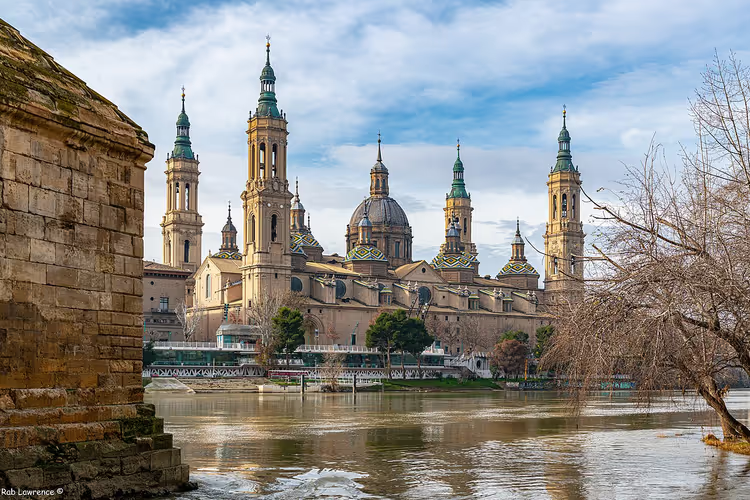
Zaragoza lies between Barcelona and Madrid. The city has plenty of ancient monuments: a Roman theater, cathedrals, the Aljafería Palace, and an early medieval stone bridge. In Plaza del Pilar stands the futuristic Fuente de la Hispanidad fountain, shaped like a map of Latin America.
120 km from the city lies the natural park of the Monasterio de Piedra (see map). The monastery was founded in the 12th century among the rocks, and waterfalls roar all around, with the tallest rising nearly fifty meters. The pedestrian Calle Alfonso is lined with elegant buildings and makes for a pleasant walk.
- How to get there: train or car, about three hours (see map).
- Where to stay: hotels in Zaragoza on Trip.com
20. Andorra
 © Carlos Delgado · CC BY-SAPhoto: Carlos Delgado, CC BY-SA (https://creativecommons.org/licenses/by-sa/3.0), Wikimedia Commons
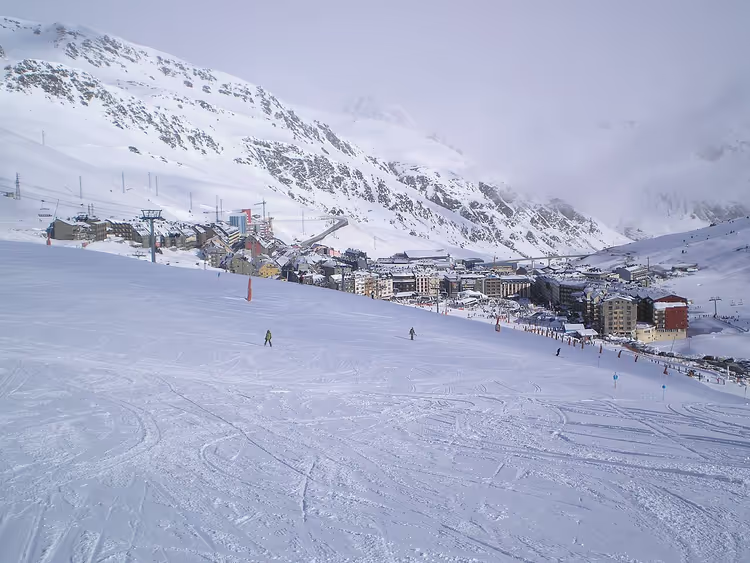
Andorra is 223 km from Barcelona (see map), and the trip takes a full day. Skiers from all over Europe come to the principality: the Grandvalira resort offers more than two hundred kilometers of slopes and three snow parks.
People also come here for shopping, because instead of VAT, a 4.5% IGI tax applies. The capital, Andorra la Vella, feels like a miniature European city: cobblestone streets, low colorful houses, and restaurants serving local cuisine.
- The catch: the drive is long, and you'll need a car or bus.
- Where to stay: hotels in Andorra on Trip.com
Day trip routes from Barcelona on the map
Below are all twenty points on one map. Open it and build your own route: nearby places are easy to combine into one day, while distant ones are better planned separately. Most cities are served by trains and buses, but Rupit, Aiguafreda, and Andorra are easier to reach by car.
Day-trip routes from Barcelona
Places on the map
- 1Girona City 100 km from Barcelona, historic centre and cathedral
- 2Figueres Salvador Dalí's city with the artist's theatre-museum
- 3Besalú Small town with an old 12th-century bridge
- 4Rupit 12th-century mountain town, accessible only by car
- 5Castellfollit de la Roca Town on a rocky outcrop in the volcanic La Garrotxa area
- 6Vic Town with a market on Tuesdays and Saturdays, a mix of architectural styles
- 7Montserrat Monastery Working monastery with a museum and the Santa Cova cave
- 8Badalona City 10 km from Barcelona with a six-kilometre beach
- 9Mataró Coastal city with artificial beaches 30 km from Barcelona
- 10Sitges Resort with Sant Sebastià beach and an old town
- 11Lloret de Mar Resort with nightclubs, a water park and the Santa Clotilde gardens
- 12Cardona Town with a castle-hotel on a hill and the legend of room 712
- 13Aiguafreda Village for hiking routes, accessible only by car
- 14Tarragona City with Catalonia's largest cathedral and a Roman arena
- 15Vilanova i la Geltrú Resort 40 km from Barcelona with a railway museum
- 16Manresa City with a 13th-century bridge and the Santa Cova cave
- 17Valencia City with the City of Arts and Sciences complex, worth a whole day
- 18Salou Resort with fountain shows and the PortAventura World park
- 19Zaragoza City between Barcelona and Madrid with a Roman theatre and the Aljafería palace
- 20Andorra Principality 223 km from Barcelona, ski slopes and VAT-free shopping
The map shows how far the selected points are from each other. Trains connect the major cities, and the coast is easy to travel by commuter rail. For mountain villages, you'll need a car rental, because public transport barely goes there. Plan your day so you have time for the trip back and dinner in Barcelona.
If you've flown into Barcelona and don't want to deal with public transport, plan your route from the airport in advance.
⁉️🤔 Frequently asked questions
How many places can you realistically visit in one day?
In one day, you can manage one city or two nearby points. Badalona, Mataró, and Sitges are easy to combine into a short route. Girona is better left for a separate day: the city has a cathedral, Arab baths, and several museums.
Where can you go from Barcelona without a car?
Trains and buses go to Girona, Figueres, Mataró, Sitges, Tarragona, and Valencia. Montserrat is easy to reach by train and rack railway. But Rupit, Aiguafreda, and Castellfollit de la Roca are only accessible by car.
How much does a day trip cost?
The total depends on transport and entrance tickets. We recommend buying tickets to the Dalí Theatre-Museum in advance on the official website (as of 09/2026, museum website). Trains around Catalonia are cheaper than renting a car.
Which resort should you choose for a beach day?
For a short trip, Badalona and Mataró work well, they're close to the city. For a longer beach day, head to Sitges, Lloret de Mar, or Salou. Sitges gets the most sun, and Salou has an amusement park nearby.
What should you take on a day trip?
Water, comfortable shoes, and sunscreen will come in handy almost everywhere. In the mountains, bring a jacket: Montserrat and Aiguafreda are cooler than Barcelona. For a picnic, pack a blanket, like in Castellfollit de la Roca.
In short: what's worth booking
If you have one free day and no car, go for Girona or Figueres: the train takes about an hour, and tickets are easy to buy online. For the beach, choose Sitges or Mataró; for a full-day trip, Valencia and Zaragoza work well. Skiers should plan Andorra in advance.
Look for hotels in your chosen city on Trip.com, and buy tickets to the Dalí Theatre-Museum on the official website. The route from the airport is easy to cover with a transfer.

A small editorial team writing guides for independent travel. We travel ourselves, but we haven’t been everywhere, so we check prices, opening hours and how to get there against official sources.