
















Beaches of Vietnam: 10 places to go by season
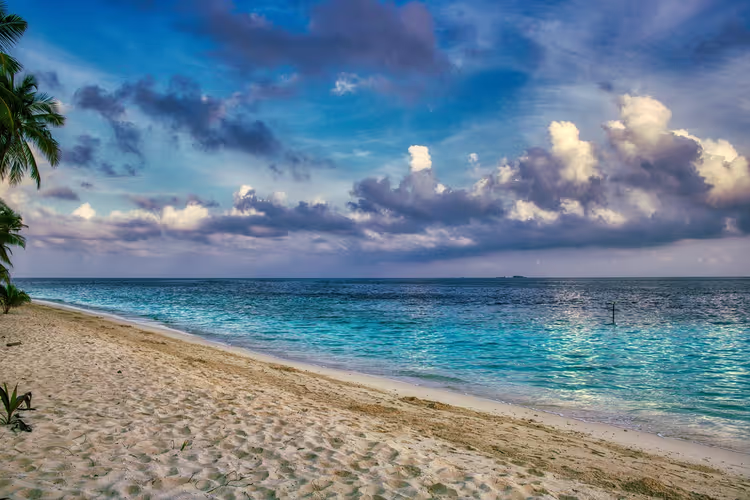
Vietnam stretches along the sea as a long, narrow strip. You'll find beaches here for every taste: from busy urban ones to nearly deserted island ones.
The country's coastline exceeds 3,000 km (according to Wikipedia). We've picked ten beaches worth considering when planning your trip and organized them by region and season.
The main challenge is something else: because of the country's great length, the rainy season arrives in different regions at different times. For each beach below, we note when to go, how to get there, and what kind of vacation it suits.
Ad: this article contains affiliate links, we earn a commission if you book through them, at no extra cost to you.
Choosing tips
💡 In short:
- Head to southern Vietnam from November to April, to the central region from February to August, and to the north from March to May and in October-November.
- For families, Nha Trang, Da Nang, and Bai Sao Beach on Phu Quoc Island are good options.
- For diving, go to Con Dao, Hon Chong, and Ha Long Bay.
 © cloud.shepherd · CC BYPhoto: cloud.shepherd, CC BY (https://creativecommons.org/licenses/by/2.0), Wikimedia Commons
Vietnam's climate is shaped by two monsoons, and the country stretches thousands of kilometers from north to south. That's why seasons in different regions don't line up. While the north is cool and damp, the south has dry, hot weather. This is worth keeping in mind if you book your trip in advance.
Most popular resorts lie in the south: Phan Thiet, Mui Ne, Vung Tau, Phu Quoc. The dry season here runs from November to April. The water warms to a comfortable temperature, and rain is rare. During the wet season, downpours can last for several days, the sea gets rough, and swimming becomes uncomfortable.
The central coast follows its own schedule. In Nha Trang and Da Nang, the best time is from February to August. From September to December, typhoons and heavy rains are common here. If you're going to Nha Trang in summer, plan your swimming before noon and book a room with air conditioning.
In the north, around Ha Long Bay, the most comfortable time is from March to May and in October-November. In summer it's hot and humid there. In winter it's cool and often foggy.
Our picks by vacation type
Beach | Region | Best season | Who it's for |
|---|---|---|---|
Mui Ne | south, Binh Thuan | November-April | kitesurfers, active vacation |
Phan Thiet | south | November-April | relaxed vacation, local cuisine |
Vung Tau | south, near Ho Chi Minh City | November-April | a short trip from the city |
Nha Trang | central | February-August | families, urban beach |
Hon Chong | central, Nha Trang | February-August | diving, seclusion |
Bai Sao | Phu Quoc Island | November-April | families, snorkeling |
Da Nang | central | February-August | surfing, city |
Con Dao | south, archipelago | November-April | wildlife, diving |
Lang Co | central | March-August | scenery, photography |
Ha Long | north | March-May, October-November | cruises, excursions |
The table gives a quick overview. Below, we break down each beach individually.
1. Phan Thiet
 © Original uploader was Nguyễn Đông Sơn at vi.wikipedia · CC BY-SAPhoto: Original uploader was Nguyễn Đông Sơn at vi.wikipedia, CC BY-SA (https://creativecommons.org/licenses/by-sa/3.0), Wikimedia Commons
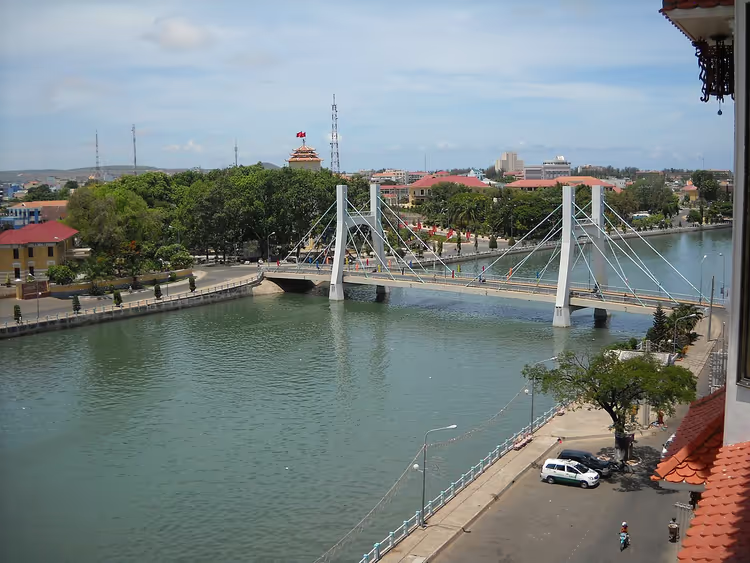
Phan Thiet sits about 200 km from Ho Chi Minh City (on the map). It used to be a fishing village, and today it's a city with a sandy beach and a promenade where colorful boats moor at the docks. Set aside a morning to walk through the market and try the local cuisine: seafood here is cheaper than at the major resorts.
If you want peace and quiet, head out of the center to the farther beaches. The fishing district is popular with tourists, so there are plenty of cafes and hotels. A stay in Phan Thiet is easy to combine with a trip to Mui Ne: the distance between them is about 20 km on the map.
- How to get there: about 200 km from Ho Chi Minh City (on the map), a few hours by bus.
- Who it's for / Not for: good for a relaxed vacation and exploring the cuisine; not for fans of a lively nightlife.
- Cost: beach access is free.
Hotels in Phan Thiet on Trip.com
2. Mui Ne
 © Monster4711 · CC BY-SAPhoto: Monster4711, CC BY-SA (https://creativecommons.org/licenses/by-sa/3.0), Wikimedia Commons
Mui Ne stretches as a long sandy strip near Phan Thiet. It's one of the windiest spots in southern Vietnam, which is why kitesurfers and windsurfers come here. Many hotels sit right on the front line, but the beach itself is public, and you can sunbathe anywhere.
The weather changes the experience dramatically. When the waves are up, the clear water turns murky, and the wind blows fine sand around. But in calm conditions, swimming is comfortable. The coastline is long and well developed: loungers, cafes, equipment rental.
In the evening, restaurants, bars, and massage parlors open up. Excursions to the sand dunes and the fish market also depart from here. If you want quiet, choose a hotel on a street set back from the bars.
- How to get there: about 20 km from Phan Thiet (on the map).
- Who it's for / Not for: good for active vacations and kitesurfing; not for those seeking seclusion.
- Cost: access is free, loungers are paid.
- The catch: in the windy season, the water turns murky and sand blows in your face; swim in the morning.
3. Vung Tau
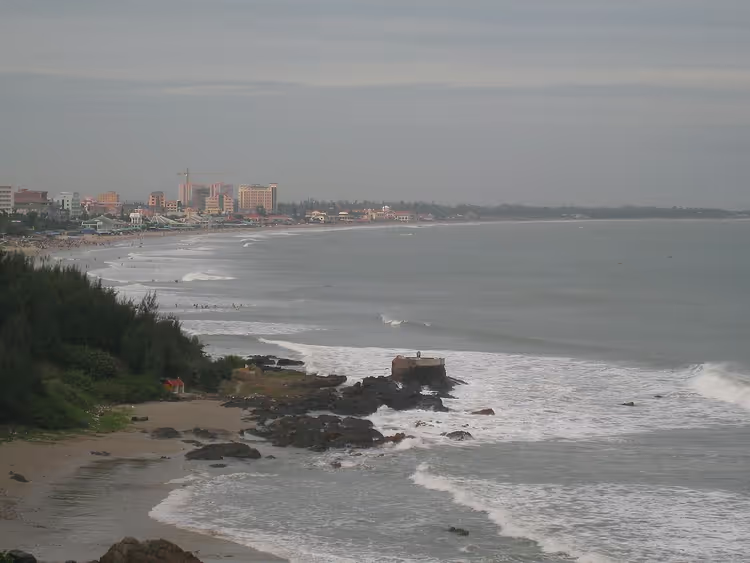
Vung Tau lies almost 130 km from Ho Chi Minh City, so people often come here for a weekend from the city (on the map). The resort's main advantage is its developed infrastructure and abundance of inexpensive hotels. Some of them used to be villas of wealthy city residents.
The resort has a notable catch. Two oil platforms stand near the coast, so the water by the shore is hard to call clean. If you're coming for swimming, this is worth keeping in mind.
But there is a choice of beaches here. Front Beach is convenient for cafes and restaurants right by the water. Back Beach is longer and less crowded, better suited to those seeking a relaxed vacation. Add to that excursions to local attractions: a Buddhist temple complex and the Hai Dang Lighthouse.
- How to get there: almost 130 km from Ho Chi Minh City (on the map), about two hours by car.
- Who it's for / Not for: good for a short trip from Ho Chi Minh City; not for those who care about a clean sea.
- Cost: access is free.
- The catch: two oil platforms near the shore, the water isn't the clearest.
4. Nha Trang municipal beach
 © Александр Попрыгин · CC BYPhoto: Александр Попрыгин, CC BY (https://creativecommons.org/licenses/by/3.0), Wikimedia Commons
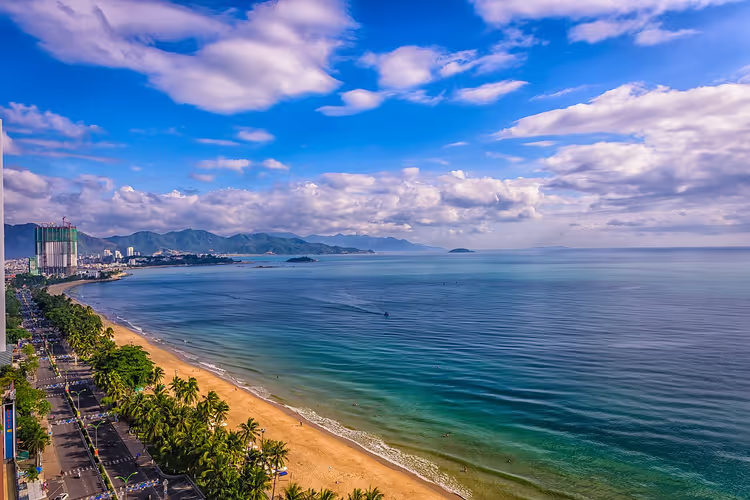
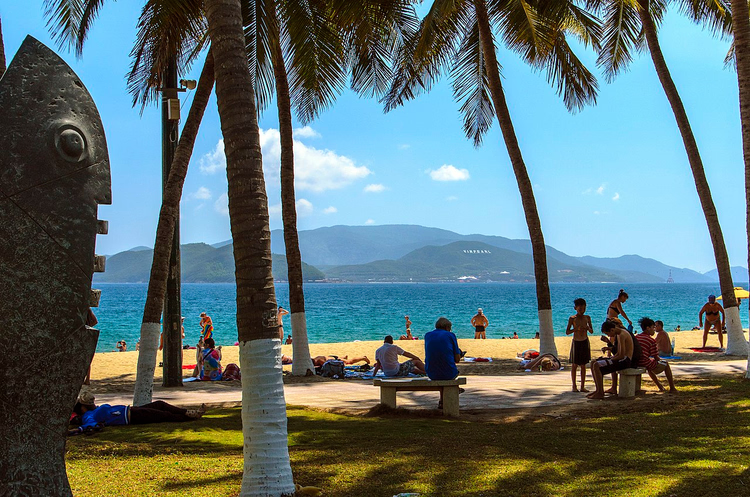
Nha Trang is known for its urban beach, which runs along Tran Phu Boulevard. You can sunbathe here for free, but you'll pay a small amount for a lounger and umbrella. The sand is light, but it's not white quartz: the beach is made of fine shell fragments. The bottom slopes gently, so entering the water is easy for both adults and children.
The best time for Nha Trang is from February to August. From September to December, rains and typhoons are common, and the sea gets rough. Come here if you want to combine the beach with city life.
The beach is easy to reach from any part of the city. There are changing cabins, toilets, and fresh-water showers, and lifeguards are on duty. On the shore, you can get a massage, a speedboat or jet ski ride, or go diving. Hungry? Cafes and bars will bring food right to your lounger.
- How to get there: an urban beach along Tran Phu Boulevard, walking distance from the center (on the map).
- Who it's for / Not for: good for families and those staying in the city without a car; not for those seeking seclusion.
- Cost: access is free, lounger and umbrella are paid.
- The catch: in the rainy season, the sea gets rough and swimming is uncomfortable.
Hotels in Nha Trang on Trip.com
5. Hon Chong Beach
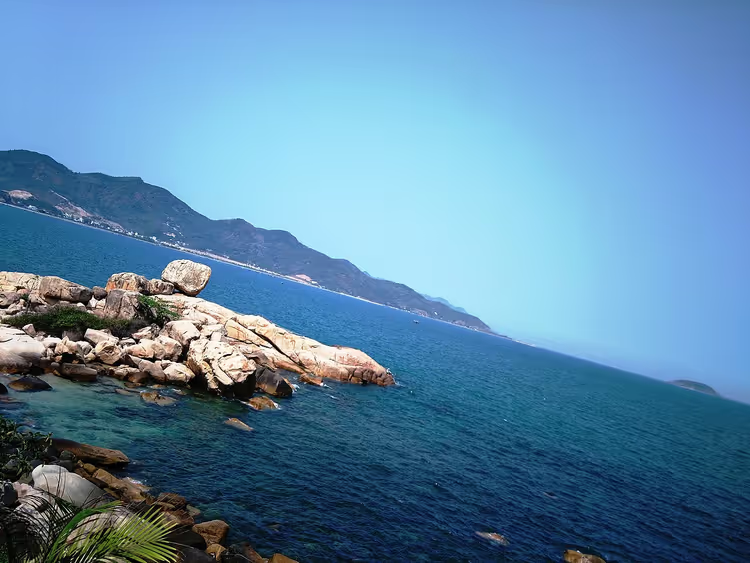
Hon Chong Beach (Hòn Chồng) lies in Nha Trang, on Vietnam's central coast. People come here for the seaside rocks and turquoise water. Divers appreciate the local sea for its rich underwater world.
The beach suits parents with children: the entry into the sea is gentle. Legend lovers will enjoy the rock with a handprint, which any local will tell you about.
- How to get there: in Nha Trang, on the country's central coast (see map).
- Who it's for / Not for: good for diving and a quiet vacation with children; not for fans of loud parties.
- Cost: free entry.
6. Bai Sao Beach on Phu Quoc
 © [//commons.wikimedia.org/wiki/User:Trantuonglam Trantuonglam] · CC BY-SAPhoto: [//commons.wikimedia.org/wiki/User:Trantuonglam Trantuonglam], CC BY-SA (https://creativecommons.org/licenses/by-sa/4.0), Wikimedia Commons
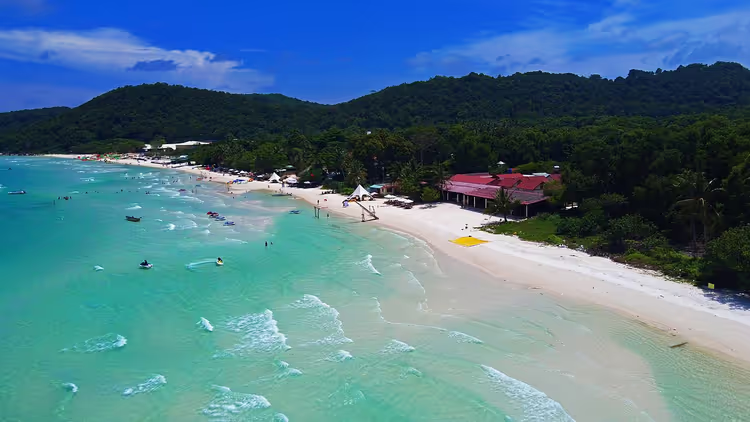
Bai Sao Beach (Bãi Sao) is on Phu Quoc Island. It's known not only in Vietnam but far beyond its borders. The climate here is mild, but it's best to come during the dry season, from November to April.
The scenery at Bai Sao is postcard-perfect: this is where you get those shots of a boat appearing to float in midair. The water is transparent, and you can see marine life even without a mask. The infrastructure is well developed: you can rent loungers, masks, and a surfboard, and you can even take a nap in a hammock. Restaurants stay open late, and nearby vendors sell fruit and drinks.
- How to get there: on Phu Quoc Island, by taxi from the airport (see map).
- Who it's for / Not for: good for families and snorkeling enthusiasts; not for those who want a completely deserted beach.
- Cost: free entry, equipment rental for a fee.
7. Da Nang Beach
 © Christophe95 · CC BY-SAPhoto: Christophe95, CC BY-SA (https://creativecommons.org/licenses/by-sa/4.0), Wikimedia Commons
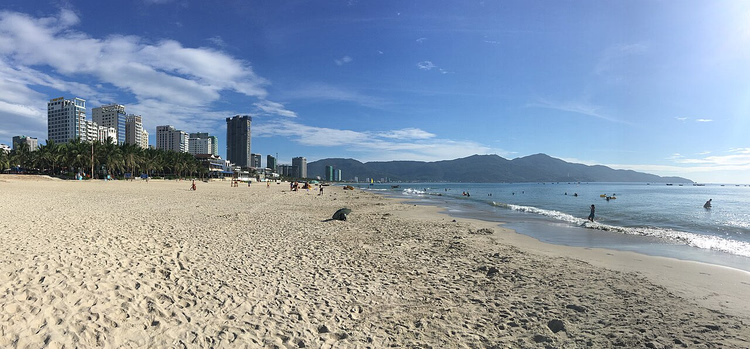
Da Nang stretches along the sea as a long urban beach called My Khe. The sand here is soft and light, and the water entry is easy even for small children. The beach is kept clean, and lounger and umbrella rentals are among the cheapest in Vietnam.
Keep the waves in mind: from November to March the sea can get rough. The rest of the year, though, the water is calm. All the infrastructure is in place: showers, toilets, snack bars. Vendors sell fresh fruit, such as coconuts, whose milk you can drink instead of juice. You can also rent a boat and diving equipment here.
- How to get there: an urban beach in central Da Nang, within walking distance of waterfront hotels (see map).
- Who it's for / Not for: good for surfers and families; not for those who want a secluded beach.
- Cost: free entry, loungers are inexpensive.
- The catch: strong waves from November to March.
8. Con Dao island beaches
 © Lam Tr Th · CC BY-SAPhoto: Lam Tr Th, CC BY-SA (https://creativecommons.org/licenses/by-sa/3.0), Wikimedia Commons
On Con Dao Island you'll find a couple dozen small beaches, including some with white sand. The archipelago consists of several islands and islets. On many beaches you can be completely alone.
The water entry is gradual, so swimming is comfortable everywhere. Kids will enjoy seeing baby turtles emerge from the sand and crawl toward the water. Fishermen won't be bored here either: the fish bite well, and sometimes you'll catch a squid. Divers who get lucky may encounter a dugong, a rare marine animal. Hunting them is prohibited: you'll face a fine.
- How to get there: an island in the southern part of the country, by plane or ferry from Ho Chi Minh City.
- Who it's for / Not for: good for nature lovers and divers; not for those who need urban infrastructure.
- Cost: free entry.
9. Lang Co Beach
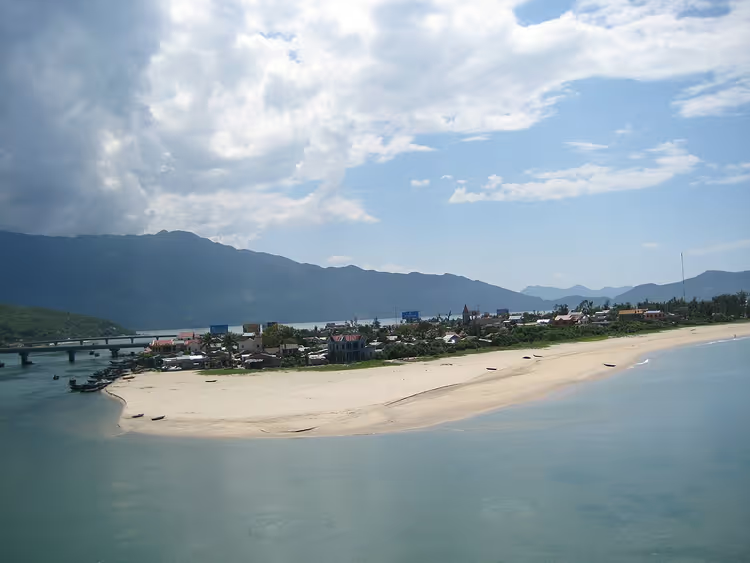
Lang Co Beach is not the place to go for a serene getaway. It's an unusual spot, and people visit it primarily for the scenery. Tall sand dunes create a distinctive landscape, and the sea is so full of life that it resembles a tropical aquarium.
Here you'll spend more time observing and taking photos than sunbathing. The infrastructure is still developing, but all the essentials are already there.
- How to get there: on the central coast (see map), most convenient with a rental car.
- Who it's for / Not for: good for photographers and fans of unusual landscapes; not for those looking for developed infrastructure and loungers.
- Cost: free entry.
- The catch: infrastructure is underdeveloped; if you want to relax on a lounger, pick a different beach.
10. Ha Long Bay Beaches
 © Andrea Schaffer from Sydney, Australia · CC BYPhoto: Andrea Schaffer from Sydney, Australia, CC BY (https://creativecommons.org/licenses/by/2.0), Wikimedia Commons
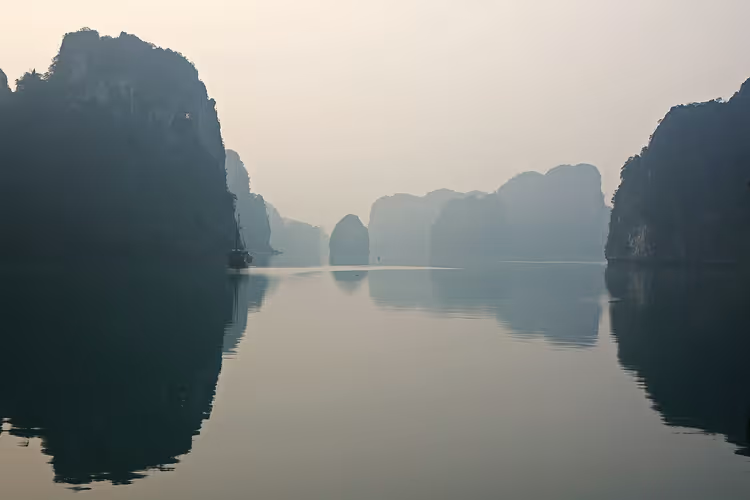
Ha Long Bay is a UNESCO World Heritage Site. It contains about 1,600 limestone islands and islets (according to UNESCO). Most of them are uninhabited, which creates a truly unique landscape.
The best time for a beach vacation is from March to May and in October-November. In the off-season, heavy rain and fog can ruin your trip. The beaches are sandy, and in many places the sand was brought in artificially.
All the activities are available on site: jet skis, water skiing, kids' entertainers, loungers and umbrellas, cafes and restaurants. Island-hopping tours with cave visits depart from here. Divers are drawn to the bay's rich underwater world, while romantics stay to admire the sunset and starry sky.
- How to get there: in northeastern Vietnam, a few hours by bus from Hanoi (see map).
- Who it's for / Not for: good for cruises and island tours; not for those who want to lie on a quiet beach by their hotel.
- Cost: free beach entry, cruises are paid.
- The catch: rain and fog are common in the off-season, and the view may be obscured.
Vietnam beaches on the map
Open the map and mark the spots you want to add to your itinerary. This makes it easier to calculate distances between beaches.
Best beaches of Vietnam
Places on the map
- 1Phan Thiet Fishing village 200 km from Ho Chi Minh City, promenade with boats
- 2Mui Ne Windy beach for kitesurfing and windsurfing near Phan Thiet
- 3Vung Tau Weekend resort from Ho Chi Minh City, oil platforms nearby
- 4Nha Trang Municipal Beach City beach along Tran Phu Boulevard, gently sloping seabed
- 5Hon Chong White sand and azure water, cliff with a handprint
- 6Bai Sao Beach on Phu Quoc island, clear water, boats on the sand
- 7Da Nang My Khe city beach, soft sand, cheap sunbed rental
- 8Con Dao Archipelago with dozens of beaches, turtles and dugongs
- 9Lang Co Beach with sand dunes, visited for the scenery
- 10Ha Long Bay Beaches of the UNESCO World Heritage bay, about 1,600 islands
⁉️🤔 Frequently asked questions
When is the best time to visit Vietnam's beaches?
The season depends on the region. In the south, the dry season runs from November to April; on the central coast, the best time is from February to August; in the north near Ha Long Bay, it's most comfortable from March to May and in October-November. Plan your trip around a specific beach, not the country as a whole.
Where is the clearest water in Vietnam?
The clearest water is found on the islands: Bai Sao Beach on Phu Quoc, Hon Chong beaches, and Con Dao. In Vung Tau, oil platforms stand near the shore, so the water there is murkier. In Nha Trang and Da Nang, clarity depends on the season and waves.
Where to go with kids?
Nha Trang and Da Nang are convenient for families: the bottom slopes gently, and there are lifeguards, showers, and cafes near the shore. Bai Sao Beach on Phu Quoc is also good for kids, with calm water and developed infrastructure. On Con Dao, kids will enjoy seeing the baby turtles.
Where should I go for diving and snorkeling?
Look into Hon Chong, Con Dao, and Ha Long Bay: these have a rich underwater world. On Con Dao, if you're lucky, you might encounter a dugong. For beginners, Bai Sao is a good fit, where you can see marine life even without gear.
Do you have to pay for loungers?
On urban beaches, entry is usually free, but you'll pay for a lounger and umbrella. In Nha Trang and Da Nang, rentals are inexpensive. At Bai Sao, loungers and equipment are also available for rent. If you're staying at a beachfront hotel, some amenities are already included.
In short: what's worth booking
The takeaway is simple: choose a beach based on the season and the type of vacation you want. If you have two weeks, go for Mui Ne or Phan Thiet during the dry season. With kids, Nha Trang or Phu Quoc is more convenient. For solitude and diving, head to Con Dao; for scenery, go to Lang Co and Ha Long Bay.
If you're on a short trip from Ho Chi Minh City, Vung Tau works, but only for the city and the food, not for swimming. If you want to combine beach time with city life, Da Nang is a convenient choice.
Hotels near the best beaches with open availability should be booked in advance: compare Vietnam hotels on Trip.com.

A small editorial team writing guides for independent travel. We travel ourselves, but we haven’t been everywhere, so we check prices, opening hours and how to get there against official sources.