
















When to go to Vietnam without rain: weather by region and month
Vietnam's rainy season is not a single season. The country stretches more than 1,650 km from north to south (according to Vietnam's official tourism portal), and its three climate zones follow their own schedules. While the south gets tropical downpours, the center bakes in the heat and Hanoi stays dry.
Vietnam is divided into south, center, and north, and the rains arrive in different months in each. That means you can pick your travel dates so you get rained on less. Below is a breakdown by region: when to expect downpours, how long they last, and where to relocate if the weather turns bad.
Ad: this article contains affiliate links, we earn a commission if you book through them, at no extra cost to you.
Vietnam's three climate zones
💡 In short:
- In the south, rain falls from May through October, peaking in June-August.
- In the center, the rainy season starts in September and runs through January, peaking in October and November.
- In the north, it is wet from May through September, and winter brings cold weather.
Vietnam is called a country of three weathers. The climate is shaped by two factors: the country's length and the Truong Son mountain range, which runs along the entire center. The mountains intercept moisture from the sea, so the central coast gets soaked in autumn, while the south and north receive rain in other months.
The easiest way to remember it: the south gets wet in summer, the center floods in late autumn, the north gets wet in summer and cold in winter.
Region | Rainy season | Peak rainfall | Dry season |
|---|---|---|---|
South (Saigon, Phu Quoc) | May-October | June-August | November-April |
Center (Da Nang, Hue, Hoi An) | September-January | October-November | February-August |
North (Hanoi, Halong, Sapa) | May-September | July-August | October-April |
The figures in the table are based on the official regional weather summary.
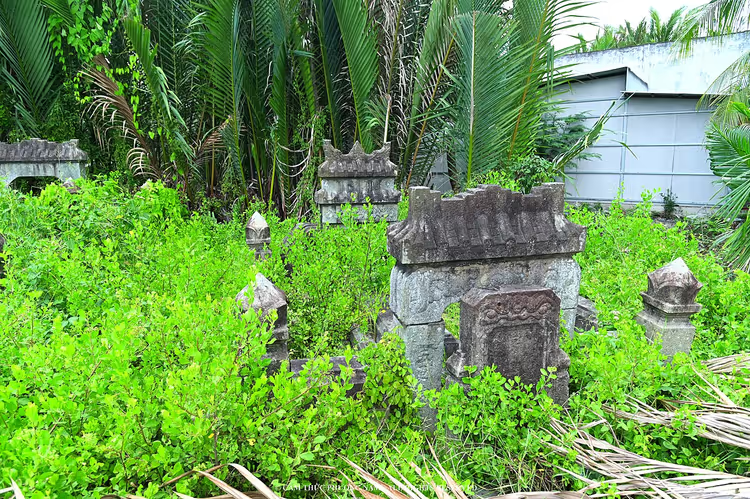
Rainy season in southern Vietnam
The south follows the simplest schedule: wet season from May through October, dry season from November through April (according to Vietnam's tourism portal). Rain here is short-lived. It usually hits the city in the afternoon for 15-30 minutes, and the morning is sunny again.
Temperatures barely change year-round: 27-32 °C (according to the monthly summary). So you can swim even in the rain without giving up the beach.
Where to go in the south: Phu Quoc, Mui Ne, Phan Thiet, Vung Tau, Saigon, and the Con Dao islands. Nha Trang runs on a different schedule: rain falls there in the fall, roughly from September-October through December. During the rainy season, housing and tours get cheaper here, and lines are shorter (according to a monsoon season overview). For shopping, we have a separate guide to shopping in Vietnam.
In the south, mosquitoes are a nuisance because they multiply quickly in high humidity. Bring repellent, and evening walks will be comfortable.
 © SouthernSensibility · CC BYPhoto: SouthernSensibility, CC BY (https://creativecommons.org/licenses/by/4.0), Wikimedia Commons
Rainy season in the central region
The center is considered the most difficult region. Rain here starts in September and doesn't end until January, with the peak in October and November (according to a rainy season summary). This is where typhoons most often make landfall.
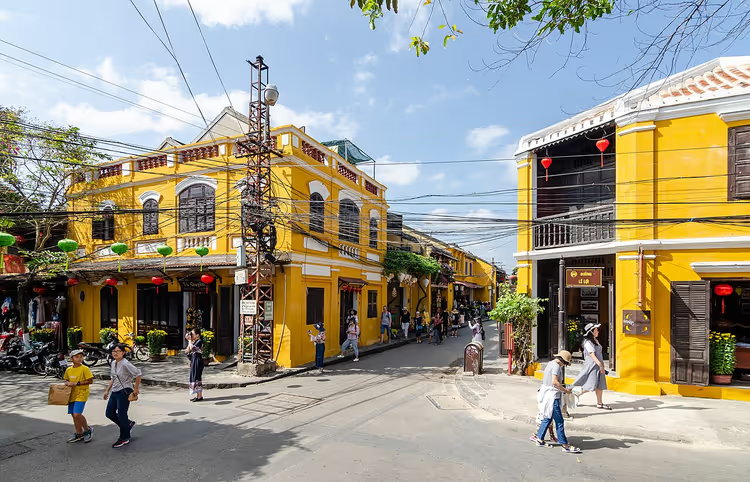
Da Nang, Hue, and Hoi An get flooded during these months. Hoi An sits on the Thu Bon River and regularly goes underwater, while Hue suffers from typhoons more than its neighbors. If you're going for the beach, plan the central coast for February-August.
Temperatures during the rainy months stay around 25-30 °C, and the sea water is warm, but swimming will be dangerous because of strong currents. Watch for red flags on the beach.
The highland city of Da Lat lives on its own schedule: it's cooler year-round, around 15-20 °C, with rain from May through October (according to the official weather summary).
 © Steffen Schmitz ( more photos ) · CC BY-SAPhoto: Steffen Schmitz ( more photos ), CC BY-SA (https://creativecommons.org/licenses/by-sa/4.0), Wikimedia Commons
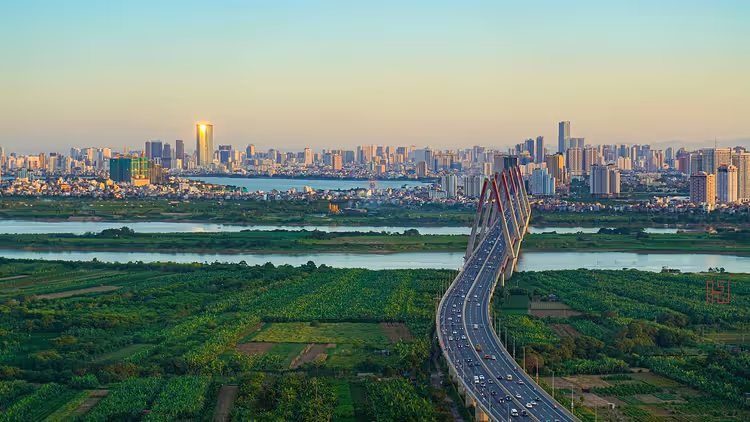
Rainy season in northern Vietnam
The north gets wet in summer: the rainy season runs from May through September, with the heaviest rain in July and August (according to the wet season overview). Hanoi receives about 300 mm of precipitation in August (according to the northern region summary).
From November through April, however, cool air masses from China move into the north. During this time Hanoi sees 14-20 °C, while in the mountains of Sapa nighttime temperatures drop to around 8 °C or lower (according to the official portal). Bring a jacket if you are traveling to Hanoi, Halong, or Sapa in winter.
The best time to visit the north is March-April and October-November: dry, clear, and up to +28 °C. During these months Halong and Sapa are at their best.
 © NKSTTSSHNVN · CC BY-SAPhoto: NKSTTSSHNVN, CC BY-SA (https://creativecommons.org/licenses/by-sa/4.0), Wikimedia Commons
What to pack for the rainy season
Rain in Vietnam is no reason to change your itinerary if you pack properly. A lightweight rain jacket and quick-dry clothing solve half the problems.
- A rain jacket instead of an umbrella. An umbrella in Vietnam costs 30,000-100,000 dong (as of 09/2026, Vietnam tourism portal), but it occupies one hand and does not help in a downpour.
- Quick-dry clothing. Cotton takes hours to dry, while synthetics dry in half an hour under a fan.
- Sandals with tread. They help on flooded streets, while leather shoes stay wet for days in the humidity.
- A dry bag for your phone. It costs about 150,000 dong (as of 09/2026, Vietnam tourism portal) and protects your devices when crossing puddles.
- Insect repellent. In the south and center, mosquitoes are active year-round.
You will need these items even if the forecast promises sunshine. Weather in the tropics changes within an hour, and finding what you need locally can take longer.
⁉️🤔 Frequently asked questions
Which month has the least rain in Vietnam?
There is no single dry month for the whole country. The south is dry from November through April, the center from February through August, and the north from October through April (as of 09/2026, Vietnam tourism portal). If you are traveling the entire country, plan your route from south to north.
Is it worth going to Vietnam during the rainy season?
Yes, if you choose the right region. Downpours in the south come in short bursts after lunch, and prices for accommodation and tours drop noticeably. Just avoid the coast around Danang and Hue in October and November, when typhoons hit that area.
Where should you avoid going in October and November?
This is the worst time for the central region. Danang, Hue, and Hoi An get torrential rain, and typhoons come in from the sea (as of 09/2026, Vietnam tourism portal). Plan these cities for February-August, and in the fall shift your trip to the south or north.
What is the temperature during the rainy season?
In the south it is 27-32 °C year-round, so you can swim even in a downpour. In the center, rainy months see 25-30 °C. In the north, winter is cooler: Hanoi gets 14-20 °C, and nighttime in Sapa can drop to around 8 °C (as of 09/2026, Vietnam tourism portal).
Is it dangerous to swim in the sea during the rainy season?
In the south, the sea is usually calm in summer. The exception is Nha Trang: its rainy season falls in the autumn, roughly from September-October through December. In the central region, October and November bring strong currents and large waves, and it is best to stay out of the water. Before swimming, check the warnings on the beaches in Nha Trang and Danang.
In short: what to book
If your vacation is in summer, choose the center: Danang or Hoi An, where it is dry from February through August. If you are traveling in autumn, pick the north and skip the center in October and November. In winter, the south is dry and warm, while the north is cool but clear.
Plan your route around the climate, not the calendar, and rain will not be a problem.
Pick a destination where it is currently dry, and book your accommodation in advance during high season.

A small editorial team writing guides for independent travel. We travel ourselves, but we haven’t been everywhere, so we check prices, opening hours and how to get there against official sources.