
















17 Best beaches in Zanzibar: where you can swim at any tide
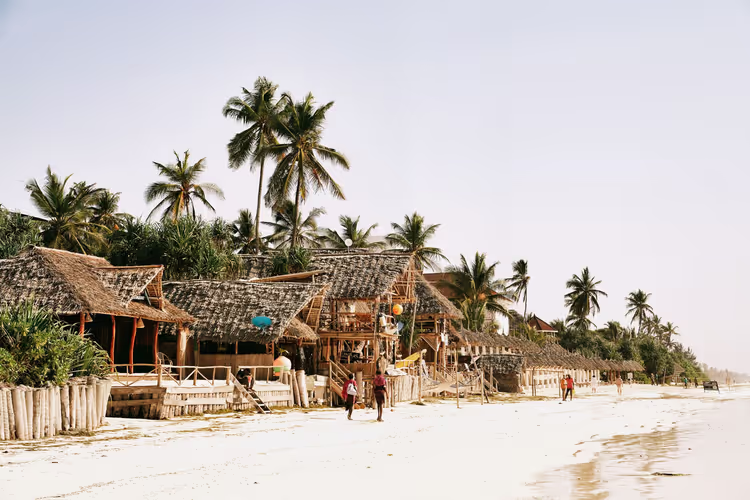
Tides in Zanzibar change your plans more than the weather does. In the north of the island the water is deep right at the shore, and you can swim at any hour. On the east coast, at low tide the ocean recedes for hundreds of meters, exposing the reef flat.
This roundup covers 17 beaches across the archipelago: the resort north, the wild east, the western lagoons, and the urban shores of Stone Town. For each one we noted who it suits, how to get there, and what honestly gets in the way of relaxing.
How to pick a beach for your tide
💡 In short:
- The north of the island (Nungwi and Kendwa) keeps its depth at any tide, while the east lives by the water schedule.
- On the east coast, low tide exposes the reef: you walk out to it, but near the shore you can see fish and coral.
- The south is quieter and cheaper, and in the west near Mangapwani there are expensive hotels. The infrastructure there is concentrated inside the hotels rather than on the street.
The table helps narrow the choice down to two or three shores. If you are going to swim, look north. If you want reef, wind, and quiet, go east. Below we break down each beach separately: how it differs from its neighbors and what is worth considering in advance.
Beach | Coast | Water and bottom | Who it's for |
|---|---|---|---|
Nungwi | north | depth at the shore at any tide | families, sunset lovers |
Kendwa | northwest | depth at the shore, wide beach | couples, relaxed vacation |
Paje | southeast | shallow water, steady wind | kitesurfers, families with kids |
Matemwe | east | strong low tides, reef opposite | snorkeling, quiet |
Kigomani | east | low tide and reef close to shore | romantic getaway |
Mnemba | east | atoll, quick access to depth | diving, snorkeling |
Pwani Mchangani | east | low tides, seaweed near shore | lazy vacation |
Kiwengwa | east | low tides, many hotels | beach vacation with comfort |
Pongwe | east | rocks and seaweed on the bottom | quiet, mid-range hotels |
Michamvi | east | large bay, seaweed in winter | budget, water excursions |
Jambiani | southeast | reef far from shore, sea urchins near the water | snorkeling, affordable tours |
Makunduchi | south | strong low tides, cleaner than its neighbors | budget, quiet |
Kizimkazi | south | rocks, dolphins | dolphin tours |
Zanzibar Town beach | town | mild low tides, gentle entry | city vacation |
Stone Town beach | town | short strip, port nearby | city sightseeing |
Bububu | west | mild low tides, mangroves | seclusion near the city |
Mangapwani | west | clean strip, expensive hotels | premium vacation |
1. Nungwi
 © Kamusiyakitaa · CC BY-SAPhoto: Kamusiyakitaa, CC BY-SA (https://creativecommons.org/licenses/by-sa/4.0), Wikimedia Commons
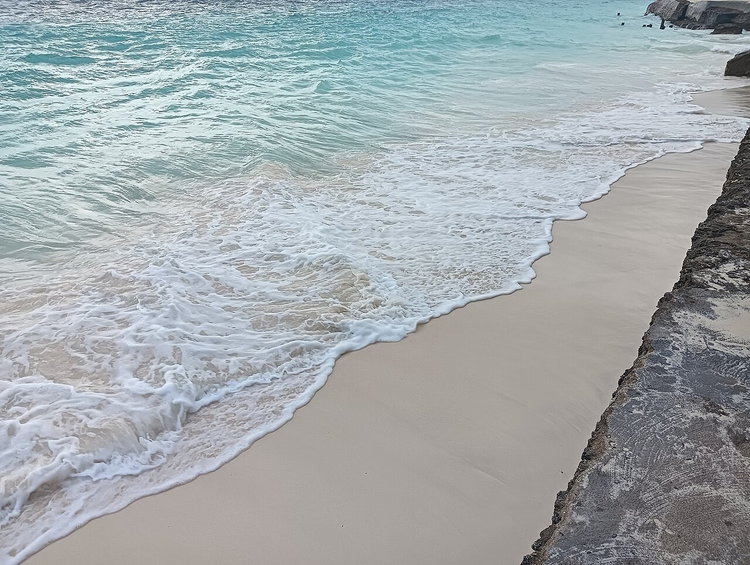
Nungwi occupies the northern tip of the island, and that is its main advantage. The bottom drops off almost right at the shore, so the depth remains both at high tide and at low tide (according to Zanzibar Insider, 09/2026). The sand strip stretches for about 2 km, and entering the water is free of rocks and seaweed.
The village sits right behind the shore: hotels from hostels to expensive resorts, restaurants, dive schools, and shops are all within walking distance. The shore is roughly divided into three parts. The southern part is quieter and better suited for a relaxed vacation, the central part is busier because of the shops and dive schools, and the northern part leads straight into the village. It is convenient with kids: the strip is wide, trees provide shade, and there are plenty of loungers.
- Who it's for: families with kids and those who want to swim at any time of day.
- Not for: those looking for complete seclusion; the center is always lively.
- How to get there: about an hour by car from Stone Town, roughly the same from the airport (per the map).
- The catch: the central part of the beach is noisy; in the evening there are lots of people and vendors.
2. Kendwa
 © Zoheb · CC BY-SAPhoto: Zoheb, CC BY-SA (https://creativecommons.org/licenses/by-sa/3.0), Wikimedia Commons
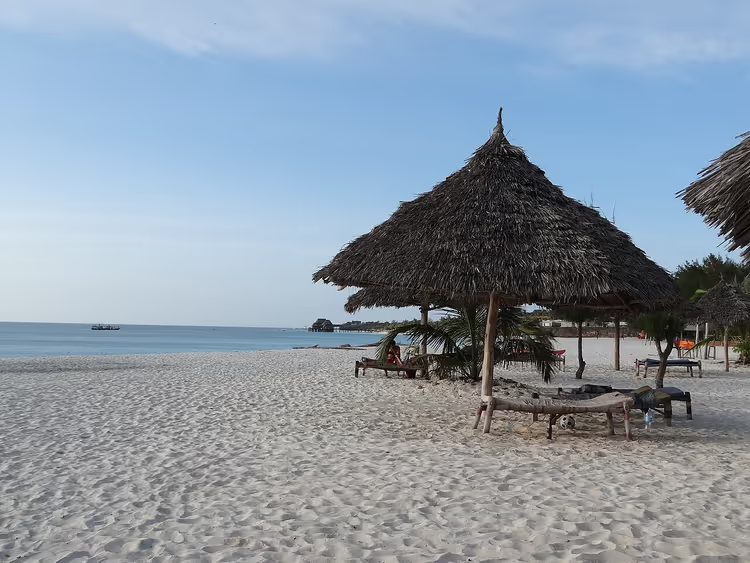
Kendwa lies 2 km south of Nungwi, on the northwestern tip of the island (per the map). Swimming conditions are similar: the bottom drops into depth at the shore, there is water at any tide, and sunsets fall straight into the ocean (according to Zanzibar Insider, 09/2026). The beach here is wider and less crowded than in Nungwi.
Over two decades, a resort area that locals call "millionaires' beach" grew up on the site of a single guesthouse. Large hotels are built here, golf courses are maintained, and expensive cuisine is served. Budget bungalows remain too, and there is bicycle rental and water transport. In the evening the shore turns into a stage for sunset photos, so you will meet many couples here.
- Who it's for: couples and those who value a wide beach and calm water.
- How to get there: 2 km from Nungwi, about 25 minutes on foot or 5 minutes by car (per the map).
- The catch: accommodation is more expensive than on the east coast: the area is geared toward the high-end segment.
3. Paje
 © Cécile Furet · CC BY-SAPhoto: Cécile Furet, CC BY-SA (https://creativecommons.org/licenses/by-sa/4.0), Wikimedia Commons
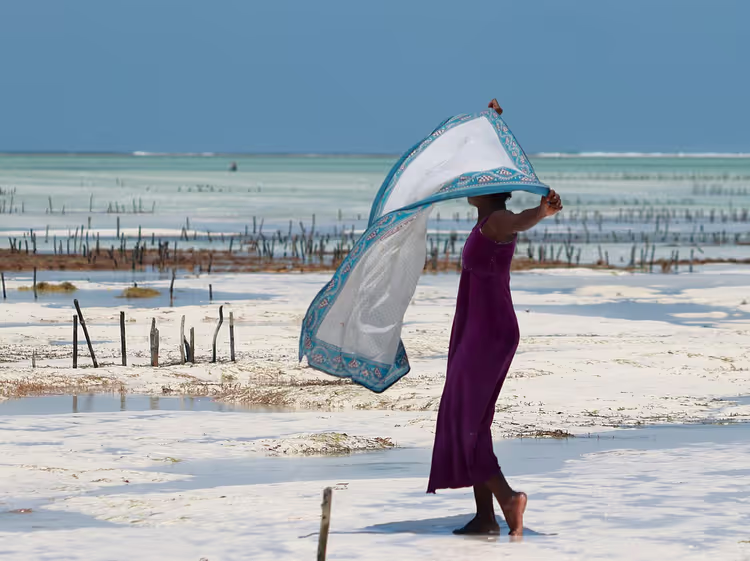
Paje is located in the southeast of the island and is considered the kitesurfing capital. The water near the shore is very shallow: knee-deep for hundreds of meters even at high tide, so small kids can swim safely. Kite lovers get steady wind and a wide sandy strip with no obstacles.
At low tide the flats are exposed, and you have to walk to reach depth. The infrastructure grew up around kite schools: cafes, equipment rental, guesthouses, and hotels a step from the water. There is a lot of sand, it is fine, and in places it is strewn with shells. Paje suits those who are ready to adapt to the water rather than wait for it from a lounger.
- Who it's for: kitesurfers, families with kids, budget travelers.
- How to get there: southeast coast, about an hour by car from Stone Town (per the map).
- The catch: shallow water: to actually swim, wait for high tide.
4. Matemwe
 © Mangapwani · CC BY-SAPhoto: Mangapwani, CC BY-SA (https://creativecommons.org/licenses/by-sa/4.0), Wikimedia Commons
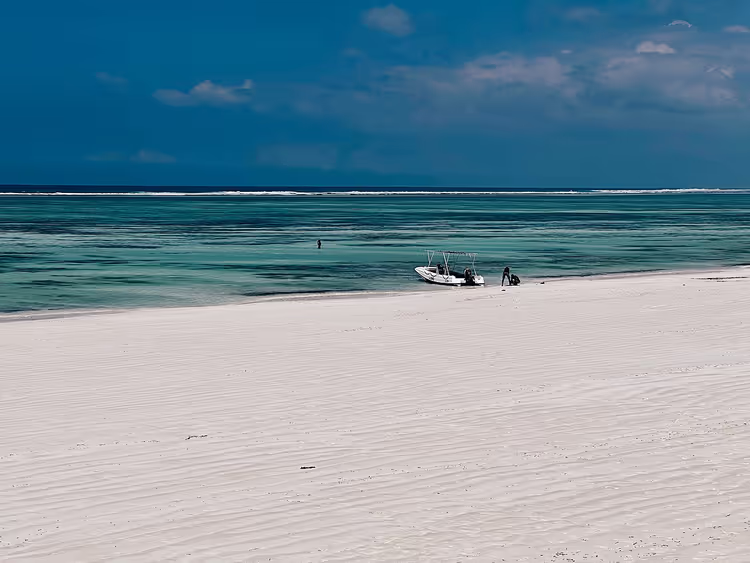
Matemwe is chosen for seclusion. Hotels line a wide strip of sand, and between them there is almost no commerce or entertainment. The area's main feature is its strong low tides: the water recedes very far, exposing a flat where locals harvest octopus. At high tide swimming is comfortable; at low tide you walk on the ocean floor.
The flip side of this geography is also noticeable. On many stretches, seaweed lies near the shore and sea urchins are common; cleaner water is more often found at hotels with pools. For parents with small kids this is a drawback; for those who want quiet and reef, it is a plus. Opposite Matemwe lies Mnemba Atoll, which is why people come here for snorkeling and diving.
- Who it's for: quiet vacation and snorkeling at the reef.
- Not for: those who want to swim at any time of day.
- The catch: seaweed and sea urchins near the shore, so a pool at the hotel is almost essential.
5. Kigomani
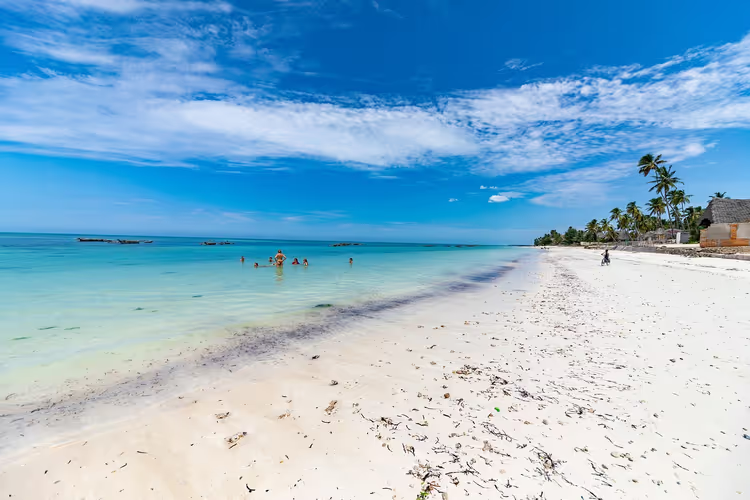
Kigomani sits north of Matemwe and looks almost untouched. Bungalows, umbrellas with palm-leaf roofs, and long fishing boats on the shore create a sense of primeval simplicity. The tourist infrastructure here is only just taking shape: apart from a few expensive resorts and budget guesthouses, there is almost nothing to do.
For calm swimming, choose morning and evening. At high tide the water comes up to the shore, the strip of soft sand is almost free of rocks, and seaweed appears only occasionally in the water. At low tide many people walk out to the barrier coral reef, which is about 700 m from the shore (on the map). This is a place to stay for those who want an unhurried rhythm without noisy bars.
- Who it's for: romantic getaways and first steps in snorkeling.
- How to get there: east coast, north of Matemwe (on the map).
- The catch: few hotels and almost no cafes outside the guesthouses.
6. Mnemba
 © Jorge Láscar from Melbourne, Australia · CC BY-SAPhoto: Jorge Láscar from Melbourne, Australia, CC BY-SA (https://creativecommons.org/licenses/by-sa/2.0), Wikimedia Commons
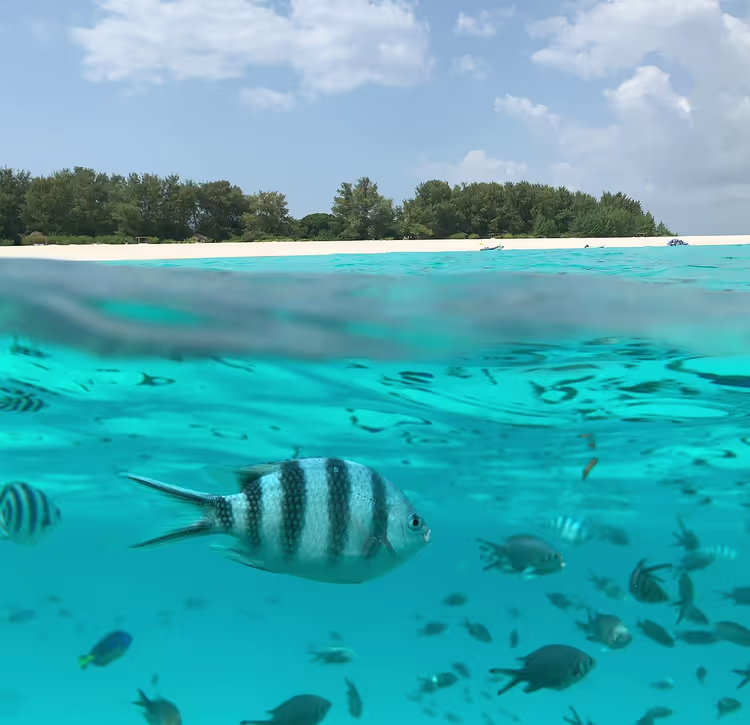
Mnemba is known for the atoll just offshore and is considered one of the best spots for diving and snorkeling on the island. The water is clear, the corals are in good condition, there are plenty of fish, and the quick drop-off into deeper water makes swimming convenient. There are no sea urchins near the shore, which is rare for the east coast.
The rules here are stricter than on ordinary beaches. Entry to the marine conservation area is paid: from September 1, 2025, for guests from outside East Africa it is $10 per adult and $5 per child, while in the Mnemba zone fees reach up to $25 (as of 09/2026, source). Snorkeling and diving for visitors are usually limited to morning hours, so diving enthusiasts stay in the local hotels.
- Who it's for: divers and snorkelers willing to pay the fee.
- How to get there: east coast, opposite the atoll, by boat from Matemwe or Kigomani.
- The catch: paid entry to the conservation area and a morning window for diving.
7. Pwani Mchangani
 © Paul Brockmeyer from Chicago, USA · CC BYPhoto: Paul Brockmeyer from Chicago, USA, CC BY (https://creativecommons.org/licenses/by/2.0), Wikimedia Commons
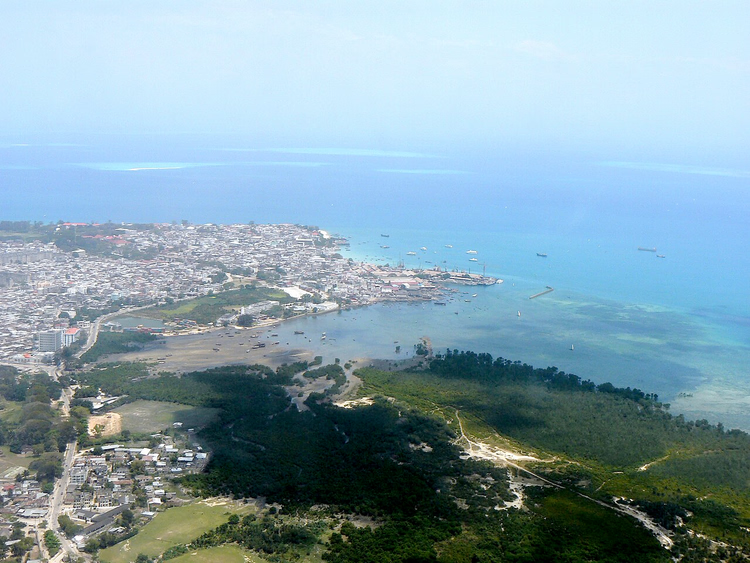
Pwani Mchangani sits right next to Mnemba: it's a village and a beach with the same white sand. At high tide, piles of seaweed remain on the shore, which locals collect for their own needs, so the beach looks less tidy than its neighbors. Swimming here also depends on the water cycles.
A separate reason to come is the wooden dhow fishing boats with sails. In the morning they head out into the ocean, and it's fascinating to watch. At low tide you walk out to the reef, about 1.5 km from shore (on the map), and observe fish, starfish, and sea urchins in a natural aquarium.
Accommodation falls into two groups: expensive all-inclusive hotels for Europeans and budget guesthouses with bungalows. There are almost no cafes or shops, only souvenir stalls, so it's better to book meals together with your room.
- Who it's for: unhurried relaxation and watching fishing life.
- The catch: seaweed near the shore at high tide and no cafes outside hotels.
8. Kiwengwa
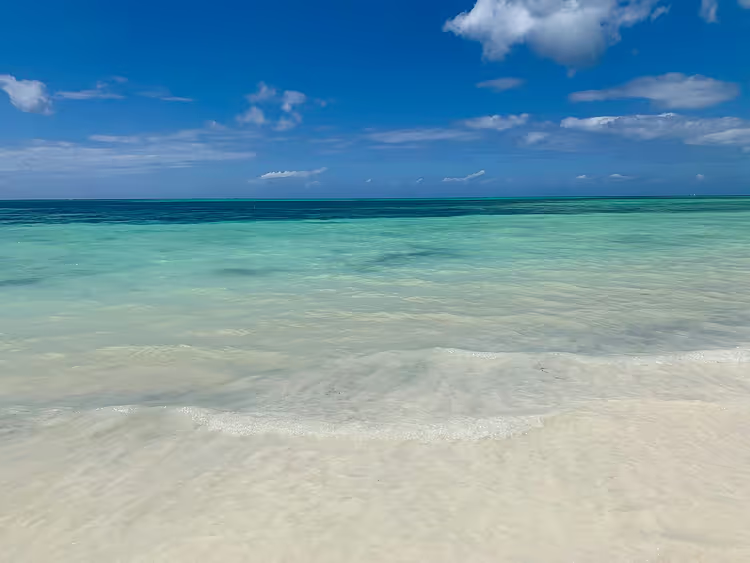 © AliceMartinelli8 · CC BY-SAPhoto: AliceMartinelli8, CC BY-SA (https://creativecommons.org/licenses/by-sa/4.0), Wikimedia Commons
Kiwengwa stretches along the east coast and is considered one of the island's most beautiful beaches. The white strip, turquoise water, and tall palms attract couples and honeymooners, and on weekends people come here from the city. Many hotels have opened here in recent years, and the beach has become popular with European tourists, especially Italians.
The African character hasn't gone anywhere: hammocks hang from trees, wooden boats sit by the shore, locals walk around in bright clothing. Along the beachfront there are souvenir stalls, water sports centers, and solid wooden loungers. In season it's crowded here, but everything you need is right next to your hotel.
- Who it's for: beach relaxation with comfort and water activities.
- How to get there: east coast, about an hour by car from Stone Town (on the map).
- The catch: because of its popularity, there are many stalls and people on the beach, and little privacy.
9. Pongwe
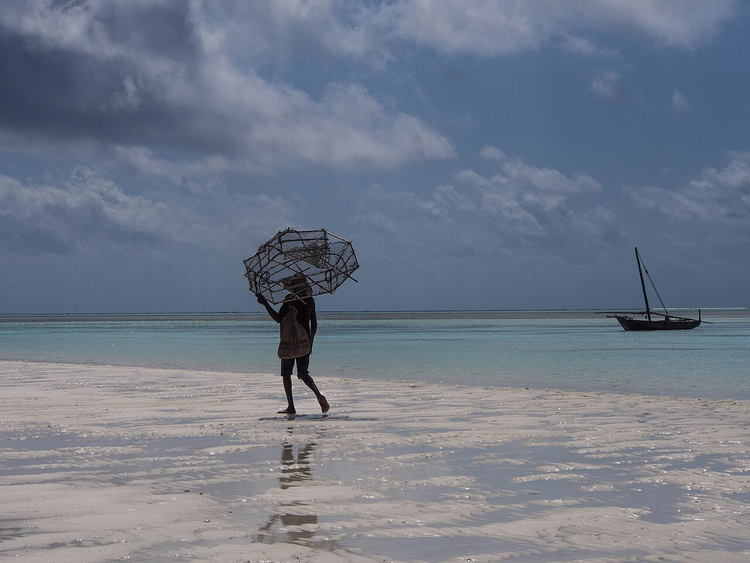 © Georgie Pauwels · CC BYPhoto: Georgie Pauwels, CC BY (https://creativecommons.org/licenses/by/2.0), Wikimedia Commons
Pongwe hides in a small bay in the central part of the east coast. A wide, clean strip of sand is framed by tall palms and flowering shrubs, with rows of loungers under mushroom-shaped umbrellas. It's about 35 km from the airport (on the map), but there's no crowding: people come here for peace, not for parties.
The emptiness is easy to explain: the low tide is strong, and the bottom has rocks and seaweed. But along the bay there are about a dozen hotels that aren't packed to capacity, with bungalows and villas in African style. Island tours are organized right at the hotels, so you won't need a car.
- Who it's for: quiet relaxation and mid-range hotels.
- How to get there: east coast, about 35 km from the airport (on the map).
- The catch: rocks and seaweed on the bottom, comfortable swimming only at high tide.
10. Michamvi
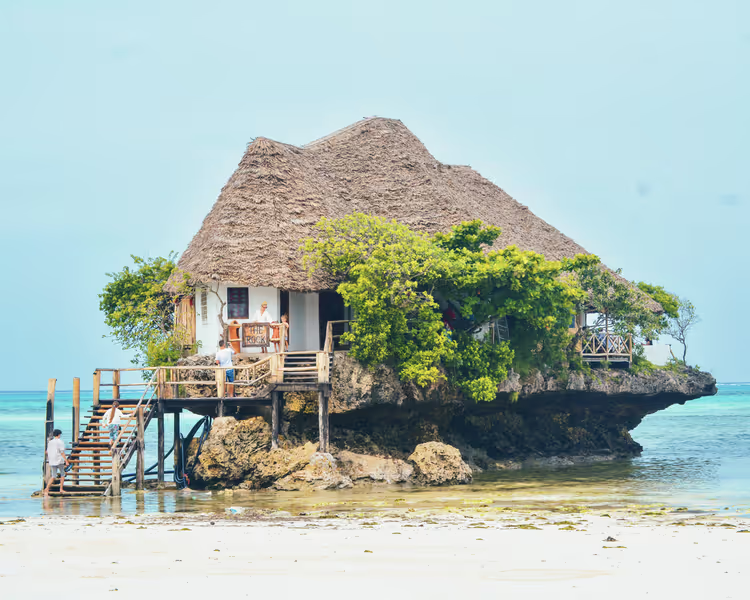 © MASOUD OBI · CC BY-SAPhoto: MASOUD OBI, CC BY-SA (https://creativecommons.org/licenses/by-sa/4.0), Wikimedia Commons
Michamvi occupies the shore of a large bay, about 25 km long (on the map). The village sits right at the water's edge, and paved roads haven't reached it yet, so the area feels rural. The hotels, however, vary: from modest bungalows and campsites to five-star resorts, so accommodation prices among neighbors differ by several times.
Seasonality matters more here than in the north. From November to March, the ocean brings in a lot of seaweed; at low tide it decomposes and makes it hard to enter the water, and the smell of rotting grass drives away some tourists. It's better to plan your trip from April to October. From the hotels you can set off on water excursions and fishing trips.
- Who it's for: budget travel, water excursions, quiet.
- Not for: those who want clear water at any time of year.
- The catch: from November to March there's a lot of seaweed and the smell of rotting grass at low tide.
11. Jambiani
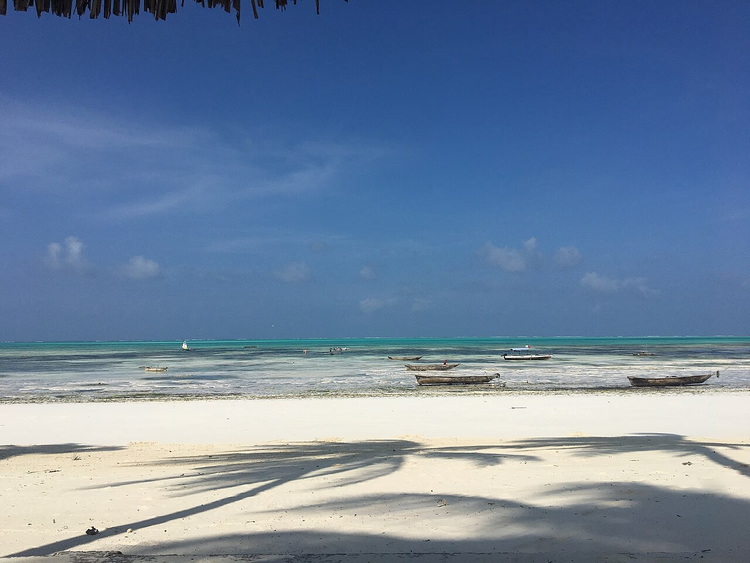 © Jonathan Dalrymple · CC BY-SAPhoto: Jonathan Dalrymple, CC BY-SA (https://creativecommons.org/licenses/by-sa/4.0), Wikimedia Commons
Jambiani is located in the southern part of the east coast. There are almost no waves near the shore: they're blocked by a reef that rises about 2 km from shore (on the map), so the water stays warm even at the very edge. The bottom is sandy, without rocks, but swimming is spoiled by sea urchins and a seaweed farm.
There's no entertainment in the European sense here: no discos, no bars, no restaurant streets. But along the first line there are about 50 hotels of varying levels, and expensive properties clean their stretch of seaweed and urchins. Budget places can't afford that, so the cleanliness of the beach depends on the room price.
A separate plus of the area is inexpensive excursions by water and land: dolphin tours, snorkeling on sailboats, trips to the monkey park.
- Who it's for: affordable beach vacation and island excursions.
- The catch: sea urchins and a seaweed farm near the shore, clean water only at expensive hotels.
12. Makunduchi
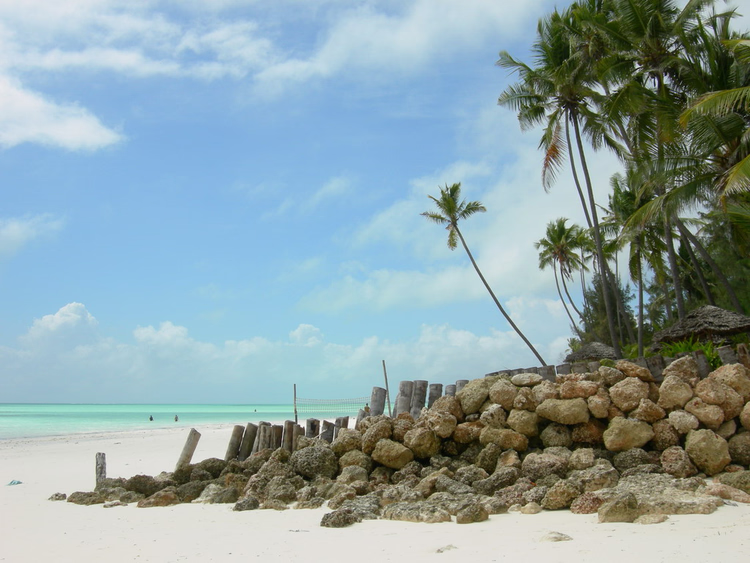 © Oleg · CC BYPhoto: Oleg, CC BY (https://creativecommons.org/licenses/by/2.0), Wikimedia Commons
Makunduchi is right next to Jambiani and resembles its neighbor in many ways: the same wide strip of soft sand and strong low tides. The difference is in the details: noticeably fewer rocks and seaweed, and lush greenery of palms and shrubs surrounds the beach, with hotels tucked among it.
At low tide the ocean recedes almost 2.5 km (on the map), and you can spend a long time exploring the bottom: shells, corals, seaweed. At high tide swimming is pleasant: the water is warm, there's little seaweed, and no sea urchins. There aren't many hotels here, but a suitable option is easy to find, and resort prices are lower than in other parts of the island.
Infrastructure is concentrated in the hotels: they organize excursions and rent out scooters and bicycles. Locals sell fruit from stands in the village and near the shore.
- Who it's for: budget travel, walks on the sandbar, quiet.
- How to get there: southeast of the island, south of Jambiani (on the map).
- The catch: no cafes or shops outside hotels; look for all services on the hotel grounds.
13. Kizimkazi
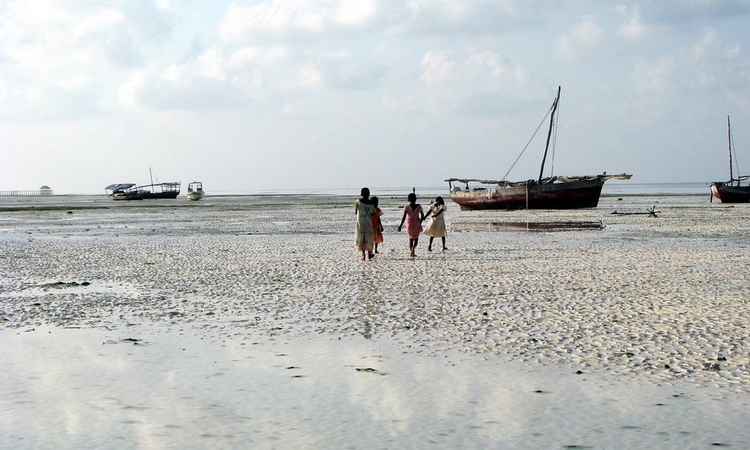 © alistair.pott · CC BY-SAPhoto: alistair.pott, CC BY-SA (https://creativecommons.org/licenses/by-sa/2.0/), Flickr
Kizimkazi borders Makunduchi and looks even more deserted. The low tide here is weaker, but there are rocks near the shore and lots of sea urchins and seaweed in the water. People mostly come here by boat for dolphins: it's right off Kizimkazi that they're seen most often.
The beach has its own circle of fans. At low tide, rocky grottoes are exposed, and tourists take photos against their backdrop. For a comfortable stay, it's better to book an all-inclusive hotel, but there are also budget guesthouses with bungalows. There are almost no shops, just a couple of souvenir stalls, and no cafes or eateries either.
The most unusual accommodation here is a fishing hut you can rent from locals. Excursions to the Miza Miza caves also depart from here.
- Who it's for: dolphin tours, snorkeling, unusual accommodation.
- How to get there: south of the island, south of Makunduchi (on the map).
- The catch: rocks, urchins, and seaweed near the shore, almost no infrastructure.
14. Zanzibar Town beach
In the island's capital, Zanzibar Town, there's a long strip of white sand, about 5 km (on the map). The entry into the water is gentle, there are no rocks or seaweed, and the low tides are weaker than on the east coast, so swimming is convenient. The Mazizini area, where the beach is located, is heavily landscaped and considered prestigious.
Don't expect pristine cleanliness here. The city is densely populated, locals come to the shore with their families, fishing boats sit by the water, and larger vessels sway at anchor further out. You won't get a secluded lie-down on a lounger, but the sea is two steps from your hotel.
There are plenty of hotels: from expensive resorts to cheap hostels. Popular activities include boat and speedboat trips, snorkeling, and fishing.
- Who it's for: a first stop in the city and a short beach break.
- Not for: those looking for quiet and an empty shore.
- The catch: lots of people and boats, the beach is more urban than resort-like.
15. Stone Town beach
 © Regiteric · CC BY-SAPhoto: Regiteric, CC BY-SA (https://creativecommons.org/licenses/by-sa/3.0), Wikimedia Commons
Stone Town, which locals call the ancient stone city, welcomes tourists year-round. Here you walk along narrow streets, look at old buildings, and stop in colorful restaurants and souvenir shops. The beach is short, with a wide strip of yellowish sand and no rocks.
There are almost no low tides or seaweed, so you can swim throughout the day. For a long stay, the conditions are still not the best: the port is nearby, and passenger and cargo ships dock at the piers. The first line is occupied by expensive hotels, while further from the shore there are inexpensive guesthouses at budget prices.
Many hotels occupy colonial buildings, which is a distinctive feature of the area. The cheap guesthouses have no luxury, but they are clean and cozy, and you can walk to the main attractions.
- Who it's for: tours of the historic center and short stops.
- The catch: the port is nearby: ship noise and views of the piers.
16. Bububu
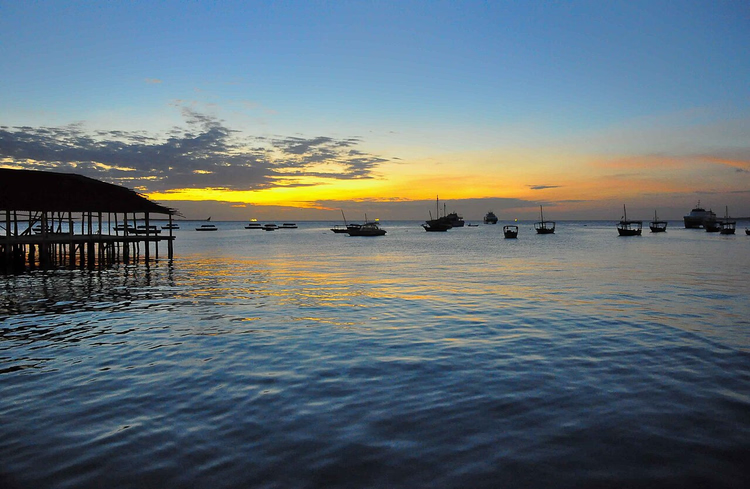 © Rod Waddington from Kergunyah, Australia · CC BY-SAPhoto: Rod Waddington from Kergunyah, Australia, CC BY-SA (https://creativecommons.org/licenses/by-sa/2.0), Wikimedia Commons
Bububu lies on the west coast, about 15 km from Stone Town (on the map). The landscape here is different: lagoons, calm turquoise water, white sand, and mangrove thickets. Tides are weak, so you can swim almost all day. The bottom is perfect in some spots and rocky in others, and some trees hang over the water like canopies, providing shade.
There are few hotels on the first line, and rooms are available even in high season, so it is uncrowded here. Farming villages where livestock is raised are nearby, and the Cheetahs Rock interactive zoo is not far away. The scenic bottom attracts snorkeling enthusiasts.
- Who it's for: seclusion near the city and snorkeling.
- How to get there: about 15 km from Stone Town (on the map).
- The catch: the bottom is rocky in places, so choose a swimming spot near your hotel.
17. Mangapwani
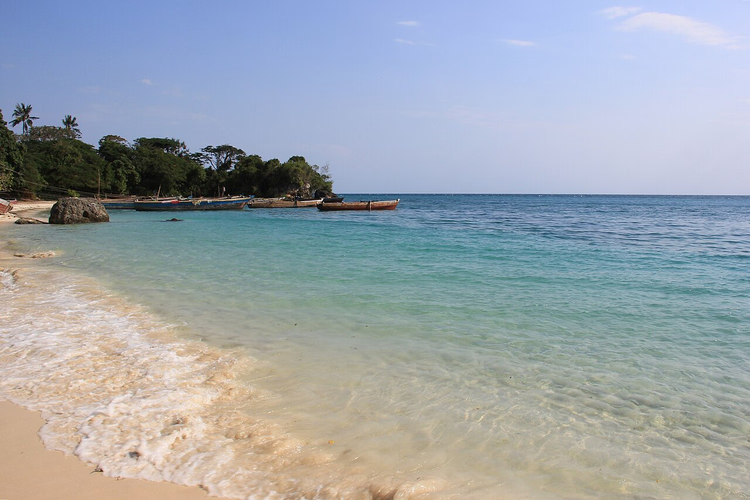 © Laika ac from USA · CC BY-SAPhoto: Laika ac from USA, CC BY-SA (https://creativecommons.org/licenses/by-sa/2.0), Wikimedia Commons
Mangapwani is considered the best beach on the west coast. There is no seaweed on the white sand, the strip looks clean, and the umbrellas and loungers here are more refined than those of its neighbors. The beach is uncrowded and the atmosphere is peaceful, which is the main reason people come here.
The second reason to visit is two cave grottoes linked to the slave trade era. One, formed by nature, contains a deep lake. The second was dug by captives: inside there is a wooden platform that divides the space into two levels, where people lived in inhumane conditions. The Mangapwani caves are a reminder of a shameful page of history and are popular with tourists.
The area is built up with expensive hotels and entertainment infrastructure, so a budget traveler will not be comfortable here.
- Who it's for: peaceful relaxation, history, and premium hotels.
- How to get there: west coast, north of Stone Town (on the map).
- The catch: accommodation is expensive, and there are almost no budget options near the beach.
Zanzibar beaches on the map
All 17 beaches are easy to compare by location. Northern Nungwi and Kendwa stand apart, the east coast stretches from Matemwe to Jambiani, and western Bububu and Mangapwani are closer to Stone Town. Mark two or three shores on the map that you can realistically move between in one trip.
Beaches of Zanzibar
Places on the map
- 1Nungwi Deep water close to shore at any tide, roughly 2 km of sand
- 2Kendwa Wide free public beach south of Nungwi, the "millionaires' beach"
- 3Paje Kitesurfing capital, shallows stretching for hundreds of metres
- 4Matemwe Secluded, with strong low tides, facing Mnemba Atoll
- 5Kigomani Almost undeveloped beach north of Matemwe, reef 700 m out
- 6Mnemba Diving and snorkelling atoll, paid entry to the protected area
- 7Pwani Mchangani Village and beach next to Mnemba, traditional dhow fishing boats
- 8Kiwengwa White sand strip and turquoise water, one of the most beautiful beaches
- 9Pongwe Quiet bay with about a dozen hotels, strong low tide and rocks on the seabed
- 10Michamvi Shore of a large bay about 25 km long, a village atmosphere
- 11Jambiani Reef breaks the waves, about 50 hotels on the beachfront
- 12Makunduchi Wide sand strip next to Jambiani, low tide reaches out to 2.5 km
- 13Kizimkazi Cliffs and grottoes, boat tours to see dolphins
- 14Zanzibar Town Beach City beach about 5 km long in the prestigious Mazizini district
- 15Stone Town Beach Short beach by the port, next to the historic centre
- 16Bububu Lagoons and mangroves west of Stone Town, few visitors
- 17Mangapwani The best beach in the west, with caves from the slave-trade era
⁉️🤔 Frequently asked questions
Where in Zanzibar can you swim at any tide?
In the north of the island, in Nungwi and Kendwa: the bottom drops off almost at the shore, so there is depth both at high tide and at low tide (according to Zanzibar Insider, 09/2026). On the east coast, at low tide the water recedes hundreds of meters, and you can only swim at high tide.
How do you get from Stone Town to the beaches?
From Stone Town, dala-dala buses and taxis go north and east. The drive to Nungwi and Kendwa takes over an hour. A rental car gives you freedom: in one day you can see two shores. There are few hotels along the road, so plan your transfer in advance.
When is the best time to go to avoid seaweed?
On the east coast, there is more seaweed from November to March, and during this time the beaches of Michamvi and Matemwe look untidy. From April to October the strip is cleaner and the water is clearer. The north of the island is almost unaffected by seasonal seaweed, so Nungwi and Kendwa work year-round.
How much does snorkeling near Mnemba cost?
From September 1, 2025, entry to Zanzibar's marine protected areas for guests from outside East Africa costs $10 per adult and $5 per child, and in the Mnemba zone fees reach $25 (as of 09/2026, protected area tariffs). The fee is paid for each trip and is usually not included in the tour price.
What to choose: north or east?
Choose the north if you want to swim every day and watch sunsets over the ocean. The east suits kitesurfers and those willing to work around the tide for the sake of reefs and quiet. The south works for budget travel, and in the west near Mangapwani accommodation is expensive. Infrastructure in both areas is concentrated in hotels rather than on the streets.
In short: which beach to choose
Zanzibar beaches are divided not by beauty but by tide. If deep water right by your lounger matters to you, choose Nungwi or Kendwa. For reefs and snorkeling, head to Matemwe, Mnemba, or Pongwe, but keep the water schedule in mind. Kitesurfers and budget travelers choose Paje and Jambiani. For quiet, people go to Kigomani, Kizimkazi, and Bububu. The city beaches of Stone Town and Zanzibar Town are convenient for a day or two, not for two weeks.
- Want to swim every day: Nungwi or Kendwa.
- Going for kitesurfing: Paje.
- Need reefs and snorkeling: Matemwe, Mnemba, Pongwe.
- Looking for quiet and low prices: Kigomani, Kizimkazi, Makunduchi.
- Staying in Stone Town and want the sea nearby: Zanzibar Town beach.
Book accommodation on your chosen shore in advance: in high season, hotels in the north and in Paje are the first to sell out, and available rooms remain only away from the first line.

A small editorial team writing guides for independent travel. We travel ourselves, but we haven’t been everywhere, so we check prices, opening hours and how to get there against official sources.