
















 AIIllustrative image: AI-generated
Koh Samui beaches: 28 shores where to swim and where to just walk
Samui can be circled by bike in a couple of hours, but choosing a beach here takes a week.
The island is the third largest in Thailand, with more than eighty islands around it, and some of them are part of the Ang Thong Marine Park (according to the Tourism Authority of Thailand). Along the coast, noisy Chaweng sits next to almost empty Na Hai, family lagoons next to stretches where swimming is not allowed.
Below are twenty-eight Samui beaches with photos, access landmarks, and honest catches. You will understand which shore fits your pace and which one is worth skipping.
1. Chaweng
💡 In short:
- Samui is easy to circle by bike on the ring road in a day and pick two or three beaches to match your pace.
- Eastern beaches (Chaweng, Lamai) are noisy and crowded, western and southern ones (Lipa Noi, Na Hai) are quiet.
- Beach access and infrastructure: 09/2026, according to the official tourism portal of Thailand
 © Vyacheslav Argenberg · CC BYPhoto: Vyacheslav Argenberg, CC BY (https://creativecommons.org/licenses/by/4.0), Wikimedia Commons
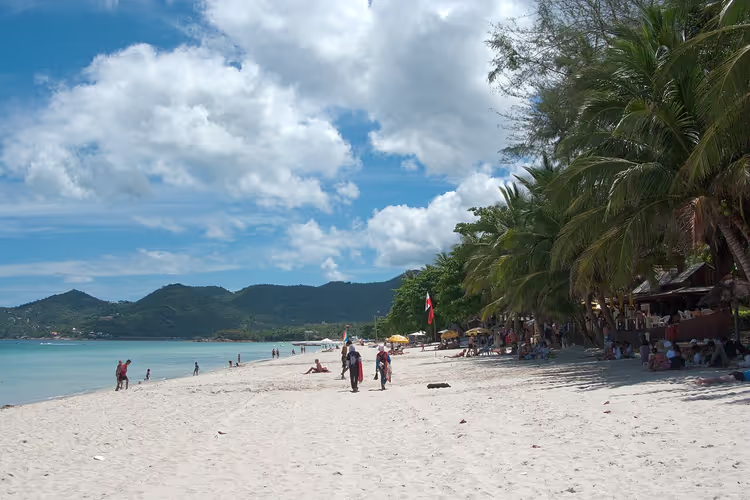
Chaweng remains the longest and noisiest beach on the island. It lies on the east coast, and bars, shops, and clubs line it. The sea here more often has waves than a flat surface, but the bottom is sandy, with no rocks.
Parties go on until dawn, and the young crowd wakes up around lunchtime. That is why in the morning you easily find a free lounger at a bar. For calm swimming, head to the southern part: breakwaters stand there, and the water stays calmer.
There is accommodation for every budget, but in high season a cheap room right by the water is hard to find. Vendors approach often, but they are less pushy than in Pattaya.
- Who it's for: for those who want bars, clubs, and everything within steps of the hotel.
- Not for: quiet relaxation and families with small children.
- The catch: waves and noise, and budget accommodation near the shore is hard to find.
2. Lamai
 © Fabio Achilli from Milano, Italy · CC BYPhoto: Fabio Achilli from Milano, Italy, CC BY (https://creativecommons.org/licenses/by/2.0), Wikimedia Commons
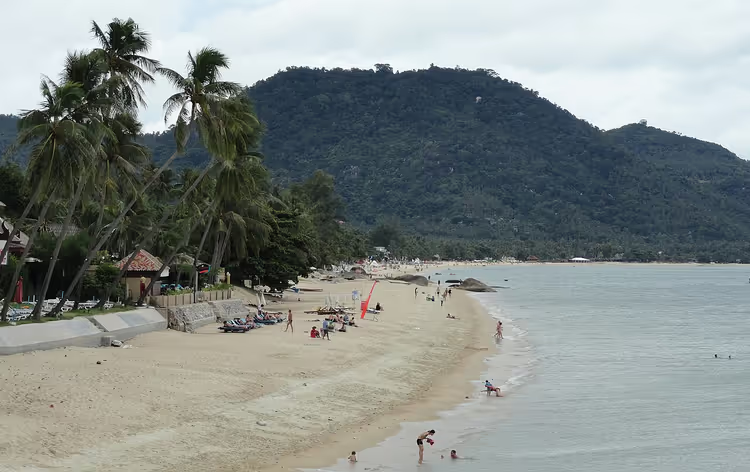
Lamai is only slightly behind Chaweng in popularity. It is easier to rent inexpensive accommodation here: a bungalow a few minutes' walk from the water costs noticeably less than in central Chaweng. Expensive hotels exist too, so any budget can find an option.
The sea at Lamai varies along its length. In the north, strong low tides: in places the water recedes so far that wet sand, seaweed, and silt remain underfoot. The southern part offers a view of the Grandmother and Grandfather rocks (Hin Ta and Hin Yai). The water gets deep right at the shore, so it is inconvenient with small children here. There are no breakwaters, and the water is almost always rough.
The central part is the busiest. Buy a drink at a bar and take a lounger or a spot in the shade under a palm tree.
The food scene at Lamai has become a separate reason to come. Those in the know recommend the Salatai restaurant: good dishes, a pleasant atmosphere, and a mid-range price.
- Who it's for: for those who want to live near the action but sleep more peacefully.
- Not for: families with small children, because the water gets deep right at the shore.
- The catch: low tides in the north and rough water almost all season.
3. Taling Ngam
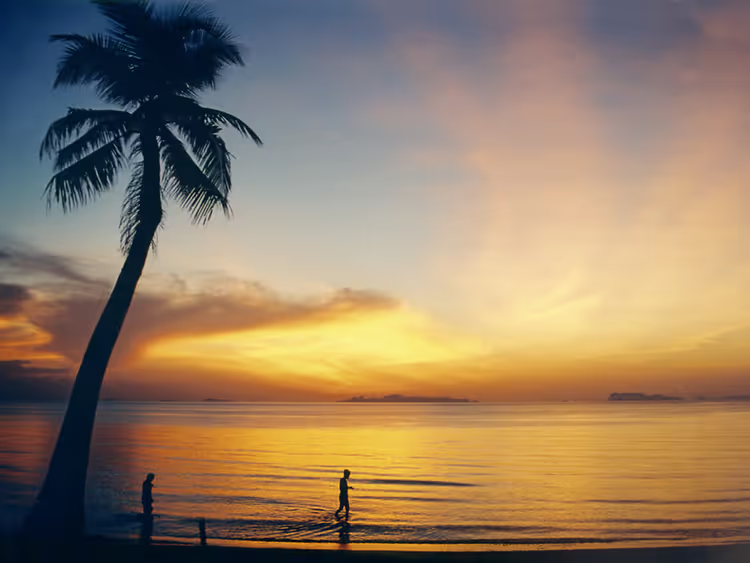
Taling Ngam suits those looking for quiet and romance. White sand and palms over the water stretch for about three hundred meters (according to the map). The sea is shallow, so swimming is comfortable even with children, and there are few visitors.
 © Manfred Werner · CC BY-SAPhoto: Manfred Werner, CC BY-SA (http://creativecommons.org/licenses/by-sa/3.0/), Wikimedia Commons
Bars close early, and there is almost no infrastructure. But the InterContinental hotel offers one of the best sunset views. If you want variety, rent a boat and go fishing or take a trip along the coast.
You get a rare combination: quiet and water without waves. For Samui, that is uncommon.
- Who it's for: for couples who value quiet and sunsets.
- Not for: those who need bars and nightlife.
- The catch: cafes close early and there is almost no infrastructure.
4. Lipa Noi
Lipa Noi lies on the west coast and suits seclusion. Waves are rare and the water is clear, so families with children love to relax here. At sunset you watch couples exchange rings and make vows.
A port operates at Lipa Noi: you can reach the mainland in just over an hour. Bars and cafes close early, and there are no clubs. The Nikki Beach hotel covers the need for music for the young crowd. The nearest supermarket is a half-hour drive away, so there is no developed infrastructure here.
People choose this beach for quiet, not for conveniences. You come here for the water and the sunsets.
- Who it's for: for couples and families who need peace and clear water.
- Not for: partygoers and shopping lovers.
- The catch: the supermarket and bars are far away, and there is almost nothing to do in the evening.
5. Bang Po
 © Roma Neus · CC BYPhoto: Roma Neus, CC BY (https://creativecommons.org/licenses/by/3.0), Wikimedia Commons
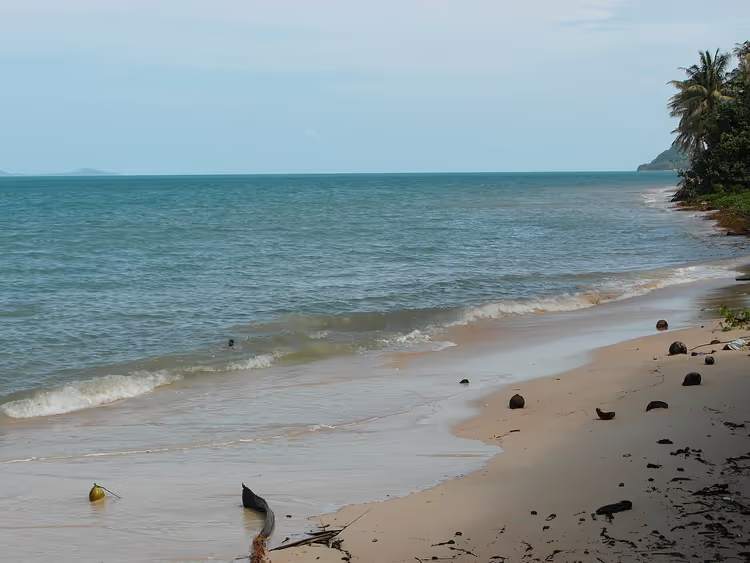
Bang Po in the north promises clear water and soft sand. The entry into the sea is gradual, so it is calm here with children. Along the ring road there is little space: in some stretches only a single cafe or hotel fits.
Accommodation prices span a wide range, from budget bungalows to villas. The main plus is that hotels, villas, and bungalows stand close to the water. There are no nightlife spots or shops, and the nearest grocery store is more than a kilometer away.
You come here for the water and peace. If you need cafes and clubs, pick another shore.
- Who it's for: for those who want to live by the water without overpaying.
- Not for: nightlife and shopping lovers.
- The catch: shops are more than a kilometer away, and there is almost no entertainment.
6. Bo Phut
 © Koudkeu · CC BY-SAPhoto: Koudkeu, CC BY-SA (https://creativecommons.org/licenses/by-sa/4.0), Wikimedia Commons
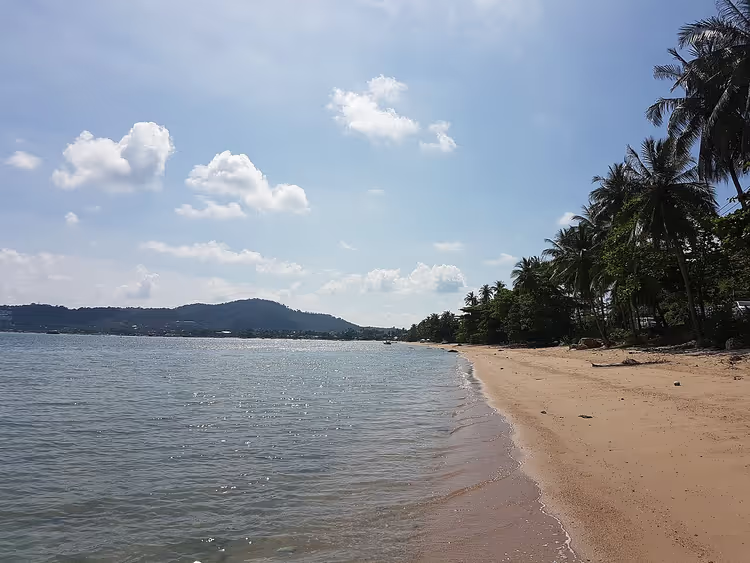
Bo Phut attracts visitors with its coarse sand and wide shoreline. The infrastructure here is well developed, but the seabed is silty, the water is murky, and the entry is steep in places. Swimming in this kind of water is uncomfortable for toddlers.
Vendors won't let you get bored, and some of them come right up on boats. At the same time, they don't push their goods on you.
Make sure to stop by Fisherman's Village: it has cafes, small restaurants, and souvenir shops. A Big C supermarket is nearby.
- Who it's for: those who value cafes, shops, and a lively atmosphere.
- Not for: families with toddlers, because the water is murky and the entry is steep.
- The catch: murky water and a steep entry into the sea.
7. Mae Nam
 © Elmschrat · CC BY-SAPhoto: Elmschrat, CC BY-SA (https://creativecommons.org/licenses/by-sa/4.0), Wikimedia Commons
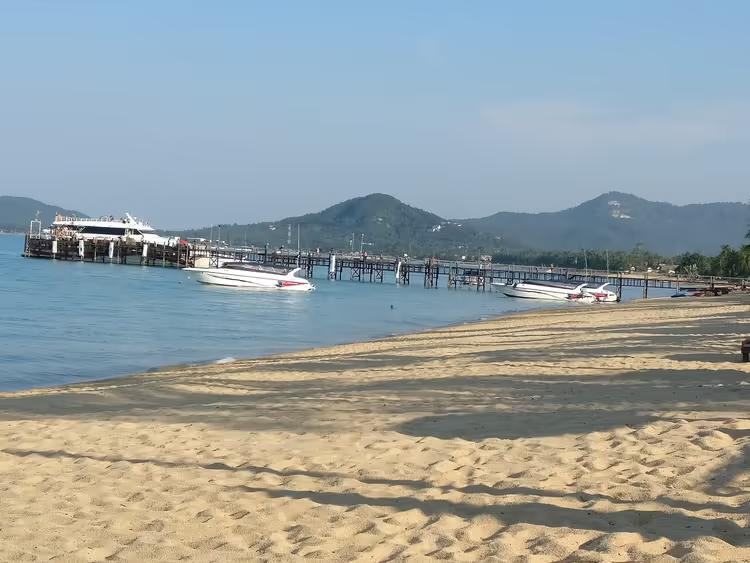
Mae Nam in the northwest is chosen by those who spend the winter on the island. The shore stretches for about five kilometers (on the map). The seabed is silty, but the entry is gradual, which is a plus.
The infrastructure is well developed: inexpensive guesthouses and pricey hotels, massage parlors, 7-Eleven and Family Mart stores, and plenty of bars and restaurants. You won't go hungry. For variety, take dance lessons, which are offered for both adults and children.
- Who it's for: winter stays, families, and those who want shops nearby.
- Not for: those looking for clear water and an empty beach.
- The catch: the water is murky because of the silty seabed.
8. Choeng Mon
 © Unknown author · CC BYPhoto: Unknown author, CC BY (https://creativecommons.org/licenses/by/1.0), Wikimedia Commons
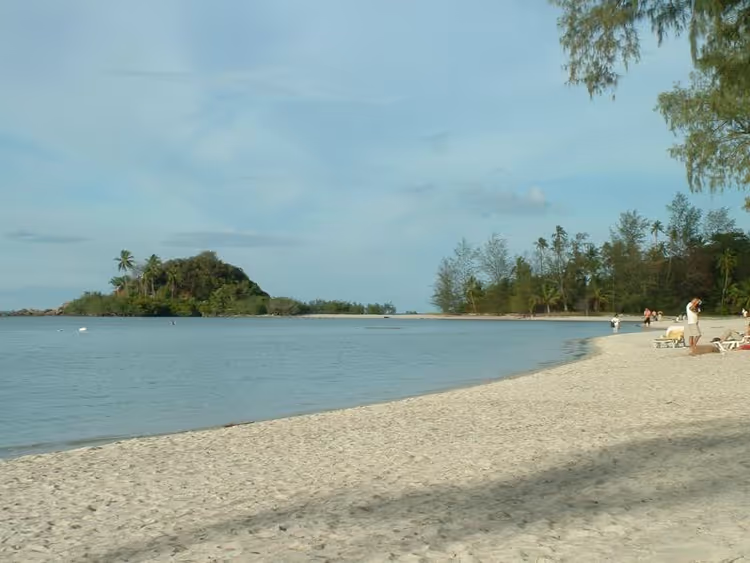
Choeng Mon lies away from the ring road. Fine white sand, clear water, and a gradual entry make it one of the best spots for a vacation with children. Waves do occur, but rarely.
The area is considered upscale, so plan your budget in advance. Budget hotels can be found, but you'll have to look for them farther from the water. There are no large supermarkets. Loungers belong to the bars, and using them requires buying a drink.
- Who it's for: families with children, because of the clean sand and gradual entry.
- Not for: those who want a shop around the corner and a cheaper hotel.
- The catch: an upscale area, higher prices, and no large supermarkets.
9. Tongsai
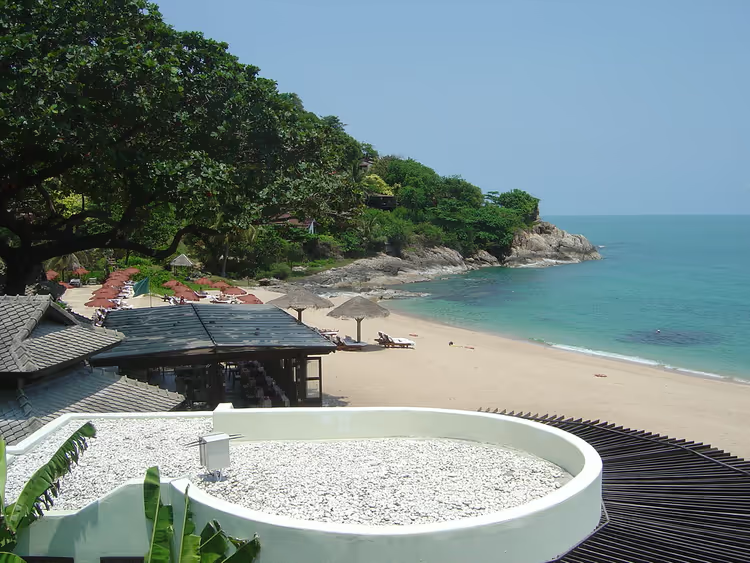 © Tips For Travellers · CC BYPhoto: Tips For Travellers, CC BY (https://creativecommons.org/licenses/by/2.0/), Flickr
Tongsai is tucked away in a small bay to the left of Choeng Mon. It's not easy to find: the path goes through the grounds of the Tongsai Bay hotel. It's quiet here, with no rowdy crowds or vendors.
This is a place for romance and carefree relaxation. If you want to get away from people, this is the spot. Swimming is comfortable, and the water is calm.
- Who it's for: couples who want peace and privacy.
- Not for: those coming for infrastructure and entertainment.
- The catch: the path is hard to find, and there are no shops or cafes nearby.
10. Silver Beach
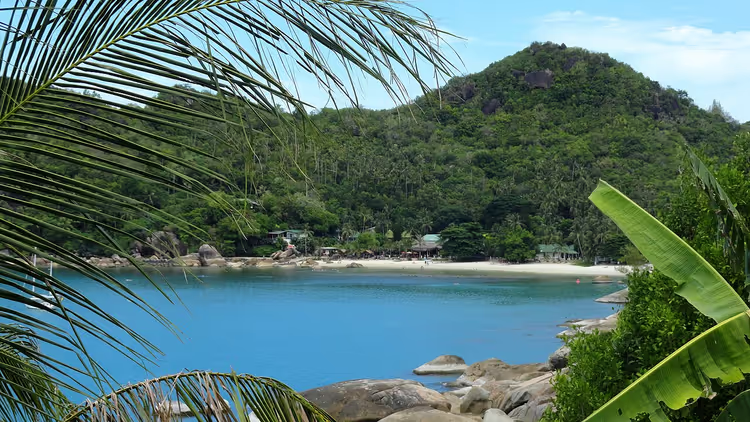 © Fabio Achilli from Milano, Italy · CC BYPhoto: Fabio Achilli from Milano, Italy, CC BY (https://creativecommons.org/licenses/by/2.0), Wikimedia Commons
Silver Beach, also known as Crystal Bay and Thong Takian, is considered the most scenic spot on the island. The bay, about three hundred meters long (on the map), lies between Chaweng and Lamai, and the views are reminiscent of the Seychelles. Fine white sand, clear water, and greenery against the sky.
The boulders here serve both as protection from the waves and as the main photo spot. Dead calm and shallow water are convenient for children. And snorkeling enthusiasts find a divers' trail on the left side that leads to an underwater coral grove.
Infrastructure is concentrated in the hotels along the shore: cafes, restrooms, showers, loungers. There are no nightclubs, but the lively Chaweng and Lamai are very close. You get a private atmosphere and quick access to the party scene.
- Who it's for: for snorkeling, calm swimming, and beautiful photos.
- Not for: for those who need clubs right on the beach.
- The catch: the shore is short, and in high season hotel loungers get taken early.
11. Ban Tai
Ban Tai, also known as Mimosa, lies in the north between Mae Nam and Bang Po. The beach is made for a relaxed family vacation. The shore is gently sloping, and the depth increases gradually, so little ones have fun and parents can relax.
The strip, about a kilometer long and ten to twelve meters wide (on the map), is divided into two parts. The right half is covered with boulders: walking on them is interesting, but swimming is inconvenient. The left half is strewn with fine sand and shells.
There is only one catch here: seaweed. It's easily solved by settling closer to the rocks. The only amenities are a water vending machine, drink stands, and massage huts. Rent a kayak or snorkeling gear. You can get there via the ring road to the "Mimosa" sign, then turn right.
- Who it's for: for families with children who need a safe entry into the water.
- Not for: for those who want cafes, clubs, and shops nearby.
- The catch: lots of seaweed and minimal amenities on the beach.
12. W-Retreat Koh Samui Hotel Beach
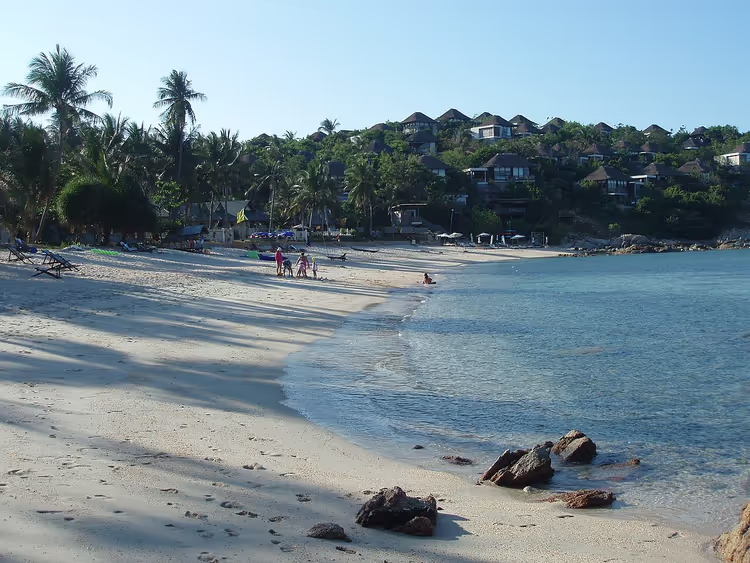 © Hansandre · CC BY-SAPhoto: Hansandre, CC BY-SA (https://creativecommons.org/licenses/by-sa/4.0), Wikimedia Commons
The beach at the W-Retreat Koh Samui hotel lies in the north, between Mae Nam and Bo Phut, and has an A-shaped outline. Golden sand, cleanliness, and few visitors remain the main advantages. Although the beach adjoins the hotel, under Thai law anyone can settle here. The amenities, however, are intended for guests, so bringing your own mat will come in handy. Shade from the palm grove will protect you from the sun.
The bottom drops off quickly. Constant wind creates ripples, so wave lovers enjoy it here. There is a volleyball court, massage pavilions, and bars.
A coral reef runs along the shore, which delights divers. Another plus is the location between two densely populated areas. The airport, restaurants, banks, and hotels are nearby. There is also plenty to see: the Phu Khao Thong temple, the Buddha statue, and the Fisherman's Village.
- Who it's for: for divers and those who want a clean beach without crowds.
- Not for: for those who need umbrellas and loungers from the hotel.
- The catch: amenities are only for guests, bring your own mat.
13. Bang Rak
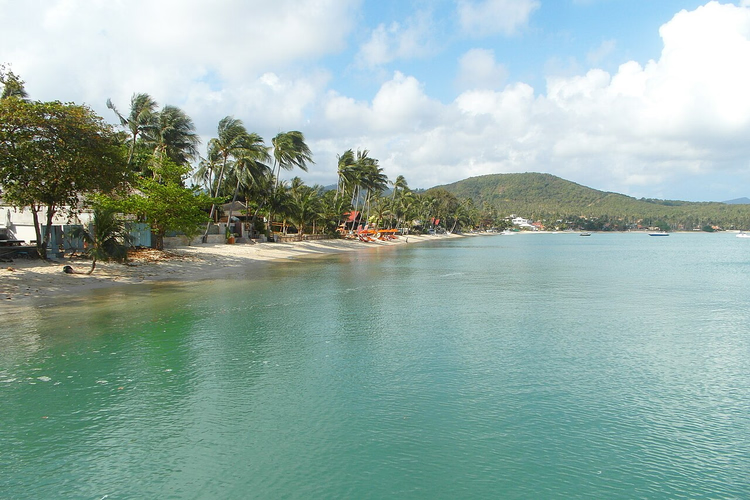 © Roma Neus · CC BYPhoto: Roma Neus, CC BY (https://creativecommons.org/licenses/by/3.0), Wikimedia Commons
Bang Rak lies in the northeast, between Man Khan Bay and the Phan Peninsula. Because of its proximity to the Big Buddha, Thais call this place Big Buddha. The beach stretches for about three kilometers, and its width reaches up to fifteen meters (on the map).
Stick to the central part: there you'll find optimal depth and clean sand. Bars, shops, massage huts, and watercraft rentals will diversify your day. Young people love the Bangrak Beach Club with its pool and cocktails. From the numerous piers, it's convenient to head out to Phangan, Tao, and Nang Yuan.
There are hotels here for every budget. Queues and crowds of tourists are almost nonexistent on Bang Rak, which noticeably sets it apart from Chaweng.
- Who it's for: for those who want a hotel by the sea and quick access to the islands.
- Not for: for those looking for a long empty shore.
- The catch: part of the shore is occupied by piers, and the water near them is murkier.
14. Plai Laem
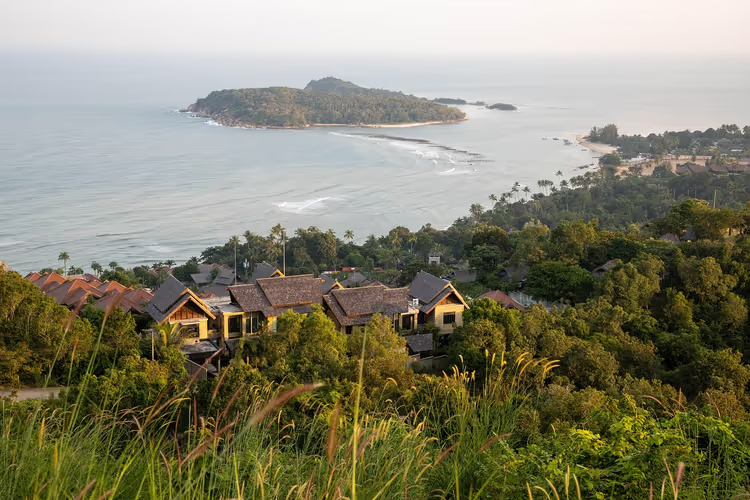
Plai Laem occupies the cape of the same name. The bay stretches for about two and a half kilometers (on the map). The southern tip is developed: several guesthouses and resorts provide loungers for their guests. The northern half is overgrown with seaweed and looks unkempt.
Swimming here is not recommended. The bottom is silty, with fragments of shells and coral, and the depth starts far from the shore. Yachts and fishing boats pass through a special channel. There are more fishermen on this shore than travelers.
There are few activities: kayaking, volleyball, sea fishing, and watching sunsets. On the plus side, the airport and a good road make it quick to reach the Big Buddha statue, the Hongsa walkway, and the Plai Laem Sor temple.
- Who it's for: for those who want a quiet shore and proximity to the airport.
- Not for: for those planning to swim and sunbathe by the water.
- The catch: swimming is not possible, and the north is overgrown with seaweed.
15. Samrong
Samrong hides at the northernmost point, on Plai Laem cape. Two hundred meters of shoreline are framed by green cliffs, from which you can see neighboring Phangan. The Bay Samui hotel keeps the area well maintained.
The entry into the water is gradual, but underfoot there are corals, vegetation, and a silty bottom. A floating pier has been built in the northern part, but it's still better to swim in special footwear. You have to walk about fifty meters to reach depth. There are almost no natural shelters, so bringing your own umbrella will be useful.
There are few activities: kayaking, a volleyball court, and a cafe. Loungers are present, but they are not for rent. For other leisure options, drive a kilometer to Bang Rak. Nearby are the Big Buddha and a temple with a statue of Guan Yin.
- Who it's for: for those who want a quiet bay with a view of Phangan.
- Not for: for families with small children due to corals and the silty bottom.
- The catch: you need to swim in footwear, and loungers are not for rent.
16. Thong Son
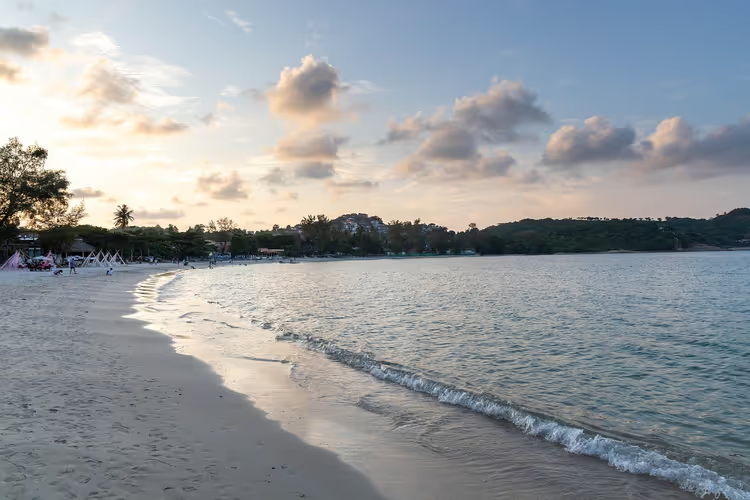
Thong Son occupies Plai Laem cape in the north. Half a kilometer of shoreline begins with a scattering of large stones and transitions into quiet stretches of powdery pale-gray sand. The entry into the water is gentle, with no coral fragments.
The shallow depth delights little ones: for them, it's a natural wading pool. Adults will have to walk fifty or even a hundred meters to swim properly.
Accommodation is offered by the upscale Melati hotel or bungalows nearby. The nearest Thai shop sells drinks, snacks, and beer. For groceries, you'll have to drive to Choeng Mon. On the plus side, the airport is close, and taxis are cheaper.
- Who it's for: for families with small children and those with early flights.
- Not for: for those who need shops and restaurants nearby.
- The catch: almost no infrastructure, and groceries are far away.
17. Chaweng Yai
 © Fabio Achilli from Milano, Italy · CC BYPhoto: Fabio Achilli from Milano, Italy, CC BY (https://creativecommons.org/licenses/by/2.0), Wikimedia Commons
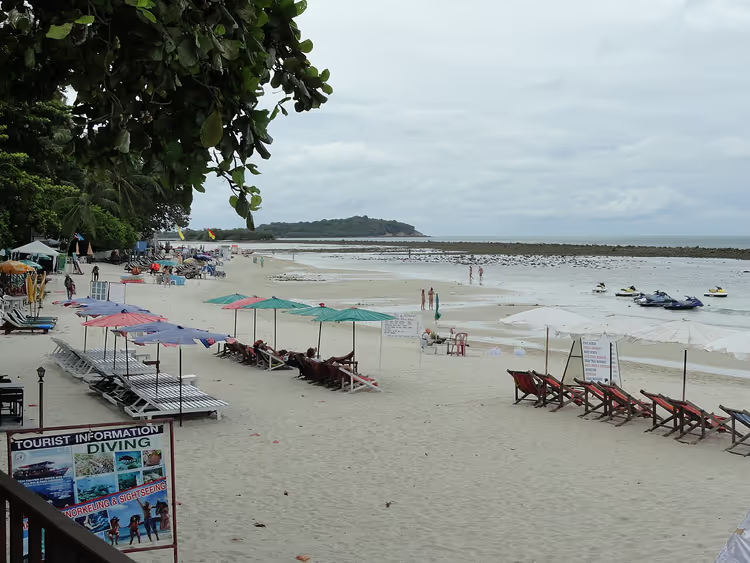
The name Chaweng Yai refers to the main part of Chaweng itself, so there are many visitors here in any season. The bay stretches for about four kilometers (on the map), but the sections differ greatly.
The northern half is covered with coarse brown sand mixed with fragments. The shoreline is littered with seaweed, and pipes run along the coast, discharging runoff into the sea. The water here can hardly be called clean.
The southern side, from Muang Samui SPA Resort to Matlang, is wider and more popular. Fine light-yellow sand and a gentle entry resemble a miniature Bounty. Families with children and wealthier guests stay here. The picture is spoiled by piles of boulders, a silty bottom, and household trash.
The area is developed for long stays: amenities are available right in the hotels, and prices are moderate. Nearby are the Pra Puttabat Chamlon Khao Hua Chuk pagoda, a crocodile farm, and Chaweng Lake.
- Who it's for: for those who want to stay near Chaweng more cheaply and with amenities.
- Not for: for those who swim every day and value a clean shore.
- The catch: seaweed, trash, and runoff in the northern part.
18. Chaweng Noi
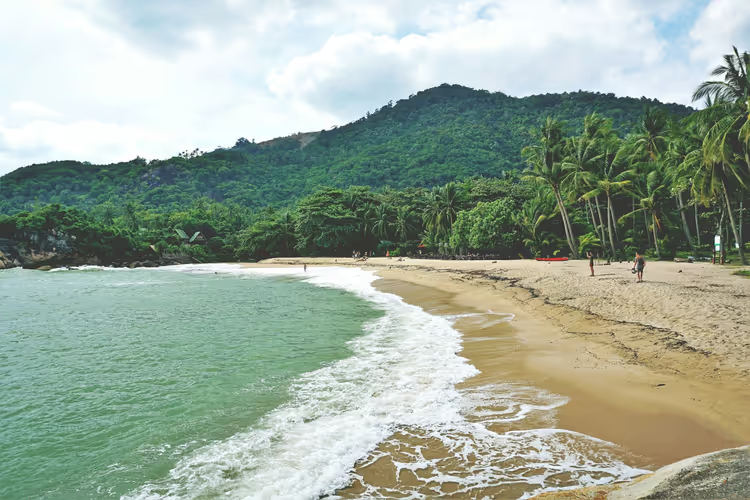
Chaweng Noi sits next to Chaweng, to the east, and mirrors its character. The bay, about a kilometer long (on the map), offers a gently sloping shore, fine golden-white sand, and boulders.
An even bottom with no sudden drop-offs and gradually increasing depth appeals to visitors of all ages. Green mountains surround Chaweng Noi on both sides. The water is clean and warm, so snorkeling here is among the best on the island. In summer the sea barely produces waves, which makes it convenient for families with children.
The beachfront infrastructure is well developed: hotels and cafes give guests every convenience. In the open area you'll find a volleyball net, jet ski rentals, and a children's playground. Pharmacies, supermarkets, Thai shops, and car rentals are within walking distance.
- Who it's for: families with children and snorkeling enthusiasts.
- Not for: those looking for an empty, wild shore.
- The catch: in season the beach gets crowded, and the beach parking fills up during the day.
19. Coral Cove
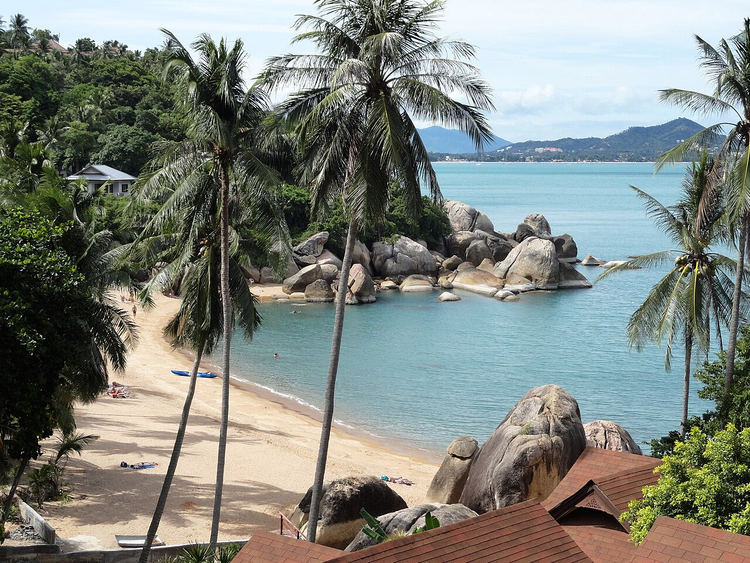 © Fabio Achilli from Milano, Italy · CC BYPhoto: Fabio Achilli from Milano, Italy, CC BY (https://creativecommons.org/licenses/by/2.0), Wikimedia Commons
Coral Cove, or Coral Bay, sits between Chaweng Noi and Tong Takian. This cozy spot, just one hundred seventy meters long (on the map), offers a peaceful escape from the noise. Stone giants rise on both sides. Coarse yellowish sand with shell fragments slopes into deep water.
A few steps are enough for good snorkeling: the depth reaches two meters right at the shore. Sharp-edged rocks on the bottom will cause trouble, so go swimming in protective footwear. Tides barely change the sea's appearance. In bad weather it gets rough, which will please fans of big waves.
Coral Cove's infrastructure is limited to a few hotels and a small restaurant. That's exactly why Coral Bay is considered one of the cleanest spots on Samui. The surroundings aren't rich in attractions, but Elephant Rock and a couple of viewpoints are nearby. The beach itself has become a landmark that draws visitors from across the resort.
- Who it's for: snorkeling and quiet relaxation in a small bay.
- Not for: families with toddlers, because it gets deep right at the shore.
- The catch: sharp-edged rocks on the bottom, better to swim in footwear.
20. Laem Nan
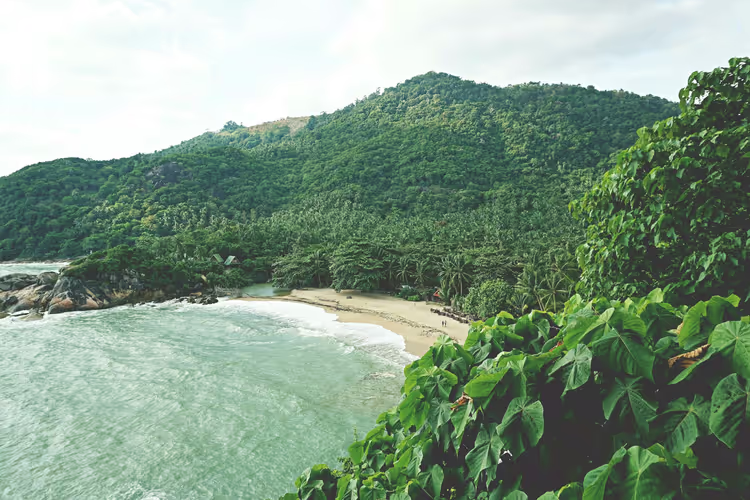
Laem Nan is in the southern part, on the cape of the same name. Seven hundred meters of shoreline are framed by impressive boulders that protect the area from wind (on the map). The sea is light and almost waveless, but it's unsuitable for swimming. The shallows extend five hundred meters from the shore. A rocky bottom with coral fragments explains why Laem Nan won't work for swimming even for children.
Several guesthouses with amenities for their guests stand along the shore. If you like, you can lounge on a sunbed. At the same time, the coast can't be called densely populated: guests prefer to relax by the pool.
It's worth getting to know the local attractions. Overlap Stone and Elephant Rock offer a good view of all of Samui and neighboring areas.
- Who it's for: walks, photos, and quiet evenings on the shore.
- Not for: those who came to swim and splash with children.
- The catch: swimming is dangerous, the shallows stretch for hundreds of meters.
21. Hua Thanon
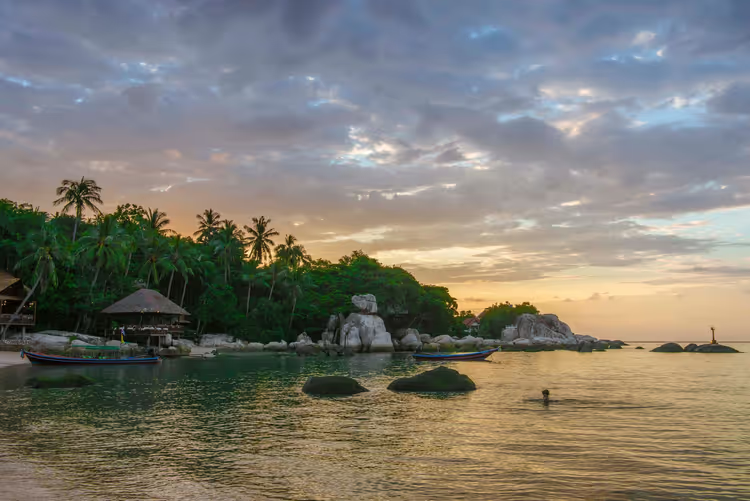
Hua Thanon, about two kilometers long, belongs to the village of the same name in the east, near Lamai (on the map). The shoreline changes from north to south, and here you can see Thai life in all its forms. The usual shallows alternate with drop-offs where small boats pull up. Coarse sand and sharp rocks gradually give way to fine sand. The beach width reaches twenty meters or disappears entirely.
Poor facilities and noticeable litter make this place unsuitable for swimming and family outings with children. Culturally, the two halves differ greatly. In the north stands the Buddhist temple Sila Ngu, where meditating monks are often seen nearby. The south ends in a Muslim village with minarets and rows of fishing boats.
Hua Thanon will appeal to lovers of solitude.
- Who it's for: those who want to see real life, not resort life.
- Not for: families with children and lovers of clean beaches.
- The catch: trash on the shore and almost no places to swim.
22. Nathon
Nathon remains the administrative center of Samui, and ferries from the mainland dock here (according to the Surat Thani province tourism page, 09/2026). The town has everything for daily life: supermarkets, travel agencies, bungalows, cafes, laundries, and car rentals. There are many locals and noticeably fewer tourists.
Nathon's coastline stretches a couple of kilometers from the Lipa Yai river and the police office to the turn of the one-way road. Swimming here won't work. Ships from all over the island approach the pier, and this affects water clarity. In high season the sea covers the entire beach strip, leaving no room for sunbeds. At low tide the water recedes far, leaving puddles with marine life.
Photo hunters, however, will find great shots here: in sunny weather the water surface resembles glass. In Nathon it's worth visiting the Si Thawip and Nathon temples, several waterfalls, and the night market by the pier.
- Who it's for: shopping, the market, and convenient ferry logistics.
- Not for: those coming for swimming and sunbathing.
- The catch: swimming is impossible, the water is murky near the pier.
23. Nahai
Nahai, a secluded and colorful beach, lies in the southeast, starting at a Muslim village and ending at Laem Set cape. Far from major centers, life flows quietly and unhurriedly. There are no bars or shops here, and only one guesthouse operates.
At the same time, upscale villas stretch for two kilometers along the coast (on the map). They show that people settle here not for comfort.
Nahai's main feature remains its open space and cleanliness. The mirror-like water surface, light sand, and endless horizon make you breathe deeper. Swimming won't work even in high season. The shore suits sunbathing, walks, and kitesurfing. A kitesurfing school operates nearby, and at low tide this sport is convenient here.
Besides nature, you'll be interested in the Samret Buddhist temple, the Butterfly Garden, a zoological show, and a fishing market. Lovers of quiet will enjoy it here.
- Who it's for: kitesurfing, quiet, and walks along an empty shore.
- Not for: young people who need bars and company.
- The catch: swimming is off-limits and there are no shops nearby.
24. Natien
Natien in the south, near Laem Set cape, is rarely promoted by travel agencies. There's no idyllic "Bounty" ad picture here. The sand is gray-yellow with large inclusions of shells and coral fragments. To reach depth, you'll have to walk fifty meters over a rocky bottom, and at low tide all two hundred.
At the same time, Natien remains one of the island's most charming corners. Along its entire five hundred meters stands a single hotel with a resort. Otherwise the shore knows almost no civilization. There are no shops or amenities nearby.
But the low crowds help you disconnect from the hustle. You see the contrast of lush greenery, bright sky, rough boulders, and a calm, waveless sea. The transparent water lets you observe its inhabitants. After a swim you can visit the Butterfly Garden, a marine animal show, and a surf school.
- Who it's for: those willing to walk over rocks for the sake of quiet.
- Not for: families with toddlers and lovers of soft sand.
- The catch: the water entry is rocky, and it's a long walk.
25. Bang Kao
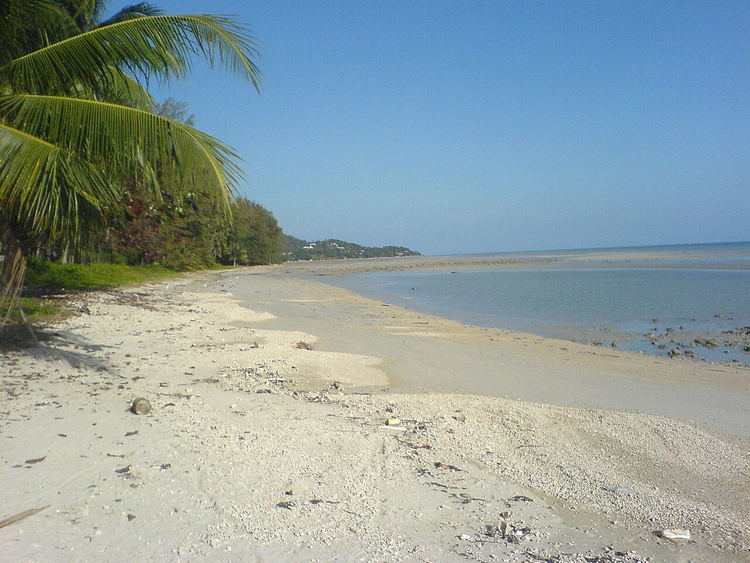 © Batze · CC BY-SAPhoto: Batze, CC BY-SA (https://creativecommons.org/licenses/by-sa/3.0), Wikimedia Commons
Bang Kao objectively remains the longest and dirtiest area on the south side. It stretches for more than four kilometers from the Ban Tale stream to the Laem Sor pagoda (on the map). There are almost no loud groups here, but household and organic trash is plentiful.
Because of the shallow water and the muddy bottom with boulders and coral patches, swimming won't work. But you can watch marine life without a mask or gear: they stay right at the water's surface.
The environmental issues are more than offset by the scenery. The smooth surface of the sea, lush greenery, and palm trees leaning toward the water attract fans of photo shoots. Your stay won't feel boring: the islands of Tan and Matsum are within easy reach. It's worth visiting the Laem Sor and Khao Chedi pagodas. Development here is only just beginning, but you'll be comfortable in the bungalows.
- Who it's for: photographers and those who come for quiet rather than swimming.
- Not for: those looking for a clean shore and comfortable water.
- The catch: trash and shallow water, swimming is impossible.
26. Thong Krut
Thong Krut, like the neighboring spots on the map, can't boast swimming conditions. But it's made for leisurely walks and taking in the scenery. The area between Thong Tanot and Laem Sor cape is almost undeveloped. Green meadows and palm groves open up before you, framing a snow-white sandy beach. The picture is completed by fishing boats with ribbons and the Coral Islands on the horizon. The ancient Khao Chedi stupa, the Laem Sor pagoda, and Buddhist temples deserve attention.
Despite the weak infrastructure, there's something for everyone. You can go sea fishing or visit the neighboring Matsum and Tan. The first invites you to the Pearl Farm. On the second you can have a good lunch and hear a local ghost story.
Nearby there's a village of the same name where you can stay overnight. The friendliness of the locals makes the stay feel warm. The absence of bars and the peacefulness let you see Thailand in a new way.
- Who it's for: walks, fishing, and trips to neighboring islands.
- Not for: those who need swimming, bars, and hotels by the sea.
- The catch: swimming is inconvenient, and there's almost no infrastructure.
27. Thong Tanot
Thong Tanot is one of the island's less popular spots. It lies on the east side, not far from Thong Krut. The low interest comes down to shallow water and its pollution.
Even five hotels in the area don't save the cleanliness of the shore: only the waves clean it, if anything. Because of the waves, there isn't a single lounger here. Most of the surface is vacant land, so finding a supermarket or cafe is a challenge.
At the same time, this quiet place will please seekers of ancient beauty. Fans of active leisure won't be bored either: snorkeling, kayaking, and open-sea fishing will brighten even the hottest day. To get here, take the ring road, turn onto Route 4170, and drive until the Buddha Temple sign.
- Who it's for: anglers, snorkelers, and those seeking quiet.
- Not for: families with children and lovers of a clean shore.
- The catch: shallow and dirty water, no cafes or loungers.
28. Bang Makham
Bang Makham stretches for a couple of kilometers between Nathon and Yai cape (on the map). The gentle entry and slowly increasing depth could have made it a favorite spot for families with children. But the muddy bottom and rich underwater fauna make swimming difficult. However, those who enjoy kayaking, kitesurfing, and fishing will like it here.
It offers beautiful views of Ang Thong National Marine Park, part of Nathon, and the beaches on the opposite shore. The park unites forty-two islands and covers about one hundred square kilometers (according to Thailand's national parks, 09/2026).
Bang Makham gives you the chance to take amazing photos. The surface is mostly covered by an unremarkable embankment, but beneath the water hides snow-white sand with intricate patterns. This is the only place where you'll see a striped sea.
The sea level here constantly changes: it either exposes the coast or floods it up to the ring road. That's why there's no developed infrastructure. But on the other side of the ring road you'll find everything, from shops to upscale little restaurants.
- Who it's for: kayaking, kitesurfing, and beautiful sunset photos.
- Not for: those who want to swim in clear water.
- The catch: muddy bottom and changing sea level.
Samui beaches on the map
Open the map and mark two or three shores that fit your route. That way you'll circle the island without extra detours.
28 beaches of Samui
Places on the map
- 1Chaweng The island's longest and busiest beach, bars and clubs along the shore
- 2Lamai Second most popular, Hin Ta and Hin Yai rocks in the south, deep near the shore
- 3Taling Ngam About three hundred meters of white sand, shallow sea and sunsets by the InterContinental
- 4Lipa Noi West coast, clear water without waves and a port to the mainland
- 5Bang Po North of the island, a gentle entry and soft sand, more than a kilometer to shops
- 6Bophut Coarse sand and a wide strip, Fisherman's Village and Big C nearby
- 7Maenam About five kilometers in the northwest, gentle entry and developed infrastructure
- 8Choeng Mon White sand and gentle entry, one of the best beaches for a family holiday
- 9Thong Sai A small cove reached through the grounds of the Tongsai Bay hotel
- 10Silver Beach A cove about three hundred meters between Chaweng and Lamai, a divers' trail to the coral
- 11Ban Tai Also known as Mimosa, a gently sloping shore about a kilometer long, lots of seaweed
- 12W Retreat Koh Samui Beach Golden sand between Maenam and Bophut, a coral reef by the shore
- 13Bang Rak Big Buddha beach, about three kilometers, piers to Koh Phangan and Koh Tao
- 14Plai Laem A bay about two and a half kilometers, swimming not advisable due to a muddy bottom
- 15Samrong Two hundred meters of shore in green rocks with a view of Koh Phangan
- 16Thong Son Half a kilometer on Plai Laem cape, shallow water and a natural paddling pool
- 17Chaweng Yai About four kilometers next to Chaweng, the north has seaweed and runoff
- 18Chaweng Noi A cove about a kilometer long, an even bottom and the island's best snorkeling
- 19Coral Cove A 170-meter coral cove, deep right at the shore, rocks on the bottom
- 20Laem Nan Seven hundred meters among boulders, shallows for 500 meters, unsuitable for swimming
- 21Hua Thanon Two kilometers by an eastern village, the Wat Sila Ngu temple and the Muslim south
- 22Nathon The administrative center with a ferry pier, swimming not allowed here
- 23Na Hai Southeast from the Muslim village to Cape Set, a kitesurfing school
- 24Na Thian Five hundred meters by Cape Set with the only hotel and a rocky bottom
- 25Bang Kao More than four kilometers in the south, shallow water and a lot of debris
- 26Thong Krut Undeveloped shore by Laem Sor cape, boats and trips to Koh Matsum and Koh Tan
- 27Thong Tanote Next to Thong Krut, shallow water, snorkeling, kayaking and fishing
- 28Bang Makham A couple of kilometers between Nathon and Cape Yai, a view of Ang Thong park
⁉️🤔 Frequently asked questions
Which Samui beach should I choose for a first visit?
Start with Chaweng if you want everything at hand: bars, shops, restaurants, and a long shore. If the noise gets to you, move to Silver Beach, where it's calmer and the water is cleaner. That way you'll compare the lively east side and a quiet shore in two days.
Where on Samui can I swim with children?
Chong Mon, Chaweng Noi, and Bang Po work well for families: they have a gentle entry and calm water. At Coral Cove and Bo Phut the water near the shore is already deep or the bottom is muddy, so it's inconvenient with little ones. Choose a beach by the depth near the shore, not by photos.
Which beach has the best snorkeling?
For coral, go to Coral Cove and Silver Beach: the reef starts a few meters from the shore. At Chaweng Noi the water is clear almost all year round. Bring water shoes, because the bottom has sharp rocks and coral fragments.
Where should I stay if I want bars and clubs?
Bars and clubs are concentrated along Chaweng and in the central part of Lamai. That's where the most venues are, and everything is within walking distance of the hotels. If you want it quieter, rent a place in the southern part of Chaweng closer to the breakwaters.
When is the best time to go, and which beach should I choose in winter?
In winter, the western shores of the Gulf of Thailand are usually calmer, so take a look at Lipa Noi. In high season, waterfront accommodation gets booked early, and prices rise. In summer, choose the eastern and southern beaches, where the water is cleaner.
In short: what to book
Samui is easy to divide by pace. If you want bars, clubs, and everything nearby, book a hotel on Chaweng or in the central part of Lamai. For quiet swimming with children, Chong Mon, Chaweng Noi, and Bang Po work well. Snorkeling fans should look for accommodation near Coral Cove and Silver Beach. And for quiet and sunsets, head to Lipa Noi or Nahai.
- If you're a family with children: choose Chong Mon or Chaweng Noi.
- If you're coming for nightlife: choose Chaweng or Lamai.
- If you're looking for quiet: choose Lipa Noi, Nahai, or Thong Krut.
- If you want snorkeling: choose Coral Cove or Silver Beach.
Check your chosen shores on the map above and set aside the first two days for them. That way you'll get a feel for the island's rhythm before the trip ends.

A small editorial team writing guides for independent travel. We travel ourselves, but we haven’t been everywhere, so we check prices, opening hours and how to get there against official sources.