













Autumn vacation in Austria: 7 destinations for October and November
Autumn in Austria starts earlier than people expect. By late September, parking lots at scenic overlooks are emptying out, and open nights at guesthouses cost less than they do in July. Alpine huts close for the season at the end of September, while the Großglockner Hochalpenstraße stays open until early November (according to the road's official website). If you are planning an October vacation, you have a three-week window when mild weather, empty trails, and peak color all line up.
There are two autumns here, not one. The early one runs from mid-September to mid-October and belongs to the Alps: Almabtrieb, the grape harvest, hikes in the lower valleys. The late one starts at the end of October, when the mountains are already in winter mode. That is when the cities and wine regions take over: Vienna, Salzburg, Graz, Wachau, and Southern Styria. Showing up in Tyrol in mid-November for trekking means finding no trails left.
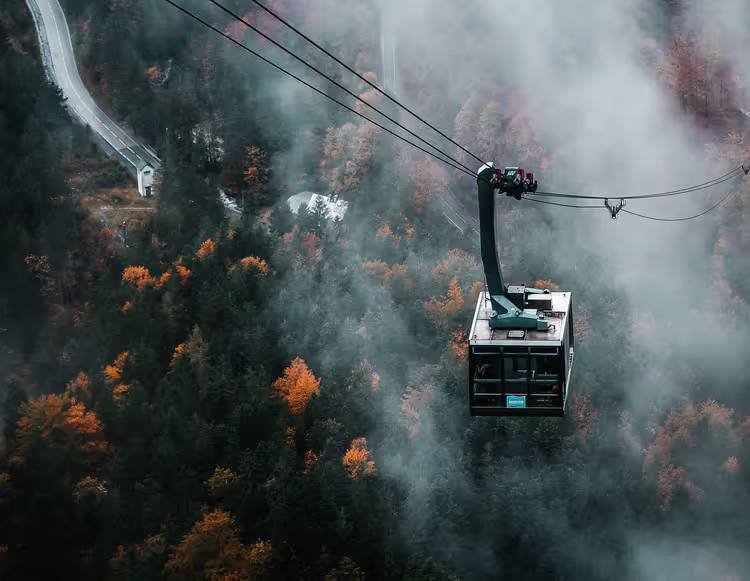
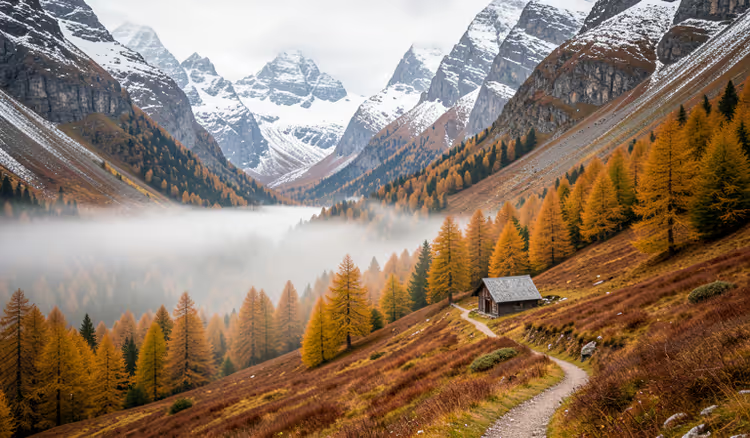 AIIllustrative image: AI-generated
Below are seven destinations where autumn delivers more than summer. For each one, we explain what sets it apart from the others on the list, how to get there, and where to stay. We checked season dates against official websites, and prices and opening hours as well.
Ad: this article contains affiliate links, we earn a commission if you book through them, at no extra cost to you.
Autumn in Austria: what you need to know
The autumn season rests on three dates. First: Almabtrieb, when cattle are brought down from high mountain pastures, usually in mid- and late September. Second: peak color, which in most valleys falls in mid- and late October. Third: the closing of mountain roads and huts. Almost all huts close for the season at the end of September, and some stay open until mid-October. Panoramic roads follow the snow: the Großglockner Hochalpenstraße shuts down in early November, while the Schlegeis-Alpenstraße to the Schlegeisspeicher, the starting point for the hike to Olpererhütte, stays open until late October.
In November, the Alps are already in winter mode. Hikes remain only in the lower valleys, some cable cars go into maintenance, and seasonal restaurants close in the villages. That is why late autumn is better spent not in the mountains but in cities and wine regions: Vienna, Wachau, Salzburg, Graz, or Southern Styria. If you want a warm option for the end of the season, look at thermal hotels in the east and southeast of the country, such as St. Martin's Therme & Lodge in Burgenland or Hotel Rogner Bad Blumau in Styria.
For October, you get a less obvious advantage: accommodation in the shoulder season is cheaper than in July, and you can book it noticeably later. Even in popular villages like Ramsau or Filzmoos, open dates are still available two to three weeks before the trip.
💡 In short:
- Early autumn (mid-September to mid-October): the Alps, Almabtrieb, the grape harvest, hikes in the lower valleys.
- Peak foliage color: mid-October to early November.
- Late autumn (late October to late November): Vienna, Salzburg, Graz, wine regions.
- Huts close for the season at the end of September, alpine roads depend on snow.
- Season dates and road closures: 09/2026, verified on the official Großglockner Hochalpenstraße website.
Autumn calendar: when to go for what
Period | What happens | Where to go |
|---|---|---|
Mid- and late September | Almabtrieb, grape harvest, Bauernherbst | Maria Alm, Ramsau, Southern Styria |
Late September and early October | huts closing, stable weather, few people | Wachau, Ramsau, Filzmoos |
Mid- and late October | peak color for larches and mountain maples | Großer Ahornboden, Ramsau, Filzmoos |
Late October and early November | Viennale, Sturm at Heuriger taverns, Großglockner closing | Vienna, Wachau |
November | Martinigansl, museums, shoulder-season prices | Vienna, Salzburg, Graz |
The peak date is determined by frost and wind, so the color shifts by a week or two every year. Do not rely on the calendar; check local webcams and tourist office updates instead. In Ramsau and Filzmoos, the larches turn yellow almost simultaneously, while the maples in the Karwendel hold their color for a few more days. In Wachau, the vines change color before the forest does, and that is your chance to photograph the region without tour buses.
Autumn dishes and festivals
Autumn in Austria is also a food season. In September and October, Heuriger taverns pour Sturm: young wine from the first pressing, sweet and cloudy, served for only a few weeks. In November comes the time of Martinigansl, goose with red cabbage and dumplings.
The main festival of the season: Salzburger Bauernherbst. In 2026, it opened on August 22 in Maria Alm, with about 2,000 events across 77 towns and villages in the state of Salzburg on the program (according to SalzburgerLand). Visitors can expect Almabtrieb, fairs, brass music, and craft workshops.
The third pillar of the autumn table: the Heuriger, a wine tavern attached to a winery. They serve cold cuts, pâtés, fresh grape juice, and young wine. Heuriger taverns operate in Vienna, Wachau, and Southern Styria, mostly in the evenings and on weekends, so plan dinner ahead: in October, open tables fill up fast.
1. Wachau
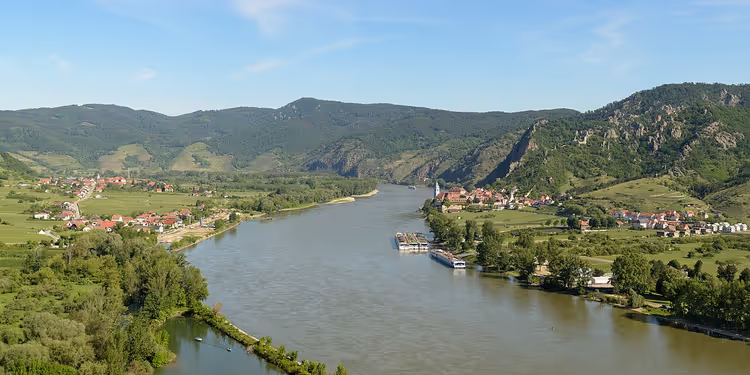
The Wachau is a 35-kilometer stretch of the Danube between Krems and Melk in Lower Austria (according to Wachau Tourismus). It is about 80 km from Vienna, meaning an hour by car or direct train. Vineyard terraces run along the shore, castle ruins stand above them, and in Melk the Stift Melk abbey rises up.
 © Uoaei1 · CC BY-SAPhoto: Uoaei1, CC BY-SA (https://creativecommons.org/licenses/by-sa/4.0), Wikimedia Commons
Autumn turns the Wachau into its own season. After the grape harvest, the vine leaves turn golden, and the shore becomes a yellow band along the river. In October there are fewer people here than in July, and the low sun gives you the best photos of the year. If you are coming for the color, book accommodation for weekdays: weekends in the Wachau are packed with Viennese couples.
What to do in autumn
 © BSonne · CC BY-SAPhoto: BSonne, CC BY-SA (https://creativecommons.org/licenses/by-sa/3.0), Wikimedia Commons
Hiking in October is comfortable: temperatures are mild, trails are empty, and no special gear is needed. Tried-and-tested routes: the Vogelbergsteig near Dürnstein, the first stage of the Welterbesteig from Dürnstein to Krems, and the Seekopf and Hirschwand loop. You can walk for half a day and meet only a couple of people on the trail.
The logical way to end a walk is at a Heuriger. Arrive at opening time, in the afternoon, otherwise the free tables on the terrace run out.
Photo spots: Rotes Tor in Spitz, the Weißenkirchener Bänke viewpoints on the Welterbesteig near Weißenkirchen, and the lookout at the Aggstein castle ruins. Plan your shoot for the second half of October: that way you get both the vine color and morning fog over the Danube. At Melk Abbey keep the season in mind: the tour takes about 50 minutes and includes the marble hall, the library, and a balcony overlooking the Danube, and the winter schedule is shorter than the summer one. Check tickets and opening hours on the official Stift Melk website.
How to get there
Two routes lead from Vienna to the Wachau. Train: direct services run every hour from Wien Franz-Josefs-Bahnhof, Wien Spittelau, and Wien Heiligenstadt to Krems, and the journey takes about an hour. Car: the road along the Danube, from central Vienna to Krems also about an hour if you leave before eight in the morning.
Sightseeing boats run on the river, but the schedule depends on water levels and is reduced by November. The no-car option looks like this: train to Krems, then buses and walking sections along the shore. On October weekends there are fewer free seats on trains, so it pays to buy tickets in advance.
Where to stay in the Wachau
Bases for overnight stays: Weißenkirchen and Spitz, both on the Danube and on the bus line. Both villages have mid-range guesthouses where breakfast is included in the price.
- Hotel Garni Weinquadrat, Weißenkirchen: a small guesthouse in the center, a hearty breakfast with local products, bicycle rental, and a self-service wine cellar open around the clock.
- Hotel-Restaurant Kirchenwirt, Weißenkirchen: a hotel with a restaurant in the center, wellness in a historic winemaking house next door, for an extra charge.
- Barock-Landhof Burghardt, Spitz: a baroque house with rooms and apartments in the center.
- Appartements Adam-Mühle, Spitz: apartments just over a kilometer from the center, about a fifteen-minute walk, breakfast on request.
- Gasthof Prankl, Spitz: right on the Danube, breakfast on the terrace included in the price, with a restaurant on site.
It is easier to compare prices and availability all at once: Wachau hotel prices on Trip.com.
2. Großer Ahornboden
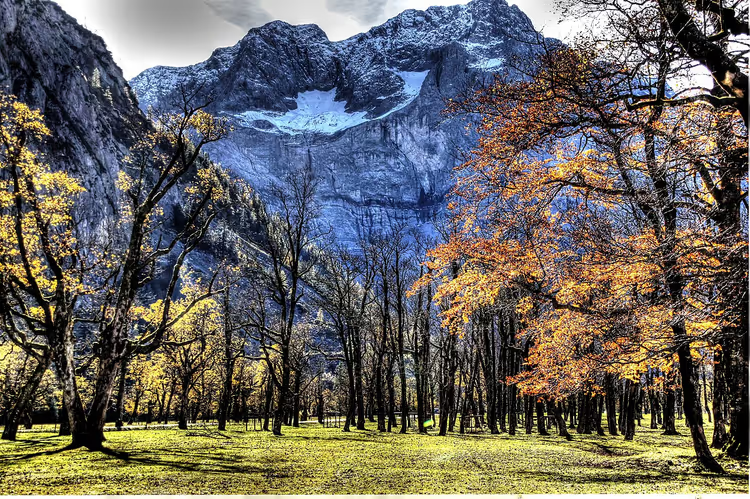
Großer Ahornboden is an alpine meadow deep in the Hinterriss valley, in the Karwendel Nature Park in Tyrol. The meadow lies on the valley floor, with the sheer cliffs of the Karwendel rising above it. Around 2,300 sycamore maples grow on the meadow, some over 600 years old, making it one of the largest stands of sycamore maple in the Alps (according to Mautstraße Hinterriss-Eng).
 © Heribert Pohl --- Thanks for half a million clicks! from Germering bei München, Bayern · CC BY-SAPhoto: Heribert Pohl --- Thanks for half a million clicks! from Germering bei München, Bayern, CC BY-SA (https://creativecommons.org/licenses/by-sa/2.0), Wikimedia Commons
Peak color comes around mid-October, with the exact date depending on frost and wind. The maple leaves are backlit by the low sun at the end of the day, so the best light for photography comes in the afternoon, closer to sunset. Come on weekdays: on weekends people drive here from Munich and Innsbruck, and the parking lot gets crowded.
At the end of the valley stands the region's only hotel, Alpengasthof und Naturhotel DIE ENG. It is usually open from early May to late October, and after a recent renovation it gained deluxe "Ahornzimmer" rooms and a new wellness center. Nearby lies the Enger Almdorf: a village complex with a Hofladen selling homemade cheese, schnapps, and other local products. Even when the cattle are already in their stalls, the village operates and welcomes guests.
Where to hike
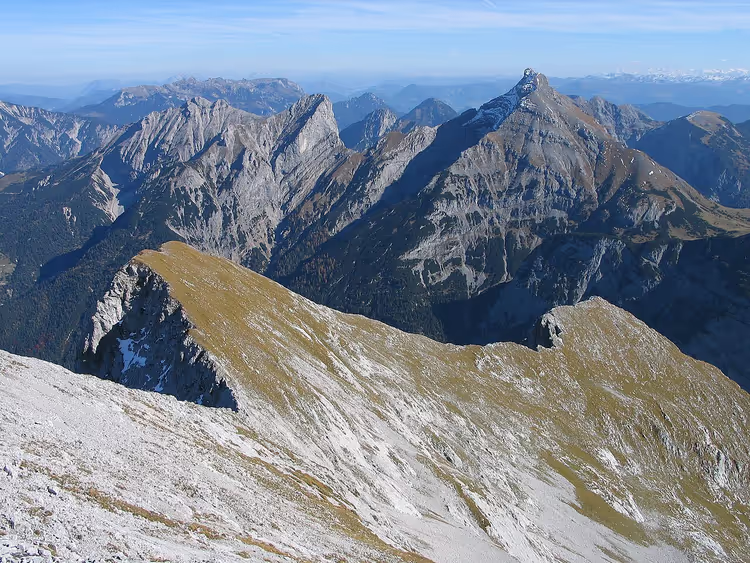 © Luidger · CC BY-SAPhoto: Luidger, CC BY-SA (https://creativecommons.org/licenses/by-sa/3.0), Wikimedia Commons
The meadow is a convenient starting point for routes through the Karwendel Nature Park. Popular destinations: Falkenhütte and Lamsenjochhütte, both of which usually close in early October. The strongest option for views: the ascent of Gamsjoch, where the western summit opens up a panorama of the Hinterautal-Vomper chain, the longest mountain range in the Karwendel. The route takes a full day, so start early and bring water.
Useful tips
- Weekends: avoid Saturday and Sunday if you want an empty meadow in your photos.
- Nights: plan at least two nights at DIE ENG, otherwise you only have one day left for the valley and hikes.
- Clothing: in mid-October the meadow is cold in the morning, so bring a shell layer and a warm wool layer.
How to get there
A single road leads to the meadow, and it is a toll road. The entrance to the Mautstraße Hinterriss-Eng starts in Hinterriss, the toll is paid at the station at the entrance, and at the end of the paved road by Alpengasthof Eng there is a large free parking lot. From Achensee the drive takes about an hour and a half, so plan the logistics in advance: there are no other access roads to the meadow.
Where to stay
The choice of accommodation here is small, and that is part of the local atmosphere.
- Alpengasthof und Naturhotel DIE ENG, mid-range: the only hotel by the meadow, within walking distance of Almdorf Eng, deluxe "Ahornzimmer" rooms, wellness, and breakfast.
- Binsalm, budget: a hut at about 1,500 meters above sea level, reachable only on foot. The climb from the Eng parking lot takes about forty minutes and gains roughly three hundred meters of elevation.
Free dates for these two options get booked up quickly, so check hotel prices near Großer Ahornboden on Trip.com in advance.
3. Maria Alm am Steinernen Meer
Maria Alm sits in the Hochkönig region of Salzburg state, in a valley below the Steinernes Meer massif. The village is known for its pilgrimage church and remains compact: you can walk the center in half an hour. The backdrop is the Steinernes Meer, part of the Berchtesgaden Alps, with its high karst plateaus.
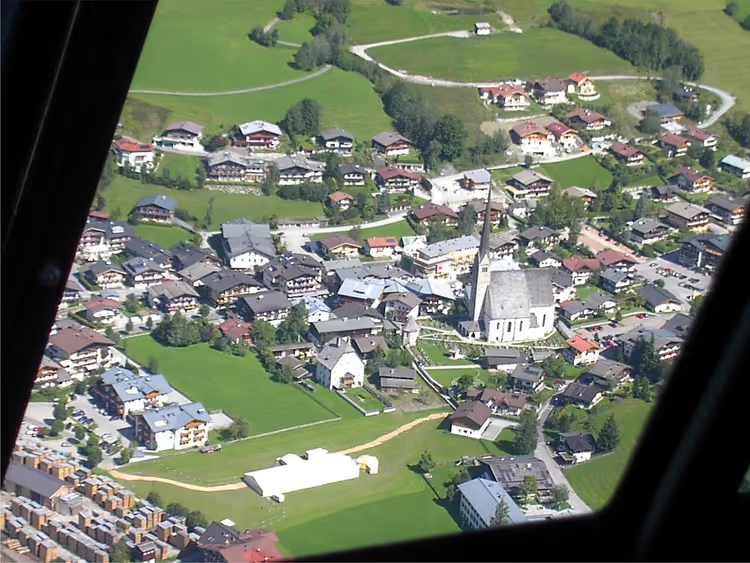 © Pinzgauer · CC BY-SAPhoto: Pinzgauer, CC BY-SA (http://creativecommons.org/licenses/by-sa/3.0/), Wikimedia Commons
In autumn people come here for Bauernherbst. The festival opened on August 22 and runs roughly until mid-October. The program includes concerts, processions, Almabtrieb and craft workshops. Check the exact program and the date of the cattle drive with the Maria Alm tourist office: the dates shift from year to year. The weather in early autumn here is usually stable, and you get mild temperatures for walking.
What to do in the surrounding area
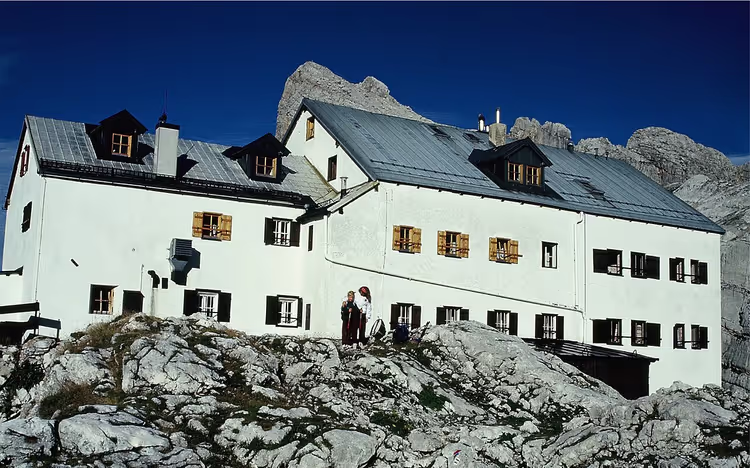 © Benutzer:Pinzgauer · CC BY-SAPhoto: Benutzer:Pinzgauer, CC BY-SA (http://creativecommons.org/licenses/by-sa/3.0/), Wikimedia Commons
Hiking routes start right from the village. One of the best-known destinations is the Riemannhaus, a mountain hut in the Steinernes Meer massif; it sits at about two thousand meters and serves as a goal for day hikes. Many good trails start from the parking lot at the Erichhütte on the Dientner Sattel pass along the Hochkönigstraße road. From there they lead to the Taghaube and along the Mühlbacher Höhenweg in the Hochkönig mountains.
For an early start, a walk to Spiegelsee on the Hochkeil works well: you set off before dawn, but you get the sunrise over the valley without any crowds. The festival program and the list of open trails in the shoulder season are available on the official Hochkönig website.
Where to stay in Maria Alm
Accommodation here is split between the center and Hintertal.
- Lifestyle Hotel Eder, Maria Alm center, upper price range: modern design and creative cuisine steps from the church.
- Berg & Spa Hotel Urslauerhof, Maria Alm-Hinterthal, upper price range: a family hotel with a large wellness area and good food, half board is worth booking here.
- Jufenalm BOHO Hotel & Restaurant, upper price range: an alpine chalet with modern design, views of the Steinernes Meer, a natural swimming pond and a spa. Breakfast is included, and the hotel has an à la carte restaurant.
Available rooms in Maria Alm on Trip.com.
4. Ramsau am Dachstein
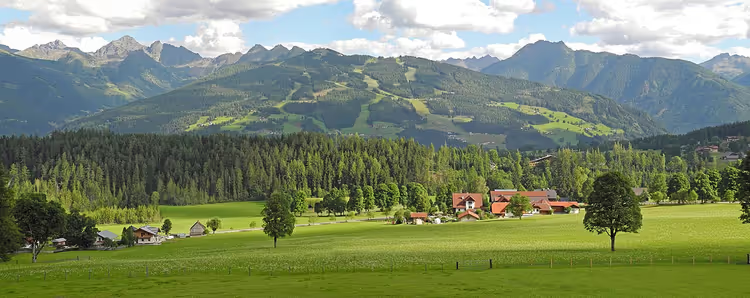
Ramsau sits on a high plateau between the Dachstein massif and the Enns valley, at about 1,135 m (according to Ramsau am Dachstein). The center is marked by the church, shops, inns and hotels, while the plateau itself opens up to the east and west. The southern slopes are almost entirely covered with larch forests, and between mid- and late October they glow gold.
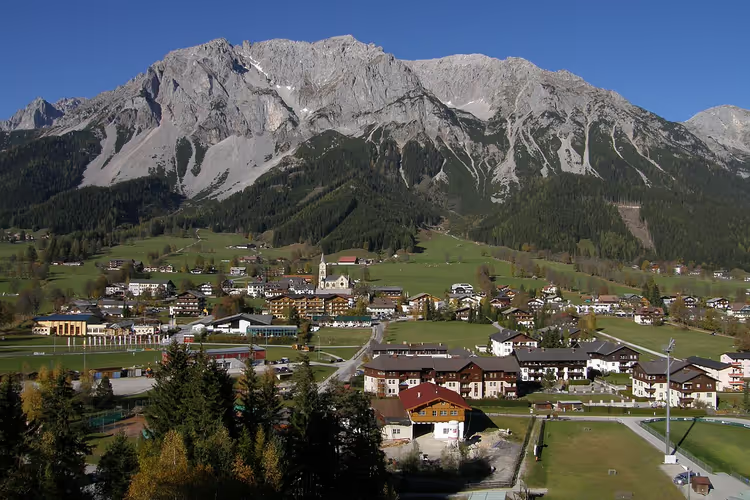 © Vorwerk · CC BY-SAPhoto: Vorwerk, CC BY-SA (https://creativecommons.org/licenses/by-sa/4.0), Wikimedia Commons
What sets Ramsau apart from its neighbors on this list is the altitude and the larch. In summer it is cooler here than in the valleys, and in autumn you get two colors at once: larches on the southern slopes and grass on the alpine meadows. An autumn evening on the plateau is cold, so bring a jacket even for a short walk.
What to do in autumn
 © SchiDD · CC BY-SAPhoto: SchiDD, CC BY-SA (https://creativecommons.org/licenses/by-sa/4.0), Wikimedia Commons
Start with the Panoramaweg: the route runs through alpine meadows, farms and forest, almost without elevation gain, and gives you a first overview of the plateau. It works for a family day out and for a first introduction to Ramsau. For larch color, take the 5-Hütten-Weg: the trail connects five huts and runs right along the southern slopes, which turn golden by mid-October.
Rock routes on the Dachstein are usually still passable in October, but check trail conditions at the local tourist office: after the first snow, some sections are closed.
Sunset over the plateau is best watched from pullouts along the road, and in the evening head back to the village. The Dachstein webcams are a convenient way to check the next day's weather; they are installed at several altitudes and show where the larch has already turned yellow. Plan lunch in the village: some huts on the plateau close as early as late September.
Where to stay in Ramsau
- Pension Adlerhorst, budget: a guesthouse with a hearty breakfast and a quiet location away from the road.
- Hotel Sporthof Austria, mid price range: a mountain hotel with a large breakfast, half board on request, a wellness area with sauna, steam bath, infrared cabin and hydromassage, plus a garden and terrace for relaxing.
- Hotel Lindenhof, upper price range: modern alpine style, views of the Dachstein, a wellness area and a restaurant using produce from its own farm. Breakfast and the Schladming-Dachstein region Sommercard are included in the price.
Compare overnight options in Ramsau on Trip.com.
5. Filzmoos
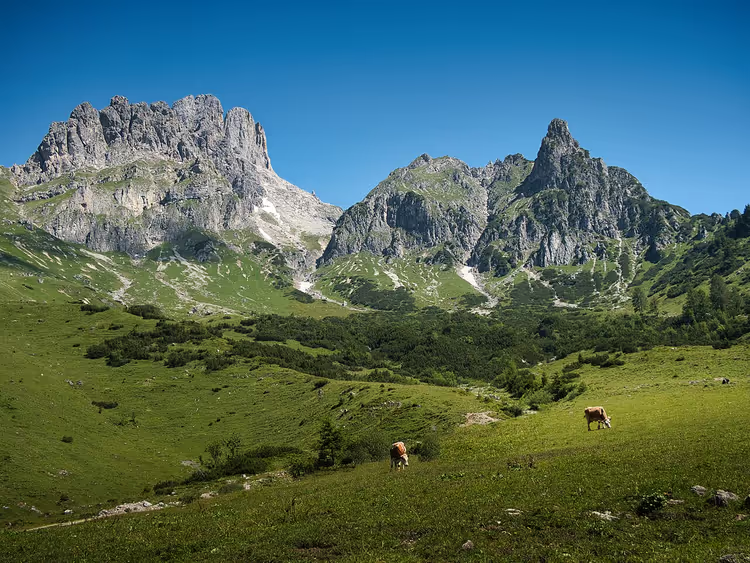
Filzmoos lies at about 1,000 m in the northern Pongau, just a few kilometers west of Ramsau am Dachstein (according to Filzmoos). The village sits at the foot of the Gosaukamm and serves as a base for hiking. The Dachstein slopes are covered with thousands of larches, which turn gold and amber from mid-October.
 © Robert J Heath · CC BYPhoto: Robert J Heath, CC BY (https://creativecommons.org/licenses/by/2.0), Wikimedia Commons
In autumn people come here for hiking: the climb to the Rötelstein, the traverse from the Hofpürglhütte to the Sulzenalm, and the route from the Bachlalm to the Neustattalm. We would spread these three routes across different days, because each one gives you its own view of the Dachstein and its own altitude.
One thing to keep in mind is the season: by late October, some inns and restaurants in Filzmoos close. The tourist office publishes a list of huts and establishments that are open, so check it before your trip, otherwise you may find yourself without dinner on a weekday evening.
Where to stay in Filzmoos
- Bauernhof Krahlehenhof, mid price range: a traditional farm with double and family rooms and apartments, a homemade breakfast and dinner from local produce.
- Das Anja Alt Filzmoos, mid price range: a house in the center of the village, rooms and apartments, guests receive the Filzmoos Sommercard.
- meiZeit Lodge, upper price range: the village's most modern hotel, a Finnish cedar sauna, herbal sauna, infrared loungers, a relaxation area and a fitness room. In the afternoon guests are offered a buffet with cakes, breakfast is included.
Find a hotel in Filzmoos on Trip.com.
6. Southern Styria (Südsteiermark)
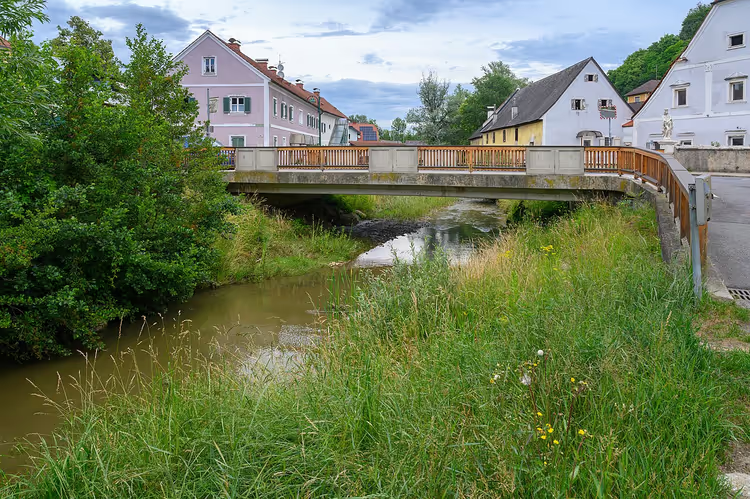
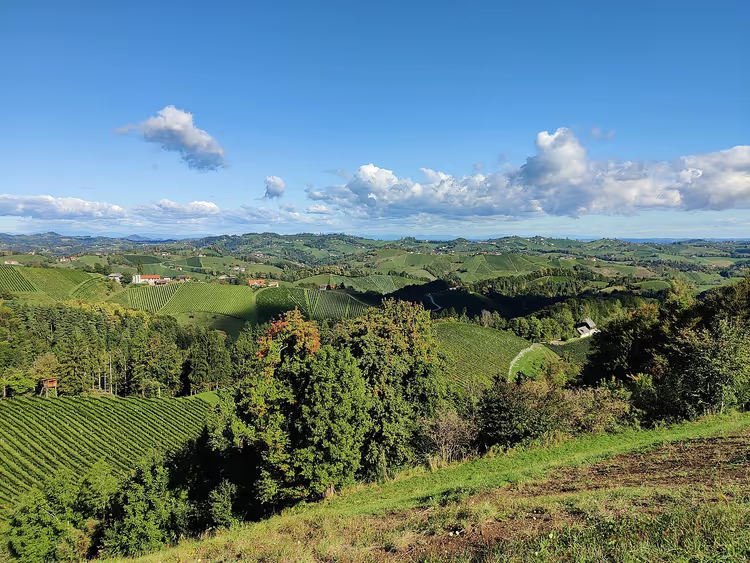
Southern Styria is a wine region on the border with Slovenia that Austrians call the country's main gastronomic area (according to Südsteiermark). The hills here are gentle and covered with vineyards, the roads are narrow, and the harvest begins in September.
 © Isiwal · CC BY-SAPhoto: Isiwal, CC BY-SA (https://creativecommons.org/licenses/by-sa/4.0), Wikimedia Commons
The region became famous for its white varieties: Sauvignon Blanc and Weißburgunder (Pinot Blanc). Autumn is the best season here: temperatures are mild, the vine leaves turn golden, and the Buschenschanken serve Sturm. If you want to combine wine and food, base yourself in Gamlitz or Ehrenhausen and follow the Südsteirische Weinstraße wine road.
What to do
 © Simon Legner ( User:simon04 ) · CC BY-SAPhoto: Simon Legner ( User:simon04 ), CC BY-SA (https://creativecommons.org/licenses/by-sa/4.0), Wikimedia Commons
The itinerary here is simple and delicious. Drive along the wine road and stop at two or three village taverns. Try Sturm while it is still being served. Go for a tasting at a winery that has a wine cellar. Rent an e-bike and ride over the hills to the next village. On rainy days, the day spa at Loisium Wine & Spa Hotel Südsteiermark is open: wine treatments, indoor and outdoor pools, a salt steam bath, and saunas.
Where to stay in Southern Styria
- Jaglhof by Domaines Kilger, Gamlitz, upper price range: the restaurant and terrace face west, so you get the sunset right from dinner.
- Loisium Wine & Spa Hotel Südsteiermark, Ehrenhausen, upper price range: a spa with wine treatments such as a grape elixir peel, indoor and outdoor pools, a salt steam bath, Finnish and mild saunas, and infrared cabins.
Hotel prices in Southern Styria on Trip.com.
7. Vienna (Wien)
Vienna is the best city option for fall: high season is over, temperatures are mild, and the parks, vineyards, Ringstrasse, and the Danube Canal are changing color (according to Wien Tourismus). The Schönbrunn Palace Park and the Augarten are especially good: you walk along avenues that empty out in October.
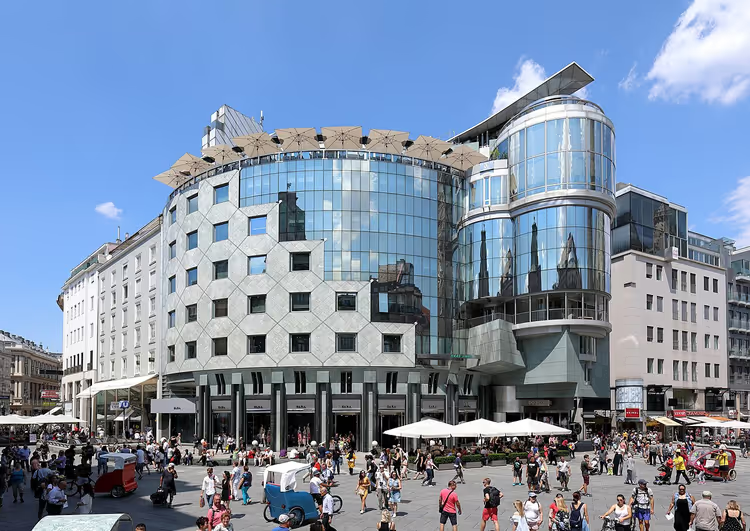 © C.Stadler/Bwag · CC BY-SAPhoto: C.Stadler/Bwag, CC BY-SA (https://creativecommons.org/licenses/by-sa/4.0), Wikimedia Commons
The main fall route in the city is Stadtwanderweg 1 from Nussdorf to Kahlenberg. It runs through vineyards, takes about 11 kilometers and three and a half hours, the climb gains roughly 300 meters, and the summit of Kahlenberg itself sits at 484 m (according to the City of Vienna). Start at the D tram terminus, finish at a Heuriger in Nussdorf, where you sit down at a table with a view over the city.
What to do in Vienna in fall
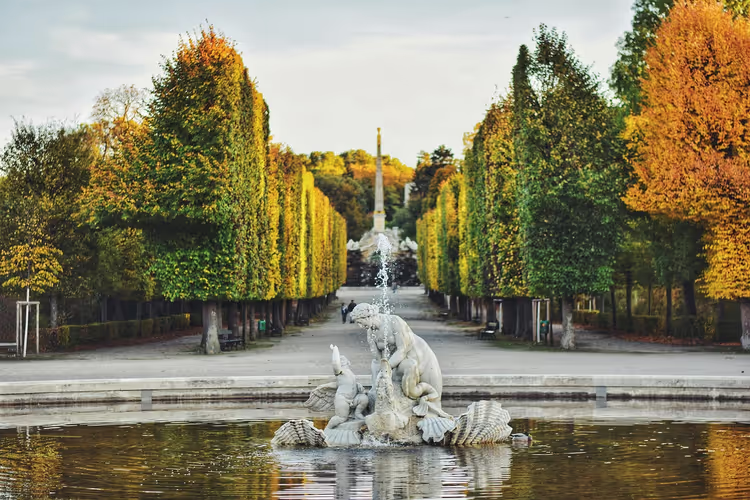
- Take a day trip to the Wachau: one hour by train to Krems, and you are in the vineyards.
- Watch a film at the Viennale. The festival runs from October 22 to November 3, 2026, and draws about 92,000 visitors each year (according to Viennale).
- Go to the Vienna State Opera: tickets for morning rehearsals are cheaper.
- Drink Sturm at a Heuriger in Nussdorf, Grinzing, or on Kahlenberg.
- Try Martinigansl: Zur Goldenen Kugel in the ninth district, s'Pfiff in the nineteenth, Gmoakeller in the third, Helmut Krenek in the twenty-first.
- Head into the Vienna Alps for a day: hikes in the lower mountains are possible until late October.
Where to stay in Vienna
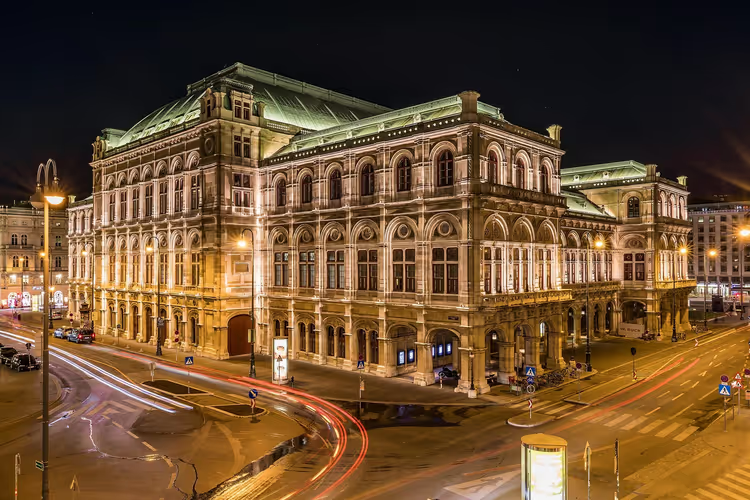
The district you choose depends on your trip scenario. The first district means sights and shopping: The Amauris Vienna, The Guesthouse Vienna, Hotel Zur Wiener Staatsoper, Rosewood Vienna. The sixth district has nightlife and the Naschmarkt nearby: Hotel Motto, Hotel Josefine, Jaz in the City Vienna, Boutiquehotel Das Tyrol, numa | Terra Apartments. The seventh district is home to museums, coffeehouses, and boutique hotels: Small Luxury Hotel Altstadt Vienna, Hotel Sans Souci Wien, Hotel Gilbert. In the ninth district, evenings are quieter and the center is close: The Harmonie Vienna.
What to read next
- The most beautiful places in Austria.
- A two-week road trip through Austria.
- A one-week circular route through Austria.
- The best mountain hotels in Austria: top 10.
- The best hikes in Austria.
- Hikes with overnight stays in huts in Austria.
- Hikes in Schladming, Styria.
- Hikes in Mayrhofen in the Zillertal, Tyrol.
- Hikes in Vorarlberg.
- Hikes in Lech am Arlberg, Vorarlberg.
⁉️🤔 Frequently asked questions
When is peak fall color in Austria?
Usually from mid-October to early November. During this time, the larches in Ramsau and Filzmoos glow gold, and the maples at Großer Ahornboden hold their color until roughly the end of the month. The exact date is determined by frost and wind, so it shifts by a week or two from year to year. Check webcams and local tourist office reports.
What is closed in the Austrian Alps in November?
Almost all mountain huts close for the season at the end of September, and some stay open until mid-October. Panoramic roads depend on snow: the Großglockner High Alpine Road usually stops operating in early November. In November, hiking is only possible in the lower valleys, and some cable cars go into maintenance before the winter season.
Do you need a car to see the Wachau?
No. Direct trains run from Vienna to Krems every hour, the journey takes about an hour, and buses run along the Danube from there. A car is more convenient for photo spots like the Aggstein ruins and Spitz, because buses between villages run less frequently. River boats operate seasonally only and reduce their schedules by November.
Where should you go in Austria for wine tourism in fall?
To the Wachau and Southern Styria. In the Wachau, you reach vineyard terraces, Heurigers, and Melk Abbey within an hour by train from Vienna. Southern Styria is farther, but the weather is milder, there are more wineries offering tastings, and in September the harvest is underway and Buschenschanken serve Sturm.
In short: what to book
If you have three days, base yourself in the Wachau or Vienna: one day for the vineyards and Melk Abbey, one for the city, one for Kahlenberg. With a week and a car, add the Karwendel or the Ramsau plateau with Filzmoos: the larches turn yellow at the same time here, and you can fit in both regions. If you are traveling for wine, base yourself in Gamlitz or Ehrenhausen.
October offers the best seasonal balance: color, mild weather, and shoulder-season prices. On weekends, fewer options are available, so it pays to book accommodation and trains in advance.
Compare options: hotels in Austria on Trip.com and train tickets for Austria.

A small editorial team writing guides for independent travel. We travel ourselves, but we haven’t been everywhere, so we check prices, opening hours and how to get there against official sources.