












When to go to Japan in autumn: a calendar of color by region
🍁 Monthly weather, foliage timing and the best dates for Kyoto, Hokkaido and Kyushu. We break down when to go to catch…
Read more →
Japan takes more planning than it seems. Train tickets, rail passes, park permits and the blossom season have to be lined up in advance, or the trip falls apart into a string of random decisions. By this point the destination is usually already chosen. What remains is to work out how many days you need, where to sleep and what to buy before you fly. This section is built for exactly that stage.
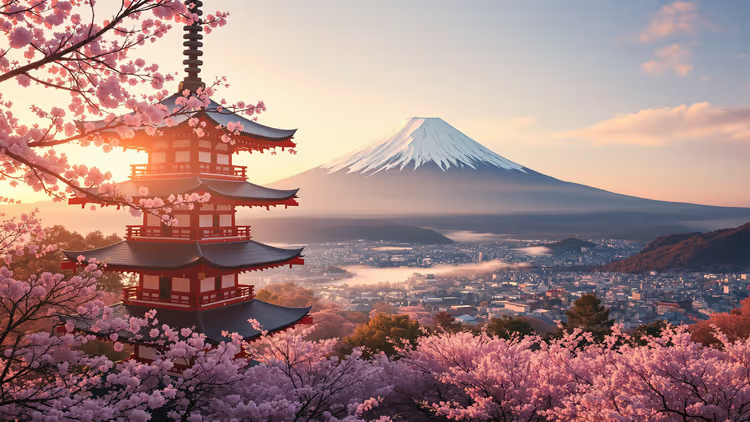
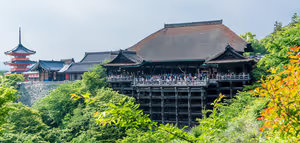
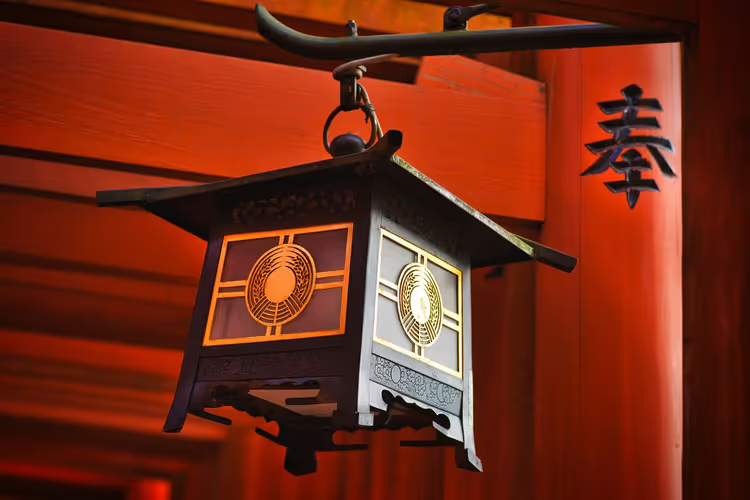
The core of the section is routes and cities. There are plans for seven days, for two weeks and for three: Tokyo, Kyoto, Osaka and Hiroshima in one version, the road from Fuji to the Alps in another. Day trips are covered separately: Hakone, Nara, Fuji and a selection of outings from Tokyo for a few hours or a full day. For a first visit there is an overview of visas, transport and budget. Another piece gathers places across the whole country, from the pagoda near Fuji to Fushimi Inari.
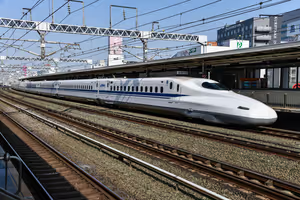
The second large group is transport and money. We look at how to get from Narita to Tokyo, how to take the shinkansen to Kyoto and when the Japan Rail Pass does not pay for itself. There are two pieces on budget: a calculation for two and three weeks and a breakdown of money-saving options with a pass, a hostel and a night bus. Accommodation is described by type (hotel, ryokan, capsule) and by place: the districts of Kyoto and bases for an overnight stay in Hakone.
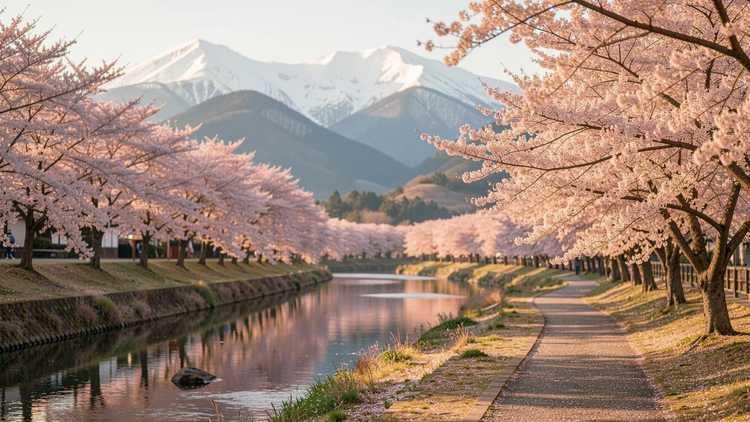
The third group is seasons and places. Cherry blossom, autumn maples, winter by region and the typhoons of late summer each have their own text, plus a general month-by-month calendar. The sights vary in scale. Tokyo's museums, teamLab and Universal Studios Japan sit alongside Takachiho Gorge, Gunkanjima Island, the Yonaguni Monument and the climb up Fuji on the Yoshida Trail. There are lighter topics too: food, souvenirs, anime locations, Tokyo with kids, the restaurant train in Niigata.
Every piece opens with a short answer to the main question. Practical blocks follow: how to get there, what to buy in advance, how much time to allow. For prices and timetables we give the source and the date we checked it. If the details may change by your dates, we say so. We write about the downsides directly: crowds in blossom season, weather risks in August and September, a pass that does not suit every route.
The section is meant for people who travel independently and are ready to put together their own route from trains, overnight stays and tickets. It works for a first visit and for a return one, when you want to get beyond Tokyo and Kyoto. It will be less useful to anyone looking for a ready-made escorted tour. We do not sell trips and we do not handle paperwork.
We suggest starting with the first-visit piece and the seasons calendar: they settle the month and the overall budget. Then choose a route by the number of days. After that, move on to transport and accommodation, and add sights and day trips last. The texts on seasons will also come in handy later, when your dates are fixed and you need to pick a region.
The section belongs to "Asia" within "Destinations". It has no subsections yet, and all the pieces sit in a single list. If you are comparing Japan with other countries, take a look at the neighboring sections: "Thailand", "Vietnam", "India", "Maldives", "Turkey", "United Arab Emirates", "Armenia" and "Azerbaijan".
Conditions in Japan change: pass fares, trail fees, the way tickets are sold. We update the pieces and check them against the official websites of carriers, parks and museums. Always verify visa requirements and insurance terms with the official sources of your own country and with the Japanese authorities. And before buying tickets, open the website of the place itself once more: the latest version of the rules is always there.
Japan: a guide for planning your own trip
🍁 Monthly weather, foliage timing and the best dates for Kyoto, Hokkaido and Kyushu. We break down when to go to catch…
Read more →🌸 Sakura bloom dates by Japanese cities in the 2026 season, five uncrowded hanami spots, park etiquette rules and…
🗾 Twenty places in Japan with prices and opening hours: Mount Fuji, Fushimi Inari, snow monkeys and old villages. Plus…
🗺️ A breakdown of lodging types in Japan: hotels, ryokans, hostels, and capsules. 12…
💶 We broke down the Japan travel budget by category: flights, hotels, trains, food and…
🚄 We calculate Japan Rail Pass payback on specific routes, compare it with regional…
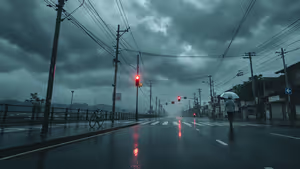
🗺️ Typhoon season in Japan lasts from June to October, peaking in August and September:…
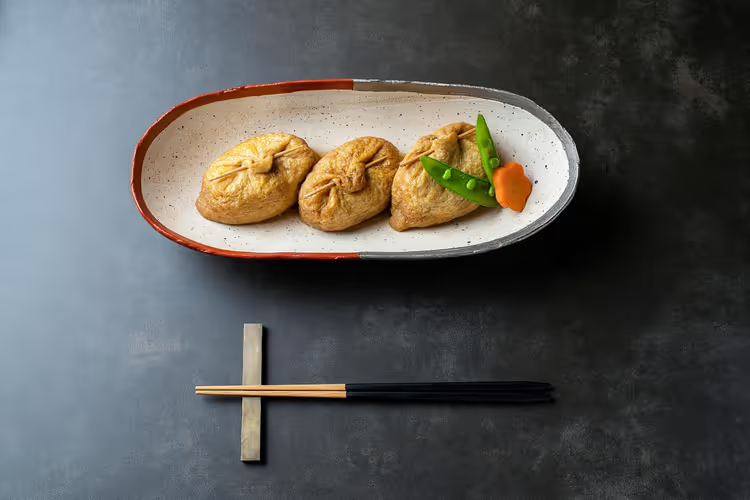
🍜 From ramen in a couple of minutes to kaiseki over several hours: a step-by-step look at eleven Japanese dishes,…
Read more →✈️ Linear Japan itinerary for 14 days: Tokyo, Kyoto, Osaka and Hiroshima, night breakdown, shinkansen, travel costs and…
🗺️ Sakura, typhoons and cheap months: we break down seasons by region, from Hokkaido to Okinawa, and suggest when to…