
















Lima: where to live by the ocean and what to see downtown
Lima surprises you right at the airport. You won't get an entry stamp for Peru here, and no trace of your visit will remain in your passport. The capital is rarely the final destination of a trip, but it's the gateway to Cusco and Machu Picchu. In a couple of days you can walk through Lima's oldest square, gaze at the Pacific Ocean from a cliff, and try ceviche in the city known as the gastronomic capital of the continent.
Entry and exit stamps are now replaced by the electronic Tarjeta Andina, which you download from the migration service website (as of 09/2026, Migraciones Peru).
Ad: this article contains affiliate links, we earn a commission if you book through them, at no extra cost to you.
General information
💡 In short:
- From Jorge Chavez Airport to Miraflores, take Uber or an official taxi; the trip takes about an hour.
- The most convenient areas to stay are Miraflores, Barranco, or San Isidro, the safest neighborhoods in the city.
- Entry to the Cathedral is paid; tickets can be bought online or on site.
- Prices and opening hours: 09/2026, verified on the official Cathedral website.
Your introduction to Peru starts with the capital. Most often, the route to Cusco and Machu Picchu goes through Lima, so the city is hard to avoid.
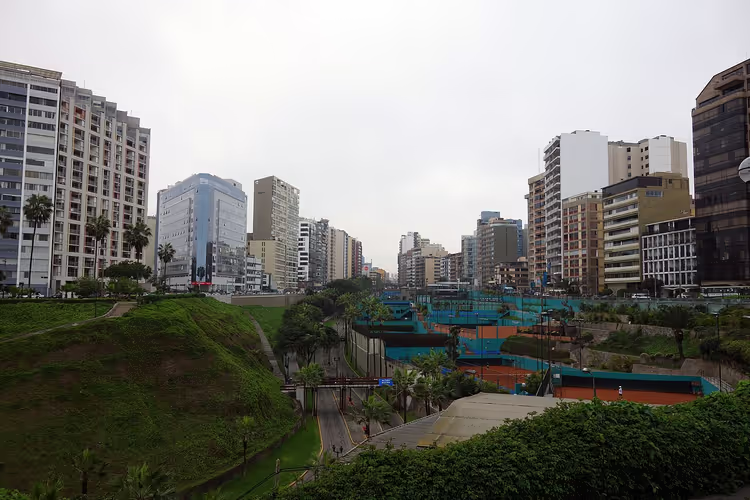
Lima stretches for dozens of kilometers, and traffic jams are part of everyday life here. Don't judge the city by the areas near the airport: there are indeed many poor neighborhoods. But their residents also try to make their streets cleaner and cozier, so first impressions can be deceiving.
 © Juanity41 · CC BY-SAPhoto: Juanity41, CC BY-SA (https://creativecommons.org/licenses/by-sa/3.0), Wikimedia Commons
What will surprise you, though, are the wide avenues and sidewalks; you're not used to such scale in Europe. Peruvians speak Spanish, and English, as in most Latin American countries, is not widely spoken. A few basic Spanish phrases will make your trip through markets and taxis noticeably easier.
Best neighborhoods in Lima
Today Lima has few safe neighborhoods, so it's not worth skimping on accommodation.
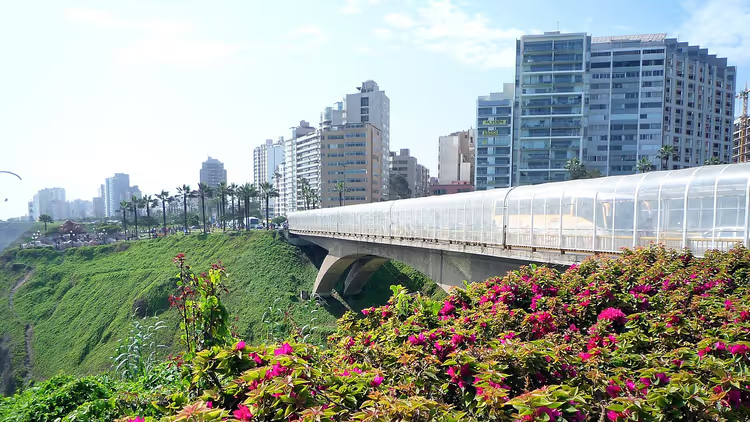
Miraflores suits those who want to live near the waterfront and parks. San Isidro is chosen for its quiet and business districts. Barranco is considered the bohemian neighborhood: creative types have moved here, and galleries, bars, and restaurants thrive. Police patrol the streets, and the waterfront offers views of the Pacific Ocean.
 © Mira4espina78y · CC BY-SAPhoto: Mira4espina78y, CC BY-SA (https://creativecommons.org/licenses/by-sa/3.0), Wikimedia Commons
Renting an apartment or staying in a hotel in these areas costs more, but you'll feel at ease in the evening. It's convenient to search for accommodation in Miraflores right by the waterfront: see hotels in Miraflores on Trip.com.
What to see
The historic center, ocean cliffs, and museums are spread across different districts, so plan at least two days. Tours of the center and coastline are easy to book on GetYourGuide.
Historic center
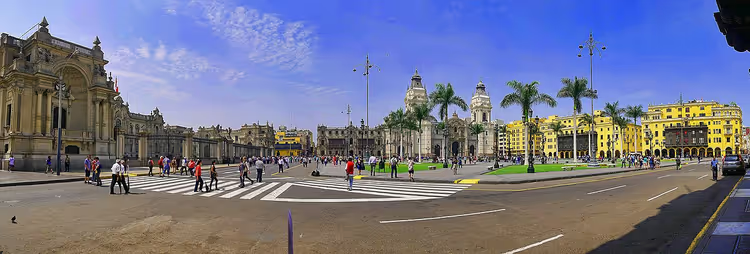
Start your city tour at Plaza Mayor. This is Lima's oldest square, founded by Francisco Pizarro in the 16th century on the site of an indigenous settlement. From here it's easy to walk deeper into the colonial center without turning off anywhere.
The buildings on the square have survived more than one earthquake, but the bronze fountain still stands in its original spot. Today the Government Palace, the City Hall, the Archbishop's Palace, and the Cathedral are all located here.
 © Allan Grey · CC BY-SAPhoto: Allan Grey, CC BY-SA (https://creativecommons.org/licenses/by-sa/2.0), Wikimedia Commons
The cathedral was built on the site of the city's first church and was later rebuilt after earthquakes. Today it operates as a museum while also welcoming worshippers. Admission is paid; tickets can be bought online on the official website or on site.
Shoe shiners work on the square: they will polish your pair for a small fee. Don't rush to decline, it's part of the local color.
Besides Plaza Mayor, the center has many streets with bright facades, cathedrals, and souvenir shops. You'll want to stop and snap a couple of shots at every building, so allow extra time.
Keep safety in mind separately: there are many beggars in the center, and they come right up to tables at restaurants. Explore the heart of Lima in the first half of the day, and we've put together tips against pickpocketing in a separate article.
The ocean and Costa Verde
Lima sits on the Pacific coast, but you can't swim here. There is no beach as such, and the shore is strewn with huge rocks that the waves undercut. For a beach holiday you'll head out of town, for example to San Bartolo or Punta Hermosa.
Just sitting on the cliff and gazing into the distance is worth doing on its own: the sound of the waves is calming after the noisy center. Just don't forget sunscreen, the sun in Lima is strong all year round.
Barranco sits on a hill, but the Bajada de Baños path leads down to the water. The walk to the ocean takes 10-15 minutes.
Water activities
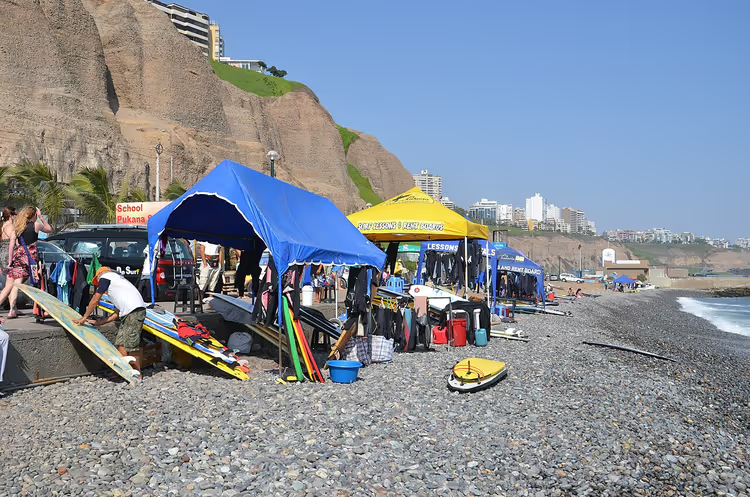
The ocean isn't suitable for swimming, but it's ideal for surfing and paragliding. Tandems fly over Costa Verde constantly, and beginners learn on the waves. If you've long wanted to see the city from above, people do it here every day.
A tandem paragliding flight costs from 300 soles (as of 09/2026, APSAFLY). The park on Costa Verde is open daily, and access to the viewpoint is free.
 © Avodrocc · CC BYPhoto: Avodrocc, CC BY (https://creativecommons.org/licenses/by/2.0), Wikimedia Commons
Surf schools operate right on the Miraflores boardwalk, and equipment is provided on site. Take a lesson in the morning, while the wind is weaker.
Museums and archaeology
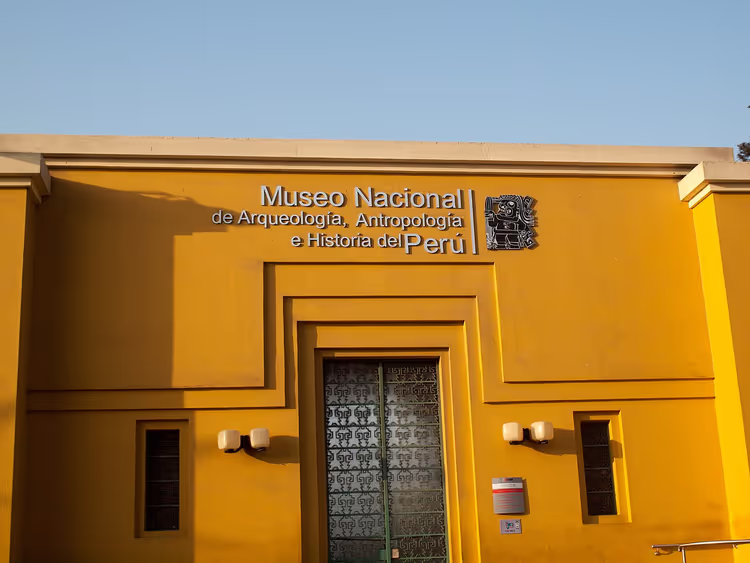
Museum lovers should check out the Museo Nacional de Arqueología, Antropología e Historia del Perú. It houses the country's entire archaeological history, including a model of Machu Picchu and exhibits several thousand years old.
 © Ibrehaut · CC BY-SAPhoto: Ibrehaut, CC BY-SA (https://creativecommons.org/licenses/by-sa/4.0), Wikimedia Commons
The museum is open Tuesday through Sunday from 9:00 to 19:30 (as of 09/2026, official museum website). Check tickets and discounts there as well.
Tours and tickets in Lima
Guided tours, skip-the-line tickets and activities — most offers can be cancelled free of charge.
See offers on GetYourGuideThe widget loads once you give your consent.
Where to eat
Lima has long held the title of South America's gastronomic capital. Central Restaurante, which topped The World's 50 Best Restaurants ranking in 2023, is located here (as of 09/2026, Wikipedia). And in November 2026, Lima will host the awards ceremony for this ranking for the first time (as of 09/2026, buenazo.pe).
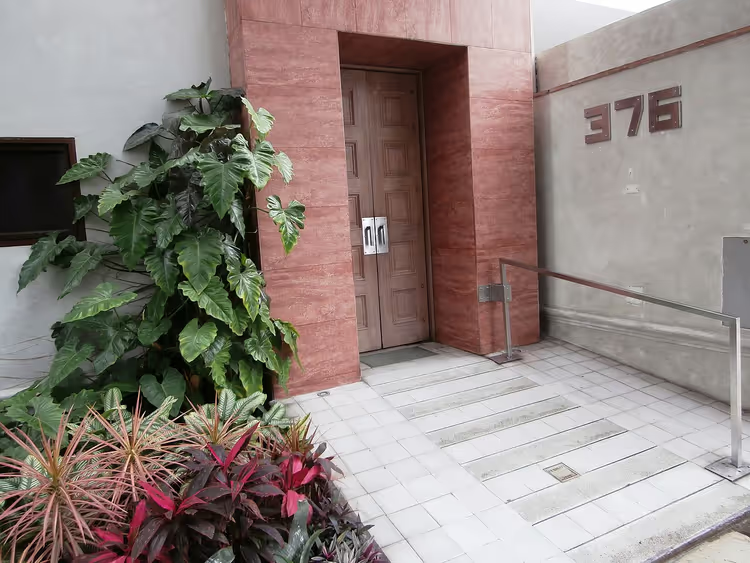
You can't get into Central without a reservation, tables are booked in advance. It's easier to try Peruvian cuisine at Embarcadero 41: they make ceviche and that very tiger's milk we wrote about in our article on Peruvian food.
 © Winedirector · CC BY-SAPhoto: Winedirector, CC BY-SA (https://creativecommons.org/licenses/by-sa/3.0), Wikimedia Commons
Between lunch and dinner you can stroll through Lima's green, well-kept parks, where it's easy to spend more than an hour.
⁉️🤔 Frequently asked questions
How do I get from Lima airport to the city?
From Jorge Chávez airport to Miraflores or Barranco, take an Uber or an official taxi. Plan on an hour for the trip, traffic jams in Lima are common. Uber is usually cheaper and safer than the cars outside the terminal, and you see the price in the app before the ride.
Can you swim in the ocean in Lima?
No. There's no beach in the city itself, and the shore is made up of huge rocks and powerful waves. You can swim and sunbathe outside Lima, for example in San Bartolo or Punta Hermosa. In the city, the ocean is only good for surfing and views from the cliffs.
Where's the best place to stay in Lima?
Choose Miraflores, Barranco, or San Isidro. These are the safest and most well-kept districts, with hotels, cafes, and the waterfront. In other parts of the city, it's better not to walk around in the evening as a tourist.
Do I need English in Lima?
Peruvians speak Spanish, and English is mostly used in hotels and restaurants for tourists. A translator app on your phone will also help.
How much does it cost to enter Lima Cathedral?
Entry is paid. A ticket for a foreign visitor costs about 30 soles (as of 09/2026, perumira tourism portal). You can buy it online or on site. The cathedral operates as a museum, but parishioners attend services for free.
In short: what's worth booking
Lima is simple: during the day you explore the historic center and museums, in the evening you have dinner in Barranco or Miraflores. If you only have two days, stay near the ocean and don't waste time on outlying districts.
If architecture matters to you, start with Plaza Mayor and the Cathedral. If you're here for the ocean and sports, stay in Miraflores, close to Costa Verde, surfing, and paragliding.
For an overnight stay by the ocean, check out hotels in Miraflores on Trip.com, and book ready-made Lima tours if you want to save time on planning.

A small editorial team writing guides for independent travel. We travel ourselves, but we haven’t been everywhere, so we check prices, opening hours and how to get there against official sources.