
















Colombo and Kandy: 18 places, tickets and the road between the cities
Colombo hits you all at once: tuk-tuk horns, the smell of curry, the ocean beyond the promenade. Most travelers start their trip to Sri Lanka in this city, since the island's main airport is right next door.
After that, tourists head to the hills, to Kandy. These two cities feel completely different. Below, we break down what to see in each, how much tickets cost, and how to get from one to the other.
Ad: this article contains affiliate links, we earn a commission if you book through them, at no extra cost to you.
Colombo: skyscrapers, markets and the ocean
💡 In short:
- The easiest way to see the city is by rented tuk-tuk: the sights are spread out over several kilometers.
- Kandy is smaller and quieter, but some sights are outside the city, so a motor rickshaw comes in handy there too.
- The train from Colombo to Kandy runs through tea-covered hills and plantations.
- Prices and opening hours: 09/2026, verified on the Lotus Tower ticket page.
Colombo stopped being the capital about forty years ago. The official status went to neighboring Sri Jayawardenepura Kotte, but the government, banks and business life stayed here. One version says the city's name translates as "mango harbor," and the ocean still shapes its character.
The points of interest are scattered across the metropolis, so it's easier to arrange a tuk-tuk driver for the whole day. He'll wait at every stop, and you won't waste time looking for transport. In colonial times, Beira Lake divided the city into two halves: Europeans settled near the port, while the local population was pushed to the other side of the water.
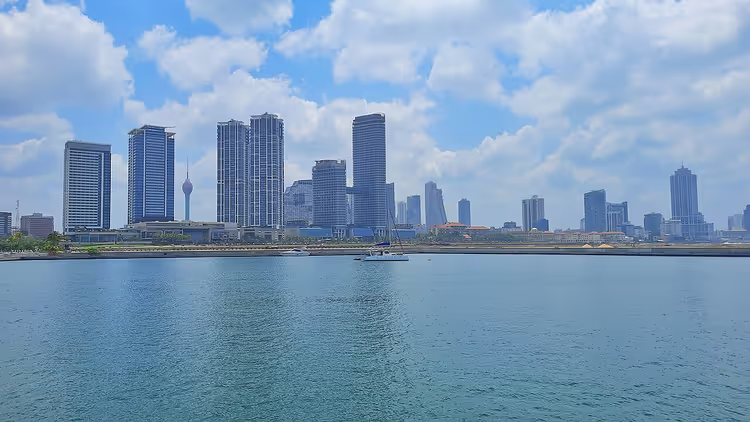
A glass business center rises next to the lake, and just a couple of steps away the old bazaar is already buzzing. That contrast is what makes Colombo interesting to explore on foot.
A. Pettah Market
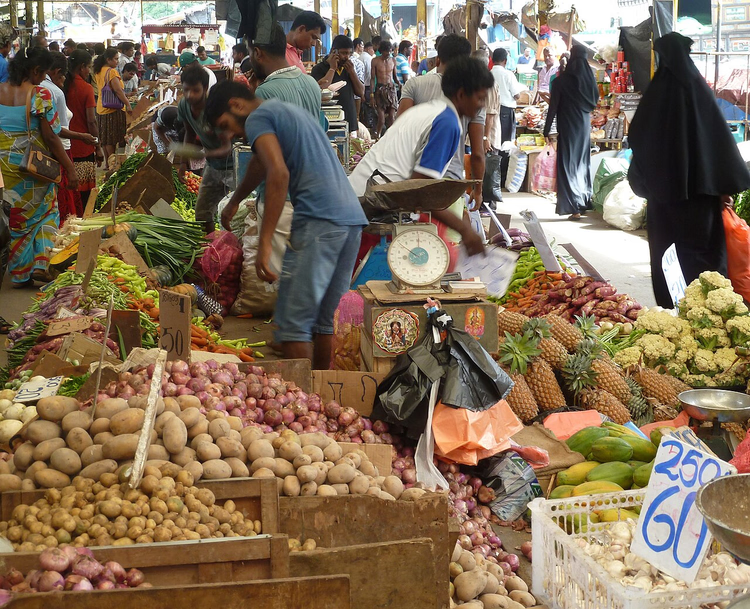
The noisy Pettah Market occupies several blocks in the very heart of the city. It sells produce, clothing, spices and souvenirs, all mixed together across several streets. Bargain: in Asia, haggling is part of the ritual, and prices can sometimes be cut in half. You'll also quickly get a sense of how everyday Colombo lives behind the facade of skyscrapers.
 © PIERRE ANDRE LECLERCQ · CC BY-SAPhoto: PIERRE ANDRE LECLERCQ, CC BY-SA (https://creativecommons.org/licenses/by-sa/4.0), Wikimedia Commons
B. Pettah Floating Market
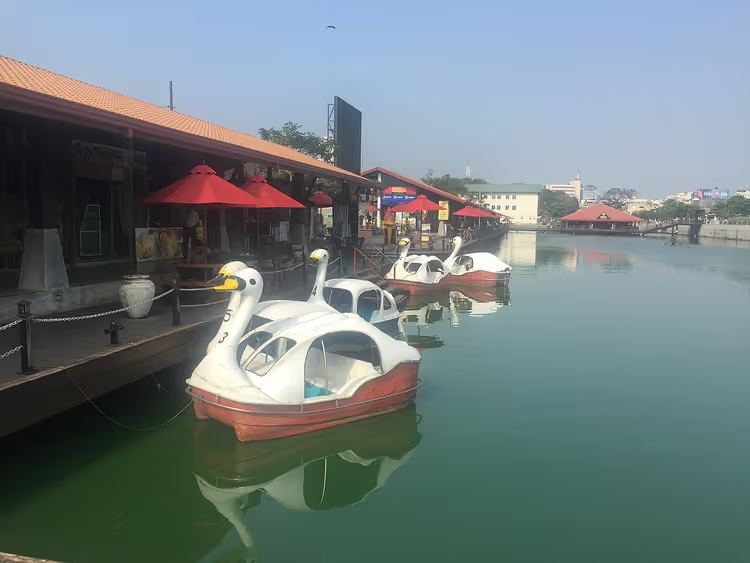
The second market sits right by the railway station, directly on the water. This area used to be abandoned warehouses, and the canals had turned into swamps. Now shops selling Sri Lankan street food and souvenirs line the water. Stop by here before your train to Kandy while you wait for the departure.
 © Dan arndt · CC BY-SAPhoto: Dan arndt, CC BY-SA (https://creativecommons.org/licenses/by-sa/4.0), Wikimedia Commons
C. Lotus Tower
Lotus Tower rises near Beira Lake, and its top is shaped like a flower. The tower is one of the tallest structures in the region, with observation decks, restaurants and shops inside. The observation deck costs $20 for an adult tourist, and the tower is open Mon-Fri 9:00-22:00 and Sat-Sun 9:00-23:00 (as of 09/2026, rates on the tower's website). Come at sunset, when the city below lights up.
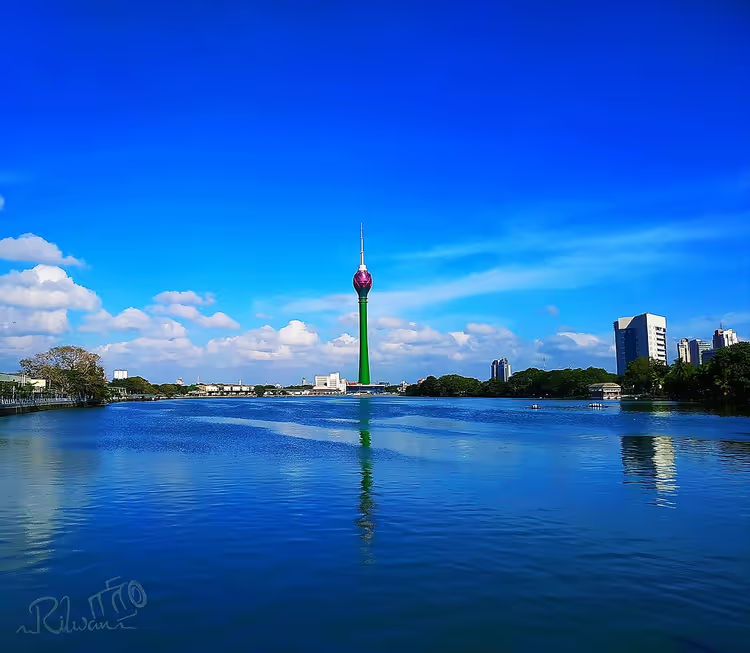 © Mohamed Rilwan1210 · CC BY-SAPhoto: Mohamed Rilwan1210, CC BY-SA (https://creativecommons.org/licenses/by-sa/4.0), Wikimedia Commons
D. Gangaramaya Temple
Gangaramaya Temple operates as an active Buddhist temple in central Colombo. Its architecture combines Chinese, Indian, Thai and Sri Lankan influences, and the complex was built in the late nineteenth century. The temple consists of several buildings, so allow an hour for a relaxed visit. Leave your shoes at the entrance, and it's best to cover your shoulders and knees.
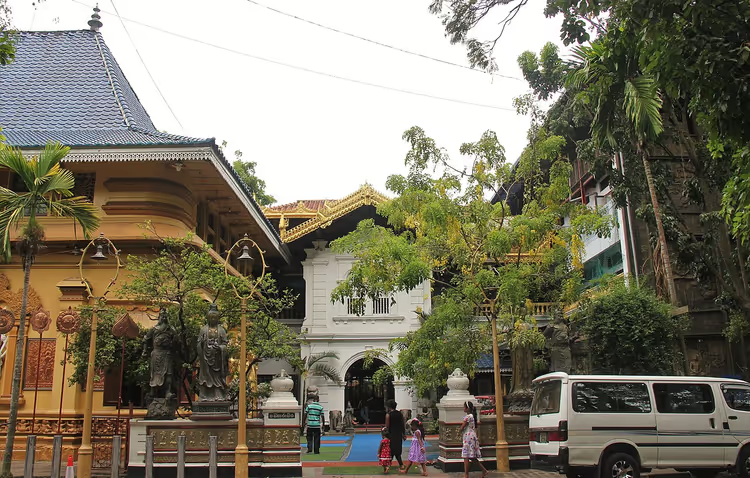 © AKS.9955 · CC BY-SAPhoto: AKS.9955, CC BY-SA (https://creativecommons.org/licenses/by-sa/4.0), Wikimedia Commons
E. Sima Malaka
Right next to the main temple you'll see Sima Malaka, a small lake with a park area. A Buddhist shrine stands on an island in the center. This part of the complex is used for meditation, so it's noticeably quieter than the surrounding streets.
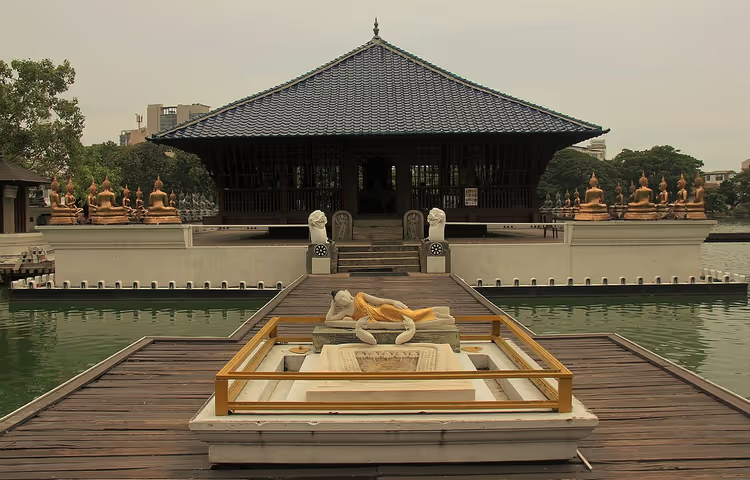 © AKS.9955 · CC BY-SAPhoto: AKS.9955, CC BY-SA (https://creativecommons.org/licenses/by-sa/4.0), Wikimedia Commons
F. Colombo National Museum
Colombo National Museum introduces you to the island's history, nature and culture. The halls span several millennia, from ancient kingdoms to the colonial period. The museum is considered the largest in the country, so allow at least two hours for it. Check the exact opening hours and prices on the museum's official website before your visit.
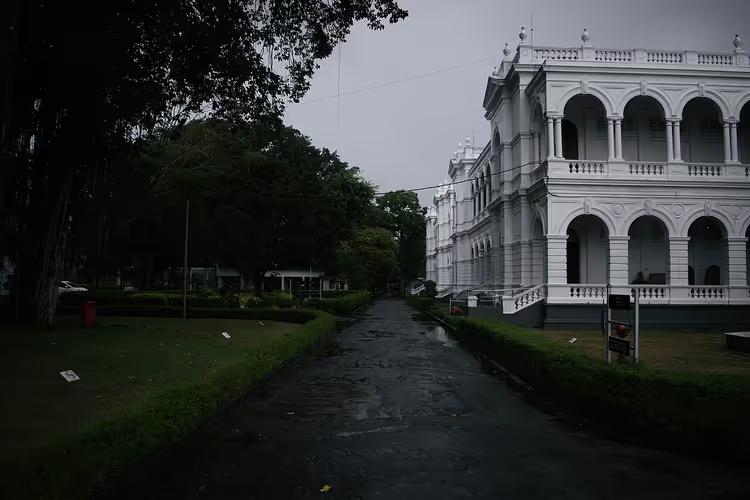 © Levi Clancy · CC BY-SAPhoto: Levi Clancy, CC BY-SA (https://creativecommons.org/licenses/by-sa/4.0), Wikimedia Commons
G. Independence Square
Independence Square was built in the mid-twentieth century, when Sri Lanka gained independence from Britain. The memorial hall stands in the center of the former Cinnamon Gardens. Today national holidays are celebrated here, and the cinnamon plantations were abandoned back in the nineteenth century, when the spice trade stopped generating income.
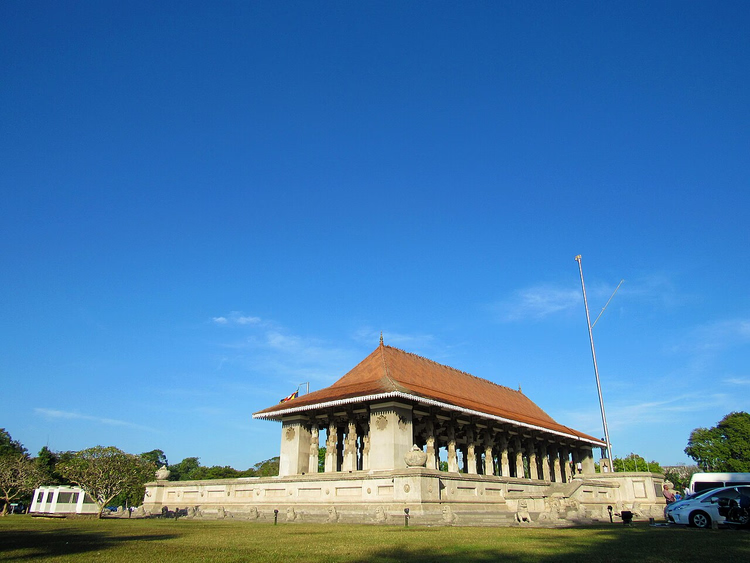 © Azeez Abubakr · CC BY-SAPhoto: Azeez Abubakr, CC BY-SA (https://creativecommons.org/licenses/by-sa/4.0), Wikimedia Commons
H. University of Colombo
Next to the square lies a large student quarter. It is home to the buildings of the country's main university and several colleges. Stop by here if you want to see the city without tourist crowds: the campus is a pleasant place for a walk in the shade of the trees.
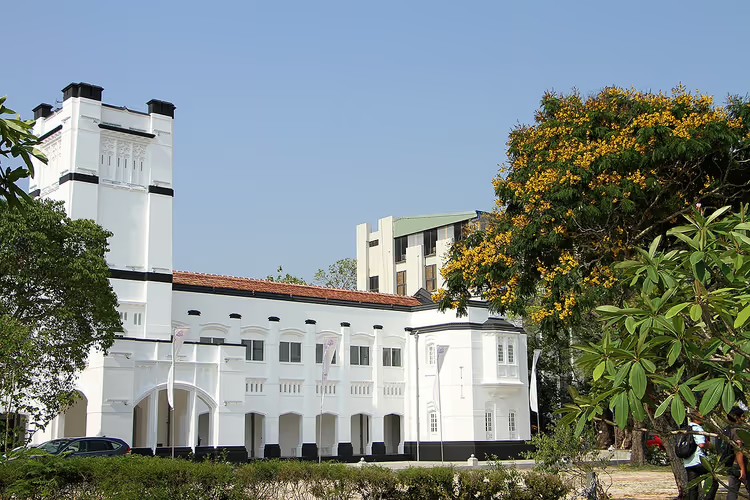 © නිපුන දොඩන්තැන්න · CC BY-SAPhoto: නිපුන දොඩන්තැන්න, CC BY-SA (https://creativecommons.org/licenses/by-sa/4.0), Wikimedia Commons
I. Galle Face Green
The Galle Face Green promenade stretches along the ocean in the very center of the city. On one side you have a view of the Indian Ocean, on the other there are food and souvenir stalls. Locals come here in the evening, when the heat subsides and the sea breeze picks up. Bring water and a light jacket to protect you from the spray.
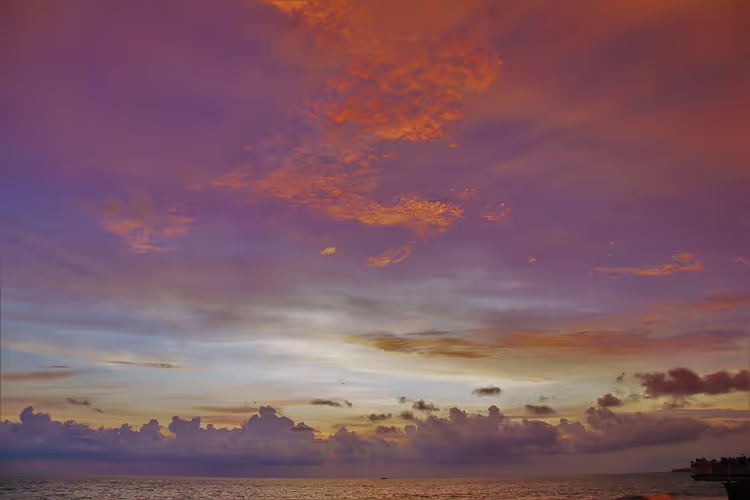 © AKS.9955 · CC BY-SAPhoto: AKS.9955, CC BY-SA (https://creativecommons.org/licenses/by-sa/4.0), Wikimedia Commons
J. Colombo Lighthouse
Colombo sits on the country's largest deep-water harbor. There used to be a Portuguese fort here, but nothing remains of it. The old lighthouse, however, has survived: it no longer works, but you can climb it. In the evening it is a good spot to watch the sunset over the ocean.
Next to the port lies the main administrative district with banks, boutiques, expensive hotels and restaurants. This is where a different Colombo begins: glass, security and air conditioning.
Kandy: the Temple of the Tooth and tea hills
Kandy sits in the mountains at the very center of the island, and people come here for the climate and the history. Trains and buses run here from Colombo. The route passes through tea plantations, and many consider it an attraction in its own right.
From the sixteenth century, when the Portuguese took the coast of Ceylon, until 1815, when the British seized the island, Kandy was the seat of the Sinhalese kings. That is why the city is called the country's cultural capital.
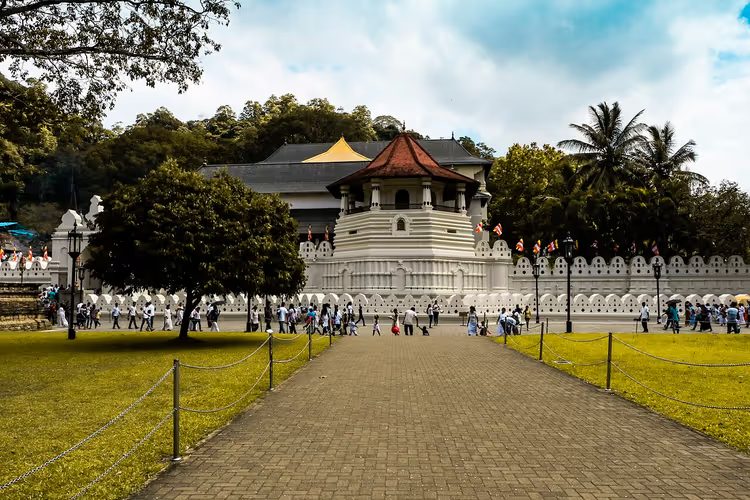 © Rashod Korala · CC BY-SAPhoto: Rashod Korala, CC BY-SA (https://creativecommons.org/licenses/by-sa/4.0), Wikimedia Commons
Kandy is much smaller than Colombo. Some sights are outside the city, and the Buddha statue sits on a hill, so you will need a tuk-tuk for the day. On foot you can only reach the center, where the temple, the lake, and the old palace stand close together.
A. Temple of the Tooth (Sri Dalada Maligawa)
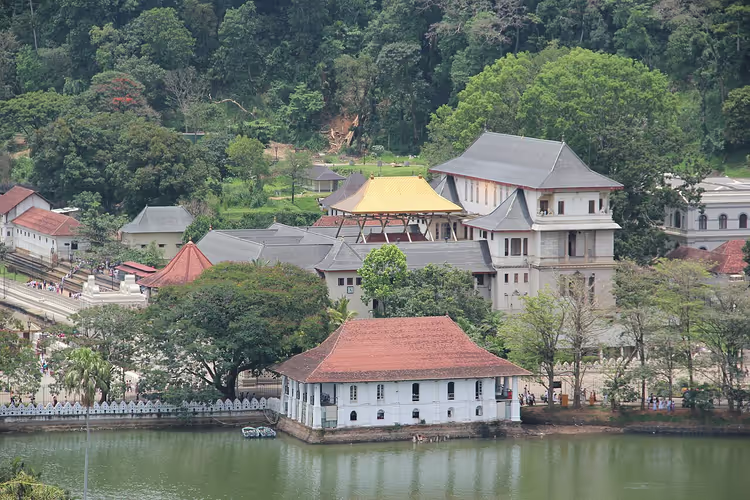
In Kandy, people head first to the Temple of the Tooth (Sri Dalada Maligawa). It houses a tooth of the Buddha, found, according to tradition, in the ashes at the site of the spiritual teacher's cremation. The relic was brought to Sri Lanka from India in the fourth century, and it ended up in Kandy after the Portuguese took the coast.
In the sixteenth century, the Portuguese shipped the relic to Goa. By one account, Catholics burned it there, but Sri Lankans deny this. They say a replica was sent to India, while the real tooth was hidden on the island. Today the relic rests on the upper floor of the temple inside seven golden caskets studded with precious stones. Tourists are not shown it, but for Buddhists around the world the temple remains one of the most important sites.
Shoes are removed at the entrance, and clothing must cover knees and shoulders. Admission is paid, with a separate rate for foreigners (as of 09/2026, entry rules on the temple website). Tickets and Kandy tours are easy to browse on Tiqets.
 © Antony Stanley from Gloucester, UK · CC BY-SAPhoto: Antony Stanley from Gloucester, UK, CC BY-SA (https://creativecommons.org/licenses/by-sa/2.0), Wikimedia Commons
B. Bogambara Lake
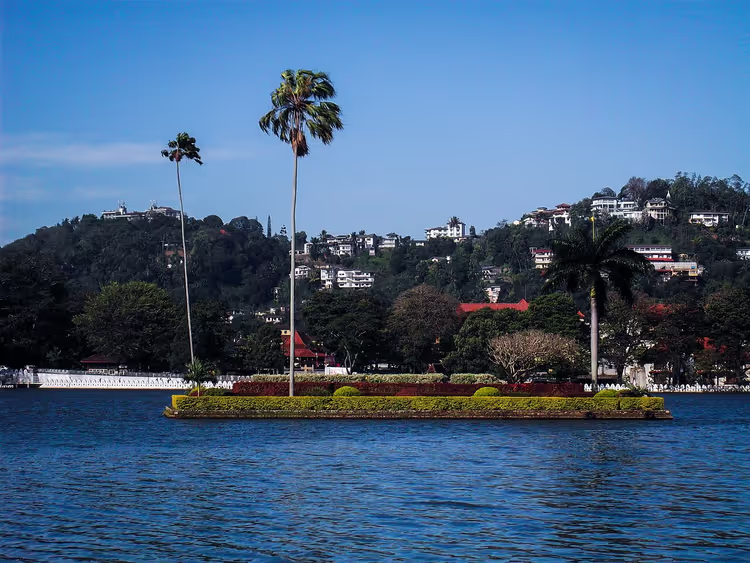
The temple stands on the shore of Bogambara Lake. The lake was dug on the site of a rice field in the early nineteenth century on the orders of the last Sinhalese ruler. There is a small island in the middle. According to legend, a royal cottage stood on it, reached through an underwater tunnel. Walk around the lake: the shaded path along the shore makes for a pleasant stroll.
 © DeeBFFTC · CC BY-SAPhoto: DeeBFFTC, CC BY-SA (https://creativecommons.org/licenses/by-sa/4.0), Wikimedia Commons
C. Old Royal Palace
The Old Royal Palace served as the residence of the last king of Kandy and stands on the other side of the Temple of the Tooth. The palace dates back to the fourteenth century, and in the seventeenth century the Portuguese destroyed it, so the complex had to be rebuilt. After the British invasion, the royal chambers were taken over by government offices. The oldest surviving part was given over to the Archaeological Museum.
D. Udawattakele Sanctuary
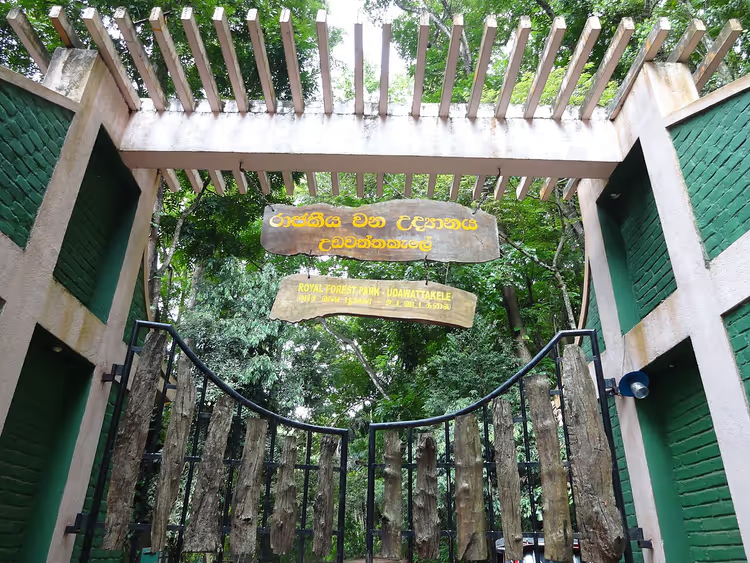
For many years, Udawattakele Sanctuary was closed to locals, and only royalty walked these trails. Now, for a small fee, everyone can stroll along the hillside paths. The park has preserved Buddhist temples and hermitages, along with a pond, a cave, and an old cemetery. A special curiosity of the park is a giant liana that is several centuries old.
 © Z thomas · CC BY-SAPhoto: Z thomas, CC BY-SA (https://creativecommons.org/licenses/by-sa/4.0), Wikimedia Commons
E. Ismail Clock Tower
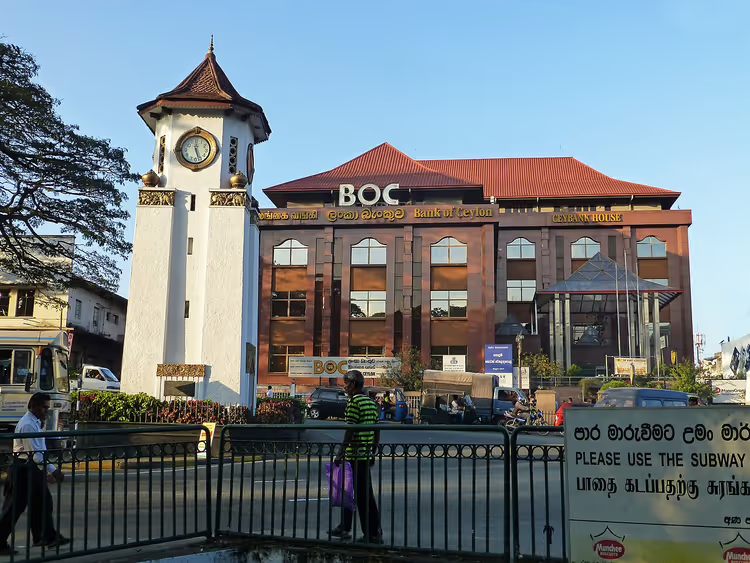
The Ismail Clock Tower was built in memory of the son of a prominent businessman. In the mid-twentieth century, the city suffered a flood with landslides, and the young man died in his car under one of them. His father erected a clock tower in the center of Kandy. Today locals arrange to meet at the tower, and you will pass by it anyway.
 © Ji-Elle · CC BY-SAPhoto: Ji-Elle, CC BY-SA (https://creativecommons.org/licenses/by-sa/3.0), Wikimedia Commons
F. Bahirawa Kanda Buddha statue
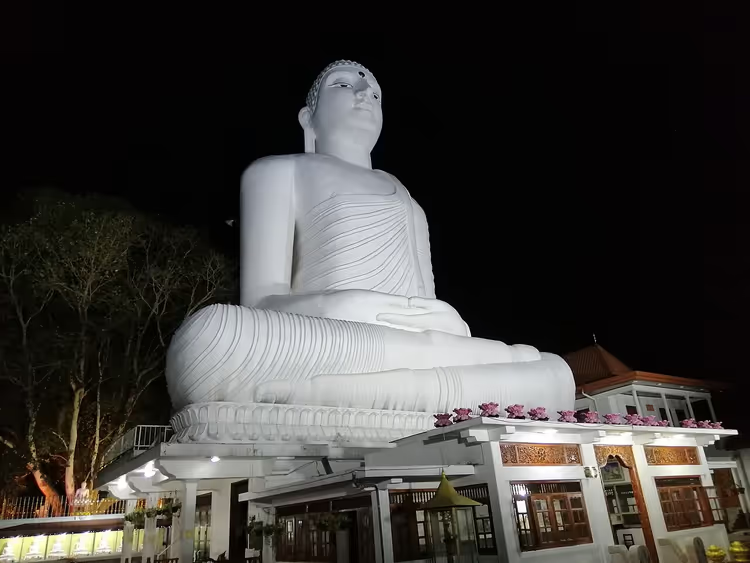
The Bahirawa Kanda Buddha statue is visible from almost anywhere in the city: a huge figure sits on a hill in a meditation pose. A climb leads up to it, and it is tough on foot. The viewing platforms offer views of Kandy and the mountain ridges around it. The statue is considered one of the tallest in the country.
 © Farhana hassim · CC BY-SAPhoto: Farhana hassim, CC BY-SA (https://creativecommons.org/licenses/by-sa/4.0), Wikimedia Commons
G. Royal botanical gardens in Peradeniya
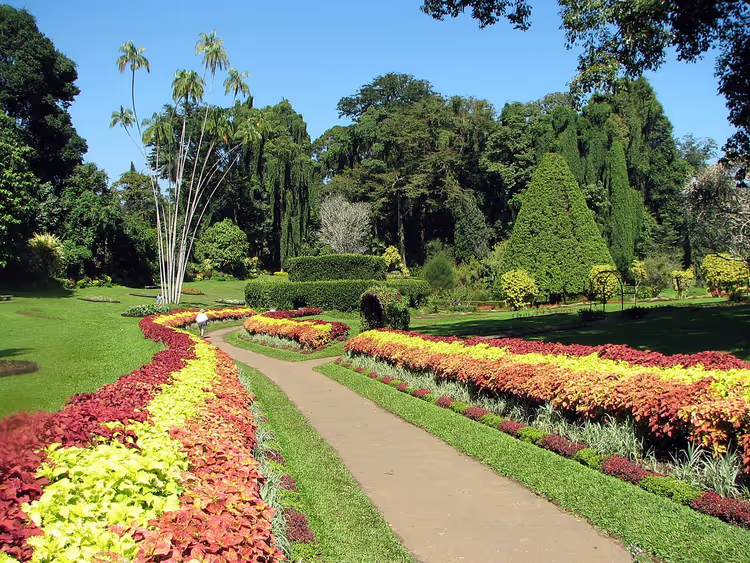
Royal Botanical Gardens in Peradeniya is one of the most visited attractions in Sri Lanka. The garden lies about six kilometers from Kandy (on the map) and grew out of a small royal garden on the banks of the island's longest river. It reached its full scale under the British, when plants from all over the island were planted here. Today the collection includes thousands of species. A separate amusement: a colony of bats that hang upside down from branches during the day.
 © Bernard Gagnon · CC BY-SAPhoto: Bernard Gagnon, CC BY-SA (https://creativecommons.org/licenses/by-sa/3.0), Wikimedia Commons
H. Ceylon Tea Museum
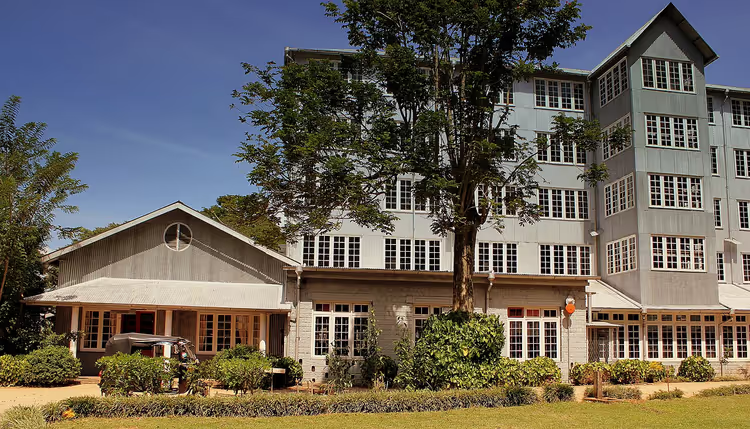
The Ceylon Tea Museum stands near Kandy, in a former tea factory building. In the early twentieth century tea was processed here, and in the early part of this century the Tea Board and the Planters' Association of Sri Lanka opened the museum. It showcases the history and production technology of Ceylon tea, and there is a library, a tea shop, and a cafe. After the tour, you will better understand the difference between high-grown and low-grown tea.
 © calflier001 · CC BY-SAPhoto: calflier001, CC BY-SA (https://creativecommons.org/licenses/by-sa/2.0), Wikimedia Commons
Across the two cities you will get the full picture: the ocean and markets in Colombo, temples, the lake, and tea hills in Kandy. Below you can pick up tickets for the main attractions.
Tours and tickets in Colombo
Guided tours, skip-the-line tickets and activities — most offers can be cancelled free of charge.
See offers on TiqetsThe widget loads once you give your consent.
How to get from Colombo to Kandy
Colombo and Kandy are about 110 km apart on the map, but the road winds through the mountains, so allow half a day. The most scenic option: the train passes through tea plantations and jungle, and the views from the window are often called the best in the country. Check schedules and tickets on Trip.com.
The bus is cheaper and runs more often, but it is more cramped and hotter. A car gives you flexibility, but the winding mountain road is tiring, especially in the rain. If you take the train, book your ticket in advance: in high season, second-class seats sell out quickly.
Colombo or Kandy: which to choose
Criterion | Colombo | Kandy |
|---|---|---|
Size | large metropolis | small mountain town |
Main draw | ocean, markets, Lotus Tower | Temple of the Tooth, lake |
Transport | tuk-tuk for the whole day | auto rickshaw to the hills and garden |
How many days | one to two days | one to two days |
Climate | hot and humid | cooler in the mountains |
If you have a short trip, choose Colombo for the ocean and local color, and Kandy for history and cooler weather. The two cities are easy to connect by train and see in three to four days.
⁉️🤔 Frequently asked questions
How many days should I allow for Colombo and Kandy?
One day is enough for Colombo if you skip the museums. With Lotus Tower and the National Museum, plan two days: the sights are scattered across the city, and getting around takes time. Kandy can be seen in a day or two, because the Buddha statue and the botanical garden are outside the center.
How do I get from Colombo to Kandy?
The most scenic way is the train through the tea hills. The bus is cheaper and runs more often. Book train tickets in advance, especially in season.
When is the best time to visit Kandy?
Kandy sits in the mountains, so it is cooler than the coast. The dry season lasts from December to March, and it is good for long walks. From June to September there is more rain, but prices are lower and crowds are smaller. Visit the temple in the morning, before tour groups arrive.
Do I need special clothing for temples?
Yes, for the Temple of the Tooth and other shrines you need clothing that covers your knees and shoulders. Shoes are removed at the entrance, so slip-on sandals are more convenient. Leave your hat and umbrella in the car. A scarf over your shoulders works if you arrive in shorts or with bare shoulders.
How much does it cost to go up Lotus Tower?
The Lotus Tower observation deck costs an adult tourist $20, and a child ticket is cheaper (as of 09/2026, Lotus Tower price list). The tower is open Mon-Fri 9:00-22:00, Sat-Sun 9:00-23:00. Come in the evening, when the city lights up and the heat subsides.
In short: what to book
If you have one day in Colombo, go for Lotus Tower and the Galle Face Green promenade. If you like museums, start with the Colombo National Museum. In Kandy, start with the Temple of the Tooth, and add the botanical garden to it. Tickets for the observation deck and tours are best booked in advance: in season, lines grow, and morning slots go first. You can check tickets and tours on GetYourGuide.

A small editorial team writing guides for independent travel. We travel ourselves, but we haven’t been everywhere, so we check prices, opening hours and how to get there against official sources.