
















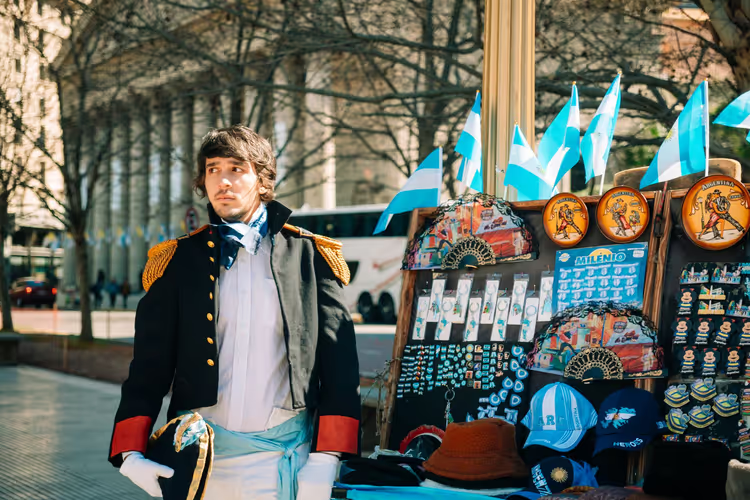
What to bring from Buenos Aires: 10 souvenirs and where to find them
Before your trip to Buenos Aires, you book flights, a hotel, and a couple of tours. The question of "what to bring home" only comes up at the airport.
Let's sort out gifts in advance. A large amount of pesos at the market shouldn't scare you. But small bills for the fair are better prepared at home.
Below are ten souvenirs and the neighborhoods where to buy them: Calle Florida, La Boca, and the Sunday fair in San Telmo. Plus a table of neighborhoods, honest catches of shopping, and answers about cards and currency exchange.
Ad: this article contains affiliate links, we earn a commission if you book through them, at no extra cost to you.
What to consider before buying souvenirs
💡 In short:
- Budget in pesos: the official exchange rate is around 1,530 pesos per dollar (as of 09/2026, BCRA).
- For leather, mate, and ceramics, go to La Boca and San Telmo, not shopping malls.
- Prices and opening hours: 09/2026, verified on the official Buenos Aires tourism office website.
Money matters more here than a list of shops. It's better to arrive with cash dollars. Exchange them for pesos as you spend. Cards aren't accepted everywhere, and not every foreign card works. At the fair and in artisan shops, cash is more often requested. Keep small bills handy.
Cash is exchanged at banks, exchange offices (casas de cambio), and street kiosks. The street rate sometimes looks better. But counterfeit bills and pickpockets are nearby. Get your money at the counter and count the amount without stepping away from the window.
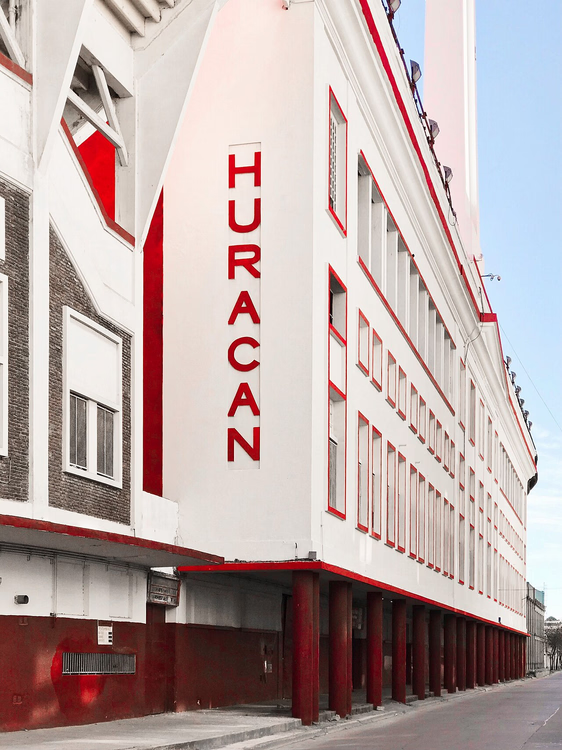
 © Roberto Fiadone · CC BY-SAPhoto: Roberto Fiadone, CC BY-SA (https://creativecommons.org/licenses/by-sa/4.0), Wikimedia Commons
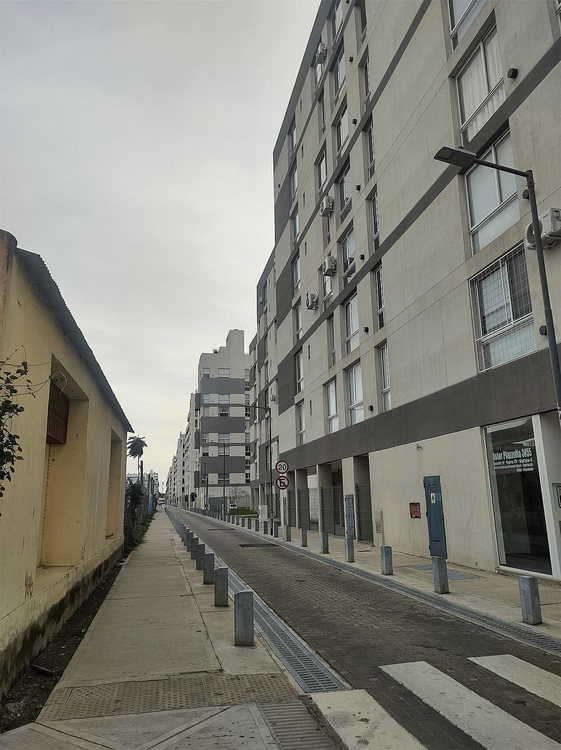
Big shopping in the city isn't worth it. Brands and electronics cost more than in Europe. A walk through Galerías Pacífico is still worthwhile: inside there's a historic arcade with boutiques, not a souvenir market. Do your shopping elsewhere.
Neighborhoods differ in selection and atmosphere. Choose based on what you're looking for.
Neighborhood | What to look for | When to go |
|---|---|---|
Calle Florida | Leather jackets and bags, mate | Daily, during the day |
La Boca (Caminito) | Colorful souvenirs, Boca Juniors shirts | During the day, while it's light |
San Telmo (Plaza Dorrego) | Antiques, handmade goods, prints | Sunday |
Galerías Pacífico | Boutiques and brands, not souvenirs | During mall hours |
If you're looking for a gift with history, start with Sunday in San Telmo. For practical items, go to Calle Florida.
1. Calabaza and bombilla
 © Siarhei Besarab · CC BY-SAPhoto: Siarhei Besarab, CC BY-SA (https://creativecommons.org/licenses/by-sa/4.0), Wikimedia Commons
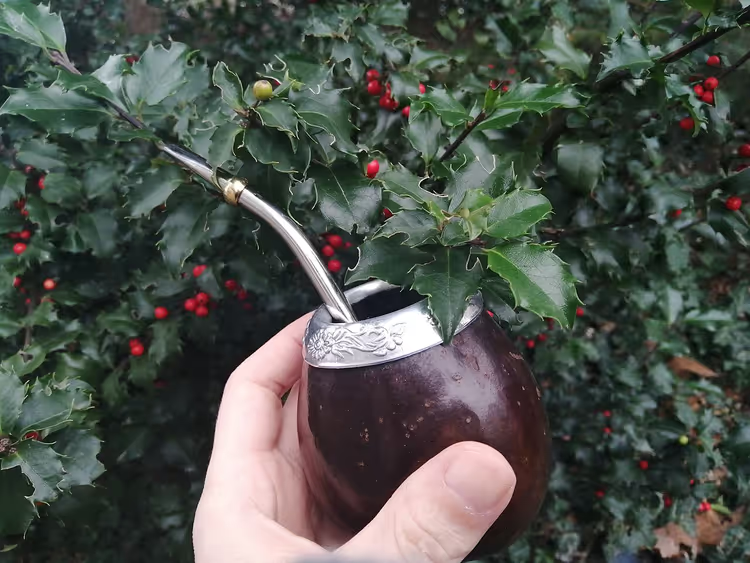
Mate in Argentina is drunk in offices, parks, and on the go. The vessel for the drink is called a calabaza. It's made from a dried gourd. The classic vessel looks rough. But it keeps the drink warm and doesn't smell like plastic.
Without the straw, the set is useless. Through the bombilla, a metal straw with a filter at the end, you drink the infusion without swallowing leaves. Get both items at once. Finding just the straw separately later is harder.
- Where to look: La Boca, Calle Florida, the San Telmo fair.
- Who it's for: those who drink mate at home and want authentic vessels.
- The catch: the gourd breaks, so carry it in your hand luggage and don't leave it under bags in checked baggage.
2. Yerba mate
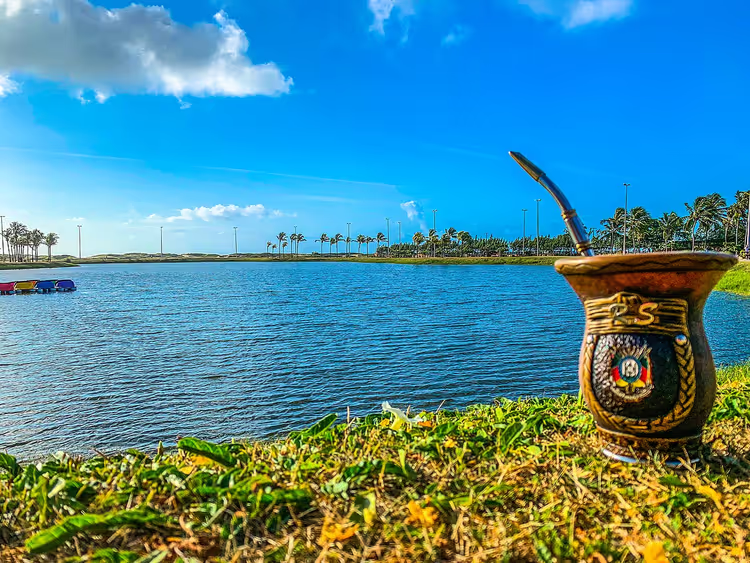
Yerba mate is made from crushed leaves of the Paraguayan holly tree. The infusion has a grassy, slightly bitter taste. Many people soften the first cups with sugar. A pack is sold in supermarkets and at Mercado de San Telmo.
 © Cesar Vieira · CC BY-SAPhoto: Cesar Vieira, CC BY-SA (https://creativecommons.org/licenses/by-sa/4.0), Wikimedia Commons
At home, brew it in small portions. That way you avoid excess bitterness, and an opened pack won't go stale.
- Where to look: supermarkets, Mercado de San Telmo, the San Telmo fair.
- The catch: the packaging takes up space in your suitcase and easily spills over your things.
3. Dulce de leche
 © Iberardi · CC BY-SAPhoto: Iberardi, CC BY-SA (https://creativecommons.org/licenses/by-sa/4.0), Wikimedia Commons
Dulce de leche is made by simmering milk with sugar almost to a caramel thickness. The texture is softer than regular condensed milk and less uniform. Argentines spread it on toast and add it to baked goods.
For a gift, packaging matters. In the center there are sweet shops where jars are assembled into gift sets. You can give such a set even to a colleague.
- Where to look: sweet shops in the center, Mercado de San Telmo.
- Who it's for: colleagues, kids, and anyone who loves caramel.
- The catch: jars are heavy, so plan your baggage weight in advance.
4. Malbec wine from a bodega
Argentina is known for wine made from the Malbec grape. The local word "bodega" means wine house. On the shelves you'll find bottles from Catena Zapata, Luigi Bosca, and Terrazas de los Andes. These producers are named among the country's top ones.
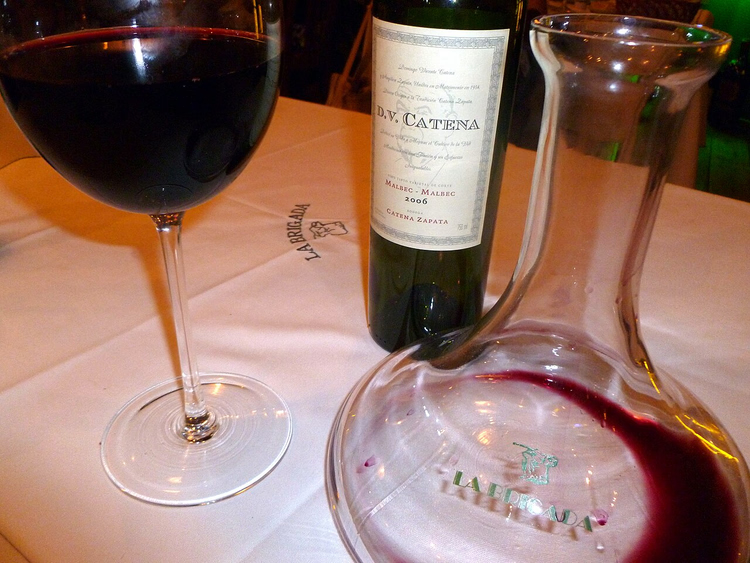 © David Berkowitz from New York, NY, USA · CC BYPhoto: David Berkowitz from New York, NY, USA, CC BY (https://creativecommons.org/licenses/by/2.0), Wikimedia Commons
Buy wine at a wine shop, where the seller can recommend a year and region. At the airport the selection is thinner and prices are usually higher. Take two or three bottles: they disappear at home faster than you think.
- Where to look: wine shops, Mercado de San Telmo.
- The catch: liquids over 100 ml are not allowed in carry-on luggage, so wine has to fly in checked baggage.
- Not for: if you are flying with carry-on only.
5. Cowhide and capybara leather
Gloves, belts, and wallets made of cowhide hold their shape for years. Argentina is famous for cowhide and capybara leather. Calle Florida has more brand-name stores. San Telmo tends to have more workshops.
- Where to look: Calle Florida, San Telmo, La Boca.
- Who it's for: those looking for a gift that lasts for years, not just a season.
- The catch: tourist shops sometimes sell thin leather, so check the seams and lining.
6. Handmade ponchos
A poncho is a reminder of the country's indigenous past. You can wear it in the city too. Thick wool keeps you warm on a cold evening, while a thinner one works for a cool morning. You don't need a special occasion to take one on your trip.
- Where to look: the San Telmo fair, La Boca.
- The catch: wool requires hand washing and dries slowly.
7. Soccer merchandise
Soccer in Buenos Aires is woven into city life. Jerseys and scarves with players' names are sold in La Boca, near Caminito. Tours also go to La Bombonera stadium, where Boca Juniors plays.
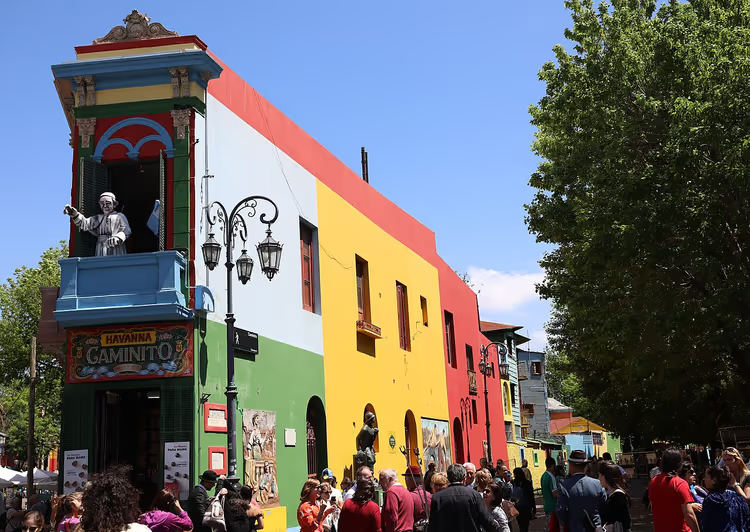 © DerHexer · CC BY-SAPhoto: DerHexer, CC BY-SA (https://creativecommons.org/licenses/by-sa/4.0), Wikimedia Commons
Official jerseys cost noticeably more than replicas. For a fan, get the official version at the club store. Save the souvenir version for friends and colleagues. You can see the stadium on a tour: La Bombonera tours on GetYourGuide.
- Where to look: La Boca, San Telmo, Calle Florida.
- The catch: without trying things on it's easy to get the size wrong, and exchanging an item from another country is difficult.
8. Playing cards
The local deck differs from what you're used to. The suits are different, but you can figure them out in an evening. A set takes up little space and looks great on a table.
- Where to look: souvenir shops, the San Telmo fair.
- The catch: you'll have to explain the rules to guests out loud.
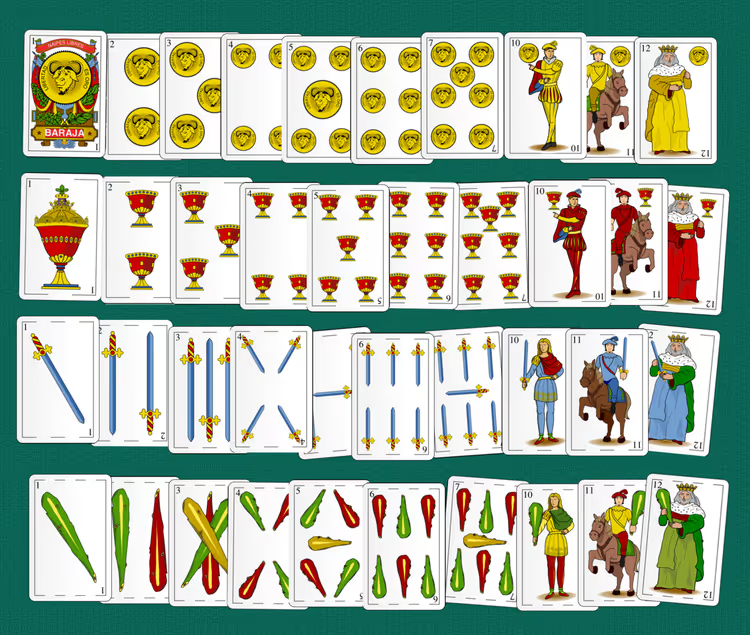 © Basquetteur · CC BY-SAPhoto: Basquetteur, CC BY-SA (https://creativecommons.org/licenses/by-sa/3.0), Wikimedia Commons
9. Antiques from the San Telmo fair
Every Sunday, Plaza Dorrego and Calle Defensa turn into a flea market. The antiques fair opened in 1970 on the initiative of Museo de la Ciudad, and since then it has sold relics and collectibles (as of 09/2026, official tourism office website). Get there when it opens. By midday the aisles are packed.
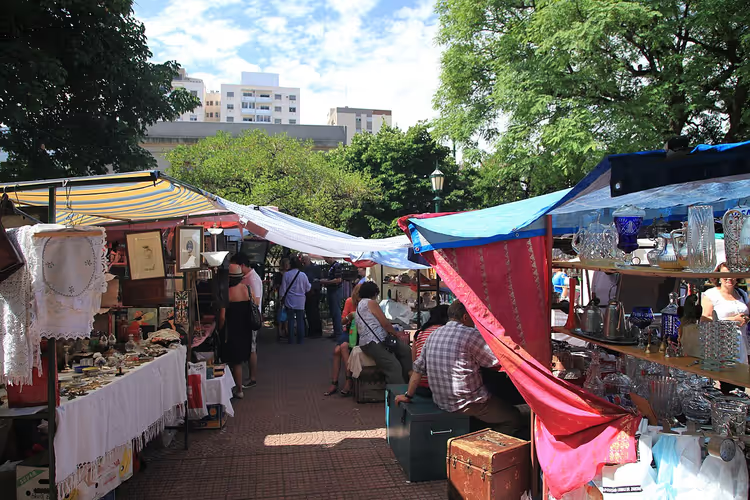 © Liam Quinn from Canada · CC BY-SAPhoto: Liam Quinn from Canada, CC BY-SA (https://creativecommons.org/licenses/by-sa/2.0), Wikimedia Commons
Bargaining is expected here. Don't be shy about naming your price and walking away if it doesn't work.
- Where to look: Plaza Dorrego and Calle Defensa, Sunday.
- The catch: rare items command high prices, and large pieces require space in your luggage.
10. Paintings and prints from Feria de las Artes
Next to the antiques market there's an art fair. On Humberto 1º street, more than 40 artists exhibit paintings, prints, photographs, and sculptures (as of 09/2026, art fair description). A small print travels home in a tube and takes up no space in your suitcase. Ask the artist about packaging. Many prepare their work for transport.
- Where to look: San Telmo, Humberto 1º street, Sunday.
- Who it's for: those who want a gift with the artist's name on it, not a fridge magnet.
- The catch: large canvases are hard to transport, so choose a smaller format.
⁉️🤔 Frequently asked questions
Where do you exchange dollars in Buenos Aires?
Exchange at a bank, a currency exchange office, or the hotel front desk. Street offers with a higher rate carry the risk of getting counterfeit bills. Count your money right away and split it across different pockets.
Can you pay by card at the San Telmo market?
Some vendors accept cards, but small stalls usually expect cash. Keep a stack of small bills on you. They won't always have change for a large note. A card terminal on the street may not get a signal, so cash is more reliable.
When is the San Telmo market open?
Every Sunday, from 10:00 to 17:00 (as of 09/2026, market website). The antique stalls occupy Plaza Dorrego and part of Calle Defensa. The arts and crafts market runs along Humberto 1º street. Come at opening time: by midday you can't get near the stalls.
What should you bring a soccer fan from Buenos Aires?
A Boca Juniors jersey or scarf from La Boca. Look for the official version at the club store, or a souvenir copy at the market. Guessing the size is tricky, so a scarf, cap, or mug is a safer bet. A tour of La Bombonera stadium is worth booking in advance.
Which is better, a calabash gourd made from squash or from wood?
A squash calabash gourd absorbs the flavor of the drink and holds the temperature. Wood is sturdier and lighter, but for the first few weeks it gives off its own smell. Plastic is the cheapest, but the drink cools down fast in it. Start with a squash one: it costs less, and you won't mind replacing it.
In short: what's worth booking
The shopping list is ready, all that's left is to lock in the trip. If you're short on time, pick a neighborhood based on your goal.
- If you have one evening for gifts: Calle Florida.
- If you want rare finds: the San Telmo market on Sunday.
- If you need a practical gift: a cowhide belt or wallet.
- If you're bringing wine: check your baggage weight in advance.
A hotel is more convenient in the center or San Telmo, near Calle Florida and Plaza Dorrego. You can browse options and prices on Trip.com: hotels in Buenos Aires.

A small editorial team writing guides for independent travel. We travel ourselves, but we haven’t been everywhere, so we check prices, opening hours and how to get there against official sources.