
















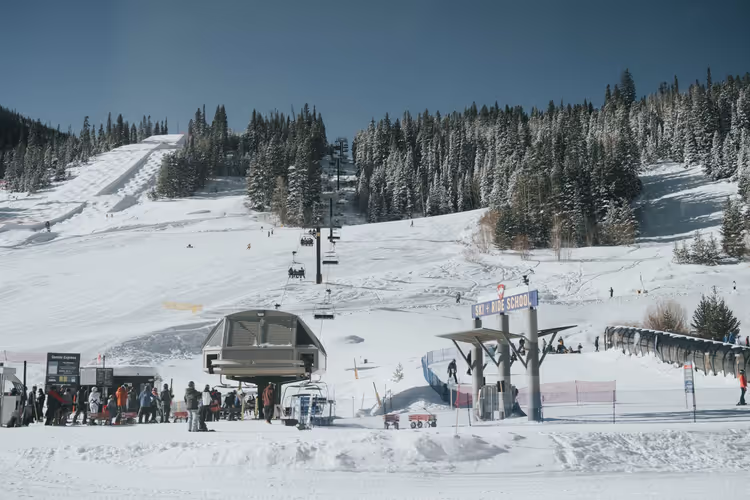
Children's ski courses in the Alps: age, equipment, payment by day
In seven of Austria's nine federal states, a helmet on the slopes is mandatory for children up to 15 years old. Tyrol and Vorarlberg are not included in this number. The Fiss-Ladis and Pitztal ski schools from the examples below are located in Tyrol. In Italy, from November 1, 2025, everyone, including adults, is required to wear a helmet, and the fine is 100-150 € (as of 09/2026, ADAC helmet guide). In Germany and Switzerland there are no requirements, but schools ask you to wear a helmet. These rules are worth checking before buying tickets.
Then the parental questions begin. The age of the first descent, the number of lessons, the choice of equipment, and payment for the course are the biggest concerns.
The short answer: you can start at three years old, teach in a children's group, and pay for lessons by the day. Below we break down age, equipment, course duration, and the language question with facts and links.
Ad: this article contains affiliate links, we earn a commission if you book through them, at no extra cost to you.
When can you put a child on skis
💡 In short:
- The optimal age for first skis: three years and older, toddlers are taken into Bambini groups (Skischule Fiss-Ladis website).
- Group lessons for toddlers work better than individual ones, and children are taught through play.
The three-year age limit is not set by schools for marketing reasons. The child can already hold their body weight on skis, and coordination is enough for a snowplow stop. In the Tyrolean Skischule Fiss-Ladis, Bambini groups start at age 3, children's groups go from 4 to 12 years, and teen groups from 13 to 17 (as of 09/2026, Fiss-Ladis group schedule).
The lower age limit depends on the school. Skischule Pitztal takes children aged 3-4 for first lessons, so when booking, check the age directly (as of 09/2026, skischule-pitztal.at).
 © Schi11 · CC BY-SAPhoto: Schi11, CC BY-SA (https://creativecommons.org/licenses/by-sa/4.0), Wikimedia Commons
For toddlers, group lessons are more effective than individual ones. In a group, imitation works: children repeat movements after their neighbor and are quicker to attempt their first descent.
First skills on the slope: keeping skis parallel and stopping with a snowplow. Children call these movements "pizza" and "french fries". It's easier to remember, and schools take advantage of this.
The first lesson is usually short. The child walks in boots on the snow, gets acquainted with the equipment, and rides on flat terrain. Don't expect speed on the beginner slope.
How to choose skis and equipment
The main mistake parents make: buying equipment to grow into. Long skis hinder the child's control and dampen interest in skiing.
Length is calculated based on height and skiing level. For beginners, the ski reaches the chest, for confident children to the chin, for young racers to eye level (as of 09/2026, children's ski length guide).
In rental charts it looks like this: a child 94 cm tall fits skis of 70-80 cm, and a child 114 cm tall needs about 100-110 cm (as of 09/2026, Intersport Rent chart).
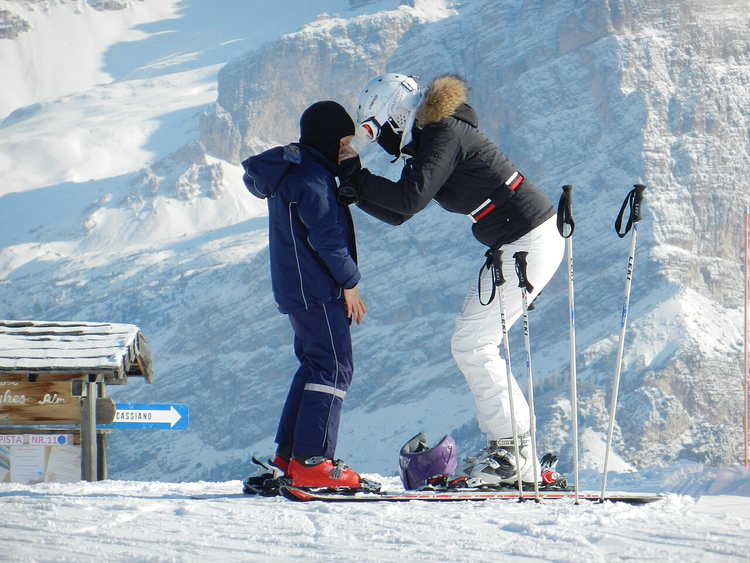
Boots are selected by weight and foot size, but not with room to grow. Soft models with a single buckle work well for toddlers. Choose a helmet and goggles strictly by head size, ideally trying them on over a thin hat.
Always take a helmet, even at resorts without a legal requirement. Country-specific rules are covered at the beginning of the article.
Choose a snowsuit with wind and moisture protection: it is colder on the lift than on the slope. Keep mittens on an elastic cord, and pack spare gloves in your backpack.
Why it is better to trust an instructor with the first technique
An instructor lays down the basic movements. Parents rarely demonstrate the snowplow correctly, and mistakes in stance take longer to correct later than to teach from scratch.
Older children get distracted when parents stand nearby. They wait for cues from you instead of listening to the coach. With toddlers, one adult is usually allowed on the practice slope.
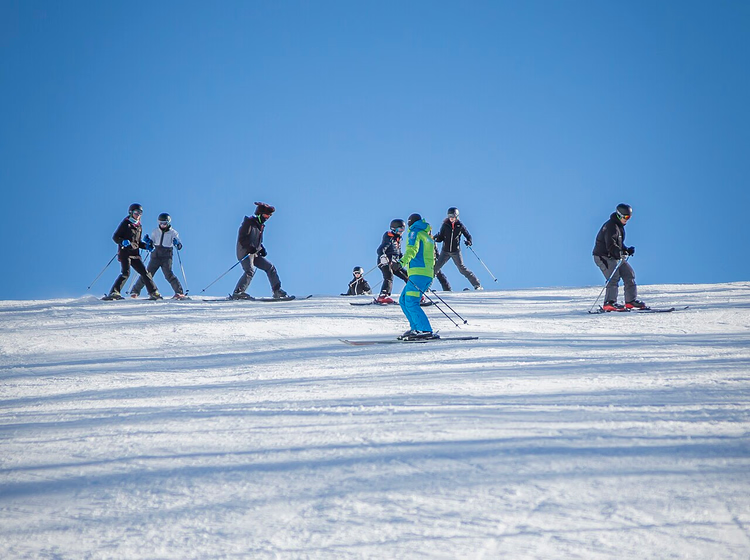
Groups in children's ski schools are small. In the children's course at Schlossalm ski school, a maximum of 4-6 children train together (as of 09/2026, skischule-schlossalm.at). In a group like that, the instructor has time to correct each child's stance.
 © Jilloau · CC BY-SAPhoto: Jilloau, CC BY-SA (https://creativecommons.org/licenses/by-sa/4.0), Wikimedia Commons
The first lessons are built around play. Children walk around in gear pretending to be moon astronauts, slide on the snow, and learn how to fall correctly. This way the skill sticks without fear or tears.
Results do not show on the first day. If by the third lesson your child is still not skiing down on their own, that is a normal pace. Do not argue with the school's methodology.
Parental fear of injuries is usually stronger than the actual risk. On the practice slope, children ski under supervision, the equipment is checked, and the run is reserved for the group only. Before the trip, check your insurance and compare coverage options.
How many days you need for the first descents
The first descents take about a week of lessons. Schools sell courses in blocks of several days, with lessons in the morning or first half of the day (as of 09/2026, course terms in Fiss-Ladis).
Do not pay for the whole course upfront. Toddlers are unpredictable: they can get sick, get tired, or refuse to take part. Paying by the day is cheaper in that situation.
The goal of the first course is not speed. The child learns to ski down an easy slope and brake, while parallel skis come in the next season.
If you are taking a week, choose accommodation near the practice slope. You can look at hotels on Trip.com, but filter them by distance to the lift.
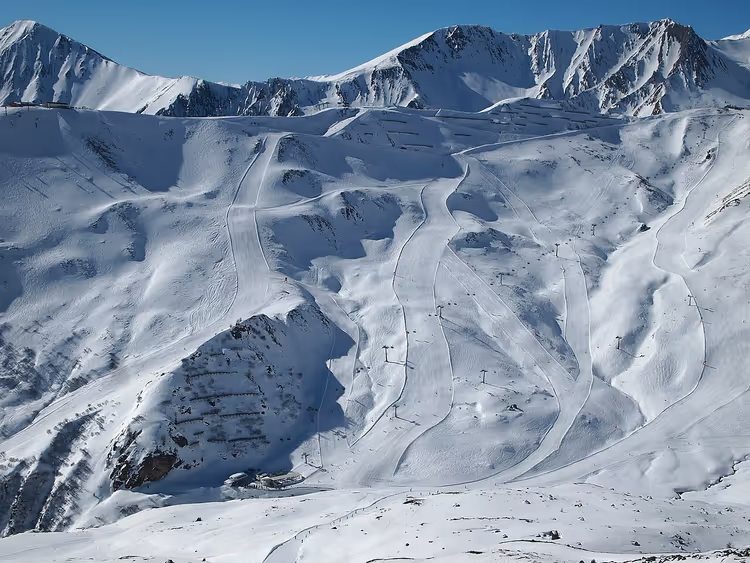 © Danbu14 · CC BY-SAPhoto: Danbu14, CC BY-SA (https://creativecommons.org/licenses/by-sa/3.0), Wikimedia Commons
How not to overprotect your child
Helping them get up after a fall is normal. Carrying your child down the slope in your arms, carrying their skis and backpack for them, and seating them on the lift with you is not worth doing. Encourage independence from day one.
The sequence is simple. You carry the gear to the slope, then the child carries their own skis. They get on the lift separately when the instructor allows it.
Overprotection shows in the child's reaction. The child stops trying without your hand and waits for cues. Praise the attempts, not the result.
How to get to the resort with children
Alpine resorts are easy to reach by train, but with children and gear, transfers are hard. For a family, a rental car for the whole trip is more practical.
Helmet and insurance rules in different countries are covered at the beginning of the article and in the frequently asked questions.
You can compare car rental options for your trip dates on DiscoverCars. Pick up the car at the arrival airport so you do not have to change transport with children.
Language barrier in an Alpine ski school
Alpine children's ski schools select instructors who speak several languages. Even with a German-speaking instructor, technique is explained through demonstration and gestures.
Many schools have a phrasebook with phrases like "Did you hurt yourself?" or "Are you cold?". Still, it is better to learn basic words in advance: it reduces the child's anxiety.
Children in a group find common ground faster than adults. They understand explanations through demonstration, and play needs no translation.
Before booking, clarify two things: the instructor's language and the age group. Mixed groups slow down both toddlers and teenagers.
⁉️🤔 Frequently asked questions
At what age do ski schools accept children?
Most Alpine schools accept children from age 3, in Bambini groups (as of 09/2026, Fiss-Ladis school about groups). Some schools take toddlers aged 3 to 4. Before paying, check the minimum age and ability requirements.
Is a helmet mandatory on the slopes?
It depends on the country and federal state. The rules for Austria, Italy, Germany, and Switzerland are summarized at the beginning of this article. Even where there is no law, schools ask you to wear a helmet.
How many lessons does a child need to ski on their own?
The first descents usually take about a week of lessons. Every child learns at a different pace, and some schools sell courses by the day (as of 09/2026, Skischule Fiss-Ladis website). Do not buy the whole course in advance: if your child gets sick, getting a refund is harder than simply not paying for the missed day.
What should I do if my child is afraid of the slope?
Start with short, play-based sessions, without pushing for a full descent. The first lessons take place on flat ground: walking in boots, sliding, falling. If your child gets tired, take a break and come back to the slope the next day.
Can I teach my child to ski myself, without a school?
You can, but it is better to have an instructor establish the basic movements. Mistakes in stance and braking take longer to correct later. Parents should lead by example: if you ski, your child will want to copy you.
Do I need ski insurance?
In Italy, third-party liability insurance on the slopes has been mandatory since 2022 (as of 09/2026, ADAC: insurance in Italy). Check with your insurer whether your child is covered on the piste and on the lift. Compare policies in advance so you do not have to buy one on the spot.
In short: what to book
Book the course directly with the school and pay by the day. Look for accommodation near the beginner slope so you do not have to carry your child in ski boots across the whole resort in the morning.
- If you have a toddler: choose a Bambini group, short rental skis, and a properly fitting helmet.
- If you have a school-age child: pick a children's group by age and a multi-day course.
- If you are driving: compare rental options in advance, the choice on site is smaller.
And most importantly: lead by example. Your child will fall in love with skiing faster if they see you skiing.

A small editorial team writing guides for independent travel. We travel ourselves, but we haven’t been everywhere, so we check prices, opening hours and how to get there against official sources.