
















Mexico: what to know before your first trip
Mexico is often pictured through postcards: pyramids, tequila, mariachi. In reality, the country surprises you with something else.
Mexico City is sinking by almost 25 cm per year, and over the past century the city has dropped by roughly 12 meters (as of 2025, NASA study). This is not an abstract figure. Because of the subsidence, staircases at metro stations are warping and historic buildings are cracking.
Below is the practical information people check before a trip: where monarch butterflies spend the winter, how much it costs to enter Chichen Itza, how the bike-share system works in the capital. Every number has a source and a date.
Ad: this article contains affiliate links, we earn a commission if you book through them, at no extra cost to you.
Mexico: what to check in advance
💡 In short:
- Mexico requires two different plans: the capital with volcanoes and colonial cities, or the Yucatan with pyramids and the sea.
- Monarch butterfly colonies change in area from year to year, so check the season against fresh reports.
- Mexico City has the ECOBICI bike-share system, and the underwater museum near Cancun is only reachable by water.
- Opening hours: 09/2026, verified on the official INAH website.
The first takeaway is simple: pick one region. Getting from Mexico City to the Yucatan means a flight or an overnight ADO bus, so in a week you can cover either the capital or the peninsula, but not both regions at once.
The second point: climate and altitude shift sharply. Evenings in Mexico City are cool, the Yucatan is humid and hot, and in the mountains of Michoacan winter temperatures hover around freezing. Bring layers and do not schedule long transfers in the first few days.
Wildlife: rabbit, jaguar, and monarch butterflies
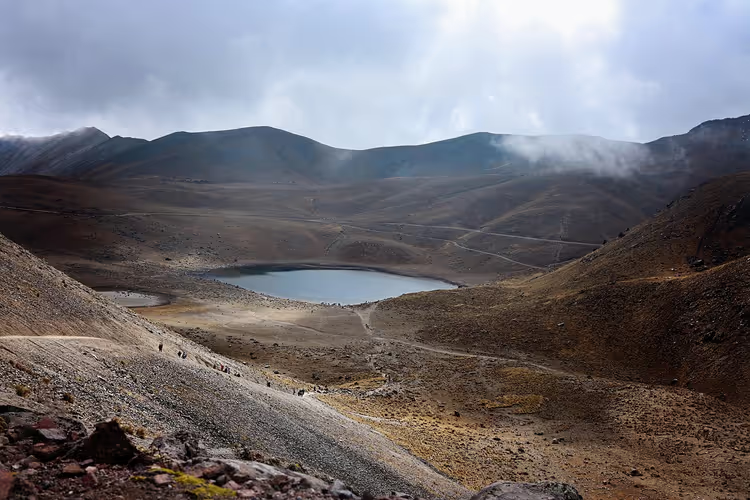
The volcano rabbit (Romerolagus diazi) lives only on the slopes of Mexican volcanoes, at elevations from 2,900 to 4,250 m. Its body length is 23-32 cm, which makes it one of the smallest rabbits in the world (as of IUCN Red List). The species is rare and listed as endangered.
- The catch: seeing one in the wild is nearly impossible. Its range is limited to a few volcanoes, and the animal itself is secretive.
The jaguar in these same forests remains the largest cat on the continent. It hunts in the jungle and near water, while tourists usually end up with tracks and guides' stories. The animal stays away from roads, so nobody promises an encounter. Another reason not to walk through the jungle alone in the dark.
 © Juan Carlos Fonseca Mata · CC BY-SAPhoto: Juan Carlos Fonseca Mata, CC BY-SA (https://creativecommons.org/licenses/by-sa/4.0), Wikimedia Commons
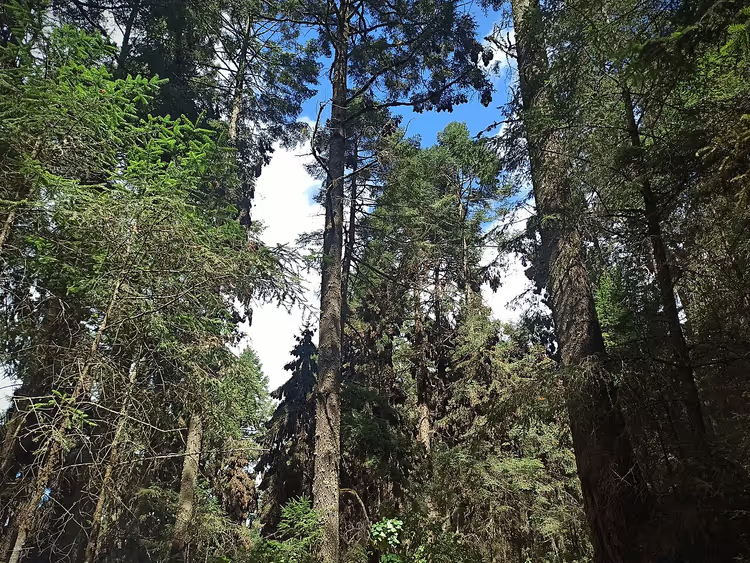
Every autumn, monarch butterflies fly from Canada and the US to the mountain forests of Michoacan and the State of Mexico. Colony numbers are measured by the area they occupy: in the 2024-25 season it was 1.79 hectares, compared with 0.9 hectares the year before (as of WWF and CONANP). The difference is nearly double, so check your travel dates against fresh reports.
The Monarch Butterfly Biosphere Reserve is a UNESCO World Heritage site. The El Rosario and Sierra Chincua sanctuaries are open to visitors, who must enter with a local guide. The season runs from November to March, and the densest colonies are seen in January and February.
- How to get there: from Mexico City and Morelia you take a bus to the nearest towns, then continue only by car or with a guide.
- The catch: the sanctuaries sit high in the mountains, and the morning air is damp and cold. Bring a jacket and shoes with non-slip soles.
Mexico City: a city sinking into water
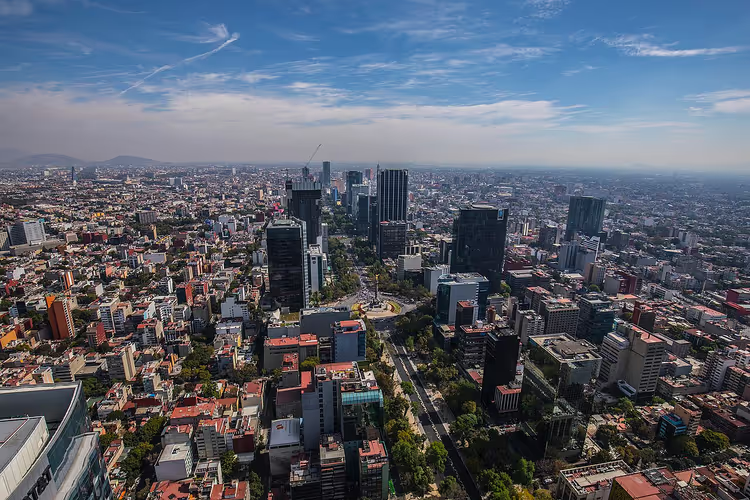
Mexico City stands on the site of Tenochtitlan, the Aztec capital built in the middle of a lake. The Spanish drained the water, but clay deposits remained beneath the city. Now the capital is sinking by about 25 cm per year (as of 2025, NASA data). Over a hundred years, the city has lost about 12 meters of elevation.
- The catch: the subsidence is uneven. It is destroying old buildings, pipes, and staircases at metro stations.
The Olmec colossal heads, carved from basalt, are older than the Aztec temples. They are found in the swamps of Tabasco and Veracruz, and some are taller than a person. The other side of the story has also survived: the Aztecs believed the world was sustained by human blood and sacrificed people on top of temples. The rituals are described in Spanish chronicles and Aztec codices.
Transport: metro, buses, and bike share
 © Daniel Case · CC BY-SAPhoto: Daniel Case, CC BY-SA (https://creativecommons.org/licenses/by-sa/3.0), Wikimedia Commons
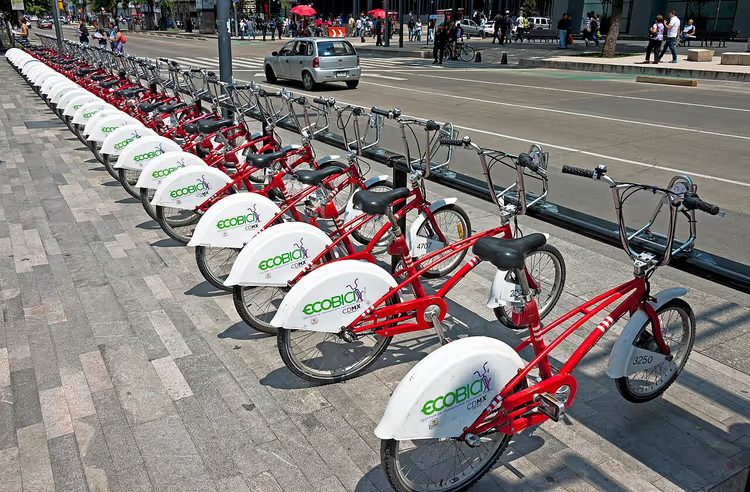
Mexico City has a municipal bike-share system called ECOBICI: stations are located near many major sights, and you can rent a bike with a subscription or for a single trip (as of 09/2026, official system website). It is a way to get between neighborhoods without a taxi, but traffic is heavy during rush hour.
For travel between cities, ADO overnight buses are more convenient. They connect Mexico City, Oaxaca, San Cristobal, and Valladolid. Tickets are sold online and at the bus station. Book seats in advance: on popular routes the bus fills up a couple of days ahead.
A rental car sometimes looks unusual. Instead of a rear license plate, a copy of the registration certificate hangs on the window, and for local police this is standard practice. Keep your documents handy so you do not waste time on explanations.
- The catch: in the capital there are traffic jams and day-based driving restrictions. It makes more sense to rent a car only for trips outside the city.
Corruption and safety in practice
 © Paul Sableman · CC BYPhoto: Paul Sableman, CC BY (https://creativecommons.org/licenses/by/2.0), Wikimedia Commons
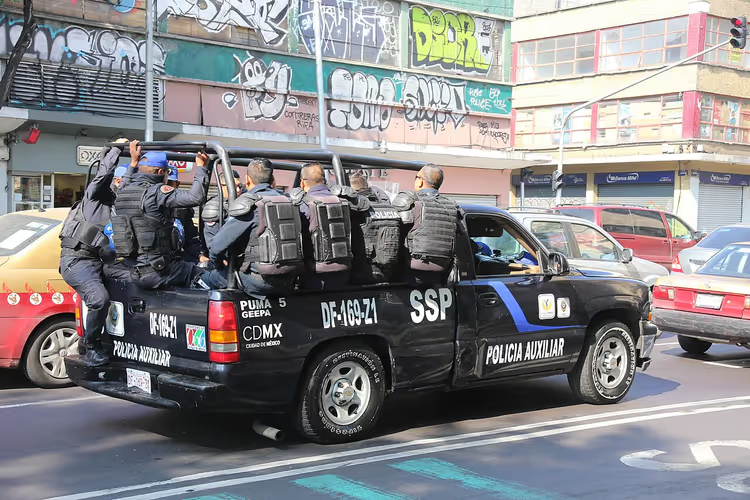
Mexico remains one of the most problematic countries in terms of perceived corruption: 26 points out of 100 and 140th place out of 180 (as of 2024, Transparency International). In practice, this means that if you break a rule, you may meet a police officer who gently hints at resolving the matter on the spot.
The rules are simple. Do not carry large amounts of cash and do not leave belongings in the car. Order taxis through an app, not from the street. Check the Auswärtiges Amt website for the latest country safety briefing.
- The catch: it is better not to plan overnight bus trips on secondary roads, and during the day stick to main highways.
Chichen Itza and the underwater museum near Cancun
 © Andy Blackledge from Scottsdale, AZ, USA · CC BYPhoto: Andy Blackledge from Scottsdale, AZ, USA, CC BY (https://creativecommons.org/licenses/by/2.0), Wikimedia Commons
Chichen Itza in Yucatan remains the country's top site. It is a Maya city and one of the "new seven wonders of the world." From January 1, 2026, general admission costs 676 pesos (as of 01/2026, Yucatan news). On Sundays, discounts apply to certain categories of visitors, so foreigners should expect to pay the full amount.
ADO buses run to the pyramids from Cancun and Valladolid, and the route from Valladolid is shorter. In Yucatan it is hot and humid during the day, so arrive at opening time and bring water. It is easier to book tickets and tours in advance: guided tours to Chichen Itza.
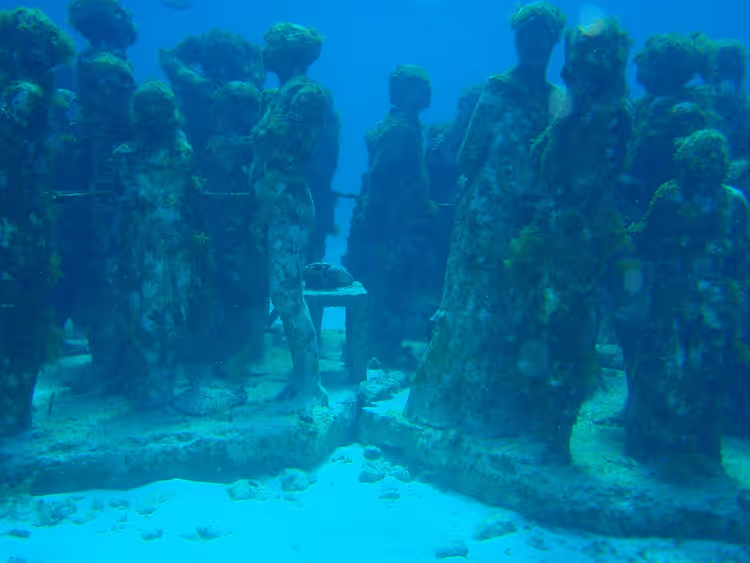
The second unusual site is underwater. This is MUSA, Museo Subacuático de Arte: more than 500 life-size sculptures lie on the seabed between Cancun and Isla Mujeres (as of official MUSA website). The project was conceived as an artificial reef to take some of the pressure off living corals.
- How to get there: only by water, meaning snorkeling, diving, or a glass-bottom boat.
- The catch: going out to sea depends on the weather, so it is better to schedule the tour for the first days of your trip.
⁉️🤔 Frequently asked questions
When is the best time to go see monarch butterflies?
The colony season runs from November to March, with the peak in January and February. The colony area varies greatly, so check dates against recent reports. Book tickets to the El Rosario and Sierra Chincua sanctuaries in advance; on weekends, groups go one after another.
How much does it cost to enter Chichen Itza and are there any discounts?
From January 1, 2026, general admission costs 676 pesos. Discounts and free Sundays apply to certain categories, so foreigners should expect to pay the full amount. Plan your visit for the morning.
How do you get to the MUSA underwater museum?
The sculptures are only accessible by water. Choose between snorkeling, diving, and a glass-bottom boat. Boat trips depend on the weather, so schedule your tour for the first days of your stay in Cancun.
Is it dangerous to travel to Mexico as a tourist?
The tourist areas of the Yucatan and major cities are calmer than the outskirts of the capital. Use taxi apps, don't carry large amounts of cash, and don't leave belongings in the car.
Is it realistic to see a volcano rabbit?
Almost impossible. The species is rare, and its range is limited to a few volcanoes. Even in the reserves around the volcanoes, you're more likely to see traces of the animal than the animal itself.
In short: what to book
If you are going to Mexico for the first time, pick one region and do not try to cover both. Choose the capital if you are interested in Aztec cities, museums, and volcanoes. Choose the Yucatan if you want the sea, pyramids, and snorkeling.
- If you have a week and it is your first time: choose Mexico City and day trips around the state.
- If you have a week and want the sea: choose Cancun, Chichen Itza, and the MUSA underwater museum.
What to book in advance: tickets to Chichen Itza and a MUSA tour, seats on ADO night buses, and entry to the Monarch Butterfly Biosphere Reserve. Read more about the country's ancient cities in our guide to Aztec pyramids.

A small editorial team writing guides for independent travel. We travel ourselves, but we haven’t been everywhere, so we check prices, opening hours and how to get there against official sources.