

















When to go to Vietnam: dry months, rains and warm sea
In Vietnam, January in the north and January in the south are nothing alike. The country stretches across more than 15 degrees of latitude, so the weather in Hanoi and on Phu Quoc on the same day can differ by ten degrees or more (as of 09/2026, Vietnam climate overview). That is why the question of "when to go" comes down to the region, not the month.
We broke the year down into twelve months and three climate zones so you can pick the region that fits your vacation. Below you will find a quick breakdown of the seasons, a table, and the weather for each month separately.
Vietnam's climate: three climate zones
💡 In short:
- North (Hanoi, Halong, mountains): four seasons, a cool dry winter and a hot humid summer.
- Central (Danang, Hoi An, Nha Trang): dry season from February through August, rain and typhoons from September through December.
- South (Ho Chi Minh City, Phu Quoc): warm year-round, dry from December through April, rain from May.
The north of the country follows subtropical patterns. It has four distinct seasons, and winter is dry and cool (as of 09/2026, Vietnam's climate by region). In the mountains it can get genuinely cold, while in the lowlands around Hanoi you wear a jacket in winter, but summer brings heat and high humidity.
The central and southern regions have a tropical monsoon climate with two seasons. In the south, the rainy period starts in late April and lasts through October. In the central region, rain falls from September through December, and the remaining months are dry (as of 09/2026, page on Vietnam's climate). In the mountains, the temperature drops by roughly 0.5 degrees for every hundred meters of elevation, which is why Dalat is cooler than the coast (as of 09/2026, country climate data).
Season | North | Central | South |
|---|---|---|---|
Winter (December-February) | cool and dry, cold in the mountains | warm, rain in places | dry and hot, high season |
Spring (March-April) | warming up, little rain | dry and sunny | the hottest time of year |
Summer (May-August) | hot, humid, frequent downpours | dry, windy, comfortable | afternoon rain |
Autumn (September-November) | cool and clear | rain and typhoons | humid but warm |
Weather in January
January greets you with two different countries. In the north it is cool and dry; in Hanoi and Halong the air rarely rises above 20 degrees (as of 09/2026, Vietnam weather reports). In the evenings you will need a jacket, and in the northern mountains temperatures can drop to around freezing in places.
The central region in January is warm, but there is less sun than in the south: Danang can see brief rain, and the water is cooler than the air. In the south it is dry and hot, the sea is warm, and it is high season on Phu Quoc. If you want to swim in January, choose the south.
Weather in February
 © Christopher Crouzet · CC BY-SAPhoto: Christopher Crouzet, CC BY-SA (https://creativecommons.org/licenses/by-sa/4.0), Wikimedia Commons
February is similar to January, but it gradually gets warmer. In the north, winter holds on: the average temperature in northern areas stays below 20 degrees, and cold fronts arrive three or four times a month and knock the air down by 4-5 degrees (as of 09/2026, climate of northern Vietnam). The sky is often overcast and there is little sun, but the center gets drier and the south has a dry season with warm water. Phu Quoc and Ho Chi Minh City offer clear weather in February. If you need a beach without rain, look to the south.
Weather in March
 © . Ray in Manila · CC BYPhoto: . Ray in Manila, CC BY (https://creativecommons.org/licenses/by/2.0), Wikimedia Commons
March in the north is dry and noticeably warmer. Halong and the mountains are already pleasant for walking, but few people decide to swim in the north. The center is dry and sunny, and the beach season opens in Da Nang and Hoi An. The south starts the hottest period of the year, and it lasts until May (as of 09/2026, climate of southern Vietnam). Bring light clothing, a hat, and sunscreen. March works for the beach almost everywhere except the north.
Weather in April
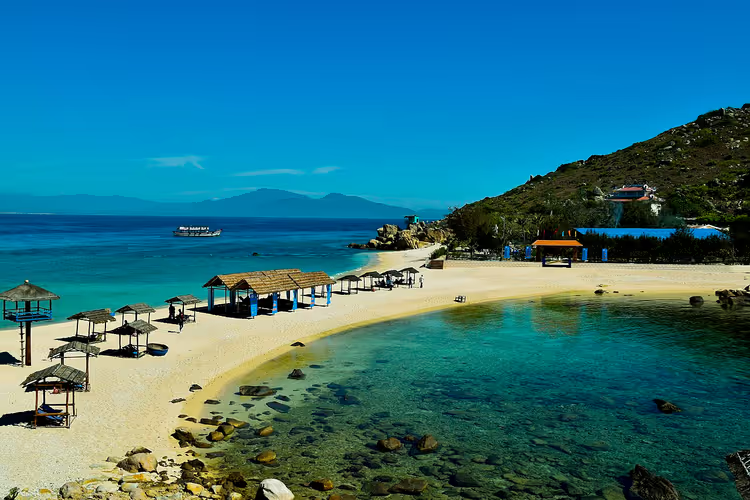
April locks in dry weather across almost the entire country. In the north it warms up to comfortable levels, and rain in the second half of the month occurs only in the northernmost provinces. The center and south deliver sunny days: you can swim, sunbathe, and dive. This is the last dry month in the south, so there are many tourists and accommodation prices rise. Book in advance if you are traveling for the holidays.
Weather in May
May divides Vietnam into three different pictures. In the north, dry days alternate with downpours, and the dry season ends here. The center is still dry and summer-warm, with daytime temperatures reaching 30 degrees (as of 09/2026, monsoons and rainfall in Vietnam). In the south, the rainy season begins: it starts in late April and lasts until October.
Downpours occur more often in the afternoon, but the sea stays warm. If you are going for the beach, choose the center in May: it is dry there and the water has already warmed up.
Weather in June
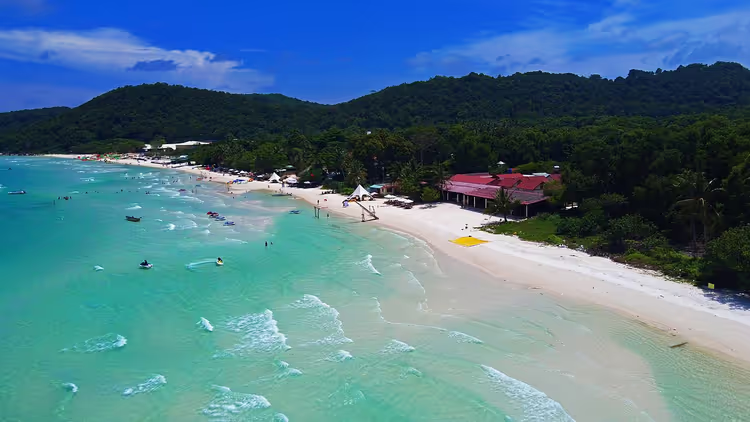 © [//commons.wikimedia.org/wiki/User:Trantuonglam Trantuonglam] · CC BY-SAPhoto: [//commons.wikimedia.org/wiki/User:Trantuonglam Trantuonglam], CC BY-SA (https://creativecommons.org/licenses/by-sa/4.0), Wikimedia Commons
June brings rain to the north and south. In Hanoi, heat combines with high humidity, downpours alternate with sun, and it is hard to breathe. The south also has wet weather, but on Phu Quoc the sea is calm and the underwater world attracts divers. The best beach weather in June is in the center: it is dry and warm here, and the water warms up strongly. If you need a dry beach, choose Da Nang or Nha Trang.
Weather in July
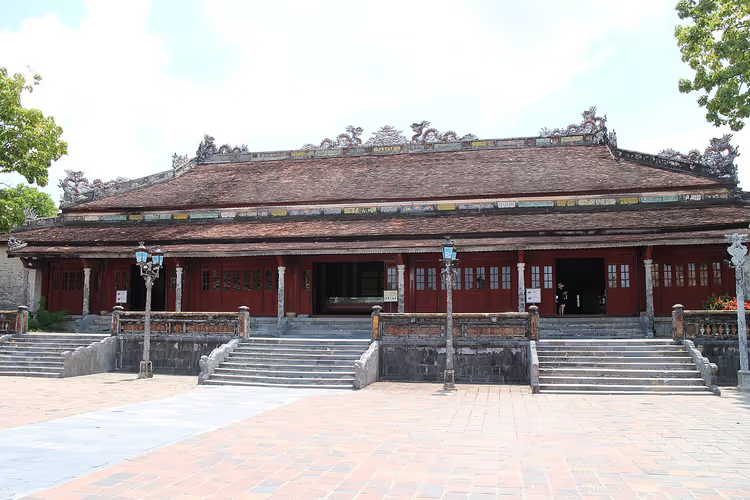 © Suicasmo · CC BY-SAPhoto: Suicasmo, CC BY-SA (https://creativecommons.org/licenses/by-sa/4.0), Wikimedia Commons
July is usually the hottest month in the north of the country. In summer, the average temperature stays around 25-30 degrees, and the peak in the north falls between May and July (as of 09/2026, summer temperatures in Vietnam). In the north and south, the wet season is in full swing, with frequent downpours. The center is more comfortable: Hue and Hoi An are warm but without exhausting heat. You'll want an umbrella, plenty of water, and light clothing.
Weather in August
 © . Ray in Manila · CC BYPhoto: . Ray in Manila, CC BY (https://creativecommons.org/licenses/by/2.0), Wikimedia Commons
August is hot everywhere, but the rain pattern changes. In the north and south, downpours become less frequent, while the central provinces are still dry. At sea, the risk of typhoons grows: the country is hit by six to eight tropical cyclones a year (as of 09/2026, typhoons in Vietnam). For the beach, choose morning and evening; the midday sun is too intense. Prices in August are lower than in high season.
Weather in September
September shifts the rains to the center. In Da Nang, Hoi An, and Hue, the wet season begins: the water is warm, but waves and rain get in the way of swimming. In the north, the weather improves and evenings turn cool. The south is still humid, but there are fewer tourists. If you want a quiet vacation without crowds, the south in September is a good fit.
Weather in October
October is the hardest month for the central coast: heavy rains fall here and the likelihood of typhoons increases. The north at this time offers dry, clear weather, and a good season begins in Hanoi and on Halong Bay. The south stays warm, with short, localized showers. For a trip through the north, October is a safe bet, and it also works for a beach vacation in the south.
Weather in November
November brings the dry season to the south and mild weather to the north. In Ho Chi Minh City and on Phu Quoc, it becomes drier and sunnier, and the sea is calm. In the center, rain is still possible, especially in the first half of the month. In the north, evenings are already cool, so a sweater will come in handy. For the beach in November, choose the south; for city sightseeing, the north works too.
Weather in December
December opens the high season in the south: dry, sunny, and warm water. The north greets real winter. In the northern mountains, the average temperature of the coldest month drops to 11-17 degrees, and at times it gets close to zero (as of 09/2026, winter in the mountains of Vietnam). In the center, rain is still possible, but it becomes less frequent. If you want a guaranteed beach for Christmas and New Year, go for the south and Phu Quoc.
⁉️🤔 Frequently asked questions
When is the best time to go to Vietnam?
There is no universal month, it all depends on the region. For the beach, choose the south: the dry season there lasts from December to April. For a trip through the north, Hanoi and Halong, the best time is from October to April, when there are no downpours. The center is dry from February to August, and from September rains and typhoons begin there.
Which month is the dry season in the south?
The driest period in the south lasts from December to April. At this time, there is almost no rain in Ho Chi Minh City and on Phu Quoc, and the sea is warm and calm. From May the wet season begins, downpours usually come in the afternoon and end quickly.
When is typhoon season in Vietnam?
Typhoons most often hit the central coast. Over the course of a year, the country is affected by six to eight tropical cyclones (as of 09/2026, typhoon statistics). The main threat comes in the second half of the year, so in September and October it is better to avoid the center.
What to pack for the trip?
For the south, light clothing, a swimsuit and sunscreen are enough. In the north in winter, add a jacket and a sweater, evenings there are cool. During the rainy season, a compact umbrella or raincoat and a waterproof phone case will come in handy. Don't forget mosquito repellent.
Can you swim during the rainy season?
Yes, often you can. Tropical rains are short and mostly come in the afternoon, while the sea stays warm. Restrictions occur during typhoons, when waves rise and authorities close the beaches. Keep an eye on the forecast and the flags on the beach.
In short: what is worth booking
If you want a beach in winter, go for the south and Phu Quoc. If you want to combine city and sea, choose Da Nang or Nha Trang from February to August. For a trip through the north, plan Hanoi and Halong for October to April, when there is almost no rain. High season in the south falls on December to February, so book accommodation two to three months ahead. And leave one spare day in reserve: the weather in Vietnam changes quickly.

A small editorial team writing guides for independent travel. We travel ourselves, but we haven’t been everywhere, so we check prices, opening hours and how to get there against official sources.