














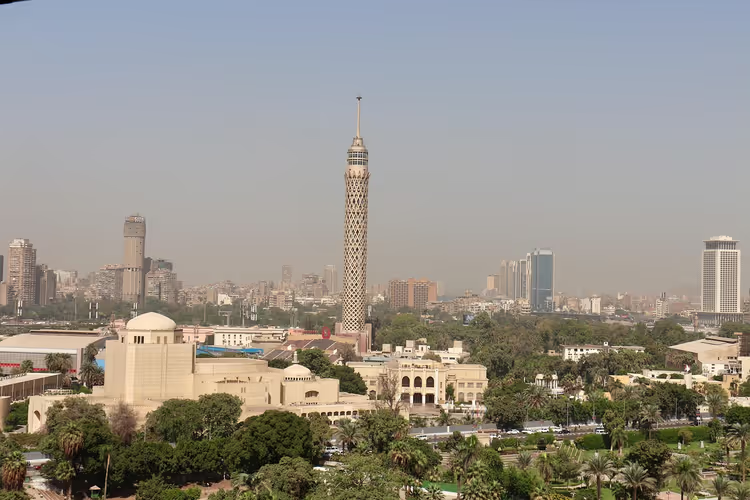
Ramadan 2027 in Egypt: how to restructure your day and where to eat after sunset
Ramadan 2027 falls in the middle of Egypt’s winter season. These are the very weeks when the most tourists fly to Hurghada, Luxor, and Sharm El Sheikh.
The dates for the month, according to timeanddate.de, are listed in the section below.
Some people cancel their trip out of fear that everything is closed. Others arrive and are surprised by empty cafes and an unfamiliar daily rhythm. Both reactions are unnecessary. Resorts operate almost as usual for guests; what changes are opening hours and a few everyday rules. We’ve gathered what affects your day: temple hours, alcohol, iftar, and local customs.
Ad: this article contains affiliate links. We earn a commission if you book through them, at no extra cost to you.
Ramadan 2027 dates
💡 In short:
- Ramadan 2027: from February 9 to March 10, Eid al-Fitr begins on March 11 (as of: timeanddate.de, 09/2026).
- Dates are not fixed: the start is announced by Egypt’s Dar al-Ifta after the moon sighting.
- Resort hotels operate as usual, temples and museums close earlier.
Ramadan shifts backward on the Gregorian calendar every year. In 2025 it began on March 1, in 2026 on February 19, and in 2027 on February 9 (as of: timeanddate.de, 09/2026). So the month slowly moves through all the seasons, and in 2027 it falls entirely in February and March.
Event | 2027 date |
|---|---|
Start of Ramadan | February 9 |
End of Ramadan | March 10 |
Eid al-Fitr, first day | March 11 |
The calculation is preliminary: final dates are announced after the moon sighting, usually a day or two before the start (as of: timeanddate.de, 09/2026).
Eid al-Fitr, the feast of breaking the fast, lasts several days in Egypt. Government offices, banks, and some shops close, domestic flights and trains sell out in advance, and the streets are packed. For a tourist, this is the busiest but also the most festive phase of the month.
What changes and what doesn’t
In hotels and resorts, almost nothing changes. In Hurghada, Marsa Alam, Sharm El Sheikh, Luxor, Aswan, and Cairo, breakfasts, lunches, pool bars, and restaurants operate on their usual schedule. Hotels are geared toward foreign guests, and staff serve them even during the fast.
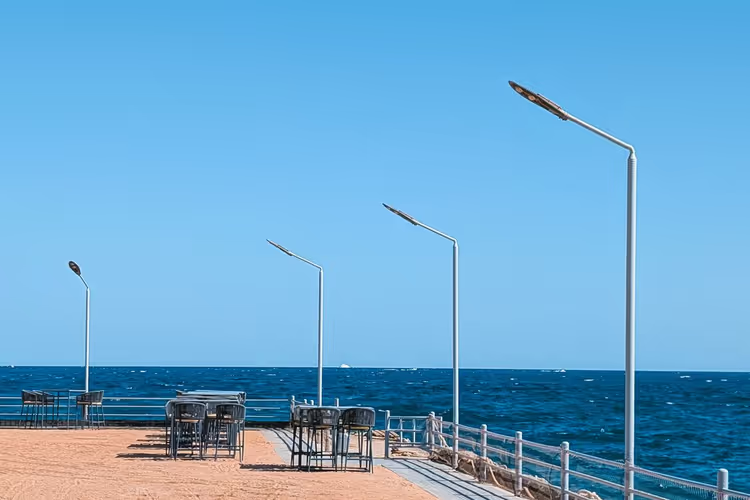
Outside the hotels, the rhythm is different. During the day the streets are quieter, some cafes and simple eateries are closed, and shop windows are covered. By late evening the city comes alive: after breaking the fast, markets, restaurants, and coffee shops often stay open well past midnight.
The most inconvenient stretch of the day comes before sunset. In the last hour before iftar, drivers rush home and drive more aggressively. Transfers, taxis, and returning from excursions are best not planned for this time. On the other hand, the half hour after breaking the fast gives you the emptiest roads of the day.
If you’re going for the beach, choose a hotel at a resort: check seasonal prices on Trip.com (view prices on Trip.com).
Opening hours for temples, tombs, and museums
Archaeological sites operate during Ramadan too: Karnak, Luxor Temple, the Valley of the Kings, Abu Simbel, the Pyramids of Giza, the Egyptian Museum in Cairo, and the Grand Egyptian Museum. What changes is the closing time. During this month, temples and museums close earlier than usual, so schedule your visit for the morning.
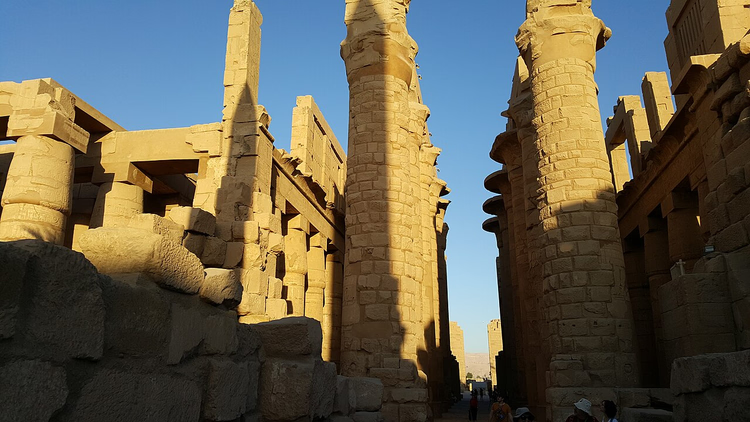 © Ovedc · CC BY-SAPhoto: Ovedc, CC BY-SA (https://creativecommons.org/licenses/by-sa/4.0), Wikimedia Commons
Opening hours are best checked on the official website of Egypt's Ministry of Tourism and Antiquities (egymonuments.gov.eg). Karnak closes around 5:00 PM during Ramadan. The Valley of the Kings and the Luxor Museum also shift their closing times.
A good plan for the day looks like this:
- Head out in the morning. It's cooler before noon, there are fewer people, and you have a buffer before closing time.
- Check evening programs. The sound and light shows at Karnak, the pyramids, and Abu Simbel may start at different times or be canceled during Ramadan.
- Confirm hours the day before with your hotel or tour operator rather than relying on old guidebooks: that way you won't lose half a day.
- On Fridays and around Eid al-Fitr, additional restrictions are possible.
Tickets for Karnak, the Valley of the Kings, and museums are easier to book in advance with a time slot (temple and museum tickets on Tiqets).
Tours and tickets in Luxor
Guided tours, skip-the-line tickets and activities — most offers can be cancelled free of charge.
See offers on TiqetsThe widget loads once you give your consent.
Alcohol: where it's served and where it isn't
During Ramadan, alcohol in Egypt is sold only to non-Muslims and mostly in large hotels and tourist establishments. Inside resorts and at seaside restaurants, beer and wine are served as usual. The rule is simple: stay within the tourist zone.
Outside it, conditions are stricter. State-run and licensed alcohol shops are often completely closed during this month, restaurants without a tourist license don't serve alcohol, and in smaller towns you can't buy it at all. Drinking or visibly carrying a bottle in a public place is especially inappropriate during Ramadan.
Iftar: how to attend and what to try
The breaking of the fast after sunset is the main event of the month. It all begins with the muezzin's call. Dates and water or Qamar al-Din, an apricot drink, are served first, followed by a full dinner. In cities, long tables called "Maidat al-Rahman," tables of mercy, are set up in the streets, where food is given free to anyone who comes.
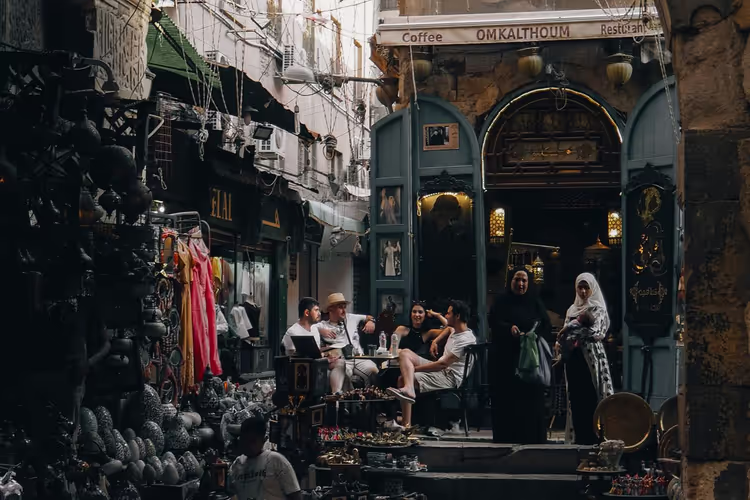
There are three ways to attend an iftar as a guest. First: many hotels and restaurants offer an iftar buffet, often at a fixed price for a set menu. Second: in Cairo, spend the evening in the old city, around Al-Muizz Street and the Khan el-Khalili market. The alleys there are decorated with colorful fanous lanterns, and life buzzes until late at night. Third: an invitation from locals, which comes more often than usual during Ramadan. Say yes, it's the most honest way to see the country.
Two final details. Book iftar buffets in advance, as spots can run out on weekends. And eat lightly during the day so you have room by evening: after iftar there's often suhoor, the last meal before dawn.
Etiquette during Ramadan
- During the day, don't eat, drink, or smoke on the street. At your hotel, by the pool, in restaurants, and on tour buses, everything is as usual.
- Carry a bottle of water and drink discreetly. On hot days in Upper Egypt, this isn't a violation as long as you don't draw attention.
- Dress modestly, especially outside resorts: cover your shoulders and knees.
- Ask permission before photographing people praying or iftar tables.
- Be patient with staff. By evening, drivers and guides have been working since dawn without food or water.
- Tipping is especially appropriate and appreciated during Ramadan.
- The greeting "Ramadan kareem" or "Ramadan mubarak" opens almost any door.
Nile cruises, diving, and traveling with kids
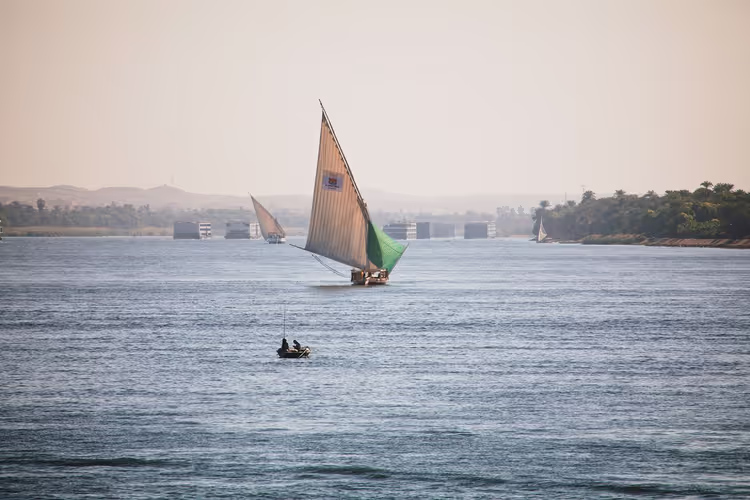
Nile cruises run on their regular schedule during Ramadan. Foreign guests are served on board, and shore excursions aren't canceled. Two things change: shore visits often start earlier because sites close earlier, and the crew arranges breaks differently. During these weeks, there's often more space on the boats and lower prices than at the peak season around Christmas.
Diving and snorkeling on the Red Sea are barely affected by Ramadan. Dive centers in Hurghada, El Gouna, Safaga, and Marsa Alam operate as usual, and boat tours depart early in the morning. Just keep in mind that the Egyptian crew is fasting: meals for guests are prepared on board, but the crew doesn't eat with you.
With kids, Ramadan is easy if you're staying at a resort. Children are exempt from fasting and can eat and drink anywhere. Nobody expects a five-year-old to observe restraint here. On city excursions, keep snacks and water handy and give them to your kids on the bus or away from people.
For independent travelers driving, the main limitation is this: roadside restaurants along highways are often closed during the day, and gas station shops stock fewer groceries. Buy food for the road in the morning at a supermarket. Excursions in Luxor and Aswan are easier to book in advance (Luxor tours on GetYourGuide).
Weather and prices in February and March
February and March are among the most comfortable weeks of the year. On the Red Sea coast it is warm during the day, and the water is suitable for swimming. In Luxor and Aswan it is hotter during the day, while the nights are cool, so pack both shorts and a light jacket. In Cairo it is mild during the day. In February it can be windy on the coast, and from late March a khamsin, a hot wind carrying sand, is possible.
Prices are uneven during this period. Ramadan itself noticeably reduces demand in Cairo and the Nile Valley, while Red Sea resorts depend more on the European holiday calendar. Travelers who go in the first two weeks after Eid al-Fitr often find good deals.
Practical tips
- Mark the 2027 Ramadan dates from the dates section. Confirmation comes only shortly before it begins (as of: timeanddate.de, 09/2026).
- Schedule excursions for the morning: temples and museums close earlier than usual.
- Do not arrange transfers for the hour before sunset.
- Expect alcohol only in hotels or in venues with a tourist license.
- During the day outside the hotel, do not eat, drink or smoke in public.
- Go to at least one iftar, and book your spot in advance.
- Around Eid al-Fitr, book domestic flights, trains and hotels in advance.
- Before your trip, check the current travel advice for Egypt on the Auswärtiges Amt website (auswaertiges-amt.de). Separate warnings apply to parts of the Sinai Peninsula and the Western Desert.
- An eSIM is a good option for internet access during your trip (eSIM for Egypt).
⁉️🤔 Frequently asked questions
Do hotels and restaurants at resorts operate during Ramadan?
Yes, on Red Sea resorts the routine barely changes. In Hurghada, Marsa Alam and Sharm el-Sheikh, breakfast, lunch and dinner run on the usual schedule, and pool bars are also open. Restrictions mainly affect cities and non-tourist areas, where many cafes and snack bars are closed during the day.
Can tourists drink alcohol in Egypt during Ramadan?
Yes, but only in licensed venues: large hotels, tourist restaurants and cruise ships. Alcohol shops are often closed during this month, and in small towns there is no alcohol at all. In public places it is better not to show bottles or open drinks, so as not to attract attention.
Are the pyramids, Karnak and museums closed during Ramadan?
No, the sites are open. The Pyramids of Giza, Karnak, Luxor Temple, the Valley of the Kings and museums are open, but they close earlier than usual. So a morning visit is more reliable, and check the current hours on the Ministry of Tourism and Antiquities website before leaving your hotel.
What is iftar and can tourists attend one?
It is the breaking of the fast after sunset. It begins with dates and water or an apricot drink, followed by a full dinner. Tourists can access iftar buffets in hotels and restaurants, free "Maidat al-Rahman" tables on the streets, and invitations from locals. Book buffets in advance, as spots are scarce on weekends.
Can you eat during the day in a hotel or on the beach?
Yes. In the hotel, by the pool, on the resort beach and in a tour bus, food and drinks are available all day. The daytime fasting rule applies to public places outside the tourist zone, where people will be understanding if you eat and drink discreetly.
Is it worth going to Egypt specifically during Ramadan 2027?
For a beach holiday there is almost no difference, while in Cairo and the Nile Valley demand is lower than in high season and hotel prices are softer. There are also fewer groups and more space at the main sites. The only drawbacks are earlier closing times and busy evenings around Eid al-Fitr.
In short: what is worth booking
Ramadan changes not the trip itself, but the daily rhythm. Temples close earlier, but in the evening the city stays open late, and iftar becomes an experience in itself. Adjust your day to this rhythm and the month will pass smoothly.
- If you are going for the beach: book a hotel on the Red Sea, where the routine does not change (Hurghada hotels on Trip.com).
- If you are going for history: plan Karnak and the Valley of the Kings for the morning and buy tickets in advance.
- If you want to experience the month itself: book an iftar buffet and spend an evening in old Cairo (tours on GetYourGuide).

A small editorial team writing guides for independent travel. We travel ourselves, but we haven’t been everywhere, so we check prices, opening hours and how to get there against official sources.