
















Sri Lanka: visa, money, transport and travel rules
Sri Lanka looks simple on a map and turns out to be complicated once you're there. Full moons, rupees, train schedules, and photography restrictions add up to dozens of small things that are better to know before you fly.
Below is the practical side of the trip: documents, money, transport, connectivity, tipping, shopping, and camera etiquette.
Ad: this article contains affiliate links. We earn a commission if you book through them, at no extra cost to you.
Key things to know before traveling to Sri Lanka
💡 In short:
- Apply for your visa online in advance: citizens of Germany, Austria, and Switzerland get it free for 30 days (entry rules), while other countries pay 50 US dollars.
- Keep cash in rupees: cards are accepted in hotels and larger restaurants, but shops, tuk-tuks, and markets require cash.
- Seats on the hill-country line between Kandy and Ella sell out weeks in advance, so book your train right after your visa.
- Check your plans against Poya full moons: on those dates alcohol sales are banned and some venues close.
- Train schedule: 09/2026, verified on the official railway website.
Visa and entry to Sri Lanka
Entry permission for Sri Lanka is obtained online as an electronic travel authorization (ETA). Starting May 25, 2026, citizens of 40 countries, including Germany, Austria, Switzerland, Poland, and Czechia, receive a 30-day tourist visa free of charge. The list of countries and conditions is published on the Department of Immigration website.
For other countries, the standard rate applies: a tourist visa costs 50 US dollars when you apply in advance, and 60 on arrival at the airport. A two-day transit visa is free, and children under 12 are also exempt from the fee for stays of up to 30 days (as of 09/2026, fees and entry rules).
Submit your application a few days before departure and keep a printed copy of the confirmation. Connectivity at Colombo airport is overloaded, and a paper copy speeds up immigration and saves you time.
Languages of Sri Lanka and basic phrases
The island has two official languages: Sinhala and Tamil. Sinhala is spoken in most households, while Tamil is understood by roughly one in four residents, so a few Sinhala words will get you through the trip.
English is widely spoken: it remains the language of schooling and business correspondence, and in tourist areas drivers, waiters, and shopkeepers use it. Instead of a Sinhala greeting, many people now simply say hello.
Pronunciation is harder than reading, so at first you'll write phrases down and show them to the person you're talking to. Locals are happy to tell you how a word should sound.
Phrasebook for the trip
- Ayubowan = hello, a universal greeting
- Stuti = thank you
- Ov = yes, næ = no
- Samavanna = excuse me
- Karunakaranna = please
- Kiyada = how much
The Sinhala "ayubowan" works almost everywhere: at a hotel, in a shop, at a temple entrance. In the north of the island and in Jaffna, the Tamil "vanakkam" is more common, and it gets a smile in return too.
Money, banks, and tipping
In Sri Lanka you pay in rupees (LKR). Exchange euros and dollars at bank branches and hotel exchange counters, not with random people on the street.
ATMs are available in all cities, but before you travel, check with your bank whether your card works on the island and what withdrawal fee it charges. Traveler's checks are outdated and almost never accepted.
- The catch: cards don't work everywhere. Shops, tuk-tuks, and markets run on cash, so keep a day's worth of rupees on hand.
Banks are open on weekdays and close early, usually just after midday. Post offices stay open longer and are open until midday on Saturdays. Plan currency exchange for the morning so you're not hunting for an open branch in the evening.
Tipping is expected for services in Sri Lanka. A guide gets about ten US dollars for a day's work, a driver slightly less, and in restaurants you leave the small change from the bill.
Transport: trains, buses, and tuk-tuks
The island has a single railway, and it's state-owned. Sri Lanka Railways connects Colombo with Kandy, the hill-country stations near Nuwara Eliya and Badulla, and the hill-country line is considered one of the most scenic rides in the world (official carrier website).
Book tickets for long-distance trains in advance: seats on the line between Kandy and Ella sell out weeks ahead, and window seats go first. Arrive at the station with time to spare, because the platform you need is often announced only by voice.
Intercity buses run by the state-owned Sri Lanka Transport Board are cheaper than the train and run more often. The journey takes longer, but you see the island right from the window.
Within cities, you get around by tuk-tuk or metered taxi. Agree on the price before you get in, because the meter isn't always switched on. Bargaining is fine, but don't argue over a dollar: your vacation time is worth more.
For longer trips, hire a driver with a car for the day. It costs more than the train, but you can stop at a tea factory or a viewpoint for as long as you like.
- Who it's for: a driver with a car works well if you're planning several transfers and don't want to deal with bus schedules.
Connectivity: SIM card and eSIM
A local SIM card costs less than roaming. Your phone must be SIM-lock free and support GSM, and a minute of international calls costs about ten cents.
Cards are sold at Colombo airport and in the city, and you top up using a code from a shop. If you don't want to find a store after your flight, get an eSIM before departure: compare eSIM plans for Sri Lanka. It activates right at the airport, and you keep your own number.
Time zone and electricity
Sri Lanka runs on a single time zone, which is four and a half hours ahead of Central Europe in winter and three and a half in summer. For the first few days you'll wake up early, so schedule demanding excursions for the morning.
Outlets on the island are British type G, with D and M also found, and the voltage is European standard. Bring an adapter from home: hotels don't always provide one, and resort shops charge more for them.
Holidays and Poya full moons
The year in Sri Lanka is divided between state dates and religious holidays. State holidays always fall on the same day, while Buddhist and Hindu ones follow the lunar calendar.
Public holidays
- February: Independence Day
- May: Labor Day
- December: Christmas
Poya full moons and religious holidays
Every full moon is declared a public holiday, called Poya. On such days shops are closed and alcohol sales are banned across the country. For 2026, 19 dry days have been announced (notice about dry days).
- January: Duruthu Poya, commemorating the Buddha's first visit
- Mid-January: Thai Pongal, the Tamil harvest festival
- January and February: Navam Poya
- February and March: Maha Shivaratri, a Hindu festival
- March: Medin Poya
- March and April: Bak Poya and the Sinhalese New Year, Aluth Avurudu
- April and May: Vesak, the main Buddhist holiday of the year
- May and June: Poson Poya, commemorating the arrival of Buddhism
- June and July: Esala Poya, the start of the Buddhist fast
- July and August: Esala Perahera in Kandy, a festival honoring the Buddha's tooth
- July and August: Vel, a Hindu festival
- August and September: Binara Poya
- September and October: Vap Poya, the end of the fast
- October and November: Deepavali, the festival of lights
- October and November: Il Poya
- November and December: Unduvap Poya
The dates shift with the moon, so check the Poya calendar for the month you need before your trip. If you find yourself on the island during Vesak or the Esala Perahera days, take in the festival in Kandy: the streets are decorated, and processions take place in the evening.
Shopping: tea, spices and haggling
People bring Ceylon tea, spices, batik and jewelry with local stones from Sri Lanka. Supermarkets and restaurants have fixed prices, but everywhere else the price is negotiable, and haggling is even expected.
The approach is simple: the seller names a price, you offer about half of what you are willing to pay, and wait for a counteroffer. After a few rounds you meet in the middle.
A rule of courtesy: if you name a price and the seller agrees, backing out of the purchase is rude. Also keep the scale in mind: a dollar difference means nothing to you, but for the seller it is a noticeable amount.
Buy tea in brand stores or directly at the factory. Certified Ceylon tea packaging carries the Sri Lanka Tea Board logo, which lets you tell a certified product apart from a blend.
Photography: what you can and cannot do
You can photograph people in Sri Lanka, but ask permission first. After taking the shot, show it on the screen: it brings a smile, especially from children.
Photography is often prohibited in temples and monasteries, and a sign at the entrance or an attendant will tell you so. Shoes are removed at the entrance, so bring socks and do not plan on a quick stop.
A local sometimes asks for money for a photo together. The choice is yours, but do not pay children for a picture: the family then starts taking the child along tourist routes instead of sending them to school.
Photographing military installations, seaports and airports is prohibited. Do not sit on a Buddha statue for a shot and do not photograph the frescoes of the heavenly maidens on the Sigiriya rock.
Laws and safety in Sri Lanka
Drugs are one of the most dangerous topics for a tourist. Possession of even a small amount carries long prison sentences, and serious offenses can lead to the death penalty.
Court procedures on the island are far from European standards: long pretrial detention, expensive and not always competent legal defense, and harsh prison conditions are all possible. For current warnings and recommendations, see the Auswärtiges Amt page for Sri Lanka.
Entry rules and fines change, so check them against official sources before your trip and do not rely on old guidebooks.
Sample itineraries for Sri Lanka
The classic island trip has three parts: the ancient cities of the cultural triangle, the tea hills in the center, and the coast. Two weeks cover a safari in Yala National Park, the mountain railway and one ancient city.
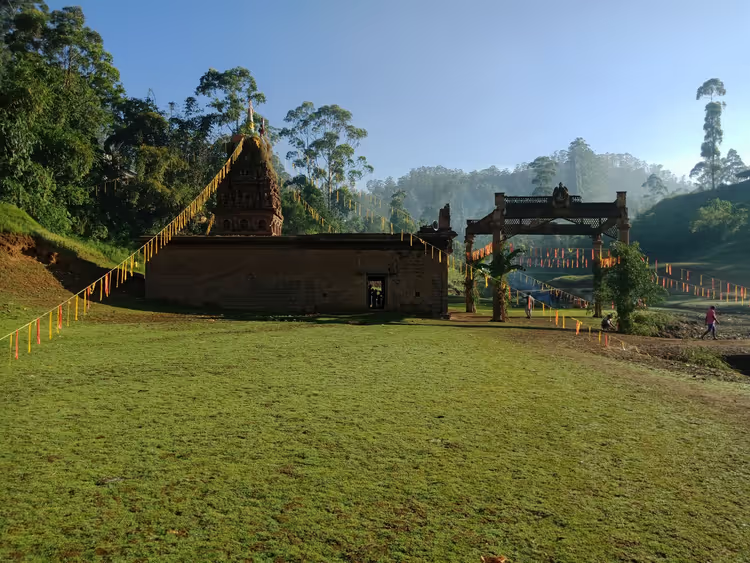
Two-week itinerary: safari and trains
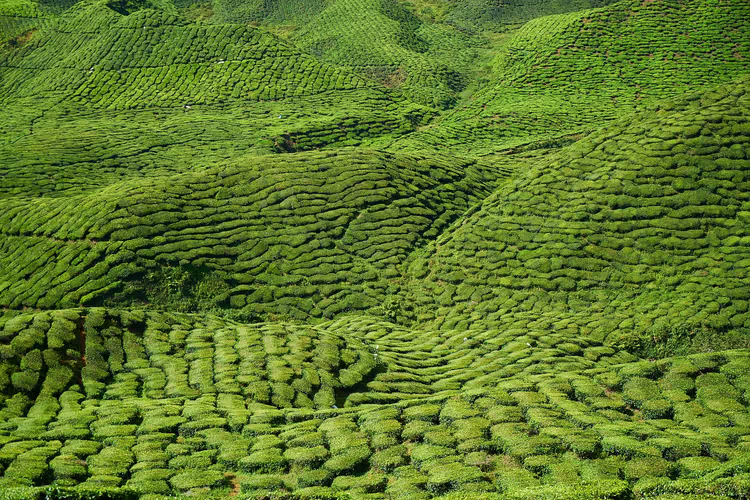
The trip is built around two strong experiences: a morning jeep safari in Yala National Park and a ride on the mountain line through the tea plantations. In between, you see the temples and rock fortresses of the cultural triangle.
This kind of trip is arranged as a private itinerary with a driver, and transfers take several hours a day. It suits those who want to see the island without changing buses.
Family itinerary: lagoon and elephants
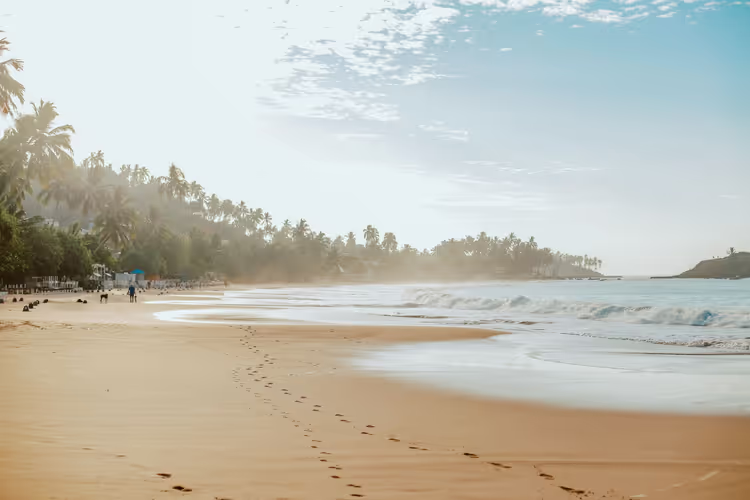
With children, the island is easier to explore at a relaxed pace: a boat safari on the Negombo lagoon, an elephant sanctuary near Galle, and a train ride through the hills. Transfers are short, and there is time for the beach in between.
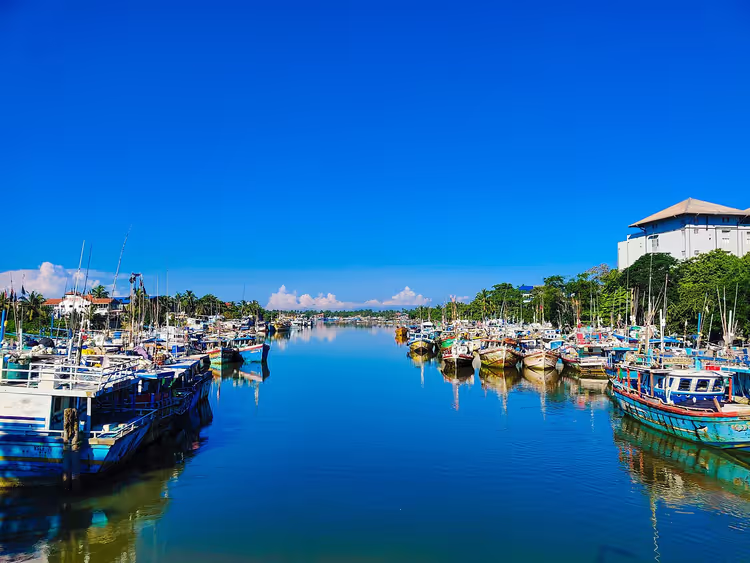 © Deshan Ruhunage · CC BY-SAPhoto: Deshan Ruhunage, CC BY-SA (https://creativecommons.org/licenses/by-sa/4.0), Wikimedia Commons
Three-week cultural itinerary
Three weeks give you time for the UNESCO-listed Golden Temple of Dambulla, the Yapahuwa rock monastery, and a ride around the Demodara Loop through the tea plantations. This itinerary suits those who want to understand the island's history, not just relax on the beach.
Tours and safaris are convenient to book with a guide: tours and safaris in Sri Lanka on GetYourGuide. Confirm the guide's language in advance, because group tours usually run in English.
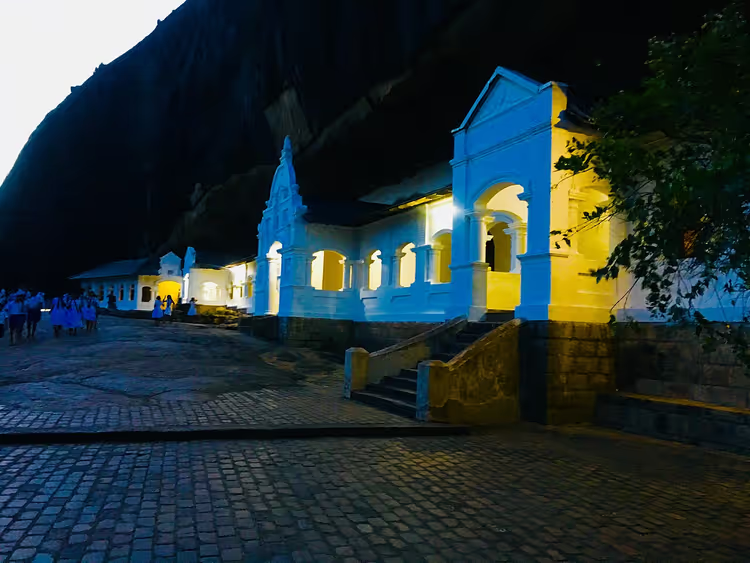 © Sampathbandaraliyanage · CC BY-SAPhoto: Sampathbandaraliyanage, CC BY-SA (https://creativecommons.org/licenses/by-sa/4.0), Wikimedia Commons
⁉️🤔 Frequently asked questions
Do I need a visa to travel to Sri Lanka?
Yes, you need an ETA electronic visa to enter; it is issued online before departure. Apply for it on the official immigration service website and keep a printed copy of the confirmation.
Do trains run from Colombo to Kandy and Ella?
Yes, the state-owned Sri Lanka Railways connects Colombo with the hill country towns and Badulla (Sri Lanka Railways). The hill line is considered one of the most scenic in the world, and seats between Kandy and Ella sell out several weeks in advance.
Can you drink alcohol in Sri Lanka?
Alcohol is sold freely, but not on Poya full moon days. On every Poya day, alcohol sales are banned nationwide, and 19 such dry days have been announced for 2026 (2026 dry day calendar). Some venues are closed on these days, so plan dinner ahead.
Can you photograph locals?
Yes, but ask permission first and show them the photo on your screen. Photography is often prohibited inside temples, and you cannot photograph military sites, ports, or airports.
How much should you tip?
It is customary to tip a guide around ten US dollars per day of work, a driver slightly less, and in restaurants people leave small change from the bill. Many restaurants add a 10% service charge to the check, so check the bill first. Any tip on top of that is your way of thanking them for the service.
Tours and tickets in Colombo
Guided tours, skip-the-line tickets and activities — most offers can be cancelled free of charge.
See offers on KiwitaxiThe widget loads once you give your consent.
In short: what to book
Book in advance anything that disappears quickly: seats on the hill line, a safari in Yala National Park, and a Colombo airport transfer.
- If you have two weeks: go with the classic route including a safari and the hill train.
- If you are traveling with kids: choose the Negombo lagoon and short trips through the hills.
- If you are on a budget: the train and state bus will cost less than a driver with a car.
Also check your insurance separately: compare insurance options before you fly, because arranging it after the flight is too late.

A small editorial team writing guides for independent travel. We travel ourselves, but we haven’t been everywhere, so we check prices, opening hours and how to get there against official sources.