
















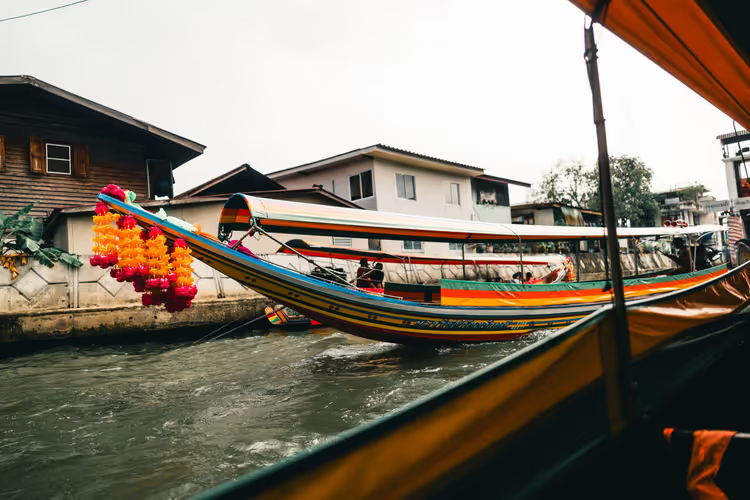
Agrotourism in Thailand: a day on a boat along Khlong Mahasawat from Bangkok
Bangkok is known for its temples, markets, and skyscrapers. But just an hour's drive from the center, a completely different country begins: rice fields, fruit orchards, and lotus ponds.
From Wat Suwannaram temple, you're taken on a long-tail boat past homesteads, greenhouses, and village kitchens. In half a day, you cover what would take an ordinary tourist days: a village, farms, and a market.
We explain how such a trip works, what to see along the way, and how it differs from a typical city tour.
Ad: this article contains affiliate links, we earn a commission if you book through them, at no extra cost to you.
How agritourism works on Khlong Mahasawat
💡 In short:
- The canal lies in Nakhon Pathom province, west of Bangkok, and the drive takes about an hour.
- A boat with a driver waits at Wat Suwannaram temple; the route takes half a day with stops.
- The stops are standard: a lotus field, an orchid garden, fruit orchards, and Ban Saladin village.
- Route and stops: verified on 15.09.2026 on the official website of the Tourism Authority of Thailand.
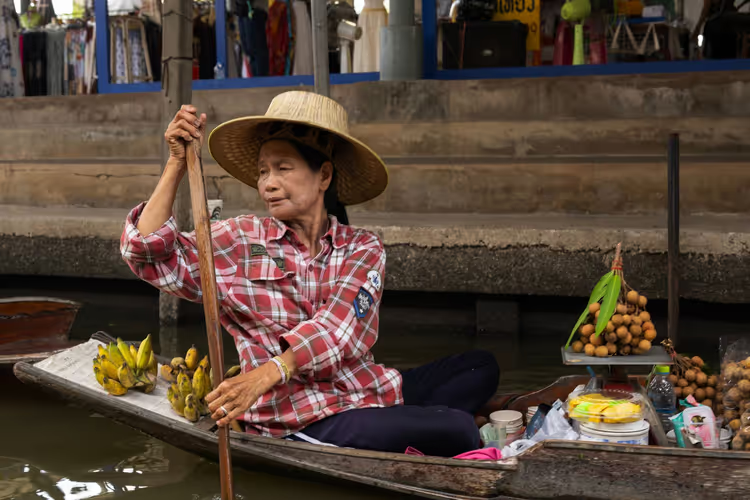
The canal was dug in the mid-19th century under King Rama IV. It connected Bangkok with the fertile lands of Nakhon Pathom, and gardening families have lived along the water ever since.
The Tourism Authority of Thailand describes the canal trip as an agritourism activity rather than a show for visitors. The community itself runs the boats, shows its farms, and sells its produce.
For the village, this is a way to earn money without middlemen. Cash stays with the families who grow rice, fruit, and orchids, while you pay only for the boat and farm entry.
Lotus fields and the orchid garden
Almost every route starts with a lotus field. The ponds become so densely overgrown that the water turns into a pink canvas, and you glide between the flowers at arm's length.
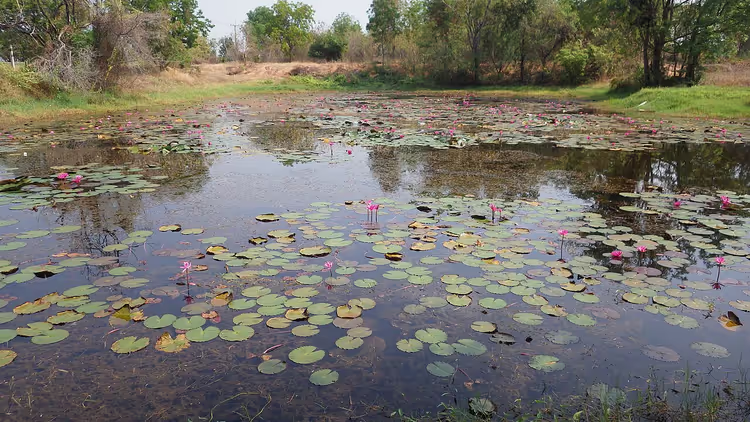 © Dr Helena Shaverdo, Vienna · CC BY-SAPhoto: Dr Helena Shaverdo, Vienna, CC BY-SA (https://creativecommons.org/licenses/by-sa/4.0), Wikimedia Commons
Lotuses here are not decoration but a working farm. The flowers are cut for sale, and the seeds and stems go to local markets.
Next, the boat approaches the orchid greenhouses. According to the official route description, in these gardens you are told about orchid cultivation and shown a collection of plants.
Tip: boats leave in the morning, and the line at the pier is shorter at opening time. On weekends there are noticeably more groups, so arrive early.
Fruit orchards and mixed planting
The orchards along the canal are planted with pomelo, jackfruit, and other trees. The farms use mixed planting: trees, rice, and vegetables grow side by side on one plot (according to the Tourism Authority of Thailand).
This approach yields harvests almost year-round and depletes the soil less. For you, it means tasting right at the garden bed and buying fruit without hotel markups.
Some farms open small workshops for guests. In some places they show how rice cakes and juice from local fruit are made, in others they let you harvest crops with your own hands.
- Who it's for: those who want to see rural Thailand in one day without traveling between cities.
- Not for: those expecting beaches, shopping, and nightclubs.
Ban Saladin village: cuisine and crafts
In Ban Saladin village, the route makes its longest stop. Guests are invited to take part in cooking national dishes and to learn a local craft.
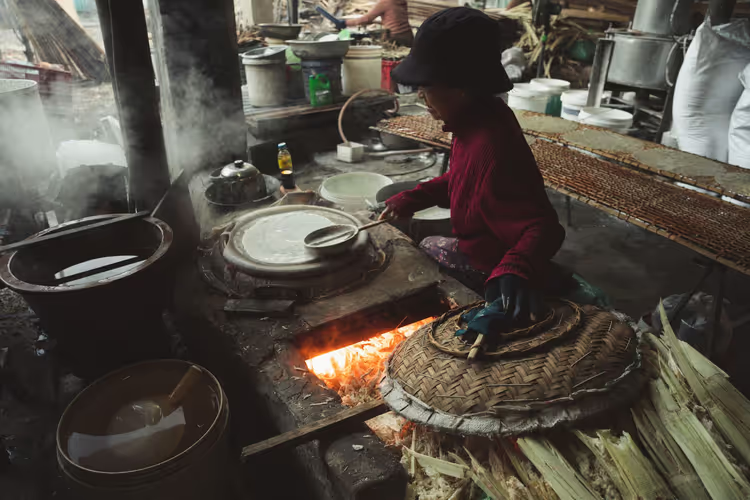
Here it becomes clear why farming communities are called the foundation of Thai society. What you see is a yard, a kitchen, and a workshop, not a display for tourists.
Arrange the workshop in advance, especially if there are more than four of you. In high season, groups are booked by the hour.
The market and what to bring home
On the way back, the boat stops at market stalls. Farmers sell fresh fruit, vegetables, sweets, and juices.
 © PattayaPatrol · CC BY-SAPhoto: PattayaPatrol, CC BY-SA (https://creativecommons.org/licenses/by-sa/4.0), Wikimedia Commons
Prices here are lower than in Bangkok's tourist areas because you buy directly from the farms. Bring cash: cards are not accepted everywhere.
If you don't want to carry fruit halfway across the country, stick to dried sweets and spices. They survive the journey easily and don't spoil in a suitcase.
How to get there and how much it costs
There are two convenient ways to reach the canal. By taxi or Grab from central Bangkok, the trip takes about an hour (according to the map), and the cost depends on the starting area and traffic.
The second option: a commuter train to Salaya station and a short taxi ride to Wat Suwannaram temple. Ready-made tours pick you up directly from your hotel and include the boat and lunch: Bangkok canal tours on GetYourGuide.
The boat price is calculated per vessel, not per person, so it works out cheaper in a group. Farm entry is paid separately, and the amounts are small. Check the exact cost at the pier before boarding.
Tours and tickets in Bangkok
Guided tours, skip-the-line tickets and activities — most offers can be cancelled free of charge.
See offers on GetYourGuideThe widget loads once you give your consent.
What else to do in Nakhon Pathom
Agritourism is not Thailand's only program for promoting travel. The country's tourism office separately supports community-based tourism: village homestays, cooking workshops, and farmers' markets across the country.
Nakhon Pathom province is convenient for a day trip from Bangkok. In the morning you go to the canal, in the afternoon you return to the city, and in the evening you have dinner in the capital.
If you plan to spend several days in Bangkok, it's better to book a hotel in advance: Bangkok hotel prices on Trip.com.
⁉️🤔 Frequently asked questions
How long does the canal trip take?
The route usually takes half a day. The boat leaves in the morning from Wat Suwannaram temple and stops at the lotus field, orchid garden, and fruit orchards. Ready-made tours from Bangkok stretch to a full day with travel and lunch. If you go on your own, allow three hours for the water and stops.
How much do the boat and farm entry cost?
The boat is paid per vessel, and farm entry is paid separately. Details are in the "How to get there and how much it costs" section. Cash will come in handy either way.
How to get to the canal without a car?
Without a car, the most convenient way is to take a commuter train to Salaya station. From there, a taxi or tuk-tuk will take you to Wat Suwannaram temple. Other options are described in the "How to get there and how much it costs" section.
What should I bring?
Bring a hat, water, and insect repellent: on the water, the sun and mosquitoes feel stronger than in the city. Cash will be needed for the farms and the market; cards are not accepted everywhere. A light raincoat won't hurt from May to October, when Thailand has monsoon rains.
When is the best time to visit the lotus fields?
Lotuses bloom almost year-round, but the densest blooming occurs in the cool season, from November to February. During these months, the heat is easier to bear and there is less rain. Morning is more convenient: fewer boats, softer light, and you can get back to Bangkok before the evening traffic.
In short: what to book
If you have one free day in Bangkok, take a canal tour with transfer and lunch.
If you're traveling independently, arrange a boat at the Wat Suwannaram pier and get there by taxi.
If village cuisine matters to you, choose a route with a stop in Ban Saladin and a workshop.

A small editorial team writing guides for independent travel. We travel ourselves, but we haven’t been everywhere, so we check prices, opening hours and how to get there against official sources.