
















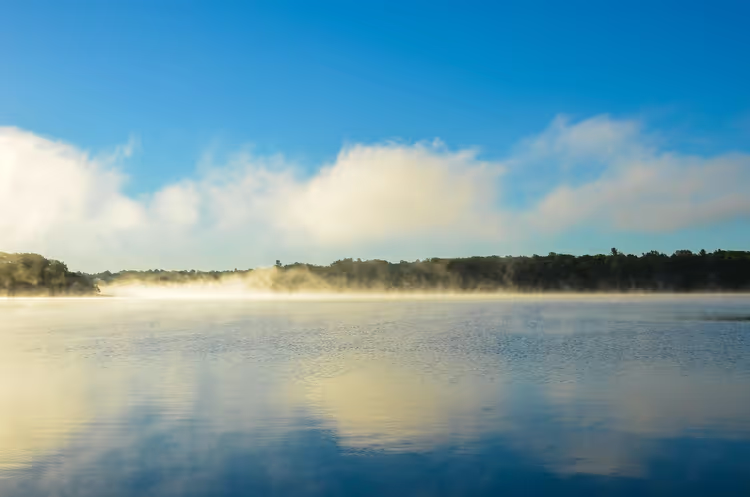
Thousand Islands park in Canada: Boldt castle, 1,864 islands and river cruises
Here the border between Canada and the US is drawn by water, not a line on a map. The St. Lawrence River breaks into dozens of rocky islands, and this stretch is home to Thousand Islands National Park. You can see the archipelago from a cruise boat, from a bridge, and right from the water in a kayak.
The park is unlike typical nature reserves. Most of the islands remain privately owned, and the park itself covers only part of the archipelago. Starting September 8, 2026, regular fees apply again (according to Parks Canada).
The park is open year-round, but the only way to reach the islands is by water. A short cruise takes about an hour, while a longer trip that stops at Boldt Castle lasts about five hours. Below you'll find the history of the archipelago, the main islands, and practical details for your trip.
Ad: this article contains affiliate links, we earn a commission if you book through them, at no extra cost to you.
History and geology of the archipelago
💡 In short:
- The park was established in 1904, the first Canadian national park east of the Rocky Mountains.
- The islands are made of ancient granite rock from the Canadian Shield.
- The park is open year-round; starting September 8, 2026, regular fees apply: verified on the official Parks Canada website.
The archipelago formed after the ice age. The glacier retreated, meltwater filled an ancient mountain system, and only the tops of rocky hills remained above the surface. That's how hundreds of islands made of ancient Canadian Shield rock rose above the water.
The park itself stretches for roughly 80 km along the river between Kingston and Brockville (according to Parks Canada). Its history began with a small stretch of shoreline: the Mallory family gave it to the government on the condition that the land be used "for park purposes." In 1904, nine islands were added to the parcel, and the area received national park status. Until 2013 it was called St. Lawrence Islands National Park.
 © Giorgio Galeotti · CC BY-SAPhoto: Giorgio Galeotti, CC BY-SA (https://creativecommons.org/licenses/by-sa/4.0), Wikimedia Commons
Local Indigenous peoples have their own version of how the archipelago came to be. The Creator made a Garden of the Gods here, hoping people would stop fighting. The hope didn't pan out, so he decided to take the land back: he put it in a bag and carried it toward the sky, but the netting tore. The fallen pieces scattered across the river and became the islands.
How many islands are in the park
By the classic count, this stretch of the river has 1,864 islands (according to Wikipedia). Some belong to Canada, some to the US. An island here is defined as a piece of land that stays above water year-round and has at least one tree growing on it.
Almost all the islands formed without human involvement. Only one was made by people: Longue Vue Island on the American side, built on four shoals, and today it has a boat station (according to Wikipedia).
Some islets are completely bare, others are covered in shrubs, and the larger ones have actual forests. The sizes vary dramatically: from a scrap of land with a single cottage to islands big enough for an entire village. The St. Lawrence Seaway shipping channel runs between the islands, and the channel depth there measures in the tens of meters.
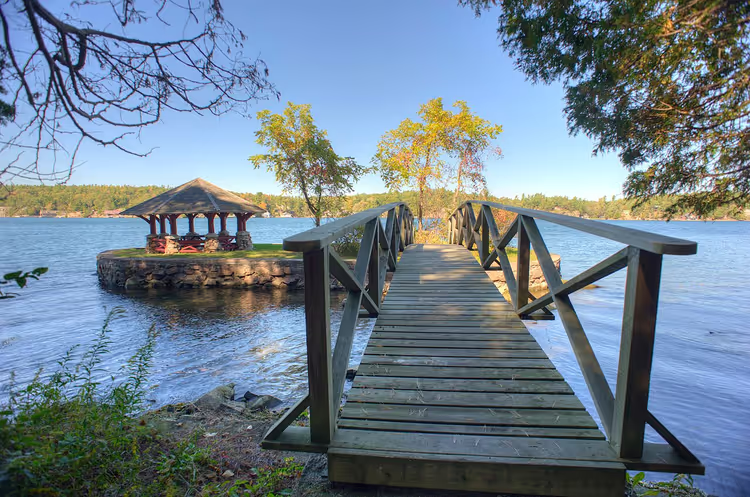
Settlement of the archipelago began in the 19th century, and from the early 20th century the islands started being sold off. Now almost every one of them is privately owned. Where there's enough room, houses stand: some people live on their island year-round, others come only for the summer.
The larger islands have electricity, running water, and connectivity. So even on a small island you won't be left without power or internet.
 © Shroha · CC BY-SAPhoto: Shroha, CC BY-SA (https://creativecommons.org/licenses/by-sa/3.0), Wikimedia Commons
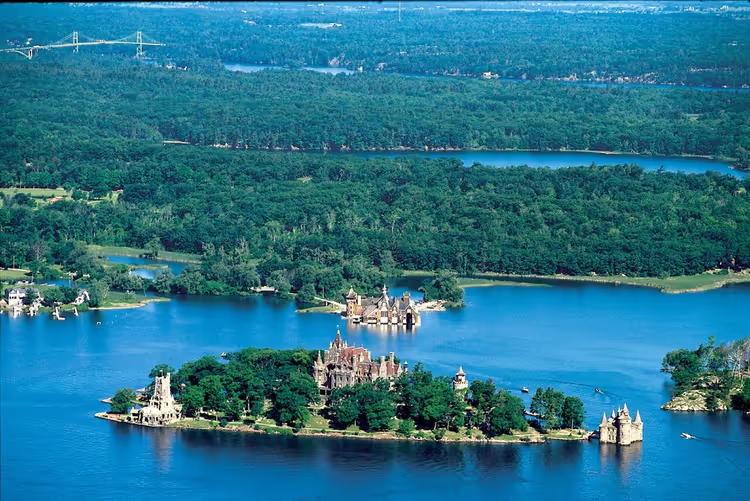
Boldt Castle on Heart Island
The archipelago's most famous landmark stands on Heart Island. Construction of Boldt Castle began in 1900, commissioned by George Boldt, owner of a major hotel chain. He envisioned a six-story Rhine-style palace as a gift for his wife Louise (according to the official Boldt Castle website).
In 1904, Louise died, and Boldt halted construction. He sent a telegram to the workers ordering them to stop work and never returned to the island. The unfinished castle stood abandoned for more than seventy years.
In 1977, the Thousand Islands Bridge Authority purchased the castle and the island for one dollar, and restoration began (according to the castle's history on the official website). Today the building houses a museum, with restored interiors and gardens.
There is one important detail for you here: Heart Island belongs to the United States. A US immigration office operates at the island's dock. Without a passport and an approved ESTA or US visa, you will not be allowed ashore.
Deer Island and the Skull and Bones society
Another island with a secretive history lies on the American side, near Alexandria Bay. Deer Island is wholly owned by the Russell Trust Association and serves as a private retreat for the Skull and Bones society at Yale University (according to Wikipedia).
Outsiders are not allowed on the island. From the water you can see a lone cottage; from the air, several more buildings in a state of disrepair are visible. All you are left with are views from the deck of a tour boat and the guide's stories.
River cruises and a 19th-century village
The easiest way to see the archipelago is from the water. Tour boats depart from Gananoque, Rockport, and Alexandria Bay. Sightseeing trips take from one to three hours, while longer cruises that stop at Heart Island run about five hours (according to City Cruises Gananoque).
Prices depend on route length and season. A short cruise costs less; a trip that includes the castle costs more. Check the operator's website for exact fares and schedules before purchasing. Cruise and tour options in the region on GetYourGuide.
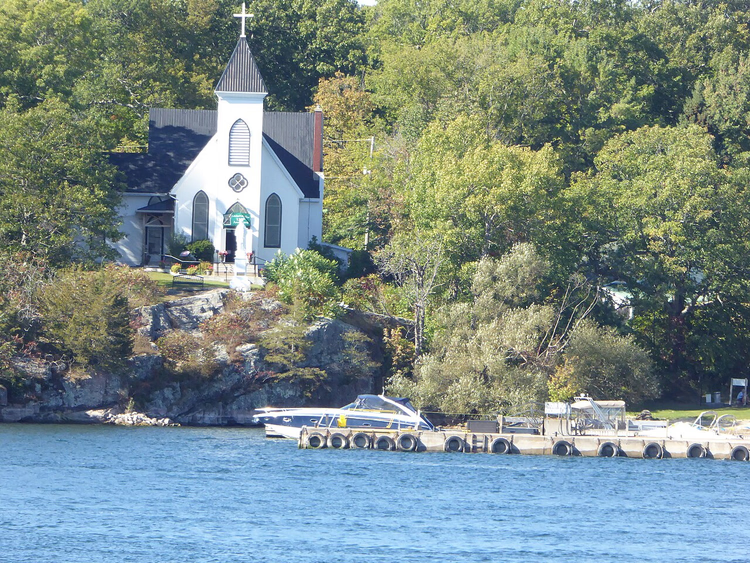
From the water you see more than just nature. Singer Castle stands on Dark Island and is also open to tourists.
 © Pierre André · CC BY-SAPhoto: Pierre André, CC BY-SA (https://creativecommons.org/licenses/by-sa/4.0), Wikimedia Commons
The region is also known for Thousand Island dressing, used on salads on both sides of the border. Legend ties the recipe to these very places, although several towns dispute the exact origin story of the dressing.
Tours and tickets in Thousand Islands
Guided tours, skip-the-line tickets and activities — most offers can be cancelled free of charge.
See offers on GetYourGuideThe widget loads once you give your consent.
The international bridge and shipwrecks
The second classic view of the archipelago opens up from the Thousand Islands Bridge. From above you can see the entire scattering of islands, and many drivers promise themselves they will come back to set foot on at least one of them.
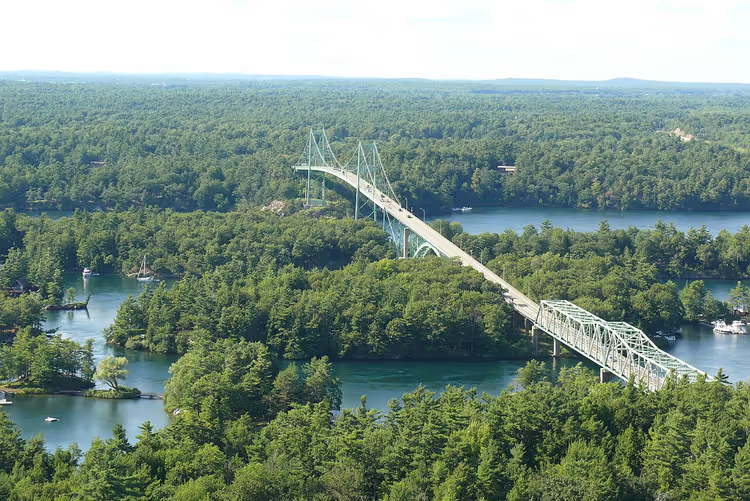 © Ad Meskens · CC BY-SAPhoto: Ad Meskens, CC BY-SA (https://creativecommons.org/licenses/by-sa/3.0), Wikimedia Commons
The region is also popular with divers. The bottom of the St. Lawrence River holds numerous 19th-century vessels, and the islands host annual reenactments of battles for these lands. For divers, this is a distinct destination with dives to wooden wrecks.
Nature conservation and UNESCO
In 2002, the region was designated the Frontenac Arch Biosphere Reserve under UNESCO protection (according to UNESCO). The park itself covers only part of this territory; the rest consists of privately owned islands and shorelines (according to Parks Canada).
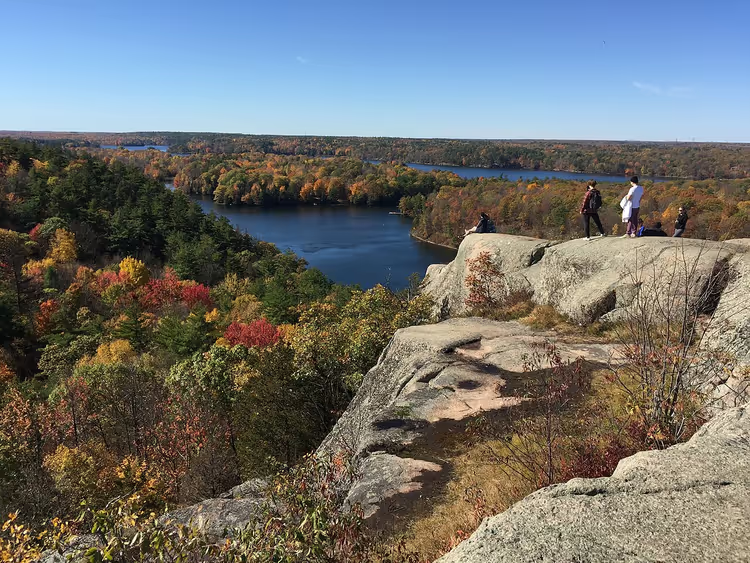 © Codex · CC BY-SAPhoto: Codex, CC BY-SA (https://creativecommons.org/licenses/by-sa/4.0), Wikimedia Commons
The archipelago serves as a stopover for migratory birds and a habitat for rare plants. For you, this means peaceful walks through wooded islands and a ban on open fires outside designated areas.
Thousand Islands National Park on the map
It's convenient to view the park's docks and islands on a map in advance. Mark Gananoque and Alexandria Bay for yourself, as those are where the tour boats depart from.
⁉️🤔 Frequently asked questions
How to get to Thousand Islands National Park?
The park sits on the St. Lawrence River between Kingston and Brockville. Gananoque, the main gateway to the archipelago, is easy to reach by car or bus via Highway 401. The park itself is accessible only by water: by kayak, boat, or tour cruise. The nearest major airports are in Ottawa and Kingston.
How much does a Thousand Islands cruise cost?
The price depends on the route length and season. One-hour sightseeing cruises cost noticeably less than five-hour trips that stop at Heart Island and Boldt Castle. Child and family rates are usually lower. Check current prices and schedules on operator websites before buying, as rates change every season.
Can you visit Boldt Castle from Canada?
Yes, but with conditions. Heart Island belongs to the US, so a US immigration office operates at the island dock. Without a passport and an approved ESTA or US visa, you will not be allowed in. Cruises to the castle depart from Gananoque in Canada and Alexandria Bay in the US, and tickets are sold on site and online.
When is the best time to visit Thousand Islands National Park?
The main season runs from May to October, when cruise boats operate and campgrounds are open. In July and August the islands are crowded, while September is quieter and the weather is milder. The park is also open in winter, but many islands become inaccessible and some services close.
Can you stay overnight on the park islands?
Yes, Parks Canada rents campsites on the park islands, and it is best to book them in advance (according to the official park website). Some islands remain privately owned, with houses and cottages available for rent. Hotels and motels are available in Gananoque, Alexandria Bay, and other towns on both shores.
In short: what to book
If you have one day, take the five-hour cruise from Gananoque with a stop at Heart Island. If you have two days, add a kayak trip around the park islands and a night in Gananoque. If you are traveling with children, choose a short one-hour cruise and a park on the mainland. Book island camping through Parks Canada in advance: spots fill up quickly in season.
Before your trip, compare hotels in Gananoque on Trip.com so you can stay near the docks. For more on Canadian castles, read the article about Hatley Castle in Canada.

A small editorial team writing guides for independent travel. We travel ourselves, but we haven’t been everywhere, so we check prices, opening hours and how to get there against official sources.