

















Which region of Vietnam to choose in August for a beach holiday
August in Vietnam looks different in every region. In the north, it's peak typhoon and heavy downpour season. In the center, it's warm, with frequent but short rains. In the south, the wet season is in full swing. Depending on the region, you'll end up on the beach or under an umbrella.
We checked the climate averages by region and show where it's worth booking a hotel in August and where it's better to shift your trip. In Hanoi, about 320 mm of rain falls per month (according to whenrome.com), and on Phu Quoc it rains about 21 days out of 31.
Ad: this article contains affiliate links. We earn a commission if you book through them, the price stays the same for you.
Weather in Vietnam in August: a quick regional overview
💡 In short:
- North (Hanoi, Halong): typhoons, frequent downpours, and street flooding.
- Center (Da Nang, Hue, Hoi An): frequent short downpours and a warm sea.
- South (Nha Trang, Mui Ne, Phu Quoc): wet season with short afternoon downpours.
- Climate by region: averages based on data from weather-and-climate.com.
Comparing regions is easier with numbers. Below are the average temperature and number of rainy days in August.
Region | Daytime | Nighttime | Rainy days | Source |
|---|---|---|---|---|
North, Hanoi | around 32 °C | around 26 °C | around 16 | |
Center, Da Nang | around 33 °C | around 27 °C | around 22 | |
South, Phu Quoc | 27.5-29 °C | around 24 °C | around 21 |
These are averaged figures, and any given year will differ. But the overall picture holds: typhoons in the north, and frequent but short downpours in the south.
Northern Vietnam: typhoons and rain
August in the north falls during the rainy season. This is the month when typhoons peak. In Hanoi, it rains about 16 days out of 31, with about 320 mm falling per month (according to whenrome.com). During the day the air warms up to 32 °C, at night it stays around 26 °C.
A few sunny days give way to downpours and thunderstorms. In Hanoi, a heavy downpour overwhelms the storm drains, and the streets of the old quarter flood. Bring shoes you don't mind getting wet and keep a raincoat handy.
Halong Bay depends on storm warnings. In strong winds, cruises are canceled, and you lose a whole day. Plan a backup day in Hanoi or Ninh Binh so you don't have to rework your entire trip on the fly.
- Who it's for: those traveling for culture, food, and the city, and who don't mind rain.
- Not for: a beach vacation with kids and short trips.
- The catch: typhoons cancel cruises and flights, and humidity stays high.
- Where to stay: Hotels in Hanoi on Trip.com
Central Vietnam: Da Nang, Hue, and Hoi An
In August, the center of the country shifts from the dry season to the wet season. Da Nang and Hue keep comfortable temperatures: around 33 °C during the day and around 27 °C at night (according to weather-and-climate.com). The sea is warm, and you can swim almost all day.
Rain is frequent in August: reports show about 22 days per month (according to weather-and-climate.com). The center isn't dry, but downpours here are short.
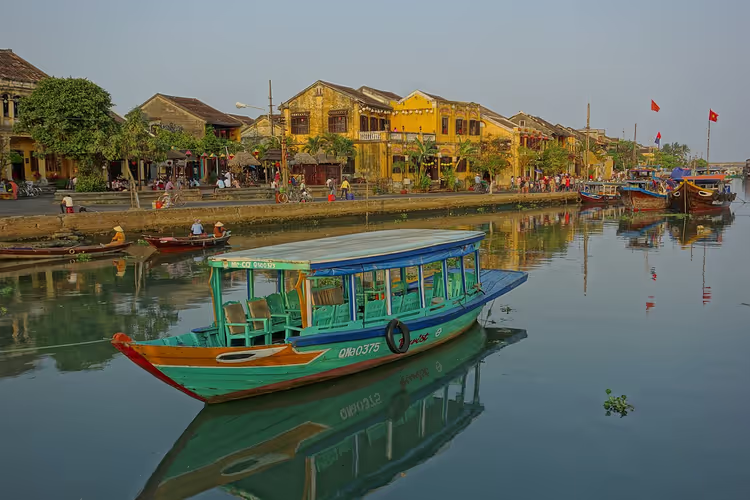 © Ryan Milani · CC BY-SAPhoto: Ryan Milani, CC BY-SA (https://creativecommons.org/licenses/by-sa/2.0), Wikimedia Commons
Add Hoi An as an evening walk: the old town, lanterns, and yellow facades. The real flooding season here comes in October and November, not August, so your risk is lower. Hue attracts with its citadel and imperial tombs, but rain falls more often here than in Da Nang.
- Who it's for: for the beach plus excursions to Hoi An, Hue, and the Marble Mountains.
- Not for: those who want a guaranteed dry week.
- The catch: downpours return in the second half of the month, and Hoi An's narrow streets get wet quickly.
- Where to stay: Hotels in Da Nang on Trip.com
Southern Vietnam: peak of the wet season
Southern Vietnam experiences the peak of the wet season in August. Rain falls almost every day, but briefly and mostly in the afternoon. Morning and evening leave you sun and a warm sea.
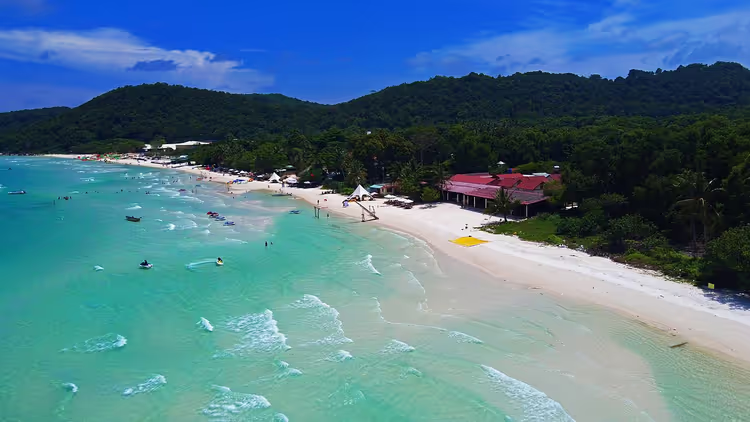 © [//commons.wikimedia.org/wiki/User:Trantuonglam Trantuonglam] · CC BY-SAPhoto: [//commons.wikimedia.org/wiki/User:Trantuonglam Trantuonglam], CC BY-SA (https://creativecommons.org/licenses/by-sa/4.0), Wikimedia Commons
Nha Trang sits on the south-central coast, and it gets less rain than the Mekong Delta. Mui Ne and Phan Thiet are known for wind and sand. This is a place for kitesurfing, not for complete calm.
Phu Quoc Island empties out in August. The average temperature stays in the 27.5-29 °C range, humidity is around 78%, rain falls on about 21 days, and about 238 mm falls per month (according to vietnamonline.com). Prices at this time are lower than in high season.
Choose Ho Chi Minh City as an urban stop, not as a beach destination. Humidity here is among the highest in the region, downpours hit suddenly, and sunny hours are noticeably fewer than on the coast.
- Who it's for: those willing to put up with short downpours for a warm sea and low-season prices.
- Not for: those who need a guaranteed dry beach vacation.
- The catch: afternoon rain can ruin an excursion or dinner on the terrace.
- Where to stay: Hotels in Nha Trang on Trip.com
⁉️🤔 Frequently asked questions
What's the weather in Vietnam like in August?
August splits the country into three zones. In the north, it's peak typhoon season with heavy rainfall in Hanoi. The center is warm, with frequent but short rains. In the south, the wet season is in full swing, but downpours are brief and mostly occur in the afternoon.
Where's the best beach destination in August?
For the beach, choose the center or the south. Nha Trang and Mui Ne get more sun than Ho Chi Minh City. Da Nang is good in the first half of the month. The north is less suitable for the beach: typhoons cancel cruises and flights.
Is Phu Quoc worth visiting in August?
Phu Quoc is in its low season in August. Prices are lower and there are few tourists, but it rains almost every day and humidity is high. If you're okay with downpours between swims, the island works. If you want a dry beach, look at Nha Trang.
What to do in Hanoi during the rainy season?
Plan the city around the rain: museums, cafes, and the Old Quarter between downpours. Keep a spare day for a Halong Bay cruise, as it gets canceled when a storm warning is issued. Bring a raincoat and shoes you don't mind getting wet.
When is a better time to visit Vietnam instead of August?
For the north and Halong, choose October and November. For the center and Hoi An, February and March are better, when it's dry. The south can be visited almost all year; the dry season there runs from December to April. If you want calm seas, go in winter.
In short: what to book
If you only have a week and just want the beach, go for Nha Trang or Mui Ne. If you're willing to put up with short downpours for lower prices, consider Phu Quoc. For cities and culture, choose Hanoi with a spare day for Halong. Book a centrally located hotel in advance. In the south, August is low season and prices are lower.

A small editorial team writing guides for independent travel. We travel ourselves, but we haven’t been everywhere, so we check prices, opening hours and how to get there against official sources.