
















Istanbul in five days: a walking route through districts with ticket prices
In five days in Istanbul, you see two continents. The route below is broken down by day: first the historic center, then the Golden Horn, Galata, the Asian side, and finally the palaces on Sarayburnu Cape.
The plan is simple: Sultanahmet, Eminönü, Galata with Istiklal, Asian Kadıköy, and Sarayburnu Cape. Between districts you're carried by tram, ferry, and metro, while a car in the center only creates parking problems. The first two days you walk around the historic peninsula, the third you give to Beyoğlu, the fourth to the Asian side, and the fifth you leave for the palaces.
Ad: this article contains affiliate links. We earn a commission if you book through them, at no extra cost to you.
Trip plan and what's important to know
💡 In short:
- Day 1 and 2: Sultanahmet and the Golden Horn, almost everything on foot.
- Day 3: Galata, Istiklal, and Taksim Square.
- Day 4: ferry to Kadıköy, then palaces on the Bosphorus shore.
- Day 5: Topkapi, Gülhane Park, and the Grand Bazaar.
- Prices and opening hours: 09/2026, according to the official museum portal
Day | Main sights | Tickets in advance | On foot |
|---|---|---|---|
1 | Hagia Sophia, Blue Mosque, cisterns | about 4 km | |
2 | Eyüp, Theodosian Walls, Balat, Bosphorus | not needed | about 3 km |
3 | Galata, Istiklal, Taksim | about 5 km | |
4 | Kadıköy, Maiden's Tower, Dolmabahçe | about 4 km | |
5 | Topkapi, Gülhane, Grand Bazaar | about 5 km |
Distances are calculated on the map, and tickets and opening hours were checked on 13.09.2026 on official websites. Five days is a compromise: each district gets roughly half a day, so decide in advance what matters more to you. We put palaces in the morning, before tour groups arrive, and leave streets and bazaars for the evening.
How much the trip costs and how to save
The main money in Istanbul goes to entrance tickets and accommodation, while transport and meals cost moderately. Below are benchmarks that let you plan a five-day budget calmly without counting every lira.
Tickets to the main museums are the most noticeable expense. Hagia Sophia costs about 25 €, Galata Tower about 30 €, and a combined Topkapi ticket with the harem about 55 € (as of 09/2026, full museum price list). Mosques, Gülhane Park, waterfronts, and the Grand Bazaar are free, so your program definitely won't come down to just ticket offices.
Item | Benchmark per person |
|---|---|
Entrance tickets | from 60 to 120 € for five days, if you do everything |
Accommodation | pricier in Sultanahmet, cheaper in Laleli and Aksaray |
Food | lunch in side streets is several times cheaper than dinner with a Bosphorus view |
Transport | one Istanbulkart card for the whole trip |
Accommodation in the center is more expensive, but it saves you time. If you stay in Laleli or Aksaray, you walk to Sultanahmet instead of paying for taxis. For five days, that matters more than the view from the window.
You can save on food without losing anything. Have lunch in the side streets behind the Grand Bazaar or near the Eminönü pier, where locals eat, and save dinner with a Bosphorus view for one evening. Simit, gözleme, and fish sandwiches are inexpensive and replace a full meal.
Transport costs the least: one Istanbulkart card for everyone, metro and tram instead of taxis. From the airport, it's cheaper to take the bus rather than a car. A taxi makes sense late at night or when you have a lot of luggage.
Another item is souvenirs. At the Grand Bazaar, prices are higher than on neighboring streets, and haggling is part of the ritual. If you just need a gift, look at the same goods in the alleys around the bazaar: the selection is similar, but the markup is smaller.
Free experiences in Istanbul don't end with mosques. A ferry across the Bosphorus costs the same as a regular transit ride, and the view is better than from paid observation decks. Walking along the Theodosian Walls and the Ortaköy waterfront also costs nothing.
The Museum Pass pays off if you visit at least four museums. For two palaces and the tower, it's cheaper to buy individual timed tickets online. We checked prices on 13.09.2026, so before your trip, open the museum price list again and check for seasonal changes.
Day 1: Sultanahmet and the Byzantine cisterns
Sultanahmet is the headland between the Sea of Marmara and the Golden Horn, where almost everything people come to Istanbul for is located. Distances here are short: from the Hippodrome to the Suleymaniye Mosque you walk for about half an hour. Start in the morning, because by midday groups gather at the main entrances, and by lunchtime you will spend an extra half hour in line.
Hippodrome Square
 © Sinan Şahin · CC BYPhoto: Sinan Şahin, CC BY (https://creativecommons.org/licenses/by/3.0), Wikimedia Commons
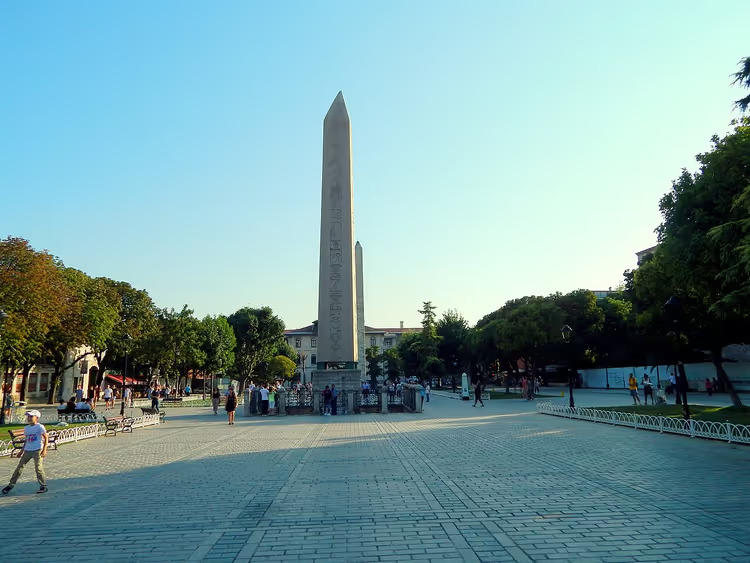
Hippodrome Square served as an arena for chariot races back under the Byzantine emperors. The stands have not survived, but the columns in the center show how huge this stadium was: the arena stretched almost half a kilometer long and more than a hundred meters wide. The Egyptian Obelisk, the Column of Constantine, and the Serpent Column stand here, and all three are older than the surrounding mosques.
The Egyptian Obelisk was brought from Karnak under Emperor Theodosius. The granite monument weighing hundreds of tons rests on just four metal supports and has survived several strong earthquakes. The Column of Constantine is assembled from many stone blocks, and where the third column stands, bronze serpents once coiled. Nearby lies the German Fountain, a gift to the sultan from Kaiser Wilhelm II. Beyond it, Sultanahmet Square stretches toward Hagia Sophia.
- Cost: free entry, the square is open around the clock.
Blue Mosque
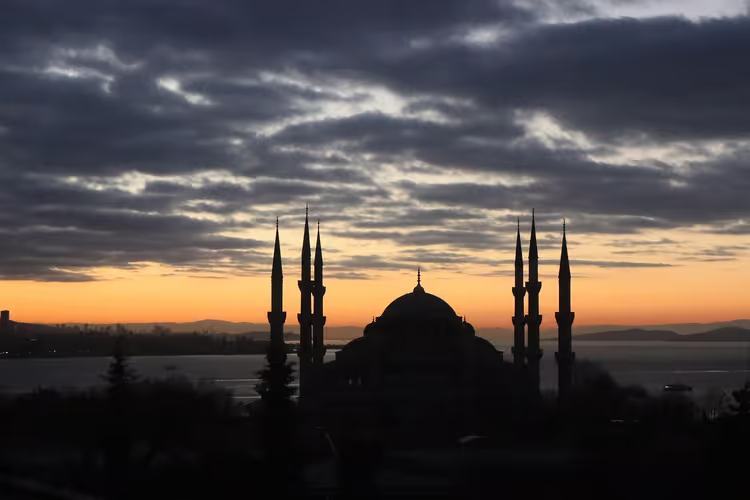
The Blue Mosque is called that because of the Iznik tiles lining the walls inside: there are about twenty thousand of them. Its official name, the Sultanahmet Mosque, honors Ahmed I, under whom it was built in the early 17th century. Six minarets were almost an act of defiance at the time, since the Forbidden Mosque in Mecca had the same number.
You are allowed inside between prayers. The courtyard and part of the prayer hall under the main dome, which rises over forty meters, are open to tourists. The walls are painted with Quranic surahs, light passes through hundreds of stained-glass windows, and the floor is covered with carpets featuring floral patterns. At the entrance, women are given a headscarf; shorts and bare shoulders are not allowed.
Cost: free entry.
The catch: only part of the prayer hall is open to tourists, so you will not see the entire interior.
Hagia Sophia
 © Kecags · CC BY-SAPhoto: Kecags, CC BY-SA (https://creativecommons.org/licenses/by-sa/4.0), Wikimedia Commons
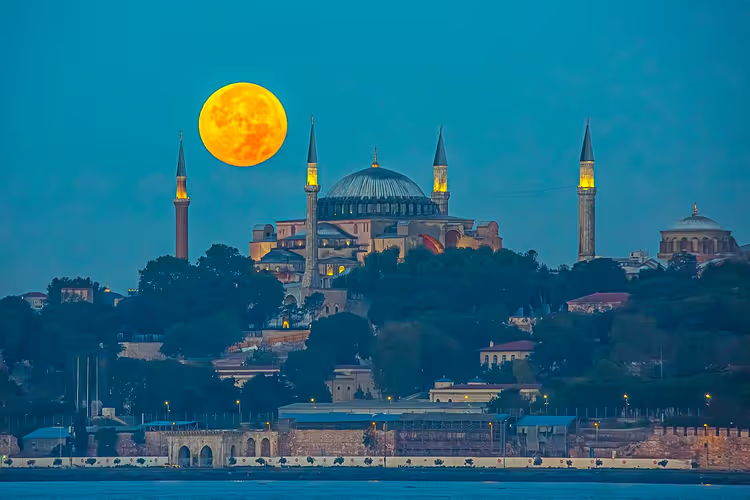
Hagia Sophia stands directly opposite the Blue Mosque and remains the city's main building. The cathedral was completed in the 6th century, converted into a mosque after the fall of Byzantium, turned into a museum under Ataturk, and since 2020 it has been a functioning mosque again. The change in status did not remove either the mosaics or the frescoes, and those are what most people come here for.
Entry for foreign tourists is paid, around 25 EUR (as of 09/2026, official museum portal), and goes through a separate entrance. The mosaics and frescoes inside were saved by the Ottomans: they plastered over the paintings, and the colors have reached us almost without loss. The most famous image shows the Virgin Mary with Emperors Constantine and Justinian; look for it at the entrance to the main hall.
Cost: around 25 EUR, check the exact price at Hagia Sophia prices and hours.
The catch: tourists are not admitted during prayer times, so come in the morning.
Great palace mosaics museum
The museum occupies part of the former Great Palace of Constantinople, of which almost nothing remains. The floor mosaics were found by accident during construction in the 1930s, and the discovery turned out to be enormous: the panels covered an area larger than a football field. Today it is one of the few ways to see what the floor of the imperial residence looked like.
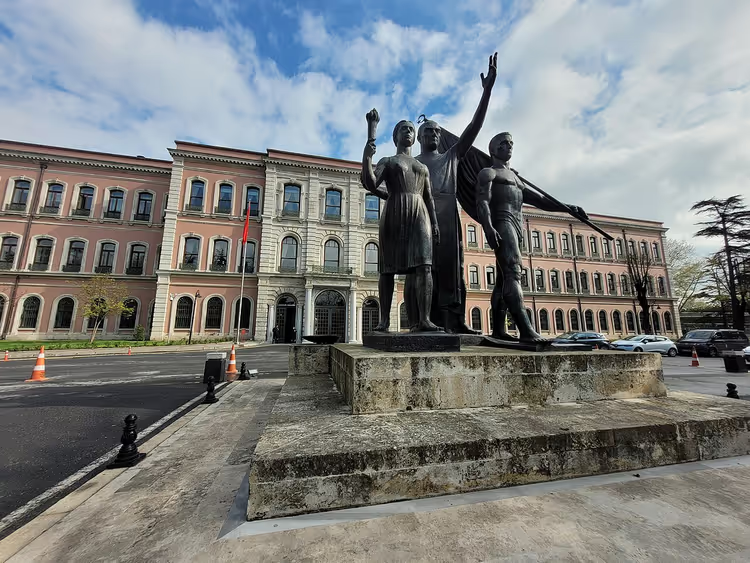 © Zafer · CC BY-SAPhoto: Zafer, CC BY-SA (https://creativecommons.org/licenses/by-sa/4.0), Wikimedia Commons
Dozens of scenes are displayed in two galleries on different levels: hunting, harvesting, children's games, mythological subjects. Each picture is assembled from terracotta, glass, marble, and limestone cubes the size of a grain. Nearby, fragments of columns and porticoes that once decorated the palace peristyle are shown.
- Cost: paid entry, see the price at Istanbul museum tickets.
Ibrahim Pasha Palace
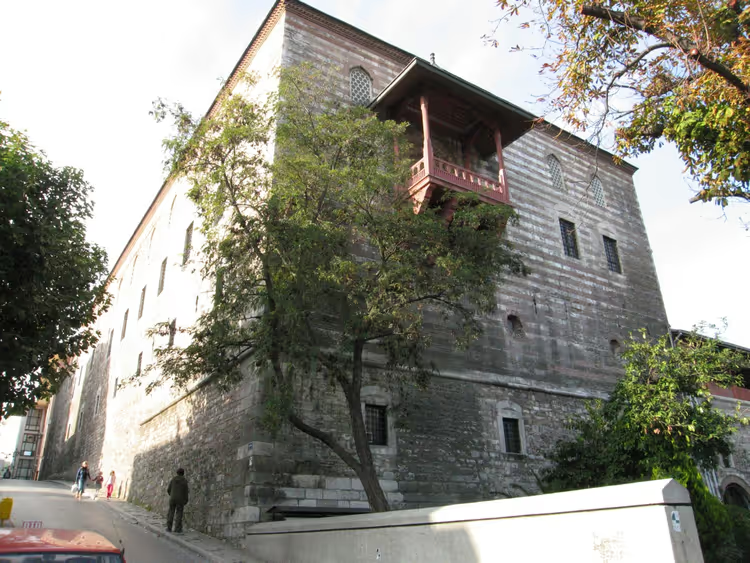
Suleiman I gave this four-story stone house in the old Ottoman style to his grand vizier Ibrahim Pasha as a wedding gift. It is less than a kilometer in a straight line from the sultan's Topkapi residence. From the outside, the building looks not like a palace but like a small fortress with four courtyards, and inside you easily lose count of the halls.
Today the Museum of Turkish and Islamic Arts operates here. The collection numbers tens of thousands of items, from the Umayyad era to the last Ottomans: manuscripts, ceramic tiles, carpets, jewelry, clothing of sultans and harem residents. Allow at least an hour for the visit, otherwise you will walk through the halls without taking in their meaning. If you are short on time, focus on the carpets and manuscripts; they are the strongest.
- Cost: paid entry, see exact hours and price at museum opening hours.
Basilica Cistern
 © Ray Swi-hymn from Sijhih-Taipei, Taiwan · CC BY-SAPhoto: Ray Swi-hymn from Sijhih-Taipei, Taiwan, CC BY-SA (https://creativecommons.org/licenses/by-sa/2.0), Wikimedia Commons
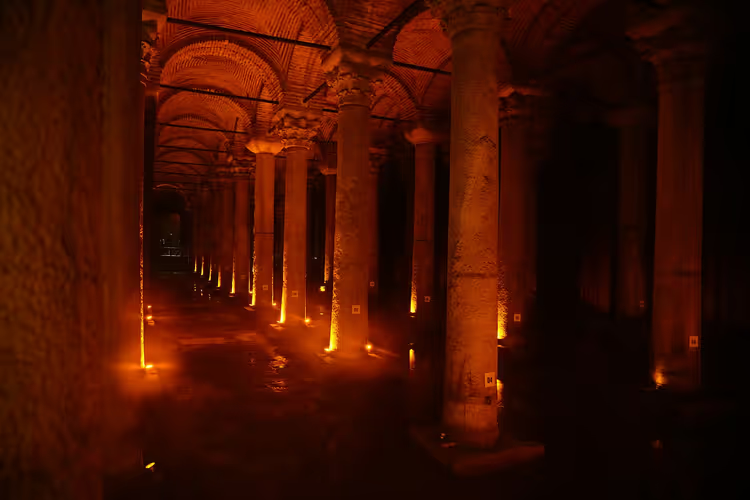
Basilica Cistern is a former water reservoir of the Great Palace, hidden deep beneath the streets. It took two centuries to build: work began under Constantine and was completed under Justinian. The marble columns were brought here from various temples, so their capitals differ from one another, and this is noticeable even from the walkways.
The descent goes down about twelve meters along damp steps. At the bottom, 336 columns await you (as of 09/2026, official museum portal) in subdued light, with a thin layer of water on the floor and the upside-down heads of Medusa in the bases of two columns. The columns stand in twelve rows, and the walls are up to four meters thick. Photos without flash come out best near the far supports, where there are fewer people.
Cost: paid entry, evening sessions cost more than daytime ones (as of 09/2026, Basilica Cistern tickets).
The catch: the steps are constantly damp and slippery, so wear shoes with good grip.
Theodosius Cistern
 © Izabela Miszczak · CC BY-SAPhoto: Izabela Miszczak, CC BY-SA (https://creativecommons.org/licenses/by-sa/4.0), Wikimedia Commons
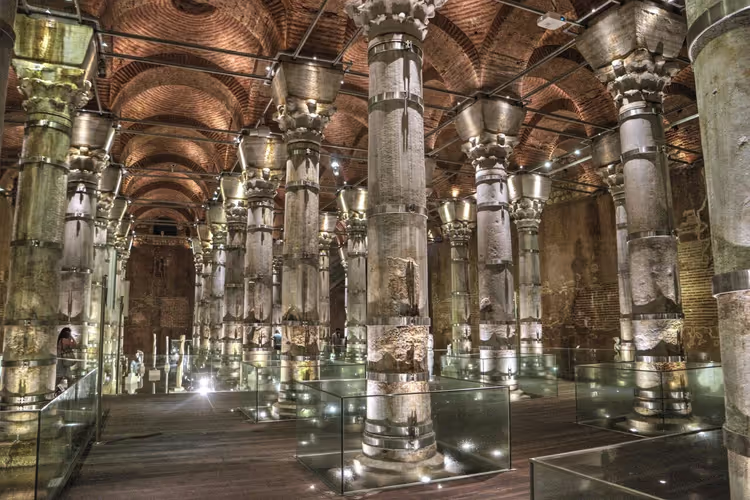
Five minutes from the Hippodrome lies Constantinople's second underground reservoir, the Theodosius Cistern. It was built under Theodosius II in the first half of the 5th century, and water was supplied by the Aqueduct of Valens. The abandoned reservoir beneath an old mansion was only discovered in the early 21st century and opened to visitors after a lengthy restoration.
It differs from the Basilica Cistern in its calm character: few tourists, almost no line. The columns here were made specifically for this site and reinforced with iron bands, and wooden walkways run over the thin layer of water. Thirty-two columns about nine meters high support the vaults. Twenty minutes is enough for a visit.
Cost: paid entry, the ticket is cheaper than at the Basilica Cistern.
Who it's for: those who want to see a cistern without the crowds and tripods around.
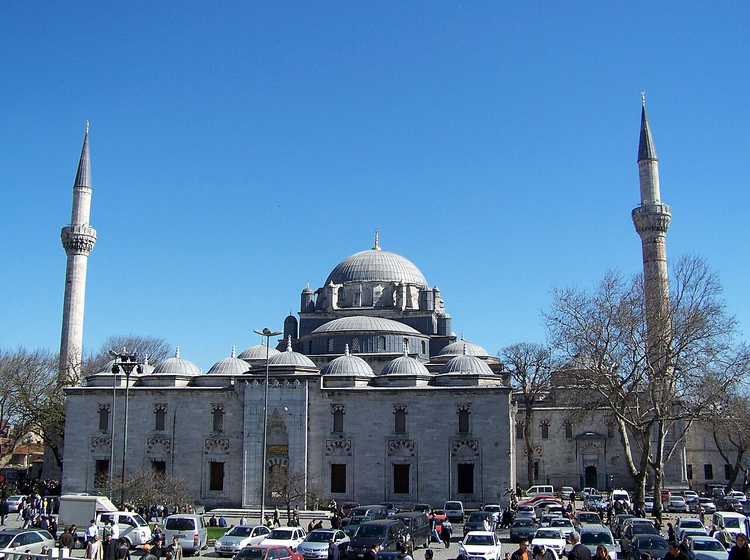
Bayezid Mosque
 © User:Darwinek · CC BY-SAPhoto: User:Darwinek, CC BY-SA (https://creativecommons.org/licenses/by-sa/3.0), Wikimedia Commons
Bayezid Mosque was founded at the turn of the 15th and 16th centuries by order of Bayezid II. Granite, marble, and porphyry were used in its construction, and old cypresses still grow in the courtyard, where a marble fountain murmurs. The building's form resembles Hagia Sophia: the main dome is supported by smaller semi-domes, and the two minarets are set far apart.
This is not just a mosque but an entire complex. Nearby there is an imaret, a caravanserai, a hammam, and a calligraphy museum; behind the mosque stretches the Sahaflar book bazaar, and Bayezid II himself is buried in the mausoleum on the south side. Stop by here on your way to the Grand Bazaar so you don't have to make a separate detour.
Cost: free entry, this is an active mosque.
Location: about ten minutes on foot from the Grand Bazaar according to the map.
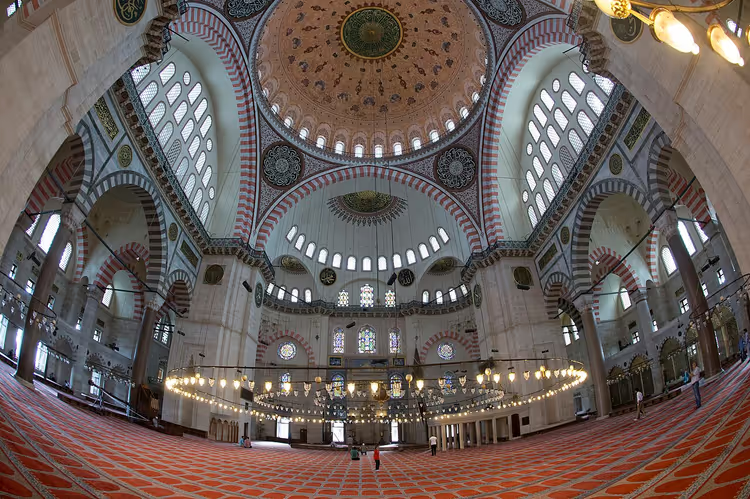
Suleymaniye Mosque
 © Dosseman · CC BY-SAPhoto: Dosseman, CC BY-SA (https://creativecommons.org/licenses/by-sa/4.0), Wikimedia Commons
Suleymaniye stands on a hill and surpasses the Blue Mosque in size. Suleiman I built it to commemorate the victory over Hungary, entrusting the design to Mimar Sinan, the greatest Ottoman architect. Construction took seven years, and today it is an example of Ottoman architecture at its peak.
Four minarets rise at the corners, with ten balconies on them. This is not decoration but a hint: Suleiman was the fourth sultan of Istanbul and the tenth ruler of the dynasty. In the garden behind the mosque, Suleiman and his wife Hurrem are buried; Suleiman II and Ahmed II also lie there, and nearby is the tomb of Sinan himself. The terrace near the mosque offers the best free view of the Golden Horn in the city.
Cost: free entry.
Getting there: about fifteen minutes on foot uphill from the Grand Bazaar.
Note: a dinner with a view of the Bosphorus and minarets is easy to finish at the Seven Hills restaurant. Book a terrace table in advance, and expect the average check here to be noticeably higher than the city average.
Day 2: Eyüp, the Theodosian Walls and Balat
The second day takes you away from Sultanahmet along the Golden Horn to the north. The historic peninsula ends here, and neighborhoods with ordinary city life begin. In the morning you take in the panorama from Pierre Loti Hill, in the afternoon you walk through Balat, and in the evening you cruise the Bosphorus.
Pierre Loti Hill
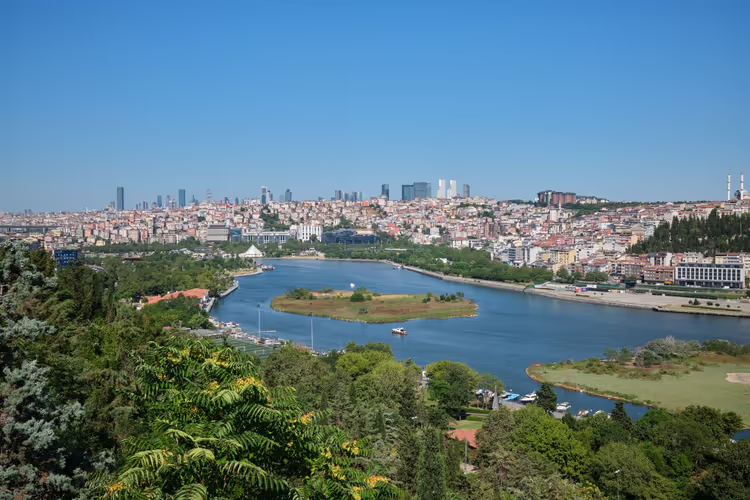
The hill above the Golden Horn is named after the French writer Pierre Loti, who lived in Istanbul and loved this spot. The elevation is modest, about fifty meters, but the panorama of the bay and the old city is one of the best in town. A cable car takes you to the top, and on foot the climb takes about half an hour past the Eyüp Mosque and a Muslim cemetery.
At the top there is a cafe with an open terrace; go there in the morning before tour groups arrive. The menu is short: the main food option is gözleme, stuffed flatbreads. The coffee and apple tea, however, are excellent, and they are worth lingering an extra hour for. From the cafe you can walk down to the walls of Constantinople in twenty minutes.
Cost: the terrace is free to enter, the cafe is à la carte.
The catch: the food selection is limited to gözleme, so a full lunch is not an option here.
Theodosian Walls
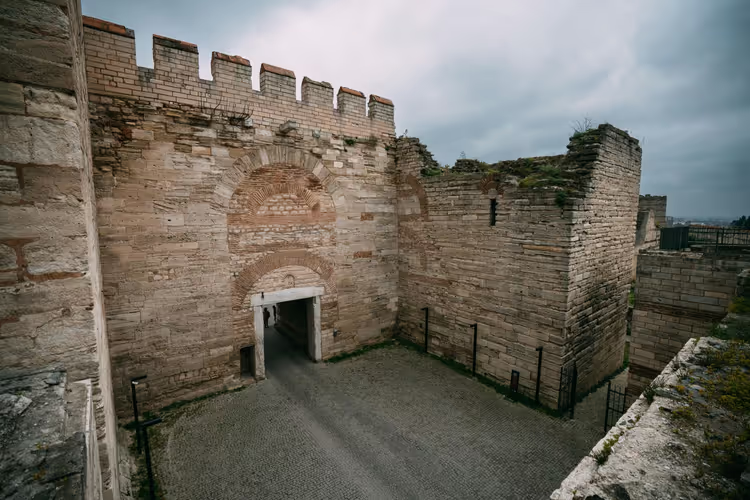
The Theodosian Walls protected Constantinople for more than a thousand years. Emperor Theodosius II ordered their construction in the 5th century, and together with the moats and towers they withstood nearly every siege. The fortification was built in several rows, which made it hard for enemies to even reach the first gates, and the ceremonial Golden Gate was closed off with a marble arch bearing a statue of the goddess of victory.
In the late 19th century the walls began to be dismantled as the city expanded beyond them. Restoration began only in recent decades, partly funded by UNESCO, and today the best-preserved section is in the Fatih district. Walk between the outer and inner walls: there are almost no tourists here, and the view of the surrounding buildings is a reminder of how old this area is.
Cost: free, open around the clock.
How to get there: tram to Fatih, then walk deeper into the neighborhood.
Mihrimah Sultan Mosque
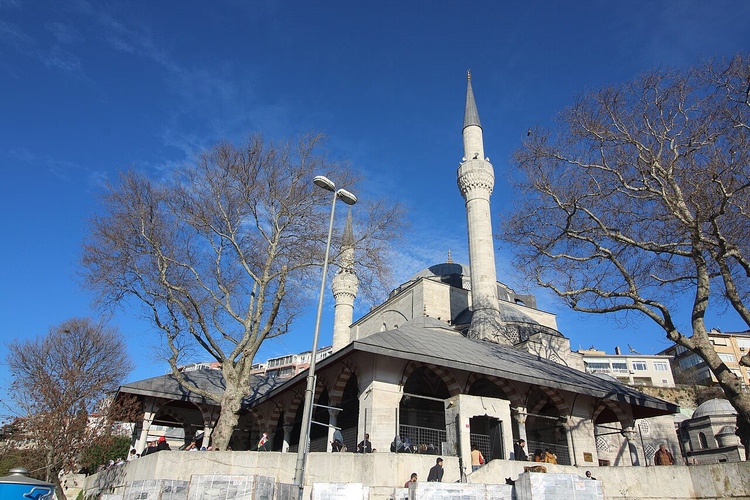
The Mihrimah Sultan Mosque was built for the daughter of Suleiman the Magnificent, a clever and wealthy princess who was involved in state affairs. The architect was again Mimar Sinan, and this modest mosque took only four years to complete. It stands a couple of hundred meters from the city walls, so it is easy to visit right after your walk along the walls.
 © Ali Osman Dilekoğlu · CC BY-SAPhoto: Ali Osman Dilekoğlu, CC BY-SA (https://creativecommons.org/licenses/by-sa/4.0), Wikimedia Commons
The mosque has only one minaret, which is linked to the personal story of Mihrimah, who lost her mother and her husband. Inside, the walls are decorated with mosaics, marble, ivory and mother-of-pearl, and light pours in through numerous arched windows. With no heavy structural elements, the interior feels almost weightless.
Cost: free entry, it is an active mosque.
Who it's for: those who want to see Sinan's work without queues and tour groups.
Chora
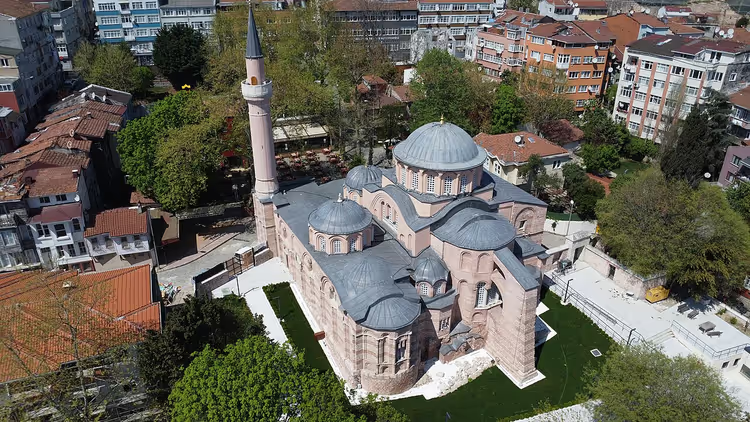
Chora began as the Church of Christ the Savior in Chora, and today it is an active mosque with one of the finest collections of Byzantine mosaics and frescoes. The 14th-century paintings depict the life of Christ, the Virgin Mary and the saints, and the scenes read like a book. The facade looks modest from the outside, so do not judge it by its walls and go inside.
Inside there are three spaces: the vestibule, the main hall and the burial chapel, and each has plenty to study. The building's status has changed twice: the church was restored and opened as a museum, and later returned to the community. The mosaics were uncovered and preserved in the process. Visit outside prayer times so nobody disturbs you while you study the scenes, and bring a headscarf.
- Cost: entry to the museum section is paid; check the current price on the Chora ticket.
Balat and Fener
 © Antoloji · CC BY-SAPhoto: Antoloji, CC BY-SA (https://creativecommons.org/licenses/by-sa/4.0), Wikimedia Commons
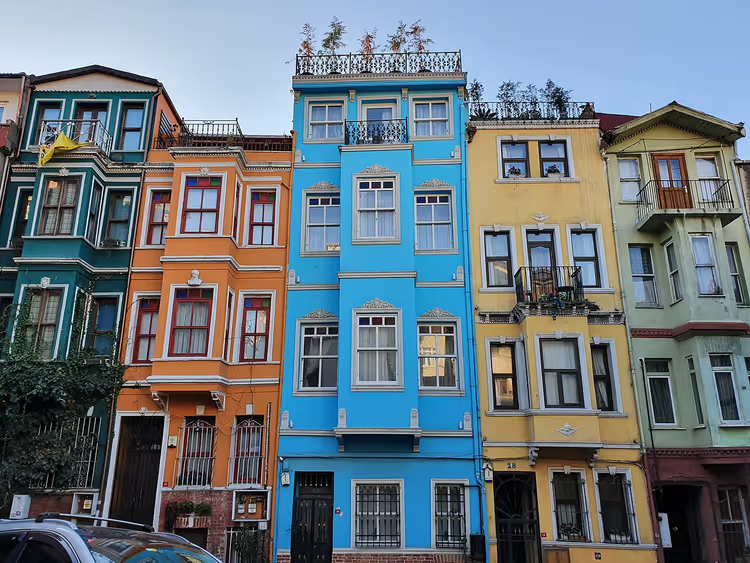
Balat and Fener are two neighboring quarters on the shore of the Golden Horn that tour buses rarely reach. Until the mid-20th century Balat was a Jewish quarter, while Fener was settled by Greeks. There is no boundary between them: churches, mosques and synagogues stand on the same streets, and that is the defining feature of the area.
People come here for the narrow lanes lined with colorful houses that have long become a backdrop for photos. Between shots, see the Cathedral of St. George with the relics of Euphemia the All-Praised, the iron Church of St. Stephen and the ruins of the Palace of Blachernae. Along the way, stop into local artists' workshops: prices here are lower than in the center, and the pieces are far more interesting than souvenir stalls.
How to get there: from Eminönü along the shore, then up the streets into the hills.
Who it's for: those who want to see the city without tour groups and souvenir stalls.
Bosphorus boat cruise
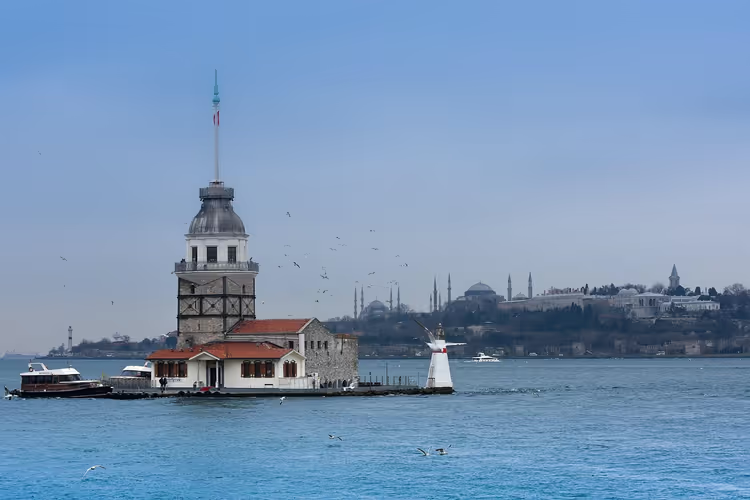
A Bosphorus cruise is the best way to give your feet a rest after two days of walking. The Haliç pier stands by the Galata Bridge in Eminönü, where ferries and sea buses depart. The price depends on the route, so check before buying where the trip ends and how long it lasts.
The city looks different from the water. Along the way you will see Rumeli Fortress, the Ortaköy Mosque, the Dolmabahçe, Çırağan and Beylerbeyi Palaces, the Maiden's Tower and the bridge across the strait. In the narrow sections the Bosphorus squeezes so tight that ships seem about to touch each other. Take a seat on the open deck: the view from the cabin is worse, and the panorama is the whole point.
Cost: depends on the route, tickets are sold at the pier.
Who it's for: those who are tired of walking and want to see both shores in one go.
Day 3: Galata, istiklal and taksim
The third day takes place on the northern shore of the Golden Horn, in Beyoglu. This is the densest part of the city in terms of cafes, shops and people. In the morning you cross the Galata Bridge and climb the tower, in the afternoon you walk along Istiklal, and in the evening you end up at Taksim Square.
Galata Bridge
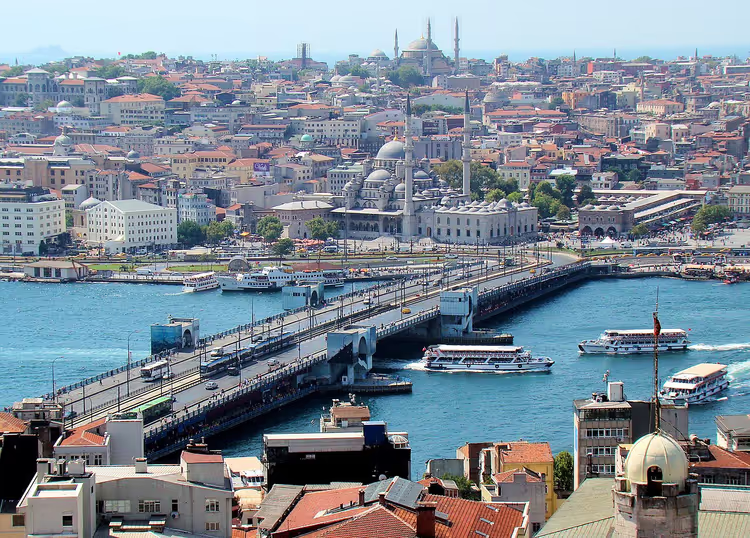 © Bjørn Christian Tørrissen · CC BY-SAPhoto: Bjørn Christian Tørrissen, CC BY-SA (https://creativecommons.org/licenses/by-sa/3.0), Wikimedia Commons
The Galata Bridge is a two-level crossing over the Golden Horn, about half a kilometer long and more than forty meters wide. The first wooden bridge on this site appeared in the mid-19th century, and the latest reconstruction added tram tracks. The central section opens to let large vessels pass through.
The upper level is occupied by pedestrians and fishermen, who stand with their rods over the water from the morning on. Street food is sold here too: balik ekmek fish sandwiches, roasted chestnuts and stuffed mussels. The lower level is given over to restaurants, from cheap eateries to expensive dining rooms. Cross the bridge on foot at least once, the view of the city is worth it.
- Cost: free, food and restaurants priced per menu.
Galata Tower
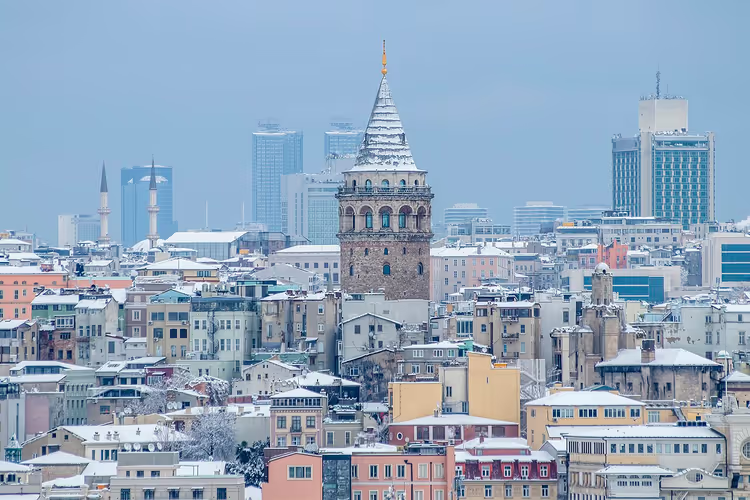 © Melih1969 · CC BY-SAPhoto: Melih1969, CC BY-SA (https://creativecommons.org/licenses/by-sa/4.0), Wikimedia Commons
The Galata Tower stands six hundred meters from the bridge and is visible from almost anywhere in the center. The stone tower was built here by the Genoese in 1348. The tower stands on a hill, so it looks taller than it is: its height is about seventy meters, and the walls are up to four meters thick.
A ticket costs about 30 EUR for foreign tourists (as of 09/2026, observation deck tickets), and it's better to buy it online for a specific time slot. An elevator and stairs take you to the top, and from the observation deck you'll see the Golden Horn, Beyoglu and the Bosphorus with the Asian side of the city. Come at opening or just before closing, otherwise the line will eat up an hour of your time.
Cost: about 30 EUR, timed tickets are sold online for tower slots.
The catch: the entrance line in high season is long, book your slot in advance.
Istiklal Street
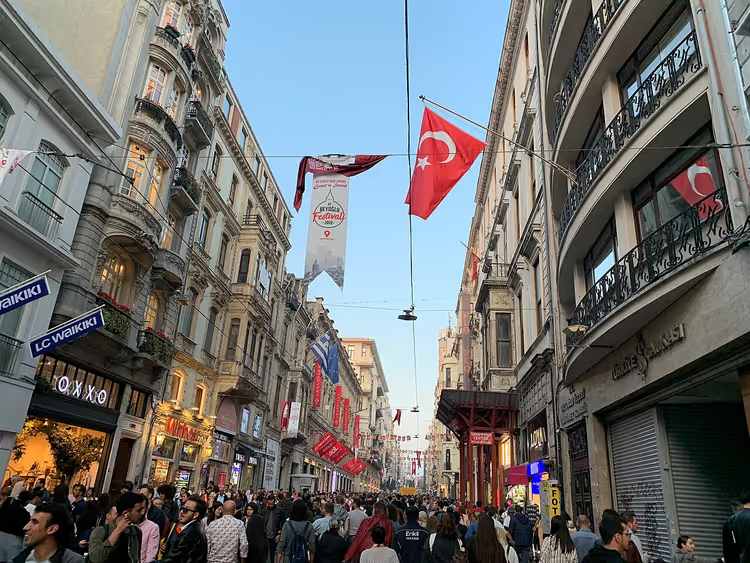 © Robot8A · CC BY-SAPhoto: Robot8A, CC BY-SA (https://creativecommons.org/licenses/by-sa/4.0), Wikimedia Commons
Istiklal stretches for almost one and a half kilometers from the Galata Tower to Taksim Square. The name translates as "independence," and the street has long been the city's main promenade. There are no cars here except for the historic tram, so you can walk comfortably even on weekends.
Shops, bookstores, restaurants and nightclubs line the street. Along the way you pass the Church of St. Anthony of Padua, the Greek Church of the Holy Trinity, the Neve Shalom Synagogue and Galatasaray High School, which has been operating since the 15th century. Don't miss Cicek Pasaji, a neoclassical arcade with flower shops and a glass dome, opened in 1876.
Cost: free.
How to get there: about one hundred meters uphill from the Galata Tower.
Madame Tussauds Museum
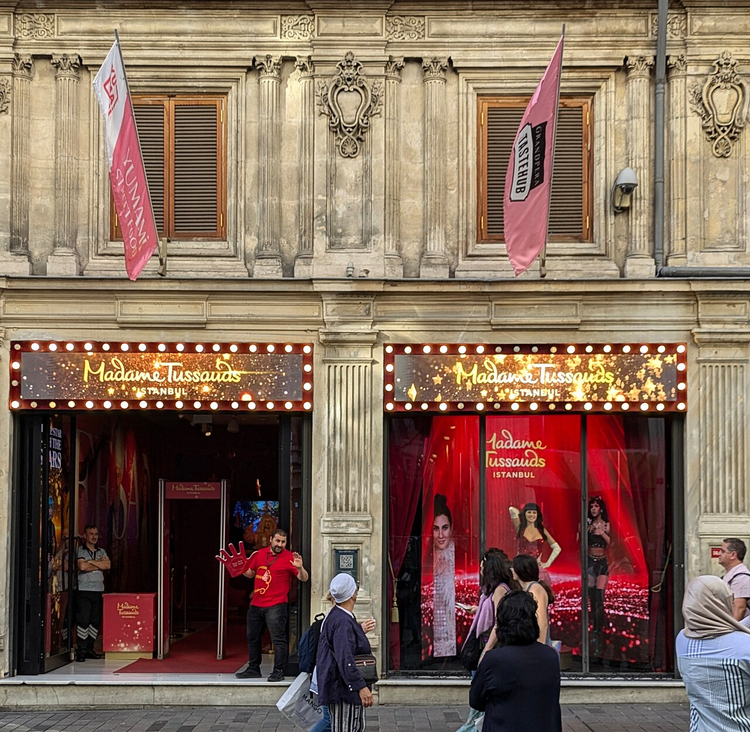 © Vano111ru · CC BYPhoto: Vano111ru, CC BY (https://creativecommons.org/licenses/by/4.0), Wikimedia Commons
The Istanbul Madame Tussauds operates in the Grand Pera shopping center right on Istiklal. The exhibition opens with a hall featuring Ataturk and other heroes of Turkish history: Sultans Mehmed II and Suleiman, the architect Sinan, the poet Rumi and the first female pilot Sabiha Gokcen. The collection is small, but you recognize the figures immediately.
Besides national figures, there are replicas of famous scientists, musicians, athletes and cartoon characters. One hall explains how wax figures are made, and there you can also cast a mold of your own hand. An hour is enough to see it all, so stop by if it's raining or you're tired of the street.
Cost: paid entry, tickets are sold on site and online.
Who it's for: families with children and those who want to take a break between walks.
Taksim Square
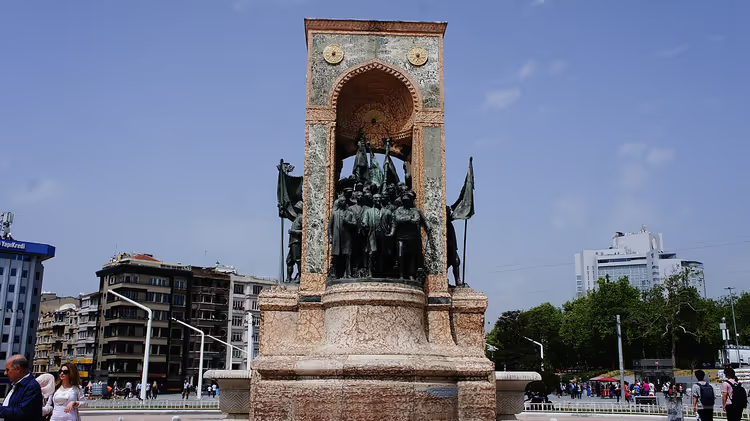 © Belovvv · CC BY-SAPhoto: Belovvv, CC BY-SA (https://creativecommons.org/licenses/by-sa/4.0), Wikimedia Commons
Taksim is the busiest hub of Istanbul, where Istiklal and the city's main boulevards begin. The name comes from the Ottoman water distribution structure that stood here in the 18th century. In the center of the square, the Monument of the Republic has stood since 1928, as tall as a four-story building.
From here it's easy to head off in different directions: the road to Dolmabahce and Ortakoy goes downhill toward the water. The must-have photo is the red nostalgic tram that runs between Taksim and Tunel station. The little car with its wooden interior runs every day and carries several thousand people, and it's best to board at the terminus.
Cost: free.
The catch: in the evening and on weekends the square is very crowded, keep children close.
Church of the Holy Trinity
 © alibarisondul · CC BYPhoto: alibarisondul, CC BY (https://creativecommons.org/licenses/by/3.0), Wikimedia Commons
The Church of the Holy Trinity south of Taksim is one of the largest Orthodox churches in Istanbul. The parish opened in the late 19th century, and the site previously housed a Greek cemetery and a small wooden church. The architect combined neo-baroque with basilica elements, so the building doesn't look like other city churches.
The facade is framed by two tall bell towers, and inside the main highlights are the ceiling frescoes and Greek icons, some of which predate the Ottoman conquest. Twelve dome windows symbolize the apostles.
Cost: free entry, it's an active church.
Who it's for: those who want to see Orthodox heritage off the tourist routes.
Day 4: the Asian side and the Bosphorus palaces
Day four starts with a ferry: without the Asian side, your introduction to Istanbul is incomplete. In the morning you cross to Kadikoy, in the afternoon you walk along Bagdat Avenue, and on the way back you see the palaces and a mosque on the European shore.
Bagdat Avenue
 © CeeGee · CC BY-SAPhoto: CeeGee, CC BY-SA (https://creativecommons.org/licenses/by-sa/3.0), Wikimedia Commons
Bagdat Avenue starts at the Kadikoy pier and runs parallel to the Sea of Marmara. It is part of the old road that led from Byzantium to the Lycian cities, and the avenue got its name in honor of Murad IV's victory in the war with Persia. Today it is the main shopping street of the Asian side.
There are no fewer shops here than on Istiklal, but the crowd is different: mostly locals rather than tourists. On the stretch between Kiziltoprak and Suadiye streets there are dozens of department stores and boutiques. In the evenings, restaurants and clubs fill up with residents, and on holidays the avenue becomes a venue for parades and festivals. Come here for ordinary city life, not for monuments.
How to get there: ferry from Eminonu or Karakoy to the Kadikoy pier.
Who it's for: those who are tired of the tourist streets of the European side.
Haydarpasa Station
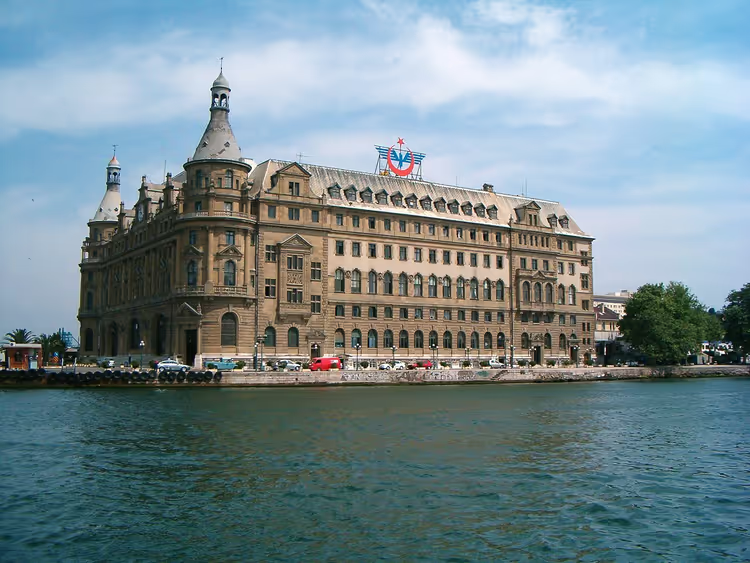 © Starliner · CC BY-SAPhoto: Starliner, CC BY-SA (http://creativecommons.org/licenses/by-sa/3.0/), Wikimedia Commons
Haydarpasa Station was built in the early 20th century to a design by German architects, and it was meant to be the terminus of the Berlin Baghdad railway. The neoclassical building with baroque clocks and turrets stands on piles right at the water's edge so passengers could easily transfer to ferries. In terms of floor area, the station is comparable to a large shopping mall.
In 2010, during restoration, a fire broke out here, and after the opening of the Marmaray underwater tunnel the station was closed. Now different wings of the building are promised to house a museum, a hotel, and a shopping center. For now you can only look at the facade from the embankment: there is no access inside.
Cost: viewing from outside is free.
The catch: the building is closed, no one is allowed inside.
Maiden's Tower
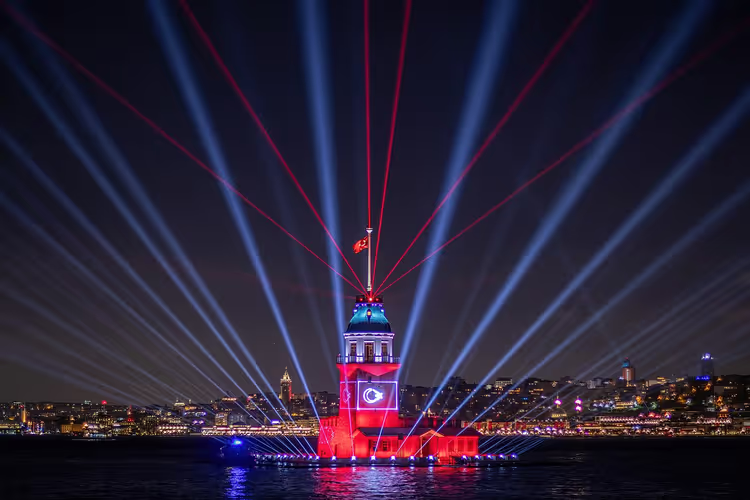 © Melih1969 · CC BY-SAPhoto: Melih1969, CC BY-SA (https://creativecommons.org/licenses/by-sa/4.0), Wikimedia Commons
Maiden's Tower stands on a tiny islet in the middle of the Bosphorus, and the exact year of its construction is unknown. Some historians date the tower to the wars between Sparta and Athens, others to the reign of Constantine, when it served as a watchtower fort. A legend about a princess and a prophecy that came true on the day she came of age is tied to the tower.
The tower's modern life began in the early nineties, when it was restored and turned into a cultural center. Today it houses an observation deck, a restaurant, a bar, and a souvenir shop. The only way to get there is by water: boats leave from the Salacak and Kabatas piers every fifteen minutes.
Cost: you need a boat ticket, restaurant is a la carte.
Who it's for: those who want to see the Bosphorus not only from the shore.
Dolmabahce
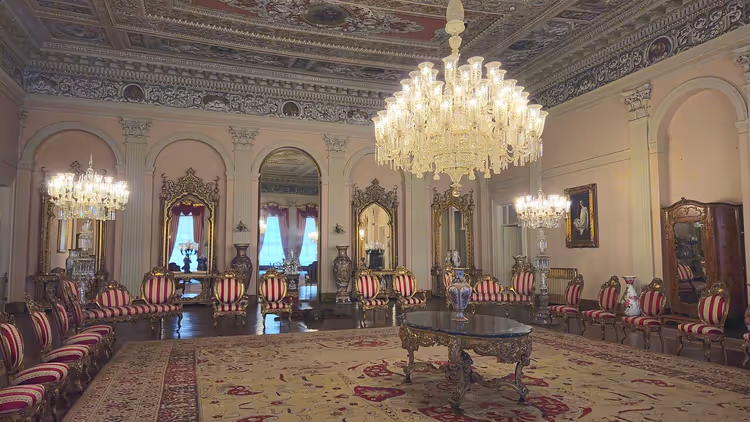 © Sergey A. Demidov · CC BYPhoto: Sergey A. Demidov, CC BY (https://creativecommons.org/licenses/by/4.0), Wikimedia Commons
Dolmabahce appeared in the mid-19th century, when Abdulmejid I decided to replace the medieval Topkapi with a more European residence. The facade stretches along the Bosphorus shore for almost six hundred meters, and inside are hidden dozens of halls, hundreds of rooms, hammams, and lavatories. The decoration rivals the best palaces of Europe: gilded ceilings, columns, handmade carpets.
The palace's main value is its authentic interiors: the ceremonial hall, the sultan's quarters, the harem, and the imperial staircase. It also displays a collection of paintings by Aivazovsky and a huge crystal chandelier that Queen Victoria gave to the sultan. In one of the rooms stands the bed on which Ataturk died in the late thirties of the last century.
Cost: admission is paid, tickets on the national palaces website.
Who it's for: those who want to see an Ottoman palace from the inside, not just the walls from outside.
Ortakoy Mosque
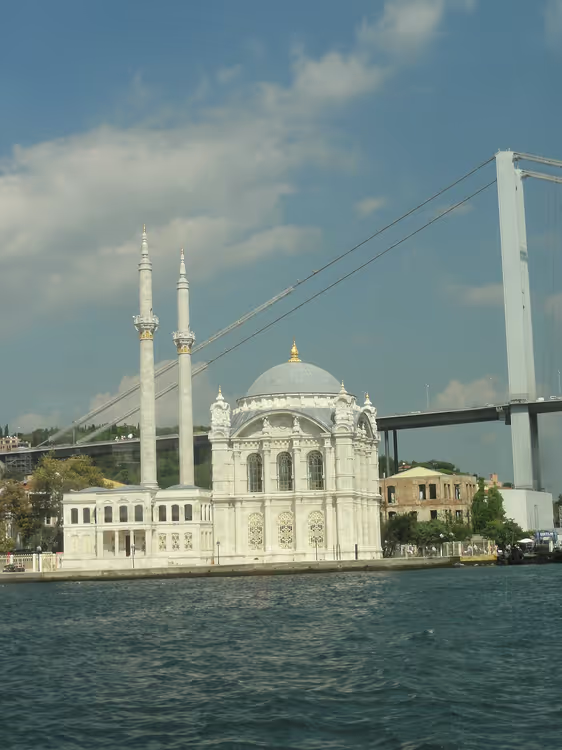 © Armenian World · CC BYPhoto: Armenian World, CC BY (https://creativecommons.org/licenses/by/4.0), Wikimedia Commons
Ortakoy Mosque, or the Grand Mecidiye Mosque, stands right by the Bosphorus Bridge and is considered one of the most beautiful in the city. It was built in the mid-19th century on the site of a temple destroyed during the 1730 uprising, but the new building also suffered from an earthquake and a fire. The restoration was completed only in this century.
From the outside it is a blend of neoclassicism and Ottoman baroque: two white marble minarets with balconies, a light dome, and adjoining sultan's quarters with a harem. Inside, the walls are faced with pink mosaic, Arabic calligraphy has been added, and the prayer hall is flooded with light from large windows. In the evening the hall is lit by a huge crystal chandelier.
Cost: admission is free, it is an active mosque.
How to get there: from Dolmabahce along the embankment, then under the bridge.
Day 5: Topkapi, Gulhane, and the Grand Bazaar
Day five is dedicated to Sarayburnu cape, where Ottoman rule over the city began. Here stand Topkapi Palace, Gulhane Park, and the Archaeological Museum, and the route ends at the noisy Grand Bazaar. Come at opening time, because the palaces take up almost the whole day.
Topkapi
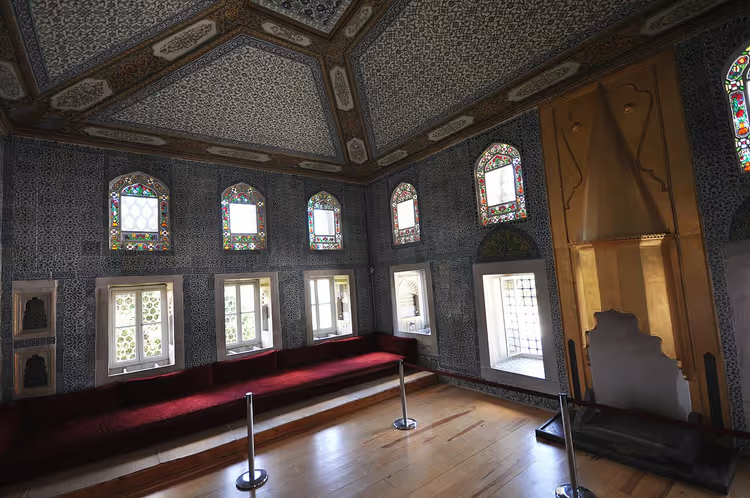 © Jorge Láscar from Australia · CC BYPhoto: Jorge Láscar from Australia, CC BY (https://creativecommons.org/licenses/by/2.0), Wikimedia Commons
Topkapi began to be built in the mid-15th century on the orders of Mehmed the Conqueror, immediately after the capture of the city. For almost four hundred years the palace served as the residence of the Ottoman sultans, and in the early 20th century it was turned into a museum. The name translates as "cannon gate," and the complex itself, with four huge courtyards, is comparable in size to a small town.
The halls display golden thrones, clothing with precious stones, the Topkapi dagger, and the famous Spoonmaker's Diamond. A separate treasure is the relics of the Prophet: a banner, a hair from his beard, and a fragment of a tooth. Allow at least two hours just for a quick look at the complex, and the harem with its three hundred rooms, hospital, and baths will take another hour.
Cost: a combined ticket for the palace and harem is about 55 EUR (as of 09/2026, palace and harem tickets).
The catch: the palace is closed on Tuesdays, plan your day in advance.
Gulhane Park
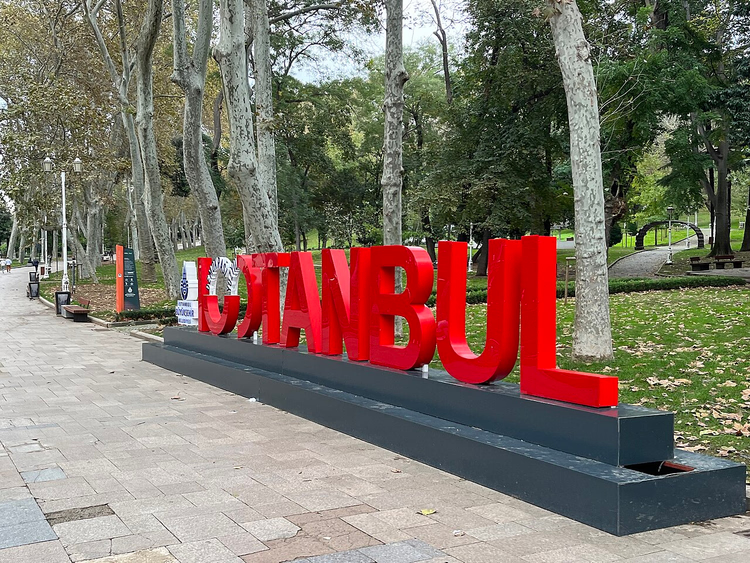 © Another Believer · CC BY-SAPhoto: Another Believer, CC BY-SA (https://creativecommons.org/licenses/by-sa/4.0), Wikimedia Commons
Gulhane Park adjoins Topkapi, and its name translates as "house of roses." Under the Ottomans it was part of the sultan's gardens, where no one but the ruling family was allowed. The park was opened to the public in 1912, and since then it has remained the quietest place in noisy Sultanahmet.
Here you will find the Parade Pavilion, the Museum of Islamic Science and Technology, and the Gothic Column, which is more than one and a half thousand years old. In spring the park becomes the main venue of the tulip festival: flowerbeds turn into living panels, and the city celebration starts right here. Admission is free.
Cost: admission is free.
Who it's for: those who want to rest between two museums and eat on a bench.
Archaeological Museum
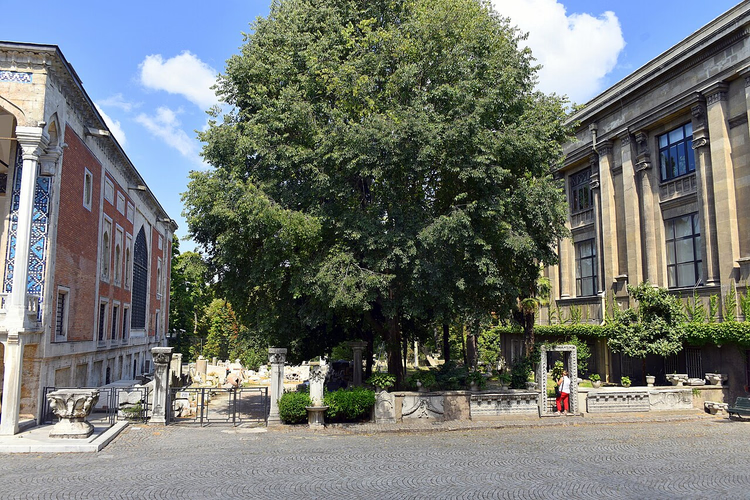 © Osama Shukir Muhammed Amin FRCP(Glasg) · CC BY-SAPhoto: Osama Shukir Muhammed Amin FRCP(Glasg), CC BY-SA (https://creativecommons.org/licenses/by-sa/4.0), Wikimedia Commons
The Istanbul Archaeological Museum was founded in the late 19th century, when the sarcophagus of Alexander the Great was found during excavations in Sidon, Lebanon. The collection has grown to hundreds of thousands of items and occupies three buildings next to Gulhane Park. It is one of the largest museums of its kind in the world.
The halls contain finds from Ancient Greece, Egypt, Anatolia, Mesopotamia, and Babylon: tombs, statues, bas-reliefs, coins, weapons, and column fragments. The strongest impression is made by fragments of the Babylonian Ishtar Gate with depictions of mythical creatures and the Lycian sarcophagi. Allow at least three hours for the visit, otherwise you will rush past half the collection.
Cost: admission is paid, check the price and hours on the entrance to the Archaeological Museum.
Who it's for: those who came to Istanbul for history, not just for the mosques.
Grand Bazaar
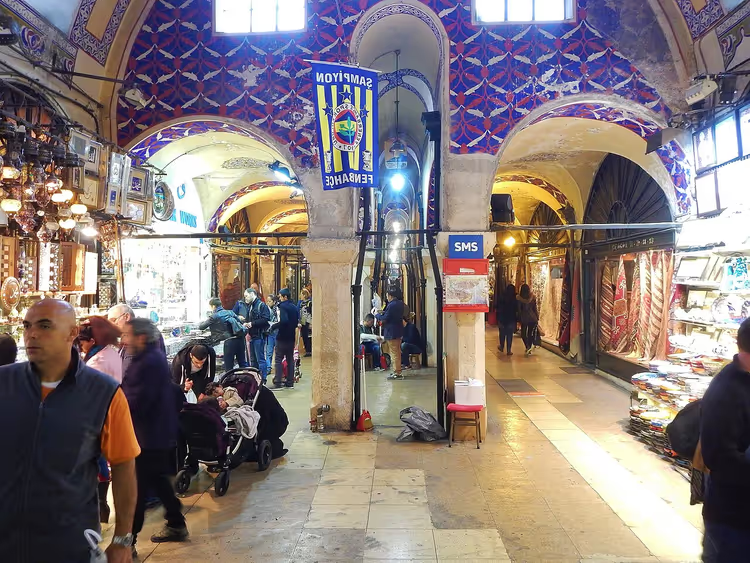 © qwesy qwesy · CC BYPhoto: qwesy qwesy, CC BY (https://creativecommons.org/licenses/by/3.0), Wikimedia Commons
The Grand Bazaar is a covered market spanning several city blocks, with thousands of shops. Mark Twain called it a hive of a thousand little shops back in the 19th century, and little has changed since. The bazaar dates back to the mid-15th century, when Mehmed II ordered the first covered pavilions built for trade.
Inside, dozens of streets run through the complex, along with mosques, a hammam, a school, and cafes. Goods are grouped by rows: ceramics in one area, carpets in another, then textiles, spices, and sweets. Prices here are aimed at tourists, so bargain calmly and walk away if the discount doesn't suit you.
Cost: admission is free, haggling is appropriate.
Who it's for: those who want to buy gifts in one place.
Tours and tickets in Istanbul
Guided tours, skip-the-line tickets and activities — most offers can be cancelled free of charge.
See offers on TiqetsThe widget loads once you give your consent.
How to get from the airport to the center
Istanbul receives flights through two airports. Sabiha Gökçen Airport (SAW) serves European low-cost carriers, while the New Airport (IST) handles the majority of tourists. The new terminal is about forty kilometers from Sultanahmet, so check exactly where your flight arrives.
HavaIst buses take you to the center. Look for Otobüs/Servis/Araç signs and take the route to Sultanahmet or Taksim: the trip takes from fifty minutes to an hour and a half, depending on traffic. You can pay by bank card or with an Istanbulkart, which is sold in yellow machines at the stops.
A hotel transfer gets you there in forty-five minutes, and taxis operate at the exits around the clock. Book a car in advance through carrier apps and don't agree to unofficial drivers at the terminal exit. In the center you don't need a car: the tram, metro, and ferry cover the entire route in this article.
Tours and tickets in Istanbul
Guided tours, skip-the-line tickets and activities — most offers can be cancelled free of charge.
See offers on KiwitaxiThe widget loads once you give your consent.
Istanbul itinerary on the map
All five days' points are collected on one map. Open it on your phone and go at your own pace: the route is easy to split into parts if you get tired or the weather turns bad.
What to see in Istanbul in 5 days
Places on the map
- 1Hippodrome Square Chariot-racing arena, Egyptian Obelisk, Column of Constantine and Serpent Column
- 2Blue Mosque Mosque of Sultan Ahmed I, about twenty thousand Iznik tiles
- 3Hagia Sophia The city's main building, a 6th-century cathedral, today a functioning mosque
- 4Great Palace Mosaic Museum Floor mosaics of the Great Palace of Constantinople, found in the 1930s
- 5Ibrahim Pasha Palace Museum of Turkish and Islamic Art in the former residence of the grand vizier
- 6Basilica Cistern Underground reservoir of the Great Palace, 336 columns and Medusa Gorgon heads
- 7Cistern of Theodosius The city's second underground reservoir, thirty-two columns, few tourists
- 8Bayezid Mosque Complex with an imaret, a caravanserai and the Sahaflar book bazaar
- 9Süleymaniye Mosque The city's second-largest mosque, tombs of Suleiman and Hürrem in the garden
- 10Pierre Loti Hill Panorama of the Golden Horn and the old city, cable car ascent
- 11Theodosian Walls 5th-century defensive walls of Constantinople, best preserved in the Fatih district
- 12Mihrimah Sultan Mosque Built by Sinan for the daughter of Suleiman the Magnificent, one minaret
- 13Kariye (Chora) Former Church of Christ the Savior in Chora, 14th-century Byzantine mosaics
- 14Balat and Fener Neighboring quarters on the Golden Horn, narrow streets with colorful houses
- 15Galata Bridge Two-level crossing over the Golden Horn, anglers on the upper deck
- 16Galata Tower Observation deck with views of the Golden Horn, Beyoğlu and the Bosphorus
- 17Istiklal Street A kilometer and a half from the tower to Taksim, shops and a historic tram
- 18Madame Tussauds Museum Wax figures of Turkish history in the Grand Pera shopping center
- 19Taksim Square The city's main hub, the Republic Monument and a nostalgic tram
- 20Holy Trinity Church A large Orthodox church south of Taksim, frescoes and Greek icons
- 21Bagdat Avenue The main shopping street of the Asian side, almost 14 km along the sea
- 22Haydarpaşa Station An early-20th-century neoclassical station on piles by the water, closed inside
- 23Maiden's Tower A tower on an islet in the middle of the Bosphorus with an observation deck and a restaurant
- 24Dolmabahçe A mid-19th-century palace on the Bosphorus shore, paintings by Aivazovsky
- 25Ortaköy Mosque The large Mecidiye Mosque by the Bosphorus Bridge, pink mosaics inside
- 26Topkapı The sultans' residence with four courtyards, a harem and relics of the Prophet
- 27Gülhane Park Former sultan's gardens next to Topkapı, the venue for the tulip festival
- 28Archaeological Museum Finds from Greece, Egypt and Mesopotamia, the Ishtar Gate and sarcophagi
- 29Grand Bazaar A covered market since the 15th century, thousands of shops and haggling in almost every row
⁉️🤔 Frequently asked questions
How much money do you need for five days in Istanbul?
Budget 60 to 100 € per day per person, excluding the hotel. For current ticket prices, see museum ticket prices. One Istanbulkart is enough for transportation.
Where do you buy an Istanbulkart and how do you use it?
The card is sold in yellow machines at stops and in the metro, and you can top it up there too. One card works for several people; you need to tap it every time you enter. Without the card, a single ticket costs more, and an anonymous card doesn't give you a transfer discount.
What days are museums closed?
Some museums are closed on Mondays; Topkapı's day off is noted in the palace description. Hagia Sophia is open every day, but entry is closed during prayer times. Before your trip, check opening hours on museum schedules, as schedules change by season.
Is five days enough for Istanbul?
It's enough for the main sights if you dedicate each day to one district. If you want to add the Princes' Islands, Beşiktaş, or the Istanbul Modern museum, plan for a week. The route above can be shortened to three days by cutting the Asian side and the Grand Bazaar.
Is the Museum Pass worth buying?
When the pass pays off is explained in the budget section above. Compare prices on Museum Pass prices before buying.
In short: what to book
If you're visiting Istanbul for the first time, a base in Sultanahmet saves you an hour of walking every day: find a hotel in Sultanahmet on Trip.com. If you're short on time and don't want to stand in lines, get tours and tickets on GetYourGuide: with a guide you can cover Hagia Sophia and Topkapı in one day. Book your airport transfer in advance, and buy an Istanbulkart once you're there.

A small editorial team writing guides for independent travel. We travel ourselves, but we haven’t been everywhere, so we check prices, opening hours and how to get there against official sources.