














Brazil by month: when to go to the north and south
Brazil is huge in area, though still smaller than all of Europe. There is no single season for the whole country. While it is winter in Germany, Rio de Janeiro is in the middle of summer: on December 21, beach season begins in the Southern Hemisphere (as of: Brazil's tourism portal). The north and south of the country run on different climate schedules, so it is better to pick dates for a specific region.
If you want dry tropics and jungle, plan the north for the period from July to November. If you like warm seas and mild winters, look at the south of the country between November and March. Next: specific months for each region, a climate comparison, and route tips.
Ad: this article contains affiliate links. We earn a commission if you book through them, at no extra cost to you.
Brazil's climate: north and south
💡 In short:
- North (Amazonia and Belém): dry season from July to November, heat all year round.
- Northeast (Fortaleza, Natal, Recife): dry from August to December, rainy in March and April.
- South (Porto Alegre, Florianópolis): best time from November to March, cool nights in winter.
- Climate and seasons: 09/2026, checked on Visit Brasil.

Brazil lies entirely in the Southern Hemisphere, so the seasons here are opposite to those in Europe. Brazilian summer lasts from December 21 to March 20, winter from June 21 to September 20 (as of: official Visit Brasil website). When it is beach season in Europe, it is winter in Brazil. So do not carry your home calendar over to another continent.
The average annual temperature across the country is around 25 °C, but regions differ greatly (as of: Brazil's tourism office). The north of the country lies in the equatorial zone: Amazonia is hot and humid all year round. The northeast offers a hot, sunny coast with almost no variation. The south belongs to the subtropics, where it is milder, and in winter highland cities can see frost.
Region | Climate | Best months | What matters |
|---|---|---|---|
Amazonia and the north | equatorial, hot and humid | July-November | dry season, lower water levels |
Northeast | tropical, lots of sun | August-December | downpours in March and April |
South and Porto Alegre | subtropical, milder | November-March | cool nights in winter |
As of: climate and weather in Brazil and Brazil climate normals, 09/2026.
Northern Brazil and the Amazon: dry season
The north of the country covers the Amazon and the city of Belém. The climate here is tropical, the difference between months is small, and the air is humid all year round. The year is divided into two seasons: a rainy one from December to June and a dry one from July to November (as of: Brazil's INMET weather service, 1991-2020 normals).
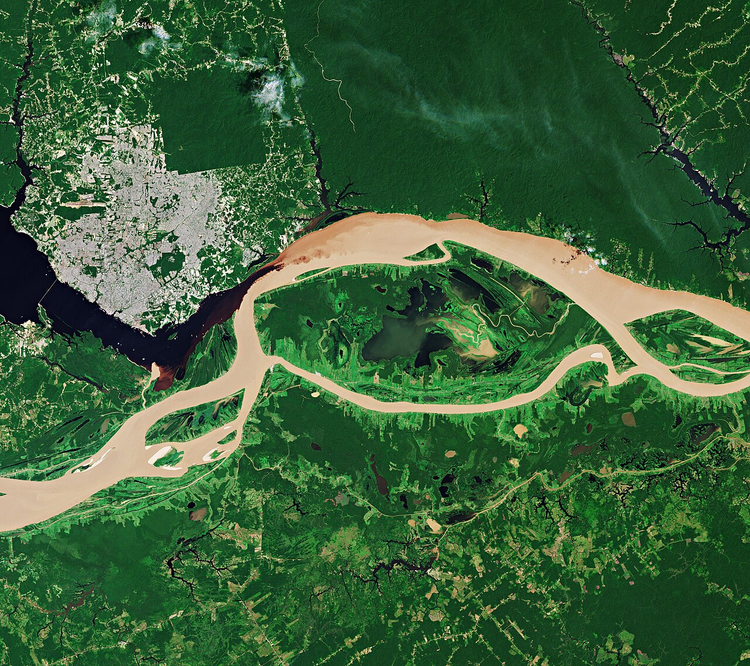 © European Space Agency · CC BY-SAPhoto: European Space Agency, CC BY-SA (https://creativecommons.org/licenses/by-sa/2.0), Wikimedia Commons
The dry season is the right time for a trip deep into the Amazon. During the rainy months, the water level in the Amazon rises, forest trails get washed out, and the number of rainy days reaches up to twenty per month. From July to November there is noticeably less precipitation, and you can comfortably hike the routes along the river.
Belém will defy expectations. Even in the dry season it is one of the rainiest cities in the country. The relatively calm months here run from August to November, but from January to May downpours are almost daily (as of: INMET climate normals, 09/2026).
On the northeast coast the rhythm is different. In Fortaleza, Natal, and Recife the driest months fall between August and December, when there is almost no rain. Precipitation peaks in March and April, so a beach vacation is best planned for the second half of the year. The average temperature in these cities stays around 27 °C all year round (as of: national weather service).
For a trip through the north, aim for the dry season. The heat on the coast lasts all year, the sea is warm, but humidity in the Amazon is very high. The catch in the north: during the rainy period some dirt roads become impassable, and boat tours get rescheduled more often.
Southern Brazil: summer from November to March
The south of the country, from Porto Alegre to Florianópolis, lives in the subtropics. There is no classic division into a rainy and a dry season here. The weather resembles European weather, only the calendar is shifted: when it is winter for us, it is the height of summer here (as of: Visit Brasil climate section).
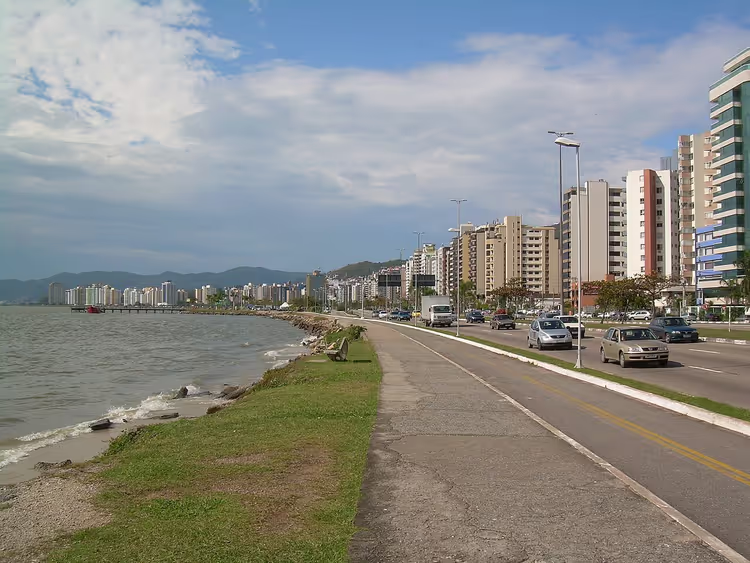
In winter, from June to September, nights in the south are cool, and in some places the temperature drops below +10 °C (as of: INMET archive). In high-altitude towns, frosts and rare snow are possible. During the day, even in the local winter, the weather stays mild, so a trip will not turn into a cold ordeal.
In summer, from November to March, the south is warm, and the thermometer regularly reaches +30 °C (as of: INMET weather observations). It is hottest in January and February. In winter the ocean in the south is cold, with water around 16-18 °C. Swimming is comfortable only in the summer months.
If you want to combine the sea and cooler weather, choose late spring or early fall. In December and January, the south sees peak local vacation season, and accommodation prices rise. The catch with the subtropics: the weather is changeable, and a rainy day can easily turn hot within a few hours.
Facts about the country and tips
Brazil is the largest country in South America by area and ranks among the most nature-rich countries on the planet. Its territory includes the Amazon rainforest, the Iguazu Falls on the border with Argentina, and the Pantanal wetlands in the west. Each region opens up in its own season (as of: Embratur portal).
The Pantanal runs on its own schedule. The best time for wildlife watching here is the dry season, when the water recedes and animals gather around water sources. To travel deep into the wetlands, you will need several days and a local guide.
In Rio de Janeiro, the local winter months are good for sightseeing without exhausting heat.
⁉️🤔 Frequently asked questions
When is the best time to go to Brazil for beaches?
For a beach vacation, choose the dry northeast coast from August to December or the south of the country from November to March. During this time there is little rain, the sea is warm, and the heat is easier to handle. In the rainy season in the north, you will spend some days under downpours.
Does the rainy season get in the way of a trip to the Amazon?
It does not get in the way, but it changes the format. In the rainy season, the water level is high and forest trails get washed out, but you will see the flooded forest from a boat. For trekking and land routes, the dry season works better.
Does Brazil have winter with snow?
There is almost no real snow. Frost and rare snow happen only in high-altitude towns in the south of the country. In other regions, the Brazilian winter brings only cool nights and warm days, and in the north it is no different from the other months at all.
When is the south of the country warmest?
The peak heat in the south falls in January and February, when temperatures reach +30 °C and above (as of: 09/2026, INMET weather data). If you do not handle extreme heat well, choose late spring or early fall.
What to see in Rio de Janeiro on a first trip?
Start with the Christ the Redeemer statue and Sugarloaf Mountain, then walk along Copacabana and Ipanema beaches. Two to three days are enough for all the main sights. For access to the viewpoints, buy tickets in advance so you do not stand in line.
In short: what to book
In December and January, accommodation prices in the south rise because of local vacations. Once your dates are set, compare accommodation and tour prices in advance.

A small editorial team writing guides for independent travel. We travel ourselves, but we haven’t been everywhere, so we check prices, opening hours and how to get there against official sources.