
















Five states closed to tourists: visas, fees and permits
There are countries that don't just let tourists in, and there are several reasons for that. A visa, an invitation, and an accredited tour operator decide everything, so without them entry is closed. We've put together five states with the strictest restrictions and broken down exactly what you need for the trip.
The most expensive example: Bhutan charges $100 per guest per night (as of 09/2026, Bhutan Cultural Tours). In North Korea, a guide accompanies tourists everywhere, and in Libya there's a critical threat level for travelers (as of 09/2026, Atlas Guide).
Ad: this article contains affiliate links, we earn a commission if you book through them, at no extra cost to you.
Why these countries are hard to enter
💡 In short:
- Entry to closed countries almost always goes through an accredited tour operator.
- Freedom of movement is limited to the capital or one permitted zone.
- Rules and fees change every year, so check them before buying a ticket.
- Entry rules for Turkmenistan: 09/2026, verified on the Embassy of Turkmenistan website.
These states have little in common. In some, entry itself is closed; in others, freedom ends right outside the capital. Below are five countries and what awaits you at the border.
Country | Entry requirement | Main barrier |
|---|---|---|
Bhutan | Visa through an operator | Daily stay fee |
North Korea | Only as part of a group | Ban on free movement |
Turkmenistan | Invitation and visa | Approval from the host side |
Libya | Organized tour | Armed conflict |
Eritrea | Visa and permit | Most of the territory is closed |
1. Bhutan
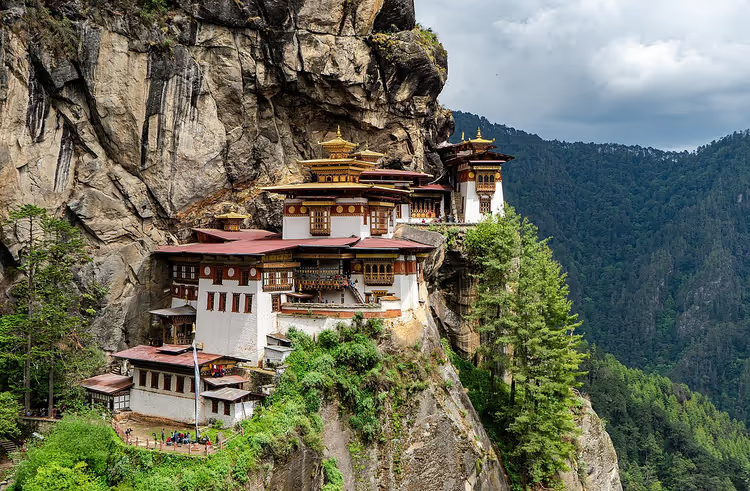 © Original: Nina R from Africa Derivative work: UnpetitproleX · CC BYPhoto: Original: Nina R from Africa Derivative work: UnpetitproleX, CC BY (https://creativecommons.org/licenses/by/2.0), Wikimedia Commons
Bhutan is squeezed between China and India, and few people know about the kingdom in the Himalayas. The locals themselves call their country the Land of the Thunder Dragon, and fewer than a million people live there. You won't be able to travel around Bhutan freely, and there are plenty of reasons for that.
More than three quarters of the kingdom's area is covered by forests, and there are almost no factories with emissions here. Pesticides are also banned, so the air in the valleys stays clean. According to the tourism portal, Bhutan remains one of the few countries with a negative carbon balance.
Until 1974, the borders were closed to foreigners. Television and the internet were only allowed in the late nineties. After the pandemic, the kingdom closed again for two years and reopened to tourists only in the fall of 2022 (as of 09/2026, Bhutan Memories).
Now visas are issued to those who bought a tour from a company accredited by the Ministry of Tourism. The stamp is placed right at the airport, and the maximum stay is 30 days (as of 09/2026, Bhutan Cultural Tours).
The main expense here is the daily Sustainable Development Fee. The current rate is $100 per person per night, half the previous rate (as of 09/2026, VisaVerge). On top of that, you pay a $40 visa fee (as of 09/2026, Bhutan.travel) and a five percent tourism services tax introduced in 2026 (as of 09/2026, DRC Bhutan).
- Cost: from $100 per night as a fee plus a $40 visa (as of 09/2026, VisaVerge).
- Who it's for: those who want a calm route without crowds and with a guide.
- The catch: the high daily fee makes Bhutan one of the most expensive destinations in Asia. Budgets here are calculated on a daily basis.
2. North Korea
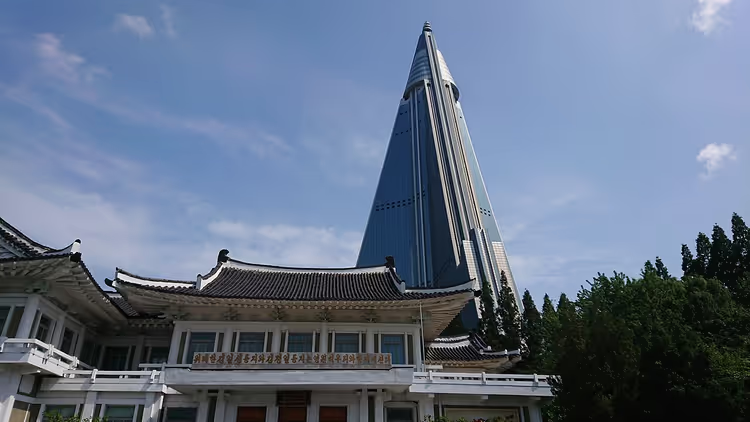 © Jan Engelhardt · CC BY-SAPhoto: Jan Engelhardt, CC BY-SA (https://creativecommons.org/licenses/by-sa/4.0), Wikimedia Commons
The official name of this country is the Democratic People's Republic of Korea. North Korea is considered the most closed country in the world, and its isolationist policy has been maintained for decades. For you, that means one thing: you can only travel around the country with a guide.
There is no free interaction with locals here, and that applies to any group. Your passport will be taken from you right at entry and returned the day before your departure. These rules apply to all tourists without exception.
You cannot get into North Korea on your own, and it's important to understand that right away. Companies that work with the Korean side assemble groups in Beijing. The itinerary usually includes the main sights of Pyongyang and one or two restaurants, and it's almost identical for every group.
The border remained closed for a long time. In winter 2025, the country briefly opened the city of Rason to groups from almost all countries except the US and South Korea (as of 09/2026, Koryo Group). In spring 2025, around 180 foreigners came to Pyongyang for a marathon (as of 09/2026, Young Pioneer Tours).
Regular tourism is still not available, and it may remain that way for a long time. You can compare organized tours in advance, but the dates of new arrivals depend on the authorities' decisions.
- Who it's for: travelers ready for strict supervision.
- Not for: those who value freedom and independent exploring.
- The catch: the itinerary is the same for everyone, and the organizer holds your passport for almost the entire trip.
3. Turkmenistan
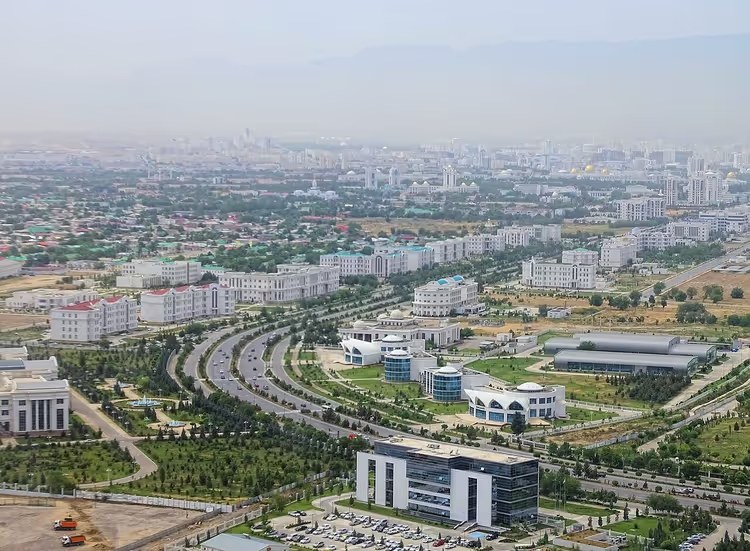 © Bjørn Christian Tørrissen · CC BY-SAPhoto: Bjørn Christian Tørrissen, CC BY-SA (https://creativecommons.org/licenses/by-sa/4.0), Wikimedia Commons
Turkmenistan remained tightly closed for a long time. Entry requires a visa and an invitation from a private individual or organization, certified by the State Migration Service (as of 09/2026, Embassy of Turkmenistan in the US). An invitation-based visa can also be issued on arrival at Ashgabat airport.
During the pandemic, the country was closed to tourists for four consecutive years. The international airport kept operating the whole time, but flights were used mainly by Turkmen citizens. Progress only began in the last couple of years.
Now they have launched an e-visa and promise to simplify the rules. According to media reports, the reforms are meant to make the process predictable. In practice, some restrictions remain, including bans on photography in certain places.
The country is still described as "Marble and emptiness." You will see white Ashgabat, empty avenues, and almost no tourists. Browse tours to Turkmenistan in advance rather than trying to arrange a visa on your own.
- Who it's for: those traveling for unusual architecture and the desert.
- The catch: entry is impossible without an invitation, and domestic travel has to be coordinated.
4. Libya
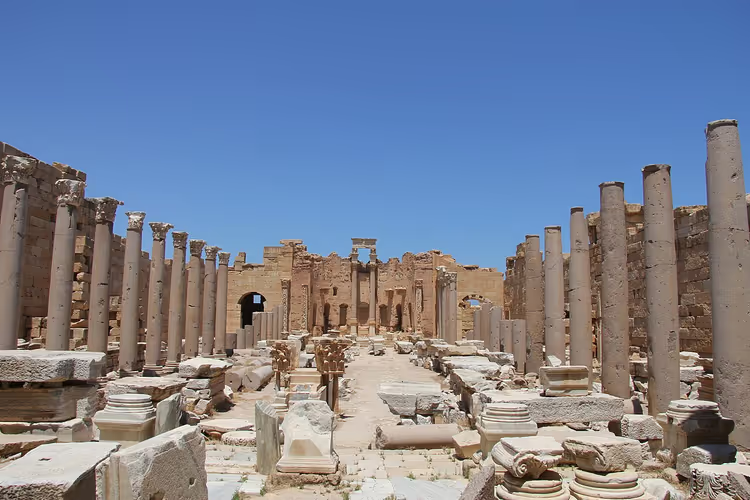 © joepyrek from Richmond, Va, USA · CC BY-SAPhoto: joepyrek from Richmond, Va, USA, CC BY-SA (https://creativecommons.org/licenses/by-sa/2.0), Wikimedia Commons
After the 2011 civil war, Libya fell apart. The country is still divided between warring factions. Travelers face the highest danger level here, and authorities advise against travel (as of 09/2026, Atlas Guide).
There are no tourist information offices that could help on the ground. Everything is researched in advance, and then you adapt to the situation as it unfolds. The first foreign groups in ten years arrived only recently, and preparation took several months.
Formally, tourism is possible. Entry is only through a licensed operator, and routes usually lead to the ancient cities of Leptis Magna and Sabratha. Tours to Libya are sold by a handful of agencies.
A separate rule applies to documents. With an Israeli visa or a stamp showing a visit to Israel, entry will be denied, as the conflict between the countries persists.
- Who it's for: experienced travelers who are fine with being accompanied.
- Not for: families with children and first-time visitors to the region.
- The catch: high danger level and limited assistance on the ground.
5. Eritrea
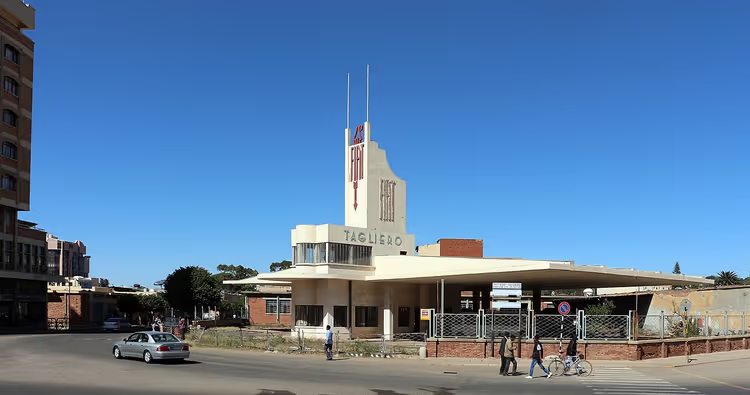 © sailko · CC BY-SAPhoto: sailko, CC BY-SA (https://creativecommons.org/licenses/by-sa/3.0), Wikimedia Commons
Eritrea is called the North Korea of Africa, and the comparison is not accidental. The country borders Sudan, Ethiopia, and Djibouti, but all land crossings are closed to tourists. The only way to get here is by plane.
Freedom of movement ends right outside the capital, and you will feel it at the very first checkpoint. To travel beyond Asmara, you need a permit from the Ministry of Tourism, which is issued in about a day (as of 09/2026, EritreaVisit). Every site here is approved through a separate request specifying the date of the visit.
Most of the territory is closed to tourists, with checkpoints everywhere. In a restricted zone, you can expect interrogation and a fine. The internet is also a problem: Wi-Fi is available in some hotels, but it works slowly.
Compare flights to Asmara in advance, because there is no other way for a tourist to enter.
- Who it's for: those interested in history and Asmara's colonial architecture.
- The catch: most of the country is closed, and a permit is required for every trip outside the capital.
⁉️🤔 Frequently asked questions
Which of these countries is easiest to get into?
Bhutan is the easiest: the visa is issued as part of a tour, and the rules are published on the government agency's website. The only obstacle is the high fees you pay for each night. North Korea and Turkmenistan also let tourists in, but through groups and invitations. Libya is not worth visiting.
How much does a trip to Bhutan cost?
Budget for a daily fee of one hundred dollars per person, a visa fee, and a tourism services tax. Add flights, hotel, food, and transportation on top of that. The total depends on the number of nights, so the budget is calculated in advance. Check the exact rates on the official website before purchasing.
Is North Korea open to tourists right now?
Not fully. Occasional groups were allowed into the city of Rason and for the Pyongyang marathon, but regular tourism has not resumed. Dates for new arrivals depend on the authorities' decision, and companies have to wait for permission. If you are planning a trip, watch for announcements from tour operators.
Can you travel to Libya independently?
No. Entry is only possible through a licensed operator, and you are driven around the country on an agreed route. Independent travel is impossible here, and the authorities actually ask visitors to stay away. If you do decide to go, arrange the route with an agency in advance.
Do you need a visa for Eritrea?
Yes, the visa is arranged in advance through the embassy. To travel beyond Asmara, you need a separate permit from the Ministry of Tourism, which is issued in about a day. Without the permit, you will not be allowed past the capital: there are checkpoints on the roads. Check the rules before you travel.
In short: what to book
Closed countries are not suitable for spontaneous trips. First find an accredited operator and get the permit, and only then buy tickets and a hotel.
- If you have time and budget: choose Bhutan.
- If you want rare architecture: go to Turkmenistan.
- If you need a short route: Asmara in Eritrea works well.

A small editorial team writing guides for independent travel. We travel ourselves, but we haven’t been everywhere, so we check prices, opening hours and how to get there against official sources.