






Berlin: the guide for planning it yourself
Berlin has no compact center the way most capitals do. The city has twelve boroughs, three centers have taken shape over its history, and the distances between the sights are long. So one rule works here: one neighborhood or one axis per day. This page is meant as the overview you build your own trip from. Each section says in a few sentences what matters and points on to our detailed articles. We deliberately leave prices out: fares, admission and hotel rates change too fast for an overview page to carry them honestly. What you get instead is a calculator where you work out your own total.
The highlights and how to arrange them
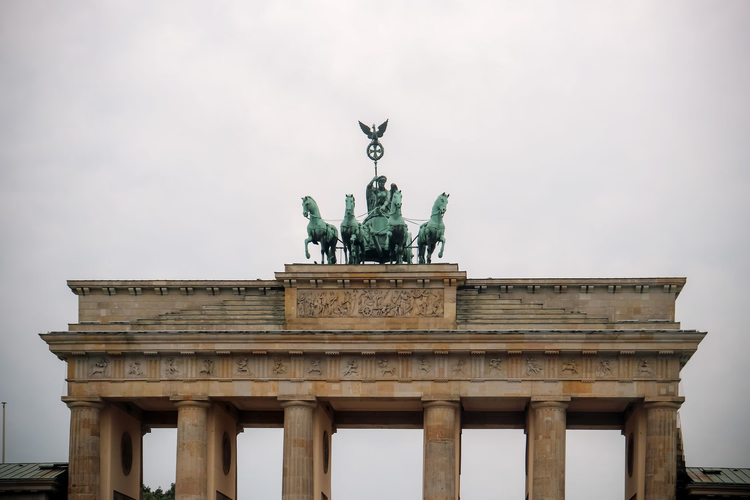
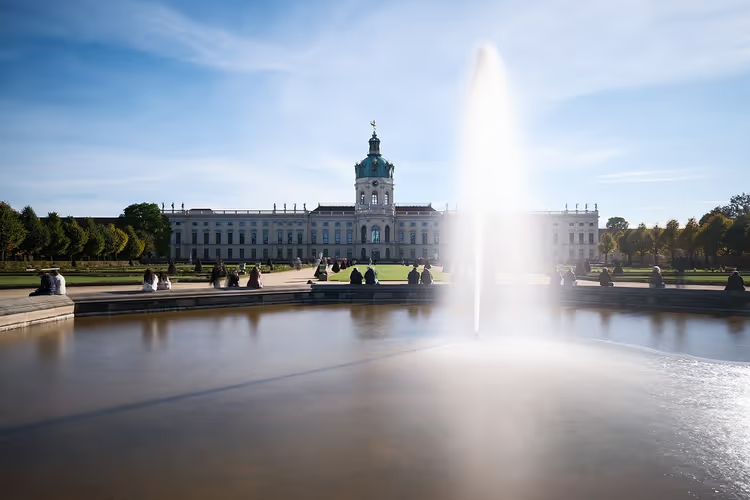
Four points carry a first trip to Berlin: the Reichstag with its glass dome, the Brandenburg Gate, Museum Island with Berlin Cathedral, and Alexanderplatz with the TV Tower. They stand on a single axis: from the gate the boulevard Unter den Linden leads to Museum Island, and from there it is a short way to Alexanderplatz. Add to that the remains of the Berlin Wall, the Tiergarten park right behind the gate and Charlottenburg Palace in the west of the city.
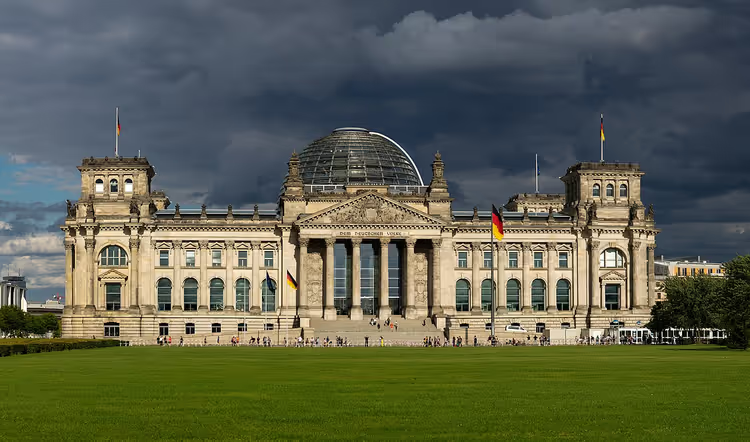
Three things are worth knowing before you go. Entry to the Reichstag dome is free, but only with advance registration on the Bundestag website. The Pergamon Museum is closed for restoration: the exhibition Pergamonmuseum. Das Panorama runs in its place, and the other four buildings on the island are open, among them the Neues Museum with the bust of Nefertiti. The state museums and Charlottenburg Palace are closed on Mondays.
Less of the Berlin Wall survives than people usually expect: a line of cobblestones, a few original sections and memorials. The main memorial stands on Bernauer Straße, and the longest stretch, the one with the murals, is called the East Side Gallery and runs along the Spree. You see all of it without a ticket.
Our articles on this
- Museum Island in Berlin: what is open and how to buy a combined ticket
- 12 Berlin museums: tickets, opening hours and what changed in 2026
- Reichstag in Berlin: entry is free, but you need a slot for the dome
- Reichstag dome in Berlin: free visit by appointment
- Brandenburg Gate in Berlin: free entry and route from the metro
- Berlin wall: what remains of it today and where to see it
- Alexanderplatz: what to see, how much it costs and how to get there
- Berlin cathedral: what to see inside and how to get to the dome
- Charlottenburg palace in Berlin: what to see and how to plan your visit
- 15 Best parks in Berlin: what to see and how much entry costs
- Treptow Park in Berlin: where 7000 Soviet soldiers are buried
Neighborhoods and where to stay
The main landmark on the map is the ring of the S-Bahn city rail. Everything inside it is fare zone A, and from there the trip to most of the main sights is short. For a first visit Mitte works best, with Alexanderplatz, Museum Island, the Brandenburg Gate and the Reichstag. The borough is large, so for a place to sleep pick the strip roughly between Alexanderplatz, Leipziger Straße and Invalidenstraße. The downside: it is the most touristy area and one of the most expensive.
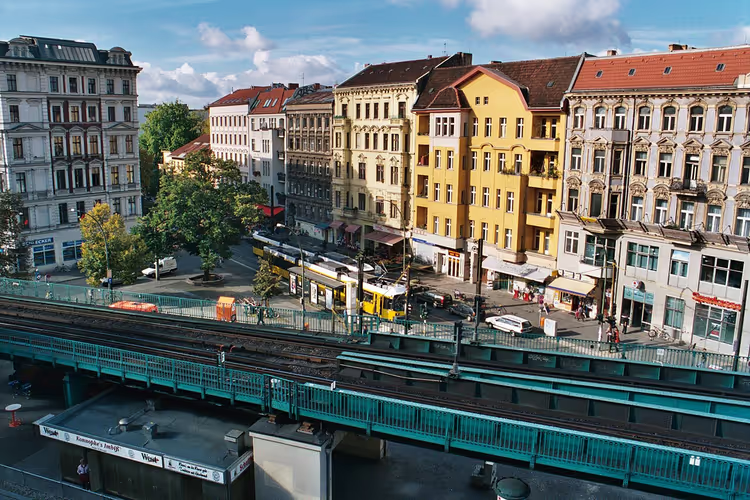
Prenzlauer Berg borders Mitte and gives you quiet close to the center: old buildings, cafés, the Kollwitzplatz square with its market, the flea market at Mauerpark. People choose Friedrichshain and Kreuzberg for the nightlife, street art and street food; the clubs cluster around Warschauer Straße station, and it is calmer in the Bergmannkiez quarter. Charlottenburg is western Berlin with the shopping street Kurfürstendamm, but Alexanderplatz is noticeably farther from here.
In any neighborhood, do not go by the word “central” in the listing. Check how long the walk is to the nearest U-Bahn or S-Bahn station.
| Neighborhood | Who it suits | What to keep in mind |
|---|---|---|
| Mitte | A first visit: you walk to the main sights or ride a couple of stops | The most touristy area and one of the most expensive; the borough is large, so check the exact spot on the map |
| Prenzlauer Berg | Couples and families who want quiet, cafés and old buildings close to the center | The choice of hotels is small, and the ride to Kurfürstendamm is noticeably longer |
| Friedrichshain | Nightlife, clubs and street art; the East Side Gallery is close by | It is noisy near Warschauer Straße station, and the choice of hotels is limited |
| Kreuzberg | Bars, street food and a lively area with character | It is noisy around Kottbusser Tor and calmer in the Bergmannkiez quarter; the choice of hotels is limited |
| Charlottenburg | Shopping on Kurfürstendamm, trade fairs at the Messe, events at the Olympiastadion | Alexanderplatz is noticeably farther away; evenings here are quieter than in the east of the city |
Our articles on this
Hotels: what to watch for in Berlin
In Berlin the location tells you more about a hotel than the number of stars: it decides whether the ride to the sights takes a quarter of an hour or a full hour. Stay within the S-Bahn ring and check how many meters it is from the door to the nearest station.
Prices depend heavily on the dates. The most expensive times are the weeks of the Berlinale film festival in February and the ITB trade fair in March, the summer, and December with its Christmas markets and New Year's Eve. For September, book well ahead; anyone who wants to see in the New Year in Berlin should sort out a place to stay by October at the latest. The cheapest months are January and November.
Ad
Compare places to stay in Berlin on Trip.com
We earn a commission through this link; your price stays the same.
Tours and skip the line tickets
A timed ticket booked ahead pays off for the TV Tower at Alexanderplatz and for Madame Tussauds: in high season the line at the entrance costs you more than an hour. Timed tickets are also sold for Charlottenburg Palace. For the zoo, the online ticket is cheaper than the one at the ticket office. On Museum Island the day ticket lets you in at any time during opening hours, and time slots are needed only for the big special exhibitions.
No tickets are sold for the Reichstag at all: the visit is free, you book it by submitting a request, and your slot is fixed only once the written confirmation arrives. Besides the dome, you can choose a tour of the building, a lecture in the gallery above the plenary chamber or, on days when parliament sits, a visit to a session.
If you have three or more museums planned, work out whether the three-day Museumspass pays off. Of the trips out of the city, the closest is Potsdam with the palaces and parks of Sanssouci, and it takes a full day.
| Sight | Ticket and entry | Closing day |
|---|---|---|
| Reichstag dome | No tickets are sold: the visit is free, with advance registration and a written confirmation | Open daily; on some days the dome is closed because of sessions, weather or maintenance work |
| TV Tower at Alexanderplatz | Timed ticket; in high season there may be no evening slots left the day before your visit | Open daily |
| Museum Island | Day ticket with no entry time; slots are needed only for the big special exhibitions | Monday |
| Charlottenburg Palace | Timed tickets are sold online | Monday; the park is open daily, and entry to it is free |
| Madame Tussauds | The online ticket is tied to the entry time you choose | Open daily |
| Zoo | The online ticket is cheaper than the one at the ticket office | Open daily, with no closing day |
Ad
See guided tours and tickets for Berlin on GetYourGuide
We earn a commission through this link; your price stays the same.
Ad
See museum and attraction tickets on Tiqets
We earn a commission through this link; your price stays the same.
Our articles on this
Food: how to choose a place to eat in Berlin
Berlin runs on street food: currywurst and döner kebab are sold at stands all over the city. Restaurants on Alexanderplatz, on Friedrichstraße and around the Brandenburg Gate are noticeably more expensive and weaker than the ones two blocks away. If you want to try a range of things in one go, head to the Markthalle Neun market hall in Kreuzberg.
Vietnamese food is a Berlin subject of its own. It arrived with the contract workers of the GDR era and turns up everywhere today: most of the places are in Mitte, Kreuzberg, Friedrichshain and Prenzlauer Berg. The usual advice is to start with pho soup and order summer rolls or a banh mi sandwich to go with it.
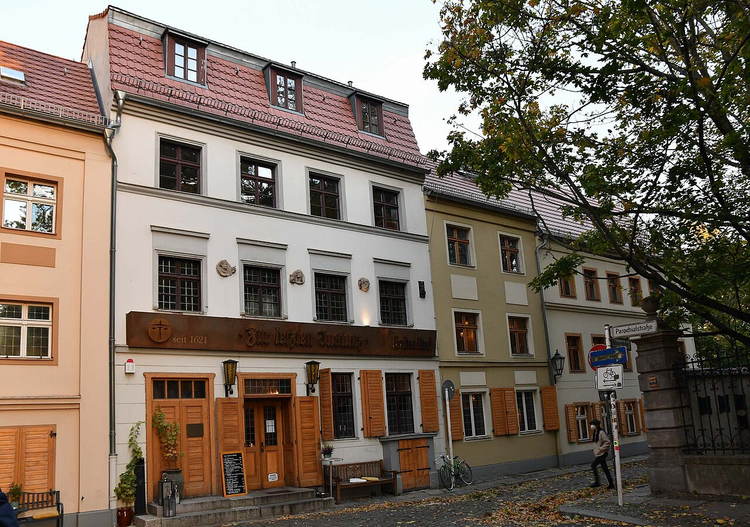
For German cooking, go to the Nikolaiviertel quarter or to Zur letzten Instanz in Mitte, which is considered the oldest restaurant in the city; you book a table there in advance. Tipping in Germany means rounding the bill up: you do not leave the tip on the table, you name the total including the tip when you pay. Bars, small snack places and markets often take cash only.
Our articles on this
Transport and getting in from the airport
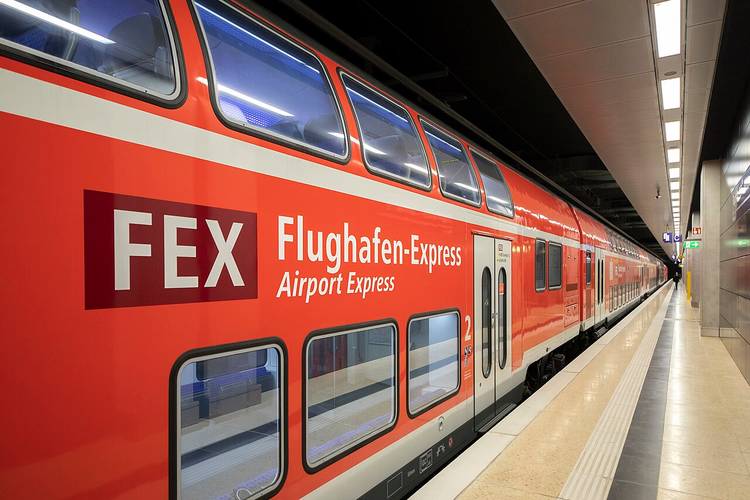
All flights use one airport, Berlin Brandenburg (BER) in the south of the city; the train station sits directly under the terminal. The FEX express gets you to the main station, Hauptbahnhof, in about half an hour, and the S-Bahn lines S9 and S45 and regional trains run alongside it. What matters here is the fare zone: the center is zones A and B, and the airport lies in zone C, so you need an ABC ticket.
The city runs on the U-Bahn subway, the S-Bahn city rail, trams and buses, and zone AB is enough for almost everything. A single ticket lets you change between all of them, but not travel back to where you started. Berlin has no turnstiles, but a paper ticket is valid only once you have stamped it in the machine at the station. With a packed schedule, a day ticket or the Berlin WelcomeCard visitor pass is the better deal.
A taxi from the airport costs several times as much as the train, and the fare depends on traffic. A transfer booked in advance pays off when you land at night or travel with a lot of luggage. From Prague the train to Berlin runs via Dresden and arrives at Hauptbahnhof.
| Route | What to take | What to keep in mind |
|---|---|---|
| From BER airport to Hauptbahnhof | FEX express | About half an hour; the station sits directly under the terminal; you need an ABC zone ticket |
| From BER airport to the east and south of the city | S-Bahn lines S9 and S45 | Slower than the express; the ticket is the same, zones ABC |
| Arriving at night or with a lot of luggage | A transfer booked in advance | A taxi costs several times as much as the train and depends on traffic |
| Trips within the city | U-Bahn, S-Bahn, tram and bus | Zone AB is enough for almost everything; a paper ticket is valid only once stamped in the machine at the station |
| A packed day | Day ticket or the Berlin WelcomeCard | A single ticket lets you change, but not travel back to where you started |
| From Berlin to Dresden | Direct train from Hauptbahnhof | The trip takes 1 hour 39 minutes; the bus takes about 2.5 hours |
| From Prague to Berlin | Daytime train via Dresden | Arrives at Hauptbahnhof in about 4.5 hours |
Ad
Book a fixed price airport transfer in Berlin
We earn a commission through this link; your price stays the same.
Our articles on this
Best time to go and weather
Berlin has no single high season. The best weather falls in June and September: June has the longest days, and September is milder, calmer and cheaper than August. If you are picking one month, make it September. August is the most crowded: hotels are expensive and there are lines at the sights.
The fewest tourists come in January, March and November, and that is also when you get through the museums with almost no lines. January is the quietest and coldest month, November is gray and rainy, but prices are low.
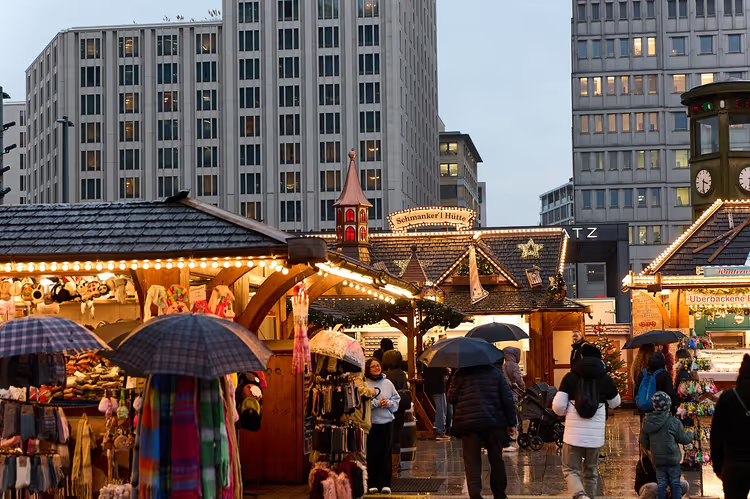
December is the second high season: the Christmas markets open at the end of November, and the city has more than sixty of them. Events worth knowing are the Berlinale film festival in February, the Fête de la Musique with free street concerts in June, the Lange Nacht der Museen museum night at the end of August and the Festival of Lights in October.
| Time of year | Weather and crowds | What to keep in mind |
|---|---|---|
| January | The quietest and coldest month, with snow now and then | Accommodation is at its cheapest, and you get through the museums with almost no lines |
| February and March | February is cold, March is a transition month; fewer tourists than in summer | The Berlinale runs in mid-February: accommodation for the festival dates gets more expensive and sells out fast |
| April and May | It gets warmer, and April weather is changeable; a moderate number of tourists | The cherry trees bloom in April; book a couple of months ahead for the long weekends in May |
| June | The longest days, comfortable temperatures; fewer people than in August | Fête de la Musique with free street concerts; accommodation gets more expensive |
| July and August | Hot; August is the most crowded, with lines at the sights | Hotels are expensive and often full; the Lange Nacht der Museen is at the end of August |
| September | Mild weather, fewer tourists than in August | Prices are below August levels, but book your accommodation well ahead |
| October and November | The days are still long in October, November is gray and rainy; few people in November | The Festival of Lights is in October; November brings low prices and museums without lines |
| December | Cold, the second high season | Christmas markets; book accommodation for New Year by October at the latest |
Twelve months compared: find the best time to go
Our articles on this
Budget: how to work out your own total
We are not writing daily rates here. Berlin is cheaper than Paris, London or Zurich, but the total depends on the dates, on the neighborhood you sleep in and on how many paid sights you put in the plan. Accommodation eats up the biggest share of the budget.
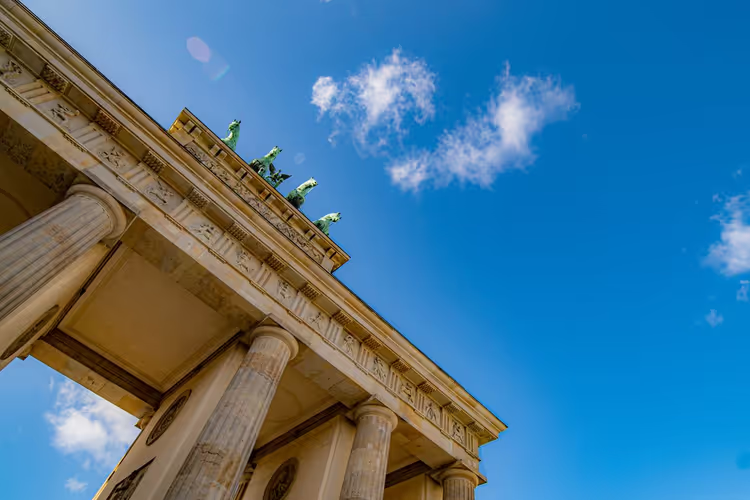
Here is where saving actually gets you something. Half of the Berlin classics are free: the Brandenburg Gate, the East Side Gallery, the Holocaust Memorial and, with registration, the Reichstag dome. Street food and lunch menus are cheaper than dinner at a restaurant. The museum pass pays for itself from the third museum, and a multi-trip ticket is a better deal than single tickets.
The most expensive mistakes have to do with rules, not prices: a ticket for the wrong zone to the airport, a paper ticket without a stamp, an ATM in a tourist spot that charges a fee. You work out your own total in the calculator: it separates accommodation, food, local transport, admissions, travel there and a reserve.
Calculate a travel budget for Berlin
Our articles on this
Routes for two and three days
Two full days are enough for the essentials in the center. The first day is spent in Mitte: Alexanderplatz and the TV Tower, the Rotes Rathaus city hall, the Nikolaiviertel quarter, Berlin Cathedral and Museum Island. The second leads from the Reichstag through the Brandenburg Gate and the Gendarmenmarkt square to Checkpoint Charlie, then on to the East Side Gallery and Potsdamer Platz.
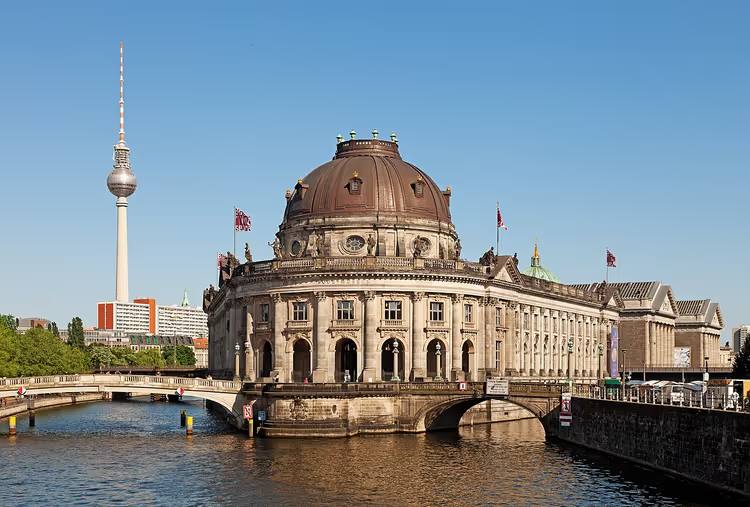
Three days give you a plan without rushing. Day one is the historic center: from the Reichstag along the boulevard Unter den Linden to Alexanderplatz, with Kurfürstendamm in the evening. Day two is spent indoors: Museum Island, the German Historical Museum, the Natural History Museum. The third combines west and east: the zoo in the morning, the Berlin Wall Memorial and Mauerpark during the day, the evening at Potsdamer Platz.
The Berlin Wall sites add up to a day of their own: the memorial on Bernauer Straße, the Topographie des Terrors, Checkpoint Charlie and the East Side Gallery at sunset. Whichever version you pick, plan no more than one neighborhood per day and allow at least half an hour for the trip between neighborhoods.
Day planner: check what fits into one day
Our articles on this
Practical matters: safety, connectivity, insurance
Berlin is not a dangerous city, but pickpockets work Alexanderplatz, the Hauptbahnhof station, the area by Warschauer Straße station and crowded buses. Bike lanes here often run right along the sidewalk and differ only in the color of the paving: do not stand on them, the locals ride fast.
On Sundays the stores are closed, supermarkets included. Only the stores in train stations, gas stations and the Späti corner shops stay open, so buy groceries on Saturday. Carry cash every day, and when you pay by card, choose to be charged in euros. For the Reichstag dome, bring your original passport or ID card: copies are not accepted.
Check the roaming terms for Germany with your own carrier before you travel. An eSIM is a backup way to have internet from the first minute: for maps, tickets in an app and contact with the hotel. Take out travel insurance before you leave and read exactly what it covers.
Build a packing list for the Berlin trip
Ad
See eSIM options for Germany on Yesim
We earn a commission through this link; your price stays the same.
Ad
See travel insurance on World Nomads
We earn a commission through this link; your price stays the same.
Our articles on this