












Budapest: the guide for planning it yourself
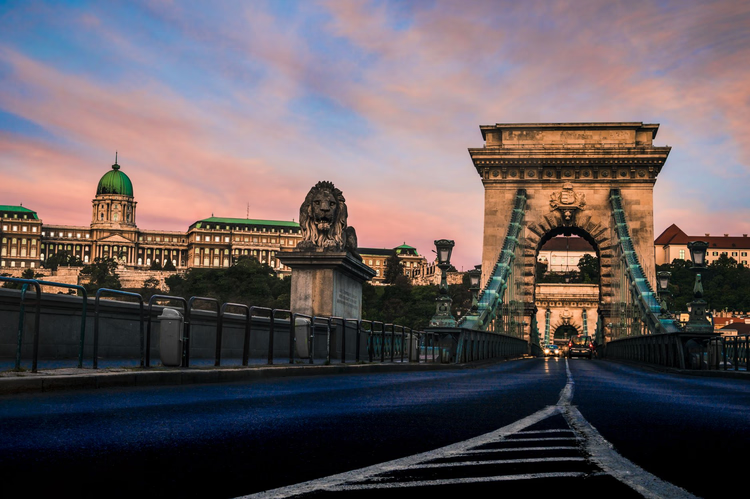
The Danube splits Budapest in two. On the west bank lies hilly Buda with its castle and panoramas, on the east bank flat Pest with the Parliament, the grand avenues and most of the hotels. The center is compact, but crossing between the banks takes time, so you build a day here around the banks, not around a list of sights. One thing sets the city apart, and that is its thermal baths: they are open all year and easily take up half a day. This page is meant as the overview you build your own trip from. Each section says in a few sentences what matters and points on to our detailed articles. We deliberately leave prices out: bath tickets and hotel rates change too fast for an overview page to carry them honestly. What you get instead is a calculator where you work out your own total.
The highlights and how to arrange them
The sights of Budapest are easiest to sort by riverbank. Buda holds the Castle District with the Royal Palace, Matthias Church and Fisherman's Bastion. On the Pest side stand the Parliament, St. Stephen's Basilica with its lookout terrace at the dome, the Great Synagogue on Dohány Street, and Andrássy Avenue with the Hungarian State Opera.
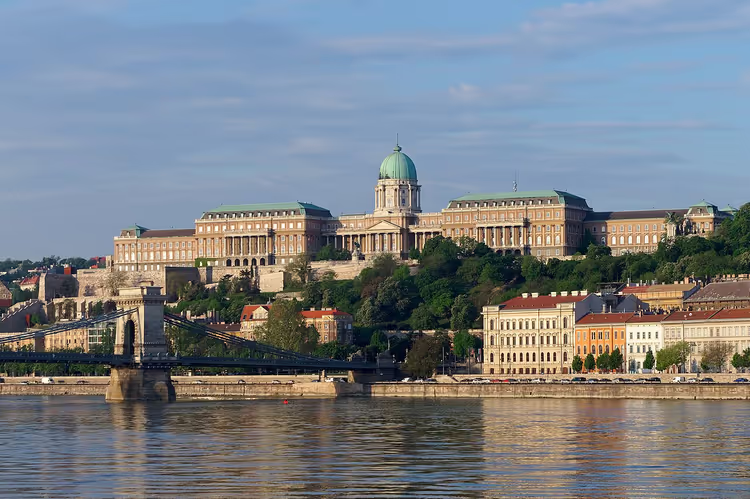
Andrássy Avenue leads out to Heroes' Square, and behind it City Park, Városliget, begins: Vajdahunyad Castle, the zoo and the Széchenyi Baths sit side by side there, so it makes sense to cover this cluster in a single day. In the middle of the Danube lies Margaret Island, a green park with a musical fountain. The embankment with the memorial “Shoes on the Danube Bank”, the Chain Bridge and Gellért Hill can all be seen without a ticket.
Two rules save the most time. Many museums are closed on Mondays, among them the Hungarian National Museum and the House of Terror. And the terraces of Fisherman's Bastion, the castle courtyards and the embankment are free, so paid admissions alternate well with places that need no ticket.
Our articles on this
- What to see in Budapest: 30 places and opening hours 2026
- Pest: what to see, when it is open and how much entry costs
- 20 Best museums in Budapest: what to see and who each one suits
- Margaret island in Budapest: what to see and how to get there by tram
- 15 Best parks in Budapest: where to go for quiet and views
Neighborhoods and where to stay
In Budapest the district matters more than the hotel category. For a first visit the most convenient choice is Belváros-Lipótváros, District V on the Pest side: you walk to the Parliament, St. Stephen's Basilica and the embankment, but hotels here are the most expensive in the city. Terézváros, District VI, means Andrássy Avenue and the opera: prices are lower, and you can still walk to the center.
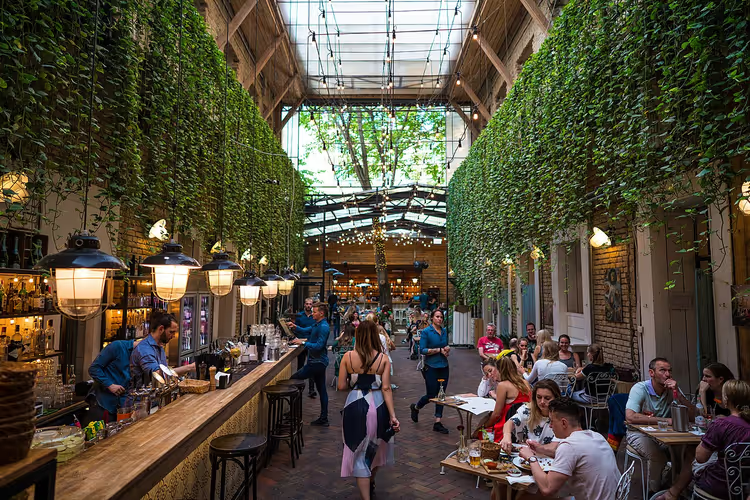
Erzsébetváros, District VII, is the historic Jewish Quarter and the ruin bars. People choose it for the nightlife, and the only quiet sleep there is in rooms facing the courtyard. Várkerület, District I, lies in Buda by the castle: quiet and a panorama of Pest, but you will have to cross the bridge to get to the bars. Újlipótváros, District XIII, suits families: it is calmer and cheaper than the center, and Margaret Island is within walking distance.
At night it is better to stay away from the parts of Districts VIII and X that lie far from the tourist streets.
| District | Who it suits | What to keep in mind |
|---|---|---|
| Belváros-Lipótváros, District V | A first visit: you walk to the Parliament, St. Stephen's Basilica and the embankment | Hotels here are the most expensive in the city |
| Terézváros, District VI | Shopping, the opera and strolls along Andrássy Avenue | Prices are lower than in District V, which is a 15-20 minute walk away |
| Erzsébetváros, District VII | Nightlife, ruin bars and the historic Jewish Quarter | The only quiet sleep is in rooms facing the courtyard |
| Várkerület, District I | Quiet, history and a panorama of Pest from the Buda side | You will have to cross the bridge to get to the bars; the district sits on a hill |
| Újlipótváros, District XIII | Families with children: Margaret Island is next door | Calmer and cheaper than the center; the Parliament is about half an hour on foot or a few tram stops away |
Our articles on this
Hotels: what to watch for in Budapest
First pick your side of the river and check how far the walk to the metro is, not just to the Danube. In historic buildings parking is usually paid and spaces are few, and breakfast is not included in every rate: clear up both before you book.
The word “spa” in a hotel description can mean different things. Only some hotels have thermal water of their own, the rest offer a heated pool with a sauna, and on a booking listing the difference is almost impossible to see. A room with windows onto the Danube is booked as a separate category, because standard rooms in the same hotels often face the courtyard. From the Pest embankment you see the Castle District, and from the Buda side your window frames the Parliament.
Book ahead. In the shoulder season two to three months is enough, and for July and August allow more.
Ad
Compare places to stay in Budapest on Trip.com
We earn a commission through this link; your price stays the same.
Our articles on this
- Where to stay in central Budapest: 15 four-star hotels with honest downsides
- Budget hotels in central Budapest: 15 options near the metro
- 15 3-Star hotels in central Budapest: from the Danube to the Jewish Quarter
- 15 Five-star hotels in central Budapest: which one to choose for your trip
- 15 Budapest hotels with Danube views: from 3 to 5 stars
- Spa hotels in Budapest: 15 best options with a pool and thermal baths
- Budapest hotels with thermal pools: 14 options for 2026
Tours and skip the line tickets
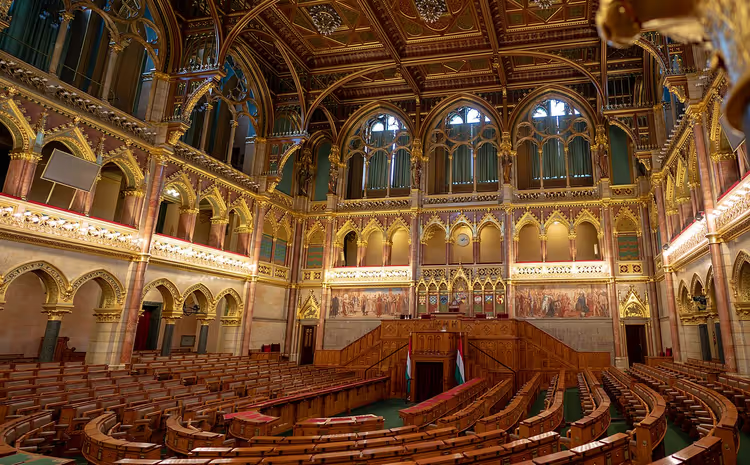
You can only get inside the Parliament on a tour, and there is no walk-in entry. Tickets are sold for a specific time and in limited numbers, so in high season book them before your trip. Every visitor needs a passport or ID card. It is also worth getting your ticket for the Széchenyi Baths in advance: in season a line builds up at the ticket office.
The Great Synagogue is visited on a guided tour or with an audio guide, and it is closed on Saturdays. The Budapest Card combines public transport with museum admission and only pays off with a packed program, so run through your own list first. The evening is a good time for a boat trip on the Danube.
If you have a day to spare, the closest outing is Szentendre with Visegrád in the Danube Bend. Day trips by train go to Eger with its castle and wine cellars and to Esztergom with its basilica, and a longer day leaves you Lake Balaton, the thermal lake at Hévíz and Bratislava.
| Sight | How to get in | What to keep in mind |
|---|---|---|
| Parliament | Only on a tour, with a guide or an audio guide; ticket for a specific time | The tour takes about 45 minutes including the security check at the entrance; everyone needs a passport or ID card |
| Széchenyi Baths | Best to get your ticket in advance | This is the city's most popular bath, and in season there is a line at the ticket office; open all year |
| Great Synagogue | On a guided tour or with an audio guide | Closed on Saturdays; on other days come at opening time, while there are fewer groups |
| St. Stephen's Basilica | Lookout terrace at the dome | Go up in the morning, when the line is shorter; you may be turned away in shorts or with bare shoulders |
| Budapest Card | Combines public transport with museum admission | Only pays off with a packed program, so run through your own list first |
| Boat trip on the Danube | Fits well into the evening | The open deck is better for photos, the covered one keeps the rain off |
Ad
See guided tours and tickets for Budapest on GetYourGuide
We earn a commission through this link; your price stays the same.
Ad
See museum and bath tickets on Tiqets
We earn a commission through this link; your price stays the same.
Our articles on this
Food: what to try and where not to overpay
The basic set of local dishes is short. Lángos is a fried flatbread made of potato dough, topped with garlic, sour cream and cheese. Gulyás in Hungary is not a stew but a thick soup with beef, potatoes and paprika.
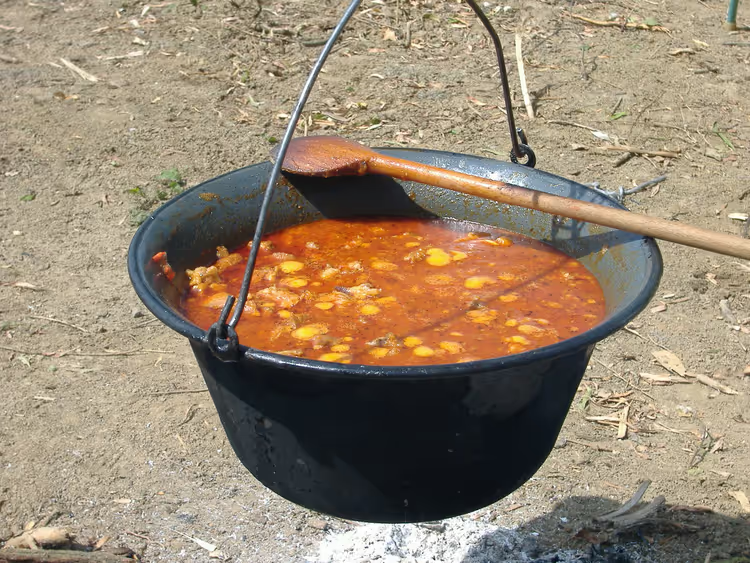
The cheapest place to eat is at the markets, and the same dishes cost noticeably more in the tourist center. At the Central Market Hall the ground floor is given over to groceries, while upstairs they sell souvenirs and the food costs more than downstairs. Come in the morning, and note that the market is closed on Sundays. At midday many places serve a set lunch menu that is cheaper than dinner. In the evening look for small restaurants in the side streets near the Jewish Quarter, not on Váci Street.
Check the bill before you pay. Often the service charge is already there as a separate line, service fee, and then no tip is needed. If there is no charge, tell the waiter the amount out loud or hand the money over directly: leaving it on the table is not the custom here.
Our articles on this
Transport and getting in from the airport
Budapest has one international airport, named after Franz Liszt, and transport into the city leaves from Terminal 2. The direct 100E express bus runs without a change to Deák Ferenc tér, operates around the clock and takes about forty minutes. It needs a separate airport ticket, and city passes are not valid on it. The cheaper way is the 200E bus to Kőbánya-Kispest station and on by metro line M3, but the trip takes about an hour.
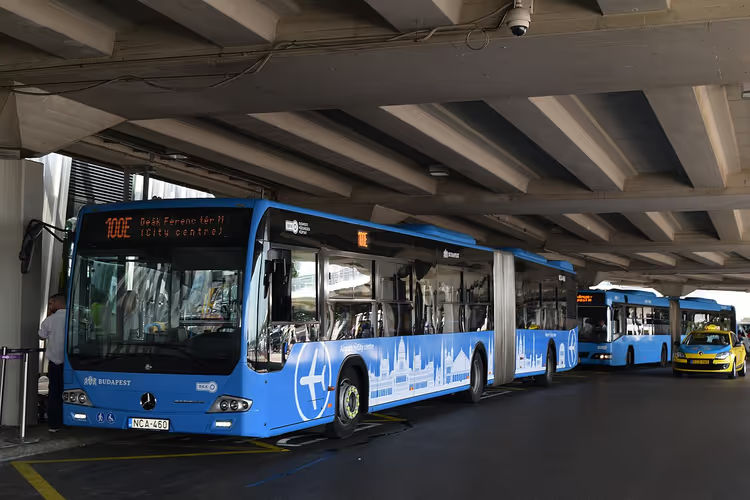
Take a taxi only from the official rank: licensed cabs are yellow and charge by the meter. At night, with children or with a lot of luggage, a transfer booked in advance at a fixed price is more convenient.
In the city the metro, trams and buses form a single network. A single ticket is valid for one ride without a change, except for transfers inside the metro, so it is simpler to buy a pass for one day or for three days. You do not need a car in the center: parking is paid and the streets are narrow.
| Route | What to take | What to keep in mind |
|---|---|---|
| From the airport to the center without a change | 100E express bus to Deák Ferenc tér | About 40 minutes, around the clock; every 6-10 minutes by day, every 30-40 at night; needs a separate airport ticket |
| From the airport to the center the cheapest way | 200E bus to Kőbánya-Kispest station and on by metro line M3 | About an hour with a change; you need a ticket for each leg; awkward with suitcases and children |
| From the airport to your address | Taxi from the official rank | Roughly half an hour; licensed cabs are yellow and charge by the meter; noticeably more expensive than the bus |
| Arriving at night, with children or with a lot of luggage | Transfer booked in advance | The price is fixed, and the driver waits in the arrivals hall and takes you to the hotel |
| Trips within the city | Metro, trams and buses | A single network; a single ticket is valid without a change, so a pass for one day or for three days is simpler |
| Trips out of the city | Car | You do not need one in the center: parking is paid and the streets are narrow |
Ad
Book a fixed price airport transfer in Budapest
We earn a commission through this link; your price stays the same.
Our articles on this
Best time to go and weather
The best window is late April, May, September and October: the weather is comfortable for long walks, there are noticeably fewer people, and hotels are cheaper than in summer.
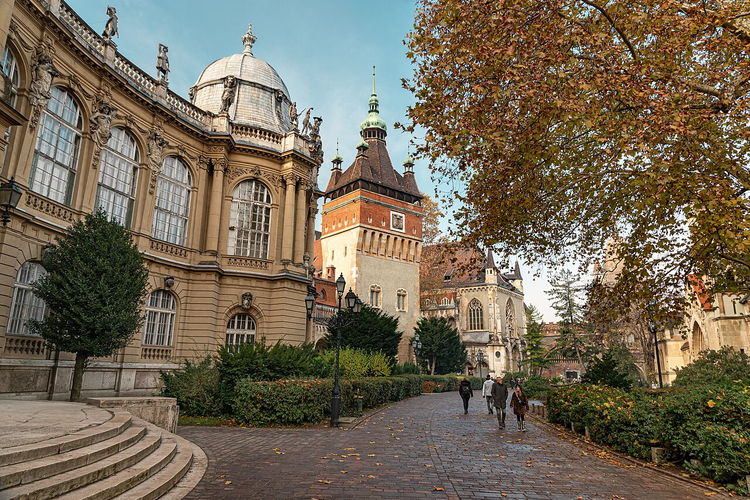
July and August are the peak: heat, lines for the baths and the highest nightly rates. In August the Sziget festival takes place on Óbuda Island, and hotels in the center get more expensive for those dates. If your vacation falls in summer, do your walking in the morning and evening and leave the middle of the day for baths and museums.
February, early March and November are the cheapest and quietest months, but chilly. In return, the thermal baths are open all year, and bathing outdoors in the cold becomes an experience of its own. From mid-November to the first days of January the Christmas markets are open, the main ones on Vörösmarty Square and by St. Stephen's Basilica.
| Time of year | Weather and crowds | What to keep in mind |
|---|---|---|
| Late April and May | Warm, moderate crowds, hotels cheaper than in summer | The time for walks around Buda and for terraces; from May there are afternoon thunderstorms, so bring a light rain jacket |
| July and August | Heat, lines for the baths and the highest nightly rates | Walk in the morning and evening, leave the middle of the day for baths and museums; the Sziget festival takes place in August |
| September and October | September is warm, October mild; fewer people than in summer | Golden fall colors in the parks and the best light for photos; it rains more often in October |
| November | Chilly and gray, few tourists, low prices | The Christmas markets open from the middle of the month; the baths are open all year |
| December | Around freezing, lots of people, prices above average | Christmas markets; come on a weekday evening, since they are packed on weekends |
| January and February | Around freezing or chilly, the fewest tourists, the lowest prices | Empty museums and outdoor bathing; it gets dark early |
Twelve months compared: find the best time to go
Our articles on this
Budget: how to work out your own total
We are not writing daily rates here. Most of the money goes to the hotel, where season and location decide the price, to dinner in the tourist center and to paid admissions. The thermal baths and the Parliament tour push a daily budget up the most, while public transport barely affects it.
Where saving actually gets you something. Do not make every day equally expensive: a walk through the Castle District and along the Danube costs next to nothing, and the baths and a good dinner can go on a different day. Have the set lunch menu at midday, a couple of blocks away from the main sights. At a card terminal and at an ATM, choose to be charged in forints: the rate is worse when the bank on the spot does the conversion.
You work out your own total in the calculator. It separates accommodation, food, local transport, admissions, travel there and a reserve, so you can see which item is pushing the total up.
Calculate a travel budget for Budapest
Our articles on this
Routes for one, three and five days
The main rule for a single day: cross the Danube no more than twice. Give the morning to the hill in Buda, where Matthias Church, Fisherman's Bastion and the Royal Palace stand close together. After lunch move over to Pest, to the Parliament and Heroes' Square, and spend the evening at a bath or on the embankment.
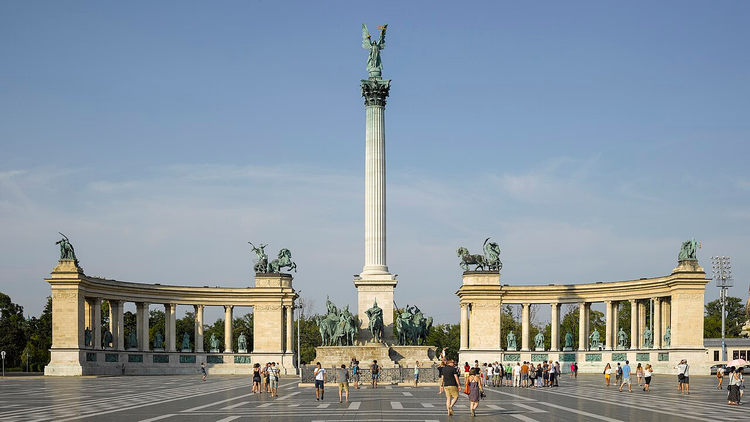
In three days you can cover both banks without rushing. Day one, the Castle District: Matthias Church, Fisherman's Bastion and the Royal Palace. Day two: Heroes' Square, City Park with Vajdahunyad Castle and the Széchenyi Baths, Andrássy Avenue and the House of Terror. Day three: the Parliament, St. Stephen's Basilica, the Great Synagogue, the memorial on the embankment and Gellért Hill.
Five days make room for what does not fit into a short trip: the Buda Hills with the Elizabeth Lookout, Margaret Island, the zoo, a second bath and a separate day out of the city.
Day planner: check what fits into one day
Our articles on this
Practical matters: money, baths, connectivity
Cards are accepted almost everywhere, and you need cash in forints only at the market, if at all. Euros are not accepted on public transport. Validate a paper ticket before you ride: inspectors check often, and the fine is issued on the spot. The center is safe if you behave as you would in any big city: keep an eye on your things on the tram and do not leave your bag unattended on a terrace.
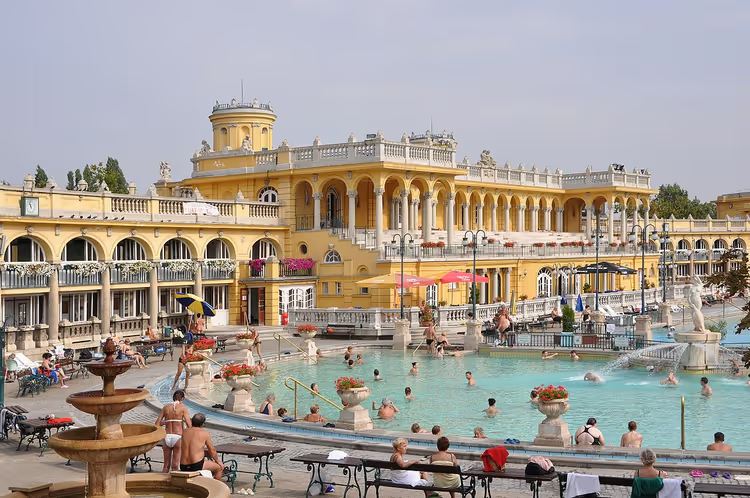
Bring a swimsuit, a towel and flip-flops to the baths. They are quietest on weekday mornings and toward evening. At the Rudas Baths some days are set aside separately for men and for women, so check the schedule in advance. You may be turned away from the Great Synagogue and the basilica in shorts or with bare shoulders.
Check the roaming terms for Hungary with your own carrier before you travel. An eSIM is a backup way to have internet from the first minute: for maps, tickets on your phone and contact with the hotel. Take out travel insurance before you leave and read exactly what it covers.
Build a packing list for the Budapest trip
Ad
See eSIM options for Hungary on Yesim
We earn a commission through this link; your price stays the same.
Ad
See travel insurance on World Nomads
We earn a commission through this link; your price stays the same.
Our articles on this