
















Sao Paulo for remote work: rent, transport and legalization
São Paulo is home to almost 12 million people (as of 2025, IBGE). For a digital nomad, it is a city of contrasts: world-class restaurants next to favelas, cheap transport and expensive rent. Before moving, you probably want to understand how much a month of living costs and how visa, connectivity, and healthcare issues are handled here.
We gathered practical data that a remote worker actually needs. Everything that could be verified against official sources, we verified. The rest of the figures we put into honest wording so you do not plan your budget around outdated prices.
Ad: this article contains affiliate links, we earn a commission if you book through them, at no extra cost to you.
What to know in advance
💡 In short:
- Visa: Brazil introduced a digital nomad visa (VITEM XIV) for those working for a foreign employer.
- Money: rent eats up most of the budget, while transport and groceries cost noticeably less than in Europe.
- Connectivity: a local mobile number is issued only with a CPF, so it is convenient to set up an eSIM in advance.
- Prices and entry rules: 09/2026, verified on the official VITEM XIV visa page.
Safety
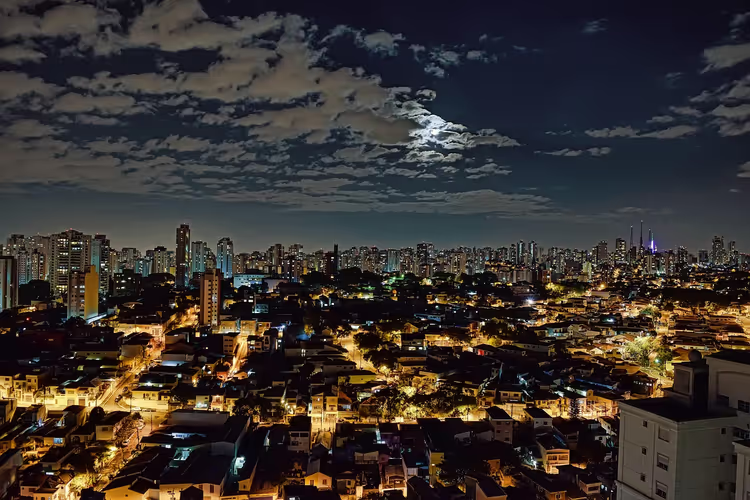
Safety is a concern for everyone thinking about Brazil. São Paulo ranks among the country’s most troubled cities, and neighboring Rio de Janeiro sits near the top of the same ranking. The statistics confirm it: in 2025, the city recorded 530 intentional homicides (as of 01/2026, G1).
 © Isabella T · CC BY-SAPhoto: Isabella T, CC BY-SA (https://creativecommons.org/licenses/by-sa/4.0), Wikimedia Commons
The level of risk varies greatly from neighborhood to neighborhood. Poor areas form favelas, whose red roofs are visible from afar. Wealthy Paulistanos live in gated condominiums with security. The historic center is also considered unsafe: it is easy to lose your phone or wallet there.
Follow basic rules. Do not wear jewelry, do not carry large amounts of cash, and do not take your phone out on the street. A motorcyclist or cyclist can snatch your device on the move. You will see police often, but chases and shootouts also happen here. Take with you exactly what you need for the day.
Visa and legalization
Brazil created a separate category for remote workers. The digital nomad visa (VITEM XIV) allows you to live in the country and work for a foreign client. See the documents, application steps, and fees on the Brazilian consulate website. Income requirement: from $1,500 per month or from $18,000 in savings.
Get your CPF number right away. This is a taxpayer identification number, issued by the tax authority in minutes with your foreign passport. In Brazil, you cannot get far without a CPF: the number is requested when shopping, renting, and setting up connectivity. Get it in your first week, otherwise every everyday step will drag on.
Sometimes people advise buying a return ticket and then canceling the booking. We would not do that: questions about trip details remain with the airline and the border officer. Keep your booking confirmation, accommodation address, and consulate contacts handy.
Transport
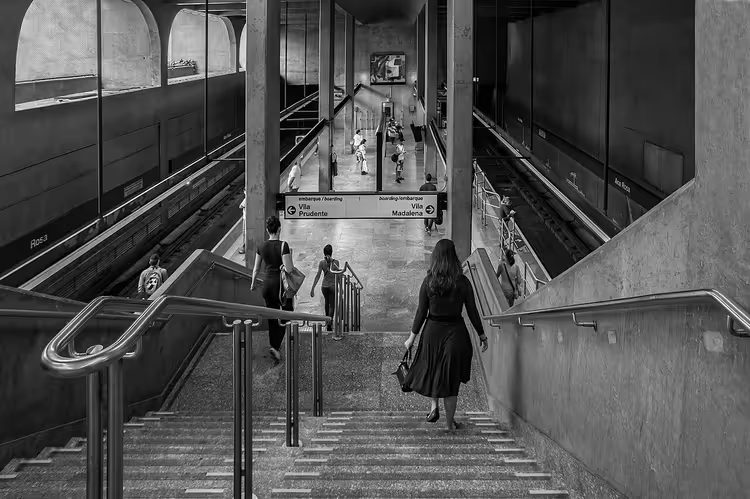
Public transit here is comfortable and predictable. The metro, buses, and commuter trains are air-conditioned and run frequently. The system is so convenient that the city regularly appears in global rankings for the best public transport. As of January 2026, a single fare costs 5.40 reais (as of 01/2026, SPTrans). Keep an eye on your bag during rush hour: crowded trains are a pickpocket's playground.
 © Wilfredor · CC BY-SAPhoto: Wilfredor, CC BY-SA (https://creativecommons.org/licenses/by-sa/4.0), Wikimedia Commons
Many locals choose Uber. It costs more than the metro, but it is faster and safer in the evening. The app sometimes offers a motorcycle taxi option. It is cheaper than a car and weaves through traffic. For a fixed-price ride, you can check transfer rates in advance.
Having your own car does not help much. Sao Paulo has record-breaking traffic jams, and parking at shopping malls is paid and guarded. You will have to keep your car in a lot because leaving it on the street is not safe. On the plus side, police almost never pull cars over for document checks.
Housing
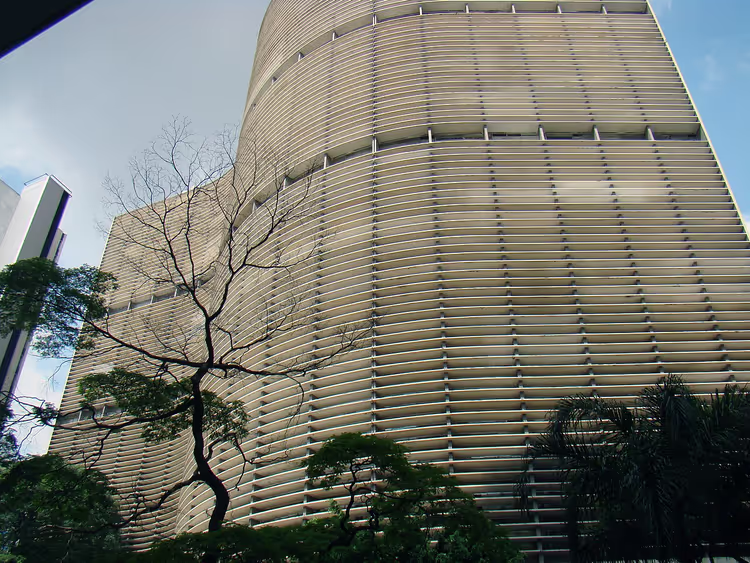
Housing in Sao Paulo becomes the biggest expense. Paulistanos live in condominiums, where the apartment comes with shared amenities. In one building that means a pool, gym, and office space; in another, just parking and a self-service shop. The set of amenities and security directly drive up the monthly condo fee.
 © Rodrigo Soldon from Rio de Janeiro, Brazil · CC BYPhoto: Rodrigo Soldon from Rio de Janeiro, Brazil, CC BY (https://creativecommons.org/licenses/by/2.0), Wikimedia Commons
In listings you will see two amounts right away: the rent and the condominium fee. Factor in both. A one-bedroom apartment in a good neighborhood takes up most of a monthly budget, and the gap between neighborhoods is huge. Set aside a buffer at least for the first year.
Local platforms are the easiest way to search for housing. For short stays, Airbnb works well; from three months, check So flats; from a year, QuintoAndar. Ready-made options with prices and reviews are easy to compare through Trip.com hotel search.
Internet and mobile
Cheap internet in Brazil is not a problem. The largest mobile carriers are TIM, Claro, and Vivo. Their plans are flexible, and coverage in the city is dense. Home internet is set up under a contract tied to the same CPF.
Getting a phone number involves bureaucracy: without a CPF, you cannot get a SIM card. So for the first few weeks, it is convenient to compare eSIM options. You arrive with working connectivity and sort out a local number once you are there.
Food
The range of groceries in Sao Paulo is surprising. Fresh vegetables, exotic fruits, various meats, and fish are available year-round. Markets have everything you need for home cooking, and prices are usually lower than in Europe. Bananas, oranges, and mangoes are the cheapest. Beef and salmon are pricier and noticeably push up the bill.
 © Wilfredor · CC BY-SAPhoto: Wilfredor, CC BY-SA (https://creativecommons.org/licenses/by-sa/4.0), Wikimedia Commons
Check exact prices in supermarkets before planning your budget, the exchange rate fluctuates. If you want to understand the local cuisine, start with five classic Brazilian dishes. They explain why dinner here lasts longer than in Europe.
Top 5 restaurants in São Paulo
The food scene here is strong, and below are five places for your list. Opening hours change, so check them on the restaurants' websites.
Spot mixes seafood, meat, risotto and pasta. Order the octopus (Polvo grelhado) and shimeji mushrooms (Cogumelos à Provençal). Locals love these dishes, and they're easy to find on the menu.
Bar Espírito Santo is known for Portuguese cuisine. The menu is broad and the atmosphere is relaxed, so it's packed in the evenings. People often grab a table while standing at the bar.
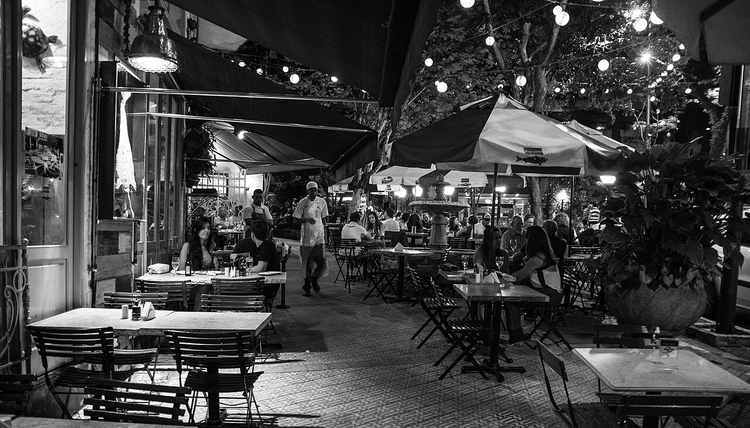 © Wilfredor · CC BY-SAPhoto: Wilfredor, CC BY-SA (https://creativecommons.org/licenses/by-sa/4.0), Wikimedia Commons
Fogo de Chão is a chain of steakhouses with rodízio. Rodízio is a local format where you pay a fixed price and eat as much meat as you can handle. Drinks are not included in the price.
Figueira Rubaiyat surprises with both the food and the dining room. A tree that is several hundred years old grows right inside the restaurant. The meat and seafood here are top notch.
Dasian Restaurante offers Asian cuisine. Besides sushi, they prepare Peking duck and scallop sashimi. The cocktail menu also gets good reviews.
Education: kindergarten and school
Preschool education starts early. Daycare accepts children from age one, and this stage is optional. From age four, a child is required to attend kindergarten (pré-escola).
Next comes elementary school (fundamental) for children ages 6 to 14. From 15 to 17, students attend high school (médio). Education in Brazil is mandatory for all children from ages 4 to 17.
Kindergartens and schools can be public, meaning free, or private, which you pay for. A month at a private kindergarten costs a significant amount of money, so parents plan their budget in advance. Public school classes often have more than forty students, while private ones usually have 10 to 20.
Schools have three shifts: morning from 7:00 to 12:00, afternoon from 12:00 to 17:00, and evening from 17:00 to 22:00. Some schools operate only two shifts. Vacations fall in July and from mid-December to late January.
There are also international private schools with British, German, American or French curricula. Tuition there is expensive, and the school provides the exact amount on request. Homework is almost never assigned, although the situation may change.
Medicine
São Paulo has both private and public clinics. Public healthcare is free, but the queues are huge, and doctor appointments open well in advance. Private clinics will see you faster, but the bill is almost equally high for foreigners and locals alike.
 © Wilfredor · CC BY-SAPhoto: Wilfredor, CC BY-SA (https://creativecommons.org/licenses/by-sa/4.0), Wikimedia Commons
Even a simple blood test at a private lab costs a noticeable amount of money. So compare insurance options in advance, before you move. A policy covers private clinic expenses and removes the main financial risk.
Interesting facts about São Paulo
We collected details that set the city apart from other megacities.
- Animals. Pets are allowed in almost all shopping malls and in some grocery stores here. For Europe, this is rare.
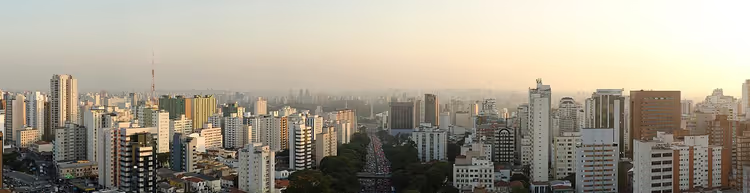 © Julio Chrisostomo · CC BYPhoto: Julio Chrisostomo, CC BY (https://creativecommons.org/licenses/by/2.0), Wikimedia Commons
Portuguese. The official language is Portuguese, and you cannot get by without it. Even in such a large city, Brazilians rarely speak English.
Helicopters. São Paulo is called the city of helicopters: many rooftops have landing pads.
Green spaces. The city surprises with its amount of greenery. When construction starts, trees are dug up, taken away, and returned to their place after the building is completed.
Outdoor ads banned. Since 2006, Lei Cidade Limpa (law 14.223) has prohibited outdoor advertising in the city (as of 2006, Prefeitura de São Paulo). Streets therefore look cleaner than in most megacities.
Waiters. Most waiters here are men over forty, and they love their job. Tips are usually already included in the bill.
⁉️🤔 Frequently asked questions
Does a digital nomad need a visa to Brazil?
For remote work, the country introduced a separate visa, VITEM XIV. It allows you to live in Brazil and work for a foreign client. Income requirement: from $1,500 per month or from $18,000 in savings. The document package and fees depend on the consulate, so check the list on the official website before applying. Without a visa, you enter as a tourist for a limited period, and working is not allowed.
How much does it cost to live in São Paulo?
Rent eats up the main part of the budget. A one-bedroom apartment in a good neighborhood takes a noticeable share of monthly income, while transport and groceries are cheaper than in Europe. Calculate the exact amount for your lifestyle: housing, mobile carrier, and shopping change the total significantly. The spread between neighborhoods is also large.
Is São Paulo safe?
The city is not among the calm ones, but the risk depends heavily on the neighborhood. Favelas and part of the historic center are considered dangerous, while gated condominiums with security are noticeably safer. Stick to busy streets and do not show your devices while walking. In the evening, it is easier to call an Uber than to walk.
Do I need Portuguese?
Portuguese will definitely help in daily life. Brazilians rarely speak English, even in a large city. For paperwork, healthcare, and renting, it is useful to know basic phrases or keep a translator handy. English appears in tourist areas, but you should not count on it.
How do I get a CPF?
A CPF is issued at the tax office with your foreign passport, and the procedure takes a few minutes. It is a unified identification number requested for purchases, rentals, and mobile service activation. Without it, you cannot even get a local mobile number. Get your CPF in the first week after arrival.
In short: what to book
São Paulo suits a digital nomad if the budget covers rent. If you have work for a foreign client, start with the visa and CPF, then look for housing with documents in hand. For a short trip, an apartment in a calm neighborhood near the metro is enough.
The decision matrix is simple. If you are going for a long stay: first VITEM XIV and CPF, then an apartment. If for a month: look at hotels in São Paulo on Trip.com in areas near metro lines. If you want to arrive with connectivity, get an eSIM before departure. And do not leave home with expensive devices on display.

A small editorial team writing guides for independent travel. We travel ourselves, but we haven’t been everywhere, so we check prices, opening hours and how to get there against official sources.