
















Galapagos: route, entrance fees and a week cruising the islands
Two hours over the ocean separate Quito from the archipelago with giant tortoises. There are no direct flights from Europe to the Galapagos.
Add the entrance fees and a mandatory return ticket to the cost of the flight (as of 09/2026, national park service).
We put together routes, travel times, airlines, tours, and cruises around the archipelago. Let's break down what makes up the trip budget and where you can save without losing out on experiences.
Ad: this article contains affiliate links, we earn a commission if you book through them, at no extra cost to you.
Basic information
💡 In short:
- The journey splits into two stages: a flight to Quito or Guayaquil, then a flight to Baltra or San Cristobal.
- Four islands are inhabited; the rest of the land is closed to development.
- Besides tickets, you pay the national park entrance fee and the INGALA card (as of 09/2026, official park website).
- Prices and opening hours: 09/15/2026, verified on the official national park website.
The Galapagos lie in the Pacific Ocean about 972 km from the coast of South America (as of 09/2026, park service). The archipelago consists of 19 volcanic islands, all of which belong to Ecuador.
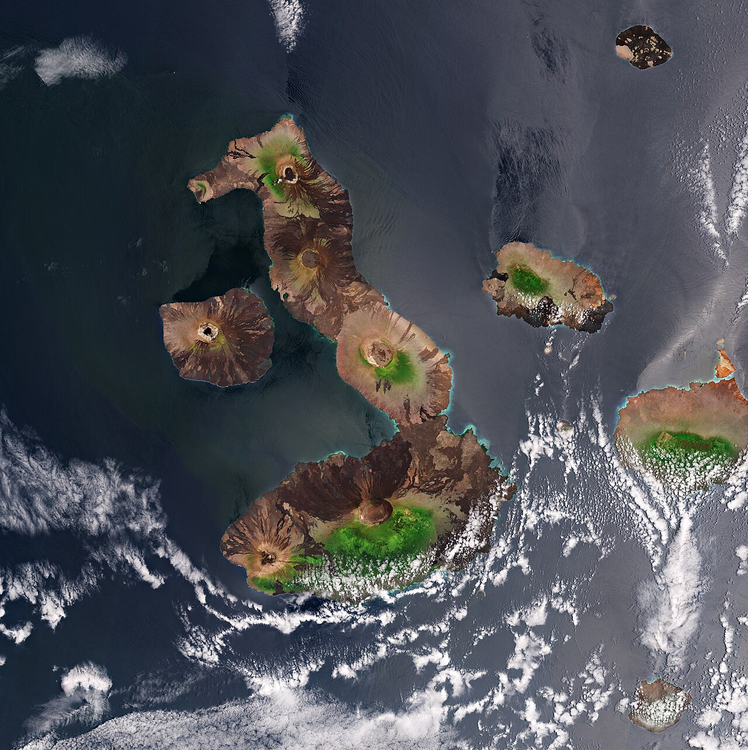 © European Space Agency · CC BYPhoto: European Space Agency, CC BY, Wikimedia Commons
Only four islands are inhabited. The rest of the territory is set aside as a national park, where you walk along marked trails with a guide. The archipelago's name comes from the Spanish word "galápago": that is what the Spanish called the local tortoises.
The capital of the archipelago, Puerto Baquerizo Moreno, is on San Cristobal Island. The tourist hub, Puerto Ayora, sits on the shore of a lagoon on Santa Cruz Island. Here you will find hotels, restaurants, and tour agencies, and along the waterfront you will see sea lions next to the boats.
Two airports welcome visitors: on Baltra and on San Cristobal. Domestic flights arrive here daily, but tickets for holiday dates sell out in advance. If you are traveling in high season, book your flight together with your hotel.
How to get there
You fly to Quito or Guayaquil, and from there you take a domestic flight to the islands. Plan your connection with a buffer, because domestic flights most often depart in the morning.
Flights to mainland Ecuador
From Europe, flights to Quito and Guayaquil involve one stopover. Most often the connection is in Madrid, Amsterdam, or Panama. Flights to Ecuador are operated by KLM, Iberia, Air France, Copa Airlines, and Avianca.
US carriers route passengers through their hubs. This makes the journey longer, but it sometimes works out cheaper in the low season. Look at options in advance: a month before departure, prices are usually higher.

With a short connection in Europe, you risk missing your domestic flight. Leave at least three hours between segments and do not buy non-refundable tickets for the first day of your trip.
Domestic flight to the archipelago
Flights from Quito (UIO) to Baltra (GPS) are operated by Avianca and LATAM (as of 09/2026, DirectFlights).
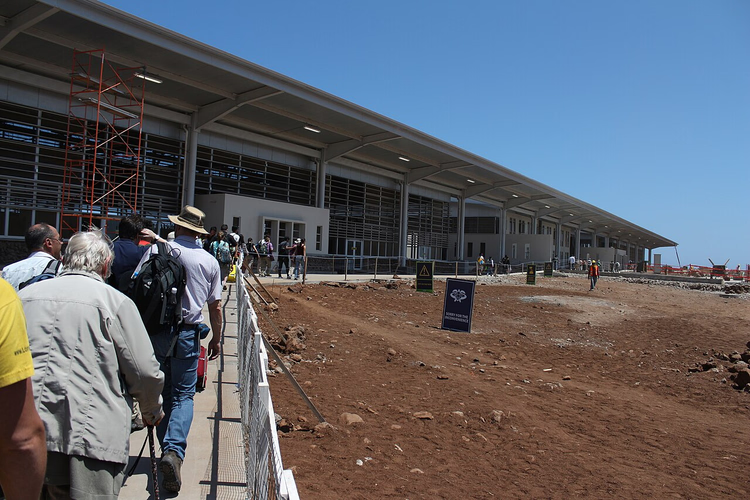 © Xxchangwoo0120xx · CC BY-SAPhoto: Xxchangwoo0120xx, CC BY-SA (https://creativecommons.org/licenses/by-sa/3.0), Wikimedia Commons
The second airport, San Cristobal, receives flights from Guayaquil and Quito. A round-trip ticket is mandatory under immigration service rules, so book both segments at once.
How long the flight takes
The journey from Europe to Ecuador takes almost a full day. A stopover adds connection time to the flight, so choose a convenient transfer, not just the lowest price for your dates.
After that, a short domestic segment awaits. Quito to Baltra: from 2 hours to 2 hours 20 minutes (as of 09/2026, flight schedule). From Guayaquil the flight is shorter, which is convenient if you arrived on the mainland from the south.
Schedules sometimes change, so check the time before buying your ticket. The international terminal in Quito is large, so allow time for the transfer.
Which airline to choose
Three things influence the choice: the route to the mainland, the connection time, and the price for your dates. Below are the carriers that actually fly to Ecuador and the Galapagos.
Avianca
The Colombian airline connects Ecuador with Bogota and the rest of Latin America. Avianca operates flights to the Galapagos from Quito and Guayaquil (as of 09/2026, DirectFlights data). This is convenient for you if your connection is in Bogota.
 © Alan Wilson from Stilton, Peterborough, Cambs, UK · CC BY-SAPhoto: Alan Wilson from Stilton, Peterborough, Cambs, UK, CC BY-SA (https://creativecommons.org/licenses/by-sa/2.0), Wikimedia Commons
LATAM
The Chilean-Ecuadorian carrier maintains a dense schedule between the mainland and Baltra. LATAM also flies to San Cristobal. The airline often sells fares without baggage, so check the terms before paying and plan your suitcases in advance.
 © Carlos Daniel Dobelli from C.A.B.A., Argentina · CC BYPhoto: Carlos Daniel Dobelli from C.A.B.A., Argentina, CC BY (https://creativecommons.org/licenses/by/2.0), Wikimedia Commons
KLM and Iberia
KLM flies to Quito from Amsterdam, Iberia from Madrid. Both airlines offer convenient connections for passengers from Europe. The ticket price depends on the season and how far in advance you book, not just on the airline.
Copa Airlines
Copa flies via Panama and is connected to most cities in the Americas. This route is convenient if you are flying from the US or Canada and want to make just one connection on the way to Quito.
 © Acroterion · CC BY-SAPhoto: Acroterion, CC BY-SA (https://creativecommons.org/licenses/by-sa/4.0), Wikimedia Commons
Air France
Air France takes you to Ecuador via Paris. Check the connection terms when purchasing, because sometimes the transfer between flights takes an entire night and you will need a hotel.
 © Leaderofthewave. · CC BY-SAPhoto: Leaderofthewave., CC BY-SA (https://creativecommons.org/licenses/by-sa/4.0), Wikimedia Commons
How to get from the airport
The INGALA card is paid for on the mainland, at the Quito or Guayaquil airport before departure. After landing on Baltra, you go through passport control and pay the national park entrance fee (as of 09/2026, entry rules).
A free bus takes you from the terminal to the ferry across the Itabaca Channel. The ferry carries passengers to Santa Cruz, and buses and taxis run from the dock to Puerto Ayora.
Baggage is checked for biosecurity: food and plants cannot be brought in. Keep your bag handy, the inspection takes a few minutes and happens before baggage claim.
Which island to choose
Four large islands are inhabited, and each offers its own experience. Santa Cruz works well as a base, Isabela draws you to volcanoes and penguins, San Cristobal shows the capital, Floreana holds the history of the first settlers. Below you will find what to see and how many days to allow for each island.
Isabela
The largest island in the archipelago is formed by five volcanoes and from above resembles a seahorse. Wolf Volcano rises to 1,707 meters, and the Sierra Negra crater reaches 10 km in diameter (as of 09/2026, national park data).
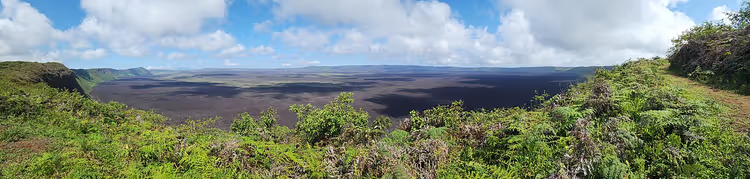 © BLUyeda · CC BY-SAPhoto: BLUyeda, CC BY-SA (https://creativecommons.org/licenses/by-sa/4.0), Wikimedia Commons
Puerto Villamil sits in the south, a small town with a few streets, restaurants, and shops. Nearby lie the Punta Moreno lagoons with mangrove thickets. In Urbina Bay you will see penguins, large tortoises, and bright iguanas that are not afraid of people.
Hikes to the craters here take a full day, and the trails are long and exposed. Snorkeling off the coast of Isabela also takes time, but the waters around the island are rich in fish.
Santa Cruz
The most populated island in the archipelago has a rounded shape. The central part is a mountain plateau of an extinct volcano. A separate attraction is a lava tunnel about 2 km long with walls up to 10 meters (as of 09/2026, official park data).
 © Diego Delso · CC BY-SAPhoto: Diego Delso, CC BY-SA (https://creativecommons.org/licenses/by-sa/4.0), Wikimedia Commons
In the port of Puerto Ayora you will find hotels, restaurants, and beach infrastructure. At the Charles Darwin Research Station, scientists monitor the breeding of 10 tortoise species (as of 09/2026, Galapagos National Park). Researchers from different countries come here, and some of the laboratories are open to visitors.
The Puerto Ayora waterfront is well developed, with a sandy beach and a pier nearby, from which boats depart for neighboring islands.
San Cristobal
This small island shows all the natural zones of the archipelago at once. In the west lies the administrative center, Puerto Baquerizo Moreno, next to the airport. The wooden waterfront with paving stones has become a favorite walking spot for tourists and locals.
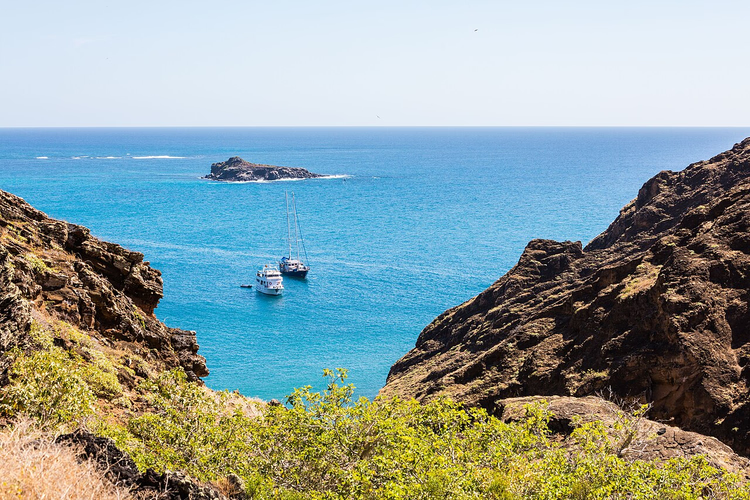 © Diego Delso · CC BY-SAPhoto: Diego Delso, CC BY-SA (https://creativecommons.org/licenses/by-sa/4.0), Wikimedia Commons
From the waterfront it is easy to watch sea lions on the other side of the railing. There are fewer restaurants and souvenir shops here than in Puerto Ayora. After flying in, tourists head to the lake in the crater of El Junco volcano.
Punta Pitt beach stretches along the northeastern coast, and diving infrastructure here is better developed than on the smaller islands.
Floreana
The sixth-largest island has earned a reputation as the quietest of the inhabited ones. Fewer than a hundred people live in the port of Puerto Velasco Ibarra. The landscapes here are more modest, but the fauna is richer: ducks, terns, plovers, and pelicans stay right by the shore.
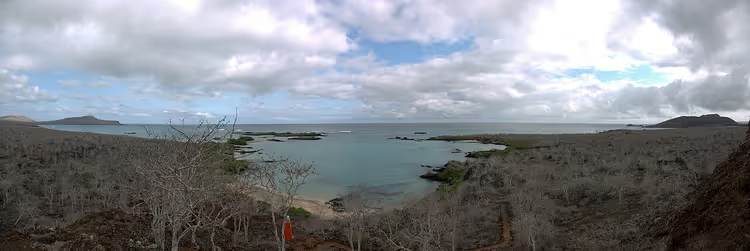 © Stephen Montgomery from Kallangur, Australia · CC BY-SAPhoto: Stephen Montgomery from Kallangur, Australia, CC BY-SA (https://creativecommons.org/licenses/by-sa/2.0), Wikimedia Commons
At Punta Cormorant, sea turtles crawl ashore to lay their eggs. Pink flamingos fly over the lagoons. A separate stop on the route is Post Office Bay with its barrel for letters, where mail is dropped off and picked up by passing ships. Dolphins often accompany boats to other islands.
The logic for choosing is simple. For a first trip, pick Santa Cruz: from there it is easy to reach Bartolome, North Seymour, and Plaza. For Isabela, allow at least two nights, otherwise the volcano hikes and Punta Moreno will not fit into your schedule. The more islands you want to see, the more your trip depends on the boat: land-based tours cover one or two islands, while cruises show five or more at once.
Galapagos tours
Package tours solve the main headache of independent travel: flights between islands, a guide, and logistics. Programs differ in length and the set of countries. Short routes cover Ecuador and a few islands, while longer ones add Peru, Bolivia, Colombia, and Easter Island.
Below are eight routes sold by operators. Prices depend on the season, hotel category, and group size, so compare dates on the partner's site. If you only need the archipelago, the cruises in the next section give you more islands per day for your money.
The price usually includes hotels, some meals, and guided excursions, while you buy international flights yourself. Pay attention to the starting point: short programs begin in Quito, longer ones in Lima or La Paz.
"Hello, booby" tour: eight days
First you explore Quito's historic center and head to the "middle of the world," the town of Mitad del Mundo. Along the way you'll see Cuicocha Lake in a volcanic caldera and the indigenous towns of Peguche and Otavalo with their markets.
Then you fly to Santa Cruz: Puerto Ayora and the Charles Darwin Research Station. Bartolome Island opens up a panorama of six islands from its summit. On the beaches you'll see penguins and sea lions at arm's length.
On Isabela, North Seymour, and Plaza you'll encounter blue-footed boobies and frigatebirds. Beyond Puerto Villamil, among the mangroves, stand lava formations, and a tortoise breeding center operates nearby.
In the sea you'll swim with starfish, turtles, and rays among schools of colorful fish. The short route is convenient if you have few days: in eight days you'll see both the mainland and four islands of the archipelago. No physical training is required; the activity level is moderate.
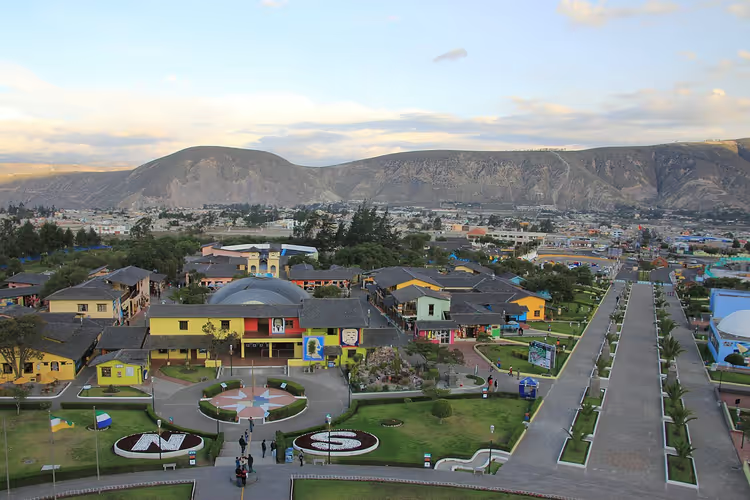 © diego_cue · CC BY-SAPhoto: diego_cue, CC BY-SA (https://creativecommons.org/licenses/by-sa/3.0), Wikimedia Commons
Tour dates and prices for "Hello, booby" on GetYourGuide
Thirteen-day route: Ecuador, Galapagos, and Colombia
The program combines eight cities across three countries. In Ecuador you'll see Cuicocha Lake, formed in a volcanic crater. On the islands, pink flamingos, pelicans, frigatebirds, marine iguanas, and fur seals will come close to you.
The Galapagos portion offers close observation of blue-footed boobies and penguins. Colombia delivers Bogota's historic center and the Gold Museum with its collection of gold artifacts and weapons from pre-Columbian times.
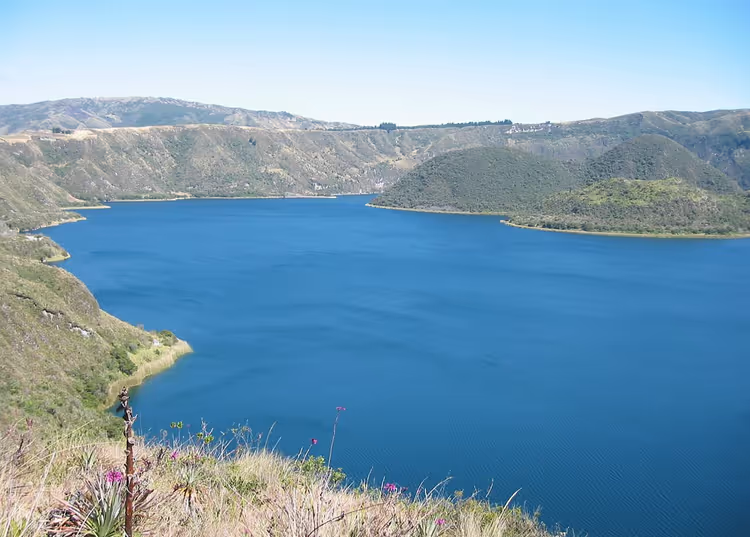 © Unknown author · CC BY-SAPhoto: Unknown author, CC BY-SA (http://creativecommons.org/licenses/by-sa/3.0/), Wikimedia Commons
The list also includes the underground Salt Cathedral in Zipaquira, Inca fortresses, and the white beaches of Rosario Island. The first half of the route is devoted to cities and museums, the second to nature: craters, mangrove lagoons, and wildlife watching.
Transfers between countries are already included in the program, and the group is usually small. For you, this is a way to see two regions of Latin America in one trip without handling the logistics yourself.
Compare dates for the thirteen-day route
Eleven days through Ecuador and the islands
The tour runs through a country that sits in two hemispheres at once. At the equator you'll find yourself in the town of Mitad del Mundo near Quito. In Banos, at the foot of Tungurahua volcano, hot springs await.
Then a train carries you through the highlands to the "Devil's Nose" section and the ruins of indigenous settlements. On the archipelago, the program covers five volcanic islands. You'll relax on beaches with multicolored sand and see the half-submerged Devil's Crown crater.
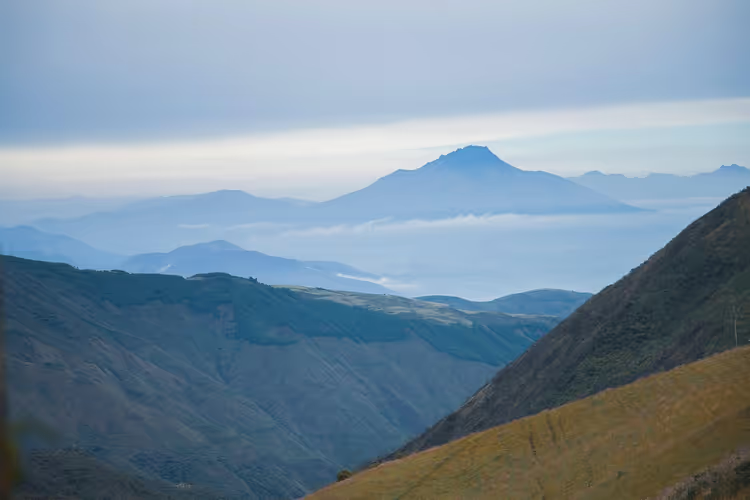
Here you can observe colorful iguanas, green turtles, fur seals, flamingos, and brown pelicans. From the summit of Wolf Volcano, you get a view of several islands at once.
Buses and trains within the country are included for transfers, and nights are spent in mid-range hotels. The route ends in Guayaquil, Ecuador's second-largest city.
Book the Ecuador and Galapagos tour
Sixteen days: Peru and the Galapagos
The route begins with a tour of Lima's historic center and the Gold Museum with its collection of gold artifacts and Inca weapons. Next come ruins, fortresses, and temples dedicated to Water, the Sun, and the Moon.
The program's centerpiece is the mountain city of Machu Picchu, lost in the Andes. In Bolivia you'll get to know the life of the Uru people on the floating islands of Lake Titicaca and visit the sacred islands of the Moon and the Sun.
Along the way you'll see the landscapes of Moon Valley near La Paz and the "Gate of the Sun" at the Tiwanaku ruins. A separate item is a flight over the Nazca Desert with its drawings of animals and geometric figures.
This kind of trip is designed for those who are ready for frequent connections: over sixteen days you move through three countries and several time zones. Not everyone handles the altitude of Lake Titicaca and Cusco well, so it is best to keep the first days relaxed. On the Galapagos, the itinerary covers five islands.
Choose dates for the Peru and Ecuador itinerary
Twenty days: Peru, the Galapagos, and Easter Island
The longest itinerary in this selection starts in Lima with the Huaca Pucllana archaeological complex and the Gold Museum. In Cusco, the Temple of the Sun awaits you with its towers and channels made of stone blocks, and at Machu Picchu you will find yourself in the medieval world of ancient builders.
Lake Titicaca will surprise you with the life of the ethnic community on Taquile Island and the floating islands of the Uros people. On the Galapagos, the yacht route adds an iguana beach, the Love Channel, and lava caves.
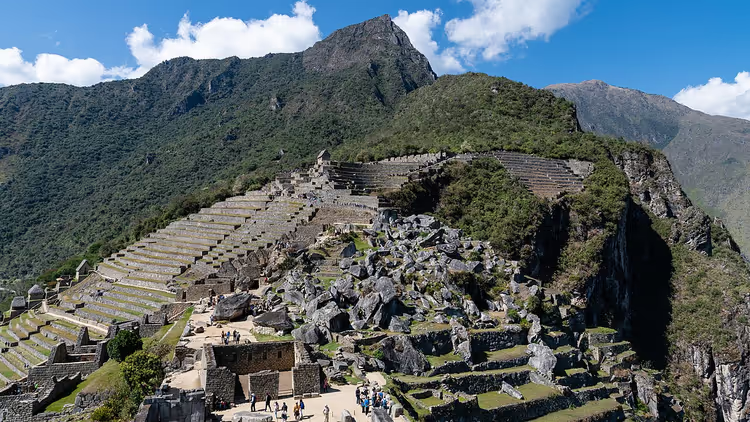 © Christoph Strässler · CC BY-SAPhoto: Christoph Strässler, CC BY-SA (https://creativecommons.org/licenses/by-sa/2.0), Wikimedia Commons
From Peru you will head to the Ballestas Islands with their cliffs, and then to the Nazca geoglyphs. The finale of the trip takes place on Easter Island among the moai statues, which weigh several tons each. The tour wraps up with a sightseeing tour of Santiago.
The twenty-day route is chosen by those who want to cover three destinations in one trip. The flight to Easter Island takes a full day, so it is placed closer to the end of the itinerary. There are many transfers between countries, so pack light and bring comfortable shoes.
See available dates for the twenty-day tour
Two-week tour: Peru and Ecuador
This itinerary introduces you to Inca culture and gives you time to relax on the islands of Ecuador. In Peru, seven ancient cities await you with archaeological complexes and the Kenko temple, built in the shape of a puma.
Inca craftsmanship is on display at the Machu Picchu citadel and the structures of the Sacred Valley of Urubamba. Archaeologists work at the high-altitude Lake Titicaca and the towers of Sillustani, and some of the finds are shown to tourists.
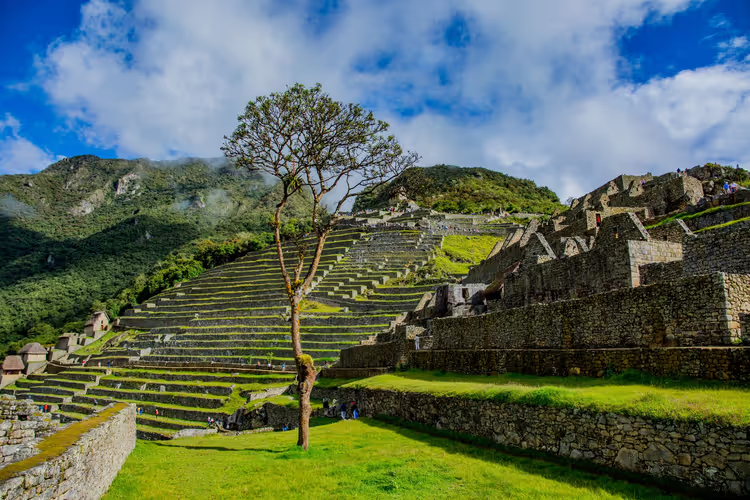
On the rocky shores of the Ballestas Islands you will see pelicans, Humboldt penguins, sea otters, and dolphins. Visitors reach the islands by boat, and the trip takes a couple of hours each way.
The Ecuadorian part includes Quito, the equator line, and six volcanic islands with hikes to craters and a lava tunnel. After the high-altitude section of the route, you get several relaxed days by the ocean.
Prices and dates for the two-week tour
Sixteen days: Peru, Bolivia, and Ecuador
The first block of the itinerary covers the monuments of Inca civilization. You will find reflections of their culture and religion at the Gold Museum in Lima, in Cusco and Machu Picchu, among fortresses and shrines to the gods of the Sun, Moon, and Water.
In Bolivia, the route passes through Copacabana, Cerro Calvario, and the Island of the Sun. The Valley of the Moon near La Paz will show you bizarre rock formations, and the Tiwanaku complex with the Kalasasaya temple and the "Gate of the Sun" dates back to the pre-Columbian era.
On Baltra you transfer to a boat and head to Puerto Ayora, to the Darwin Station. The itinerary also includes Plaza Island, the half-submerged Devil's Crown crater off Floreana, and Tortuga Bay beach with underwater excursions.
Puno and Lake Titicaca are at high altitude, so it is best not to plan a demanding first day there. The boat ticket between Baltra and Puerto Ayora is usually arranged together with the tour. The route is long, and some days are spent traveling between cities.
Book the three-country itinerary
Seventeen days: Peru, the Amazon, and the Galapagos
This long route starts in Lima with parks, fountains, and the Gold Museum. Tours of Cusco, Machu Picchu, and Raqchi showcase the skill of ancient builders, and the Ollantaytambo sanctuary adds mountain fortresses.
After Lake Titicaca and Iquitos, the journey continues with an Amazon cruise. You will visit the floating city of Belen and settlements of local tribes.
The Galapagos part is built around beaches, diving, and snorkeling. This option suits those traveling for an extended period: the Andes, the Amazon, and the islands in one itinerary. Allow extra time for flights, as a full day usually passes between the Amazon and the islands.
In Iquitos, check vaccination requirements in advance, as they are sometimes verified upon entry. Among the photos from this trip will be volcanoes, caves, mangroves, and cacti, as well as boobies, sea lions, giant tortoises, iguanas, and flamingos. The tour ends in Quito, at the equator line.
Tour dates with the Amazon and the islands
Each itinerary includes main flights, hotels, and guided excursions, while the Galapagos entrance fee and the INGALA card are paid separately. Before paying, confirm the set of services: in some tours, domestic flights and meals are offered as an option.
If you are visiting for the first time, choose a route that includes both the mainland and the islands. That way you will see Quito and the archipelago in one trip and understand whether you want to come back just for the wildlife. For long three-country itineraries, check your passport validity and visa requirements in advance.
Tours and tickets in Galapagos
Guided tours, skip-the-line tickets and activities — most offers can be cancelled free of charge.
See offers on GetYourGuideThe widget loads once you give your consent.
Cruises around the archipelago
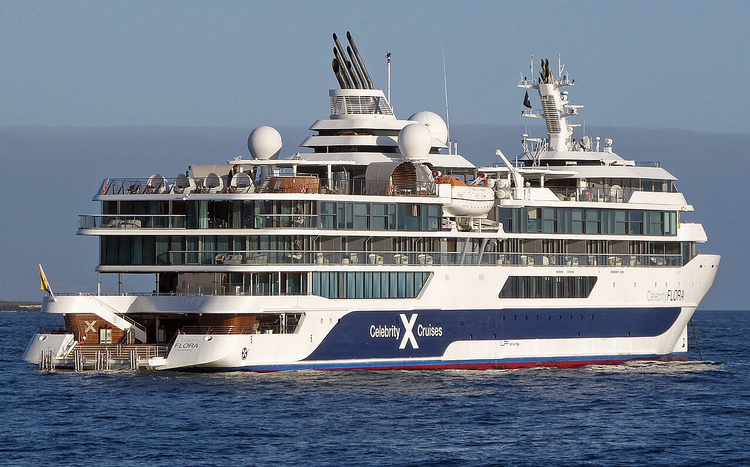
A cruise solves the archipelago's main challenge: the distances between islands. At night the ship moves to the next point, and during the day you go ashore with a guide. In 2026, the main operator of long-range expeditions in the Galapagos, Celebrity Cruises, runs the Celebrity Flora here, a ship built specifically for the archipelago (as of: 09/2026, Celebrity Cruises).
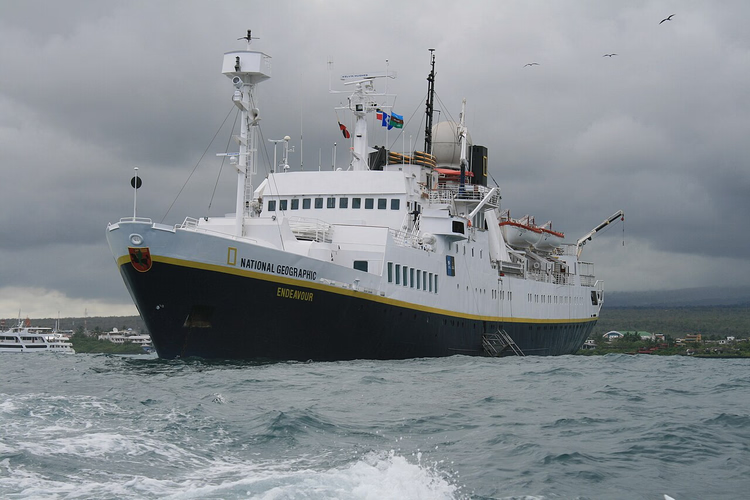 © RAF-YYC from Calgary, Canada · CC BY-SAPhoto: RAF-YYC from Calgary, Canada, CC BY-SA (https://creativecommons.org/licenses/by-sa/2.0), Wikimedia Commons
Routes are divided into northern, central, and western. The price includes the cabin, meals, excursions, and snorkeling gear, so a cruise looks more expensive than a land-based tour. But in a week you will see more islands than any land-based lodge can show you.
When booking, check the ship name and dates: some routes from previous years were operated by the company's other expedition ships. Below are six programs worth comparing.
Eight-day cruise from Baltra: San Cristobal, Floreana, and Isabela
The cruise starts on uninhabited Baltra, where tourists arrive from the mainland. From there, the landscape of Baltra, Santa Fe, and South Plaza changes: striking cliffs, cactus groves, and mangrove forests.
Here you will encounter sea lion colonies and yellow and red iguanas. San Cristobal adds mountain scenery and Punta Pitt beach with yellow sand, where you can swim or snorkel.
 © Diego Delso · CC BY-SAPhoto: Diego Delso, CC BY-SA (https://creativecommons.org/licenses/by-sa/4.0), Wikimedia Commons
At Punta Cormorant, flamingos and nesting sites of rare birds await, and on the olive-colored beach you will see turtles. In Elizabeth Bay, Galapagos penguins, sea lions, and cormorants swim up to the ship. At Punta Suárez, waves shoot up like fountains from huge boulders, and bird colonies cling to the rocks.
Night passages here are short, so in the morning you are already in a new bay and don't waste time in transit. Snorkeling is included in the program, and a mask and fins are provided on board. The route is convenient for a first trip, as the islands lie close to each other. Baggage inspection takes place before boarding on Baltra.
Compare dates for the eight-day cruise
Seven nights from Baltra: North Seymour, Isabela, and San Cristobal
The program starts on Baltra and heads north to North Seymour. This is where you will first see blue-footed boobies.
Volcanic South Plaza and Santa Fe surprise with sea lion populations and families of red and yellow iguanas. In Santa Fe bay, the ship approaches the shore so close that the animals are just a couple of meters away.
 © Diego Delso · CC BY-SAPhoto: Diego Delso, CC BY-SA (https://creativecommons.org/licenses/by-sa/4.0), Wikimedia Commons
San Cristobal with its golden beaches suits diving enthusiasts: the underwater world here is denser than around the central islands. On Isabela you observe penguin colonies, pink flamingos, and pelicans up close, and on Santa Cruz you'll find Puerto Ayora and the Darwin Station.
The route connects the central islands with Isabela and San Cristobal. Cabins are booked in pairs, and the single supplement is usually high. Evening wildlife viewing takes place near the shore, when activity is higher.
Choose dates for the seven-night cruise
Eight days across nine islands
The ship departs from Baltra and visits nine islands of the archipelago in eight days. In the north of Santa Cruz, Caleta Tortuga Negra bay, surrounded by mangroves, welcomes you.
Small Rabida shows red sand and volcanic rocks where marine iguanas and fur seals live. At Caleta Tagus, blue-footed boobies coexist with penguins, and pelicans and sea robins are visible near the shore.
 © Stephen Montgomery from Kallangur, Australia · CC BY-SAPhoto: Stephen Montgomery from Kallangur, Australia, CC BY-SA (https://creativecommons.org/licenses/by-sa/2.0), Wikimedia Commons
Fernandina consists of solidified lava and is home to iguanas, sea lions, penguins, and cormorants. The coasts of Isabela offer Urbina Bay and the cliffs of Punta Vicente Roca. The finale takes place in El Barranco bay, where a trail with stone steps leads to a lookout over the ocean.
Nine islands in eight days make for a packed schedule: landings happen once or twice a day. Trails are rocky in places, so closed-toe shoes are needed. Fernandina has no dock, so landings are done by boat, and the western shores are cooler, so a windbreaker comes in handy.
Find available cabins on this route
Celebrity Flora route: eight days
This program starts near San Cristobal, where the Kicker Rock cliffs rise from the water. Stops at Isabela and Bartolome offer several hours of snorkeling among green turtles and rays.
Tourists who stay ashore watch penguins and sea lions, and at Espumilla Beach they watch ducks and pink flamingos. In Caleta Tagus and Elizabeth Bay, penguins and boobies share territory with pelicans.
 © Wolfgang Fricke · CC BYPhoto: Wolfgang Fricke, CC BY (https://creativecommons.org/licenses/by/3.0), Wikimedia Commons
Diving enthusiasts descend to the reefs off tiny Champion Island. On Santa Cruz, the slopes of Cerro Dragón with green iguanas, the white beaches of Las Bachas, and the sinkholes of Los Gemelos await. The final point is uninhabited Baltra with mangroves and sea lions.
This route runs on a ship with balconies and an all-inclusive system. Espumilla Beach closes during turtle nesting season, so the schedule is sometimes adjusted. Diving at Champion Island is available to experienced divers, and the views at Cerro Dragón are better in the morning, when the light falls on the slope.
Book the Celebrity Flora cruise
Overview cruise across twelve islands
The broadest route in this selection starts on Baltra and covers twelve islands. Mangrove forests and cactus fields here sit alongside cliffs of volcanic origin.
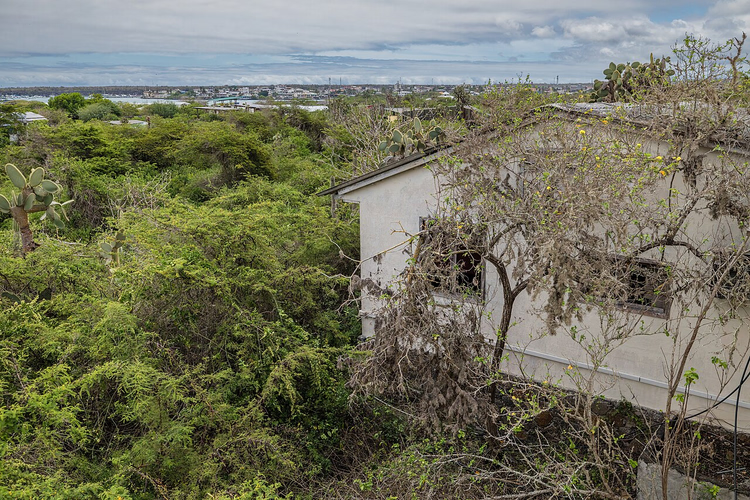
On the way to Puerto Egas, the ship passes Daphne Island with its volcano. On San Salvador and Rabida, you will step ashore onto red sand inhabited by iguanas, turtles, and fur seals.
 © The Official CTBTO Photostream · CC BYPhoto: The Official CTBTO Photostream, CC BY (https://creativecommons.org/licenses/by/2.0), Wikimedia Commons
You will continue getting to know penguins, boobies, and red-billed tropicbirds in the bays of Caleta Tagus, near Santa Cruz and North Seymour. On Bartolomé you will swim alongside turtles and rays, and on San Cristóbal you will see mass bird nesting sites at Punta Pitt. The finale takes place at the Darwin Station and in Puerto Ayora.
The overview route gives you the maximum number of islands in one week. On Daphne you do not go ashore: the vessel circles the rocks to show the birds from the water. The nesting sites at Punta Pitt are best viewed in the first half of the day, and on San Salvador you need sturdy shoes, as the trails there have no railings.
View prices for the overview cruise
Seven nights: west and south of the archipelago
This route shows the western part of the archipelago. From Baltra the vessel heads to Gardner's lagoons and a white-sand beach, from which it is easy to dive into the clear water.
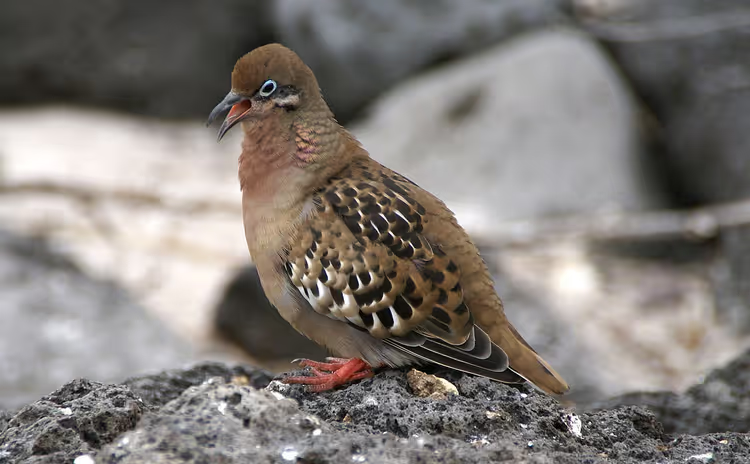
At Punta Suárez, water fountains shoot out of the boulders. On Floreana, in Punta Cormorant bay, the sand has a greenish tint, and on the coasts of Isabela, armies of flamingos gather among the black rocks.
 © putneymark · CC BY-SAPhoto: putneymark, CC BY-SA (https://creativecommons.org/licenses/by-sa/2.0), Wikimedia Commons
Further on, penguins, fur seals, turtles, and pelicans await you near the coral coast of Urbina Bay, on the islands of Punta Espinosa and South Plaza. Green iguanas can be found near Cerro Dragón on Santa Cruz, and the journey ends in Puerto Ayora.
The western route shows Isabela and Floreana, where there are fewer vessels and it is calmer near the shore. Flamingos on Isabela stay near the lagoons constantly, so the chance of seeing them is high. For snorkeling at Punta Espinoza, you need a sun shirt and sunscreen.
Cruises are booked well in advance of the trip: cabins for the dates you need may no longer be available. If you are traveling in high season, start comparing routes several months ahead.
Best time to visit
The weather on the islands is steady, and there is no harsh winter here. The local climate is divided into two periods. From June to November it is cooler and drier, the ocean water is colder, and a fine drizzle, the local garúa, hangs over the highlands. From December to May it is warmer and more humid, but the rains are short and do not disrupt excursions.
For hiking routes, the dry season is more convenient: the trails are not washed out, and animals stay near the shore. For snorkeling and diving, choose the warm months, when the water warms up more and visibility is higher.
The islands sit on the equator, so the sun is scorching all year round. Bring a hat and high-SPF sunscreen. In high season there are more tourists, and tickets for domestic flights should be booked in advance.
Tips for travelers before the trip
- Bring a hat and sunburn protection: the sun is intense year-round on the equator.
- Almost the entire archipelago is part of the national park, so walking is allowed only on trails with a guide (as of 09/2026, national park rules). Tents are set up only in designated areas.
- Do not approach animals closely or feed them. If an animal comes toward you, stand still and do not back away abruptly.
- Do not drink tap water. Buy bottled water in shops in Puerto Ayora and Puerto Baquerizo Moreno.
- Bring an adapter for American outlets and a supply of essential medications: there are no pharmacies on the smaller islands.
- Photography and amateur video are allowed freely, with no camera restrictions for visitors.
Galapagos Islands on the map
The archipelago stretches along the equator west of mainland Ecuador. Below is a map that makes it easy to estimate travel between islands and the distance to the mainland.
⁉️🤔 Frequently asked questions
Do I need a visa to travel to the Galapagos?
Ecuador admits European Union citizens without a short-term visa, so no separate permit for the archipelago is required. Your passport must be valid for the entire duration of the trip. On the Galapagos you will get an additional stamp with a tortoise. Rules sometimes change, so check the requirements on the Ecuadorian consulate website before flying.
How much are the entrance fees?
An adult foreigner pays $200 for national park entry and $20 for the INGALA card (as of 09/2026, official park page). Children pay less, and some fees are accepted in cash. Keep dollars ready, because there are no ATMs on Baltra.
When is the best time to go?
The dry season runs from June to November, the wet season from December to May. In the dry months it is cooler and more comfortable for hiking routes, while in the warm months the water warms up more and is better for snorkeling. The islands sit on the equator, so the sun is scorching at any time of year.
Can I go without a prearranged tour?
Yes. You book a hotel on Santa Cruz or San Cristobal and buy day trips on site. Trails in the national park are only walked with a guide, so some routes still go as part of a group. A ticket to the archipelago and back is mandatory; without it you will not be checked in for the domestic flight.
How many days do I need for the archipelago?
A week is enough for a first introduction. A land base in Puerto Ayora gives you two or three islands, while a seven-night cruise shows far more. If you want to see both the western islands and the center of the archipelago, plan at least ten days, including flights.
In short: what to book
If you have a week and the goal is to see as many islands as possible: take a seven-night cruise from Baltra. If budget matters more: stay in Puerto Ayora and buy day trips to Bartolome and North Seymour. If you are going for the first time and want both the mainland and the archipelago: choose a tour with Quito and Santa Cruz. If you love diving: add Isabela and Punta Pitt beach.
Book domestic flights, entrance fees, and cabins in advance. In high season, finding available spots for your dates is harder, and prices rise closer to departure.

A small editorial team writing guides for independent travel. We travel ourselves, but we haven’t been everywhere, so we check prices, opening hours and how to get there against official sources.