











Prague: the guide for planning it yourself
Prague is more compact than the guidebooks make it seem. Prague Castle, Charles Bridge and Old Town Square stand about a twenty-minute walk from one another, and the historic center can be covered on foot. The hard part of a first trip is not the distances but the tickets and the lines: in summer, without a time slot, you stand with everyone else at St. Vitus Cathedral and the Old Town Hall tower. This page is meant as the overview you build your own trip from. Each section says in a few sentences what matters and points on to our detailed articles. We deliberately leave prices out: tickets, fares and hotel rates in Prague change too fast for an overview page to carry them honestly. What you get instead is a calculator where you work out your own total.
The highlights and how to arrange them
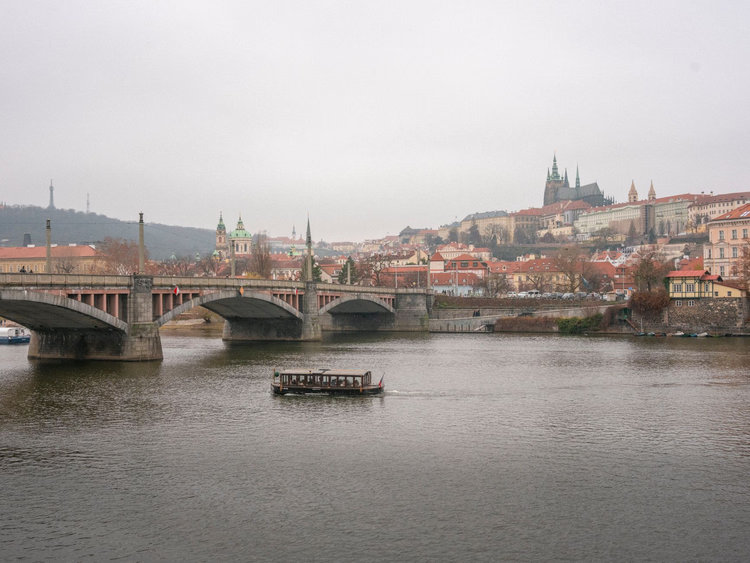
A classic triangle carries a first trip to Prague: Prague Castle, Charles Bridge and the Old Town. Prague Castle is not a single palace but a whole quarter on the hill above the Vltava: St. Vitus Cathedral, the Old Royal Palace, St. George's Basilica and Golden Lane. Charles Bridge, with its thirty Baroque statues, links the Old Town with the Lesser Town (Malá Strana). On Old Town Square stand the town hall with the Orloj astronomical clock, the Týn Church and the Jan Hus Memorial.
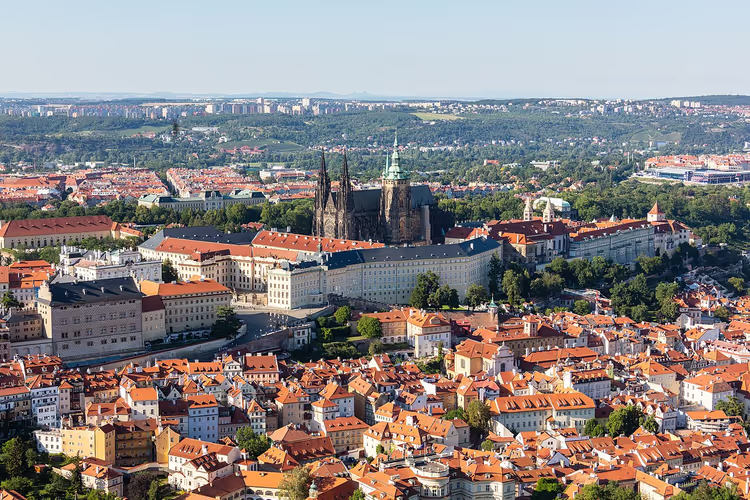
The second circle is easiest to put together by area. On the left bank that means Petřín with its lookout tower, Strahov Monastery with its library and the Prague Loreto. On the right bank: Vyšehrad with the Vyšehrad Cemetery and the Slavín pantheon, the Jewish Quarter of Josefov, Wenceslas Square with the National Museum, and the Clementinum.
Two rules save the most time. First: much of what matters most needs no ticket. Charles Bridge is open around the clock, the courtyards of Prague Castle and the grounds of Vyšehrad are free, and you watch the procession of the apostles on the Orloj right from the square. Second: check the closing days. Many Prague museums and the Týn Church are closed on Mondays, and the museums of the Jewish Quarter do not open on Saturdays.
Our articles on this
- 35 Prague landmarks: what to see and how to get there
- Prague Castle in 2026: opening hours, tickets and a half-day route
- St. Vitus Cathedral: tickets, opening hours and tower climb
- Old royal palace in Prague: what to see and how to get inside
- Charles Bridge in Prague: where to make a wish and how to climb the tower
- Charles Bridge in Prague: how to visit without crowds and where to make a wish
- Old Town Square: what to see and when to go to the astronomical clock
- Old town hall: what is included in the ticket and when to watch the apostles
- Astronomical Clock Orloj: when the apostles come out and how much the climb costs
- Tyn Church in Prague: opening hours, entry and what to see inside
- Tyn Church: the Adam and Eve towers, the 1673 organ and entry hours
- Vysehrad: casemates, cathedral and panorama of Prague over the Vltava
- Vysehrad above the Vltava: casemates, basilica and Prague panorama in half a day
- Petrin Hill in Prague: what to see and how to get up
- Wenceslas Square in Prague: the Wenceslas Monument, the National Museum and what to fit in half a day
Neighborhoods and where to stay
Prague is compact, but the neighborhood you sleep in changes the whole trip. For a first visit of two or three days, the Old Town and the New Town both work: you walk to Old Town Square, the astronomical clock and Charles Bridge. The Old Town is the most expensive and the loudest. The New Town around Wenceslas Square is usually cheaper but has less historic character.
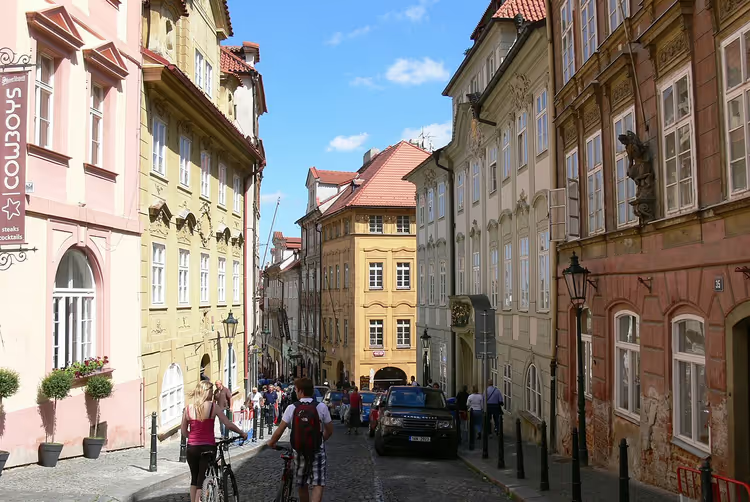
The Lesser Town lies on the other bank of the Vltava, right below Prague Castle. It is quieter and more romantic here, but there are few places to stay, the boutique hotels in the old houses are expensive, and there are fewer bars in the evening.
If price matters or the trip is a long one, look farther from the center. Vinohrady is a calm residential quarter with cafés and the metro close by. Žižkov is the cheapest and the liveliest at night. Holešovice, a former working-class district, now lives on galleries and markets. From all three you will have to ride to the sights, so check where the nearest tram stop or metro station is.
| Neighborhood | Who it suits | What to keep in mind |
|---|---|---|
| Old Town | A first visit of two or three days: you walk to the main sights | The most expensive and loudest area; ask for a room facing the courtyard |
| New Town | Anyone who wants a balance of location and price, and a weekend trip | Less historic character, and the main streets are noisy |
| Lesser Town | Couples and anyone after quiet evenings below Prague Castle | Few places to stay, boutique hotels are expensive, fewer bars in the evening |
| Vinohrady | A long trip, cafés and a calm residential quarter | The metro is close by, but it is a long walk to the sights |
| Žižkov | A tight budget and nightlife | The tram runs to Old Town Square with no changes; at night you hear the bars and the trams |
| Holešovice | A long trip, galleries, markets and apartments with a kitchen | You take the tram or the metro to the center every day |
Our articles on this
Hotels: what to watch for in Prague
In Prague, location and reviews tell you more about a hotel than its stars: a solid three-star place on a quiet lane is often better than a weak four-star one on a noisy street. The words “close to the center” in a description can mean anything, so check the address against the map. Some of these hotels stand by the Florenc bus station or behind Wenceslas Square. The Old Town is noisy in the evening, so ask for a room facing the courtyard.
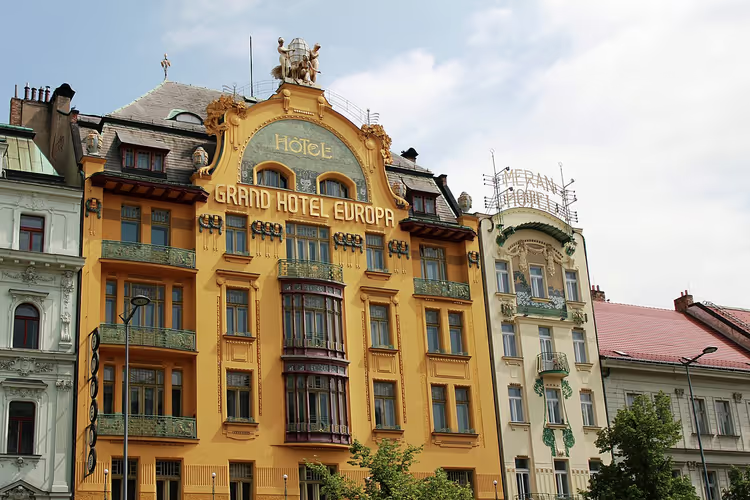
Prague is popular all year, and prices climb fastest from May through September and on the Advent weekends. Book two to three months ahead: the choice is wider than a week before the trip. Look at what the rate includes: breakfast, free cancellation and the city tax. For a week or a trip with children, apartments with a kitchen are more convenient.
Ad
Compare places to stay in Prague on Trip.com
We earn a commission through this link; your price stays the same.
Our articles on this
- Where to stay in Prague: 15 4-star hotels within walking distance of the center
- 15 Best 4 star hotels in Prague city center
- Prague 3 star hotels in the center: 15 options from Old Town to Mala Strana
- Prague 3 star hotels in the center: 14 options near attractions
- Where to stay in Prague: thirteen hotels from Old Town Square to Mala Strana
- 11 Hotels near Charles Bridge: prices, downsides and what to choose in 2026
- Where to stay near Wenceslas Square: 13 options with photos and prices
Tours and skip the line tickets
A ticket bought ahead pays off above all for Prague Castle and the Old Town Hall tower: in season the lines at the ticket offices grow by the hour. The main circuit of the castle covers St. Vitus Cathedral, the Old Royal Palace, St. George's Basilica and Golden Lane, while the cathedral tower is paid for separately. Before you travel, check whether any of the rooms are closed. The town hall ticket includes the tower, the chapel, the historic halls and the underground rooms.
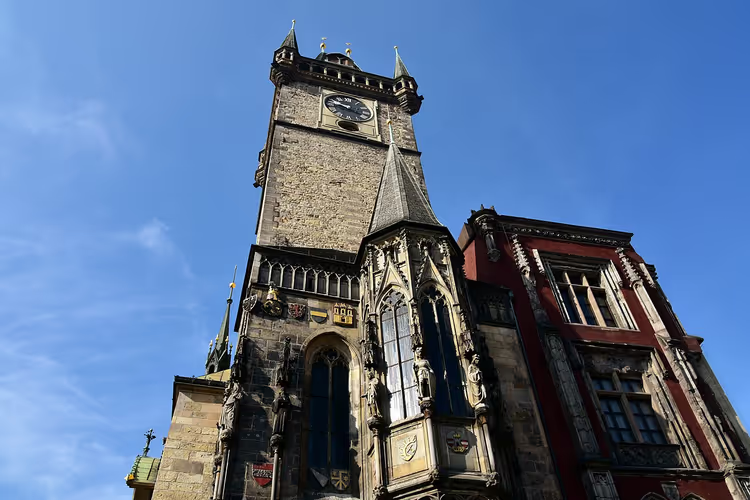
There are places you cannot get into without a guide: at the Clementinum the route through the library and the Astronomical Tower is by guided tour only, and the Vyšehrad casemates also admit visitors in groups on a schedule. In the Jewish Quarter a single ticket covers four synagogues and the Old Jewish Cemetery.
Plan separately for a boat trip on the Vltava, an evening at the National Theater and a day at the zoo in the Troja district. Day trips from Prague go to Kutná Hora with its ossuary, to the castles of Karlštejn and Český Šternberk, to Český Krumlov or to Karlovy Vary.
| Sight | How to get in | What to keep in mind |
|---|---|---|
| Prague Castle | Ticket for the main circuit; buy it ahead in season | The tower of St. Vitus Cathedral is paid for separately; entry to the courtyards is free |
| Old Town Hall | One ticket; buy it ahead in season | The ticket includes the tower, the chapel, the historic halls and the underground rooms |
| Clementinum | By guided tour only | The route goes through the library and the Astronomical Tower |
| Vyšehrad casemates | In groups on a schedule | The grounds of Vyšehrad themselves are open without a ticket |
| Jewish Quarter | Single ticket | Covers four synagogues and the Old Jewish Cemetery; the museums of the quarter are closed on Saturdays |
| Charles Bridge and the Orloj | No ticket | The bridge is open around the clock, and you watch the procession of the apostles right from the square |
Ad
See guided tours and tickets for Prague on GetYourGuide
We earn a commission through this link; your price stays the same.
Ad
See tickets for museums and viewpoints on Tiqets
We earn a commission through this link; your price stays the same.
Our articles on this
Food and beer: how to choose a place to eat in Prague
Czech cooking is hearty and simple. In the pubs people order goulash with dumplings, svíčková, which is beef sirloin in a cream sauce, pork knuckle and soup in a bread bowl, with apple strudel for dessert. Trdelník is something you pick up on the street.
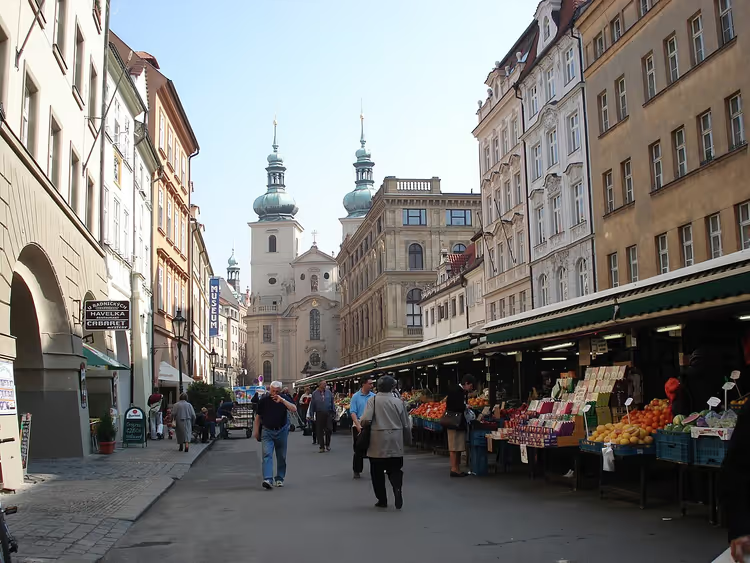
What a meal costs depends most of all on the address. On Old Town Square and near Charles Bridge you pay for the view and the tourist traffic, while a few blocks away, in Karlín or Vinohrady, the same dishes cost less. At midday on weekdays many pubs serve a lunch menu, the polední menu: it is cheaper than ordering from the same menu in the evening.
Beer has been brewed in Prague since the 14th century, and in the residential districts it is noticeably cheaper than in the center. The city's oldest working brewery is U Fleků. At popular beer halls, reserve a table ahead for the evening. The Havel Market between Old Town Square and Wenceslas Square is open daily.
Our articles on this
Transport and getting in from the airport
Václav Havel Airport lies within the city limits, but the metro does not reach the terminals. The cheapest way in is a city bus with a change to the metro: bus 119 runs to Nádraží Veleslavín station on line A, bus 100 to Zličín station on line B. You need an ordinary city ticket, and the ninety-minute ticket covers the whole ride including changes. The Airport Express bus goes to the main train station, but the city ticket is not valid on it.
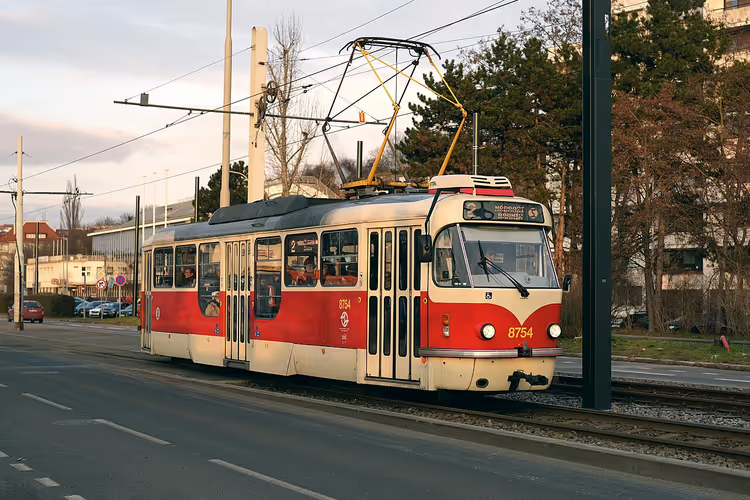
In the city, the metro, trams and buses run on one fare system, and you buy a ticket by time, not by ride: a short one, one for an hour and a half, a one-day pass or a three-day pass. In the PID Lítačka app it is cheaper than on paper. The short tickets are not valid on the funicular up Petřín, while the one-day and three-day passes are. Before you go up, check whether the funicular is running again after its reconstruction.
A transfer booked in advance is convenient for a late arrival, with children and with a lot of luggage: the driver meets you in the arrivals hall and the price is known beforehand. Call a taxi through an app rather than taking one from the private drivers by the exit. You rarely need a car in Prague itself: parking in the center is paid and expensive.
| Option | Where it takes you | When it works and what to keep in mind |
|---|---|---|
| Bus 119 or 100 and the metro | To Nádraží Veleslavín (line A) or Zličín (line B) station, then the metro to the center | The cheapest way; at rush hour the bus is full, and standing with a suitcase is awkward |
| Airport Express bus | To the main train station | Handy if you are going on by train; the city ticket is not valid, and the bus does not run late in the evening |
| CEDAZ shuttle | To V Celnici street in the center | Suits groups and families; the minibus waits for other passengers and does not take you to the hotel door |
| Transfer booked in advance | To your hotel | A late arrival, children, a lot of luggage; the driver meets you in the arrivals hall, but it costs noticeably more than the bus |
| Taxi through an app | To your hotel | You see the price beforehand; the most expensive option, especially if you are riding alone |
Ad
Book a fixed price airport transfer in Prague
We earn a commission through this link; your price stays the same.
Our articles on this
Best time to go and weather
May and September are best for a first trip: it is warm, the showers are short, and the lines at the main sights are still shorter than in summer. July and August are peak season, when the center is already crowded before noon and hotel prices are at their highest.
The fewest tourists come in January, February and the first half of March. The museums have no lines then, but the days are short and it gets dark early.
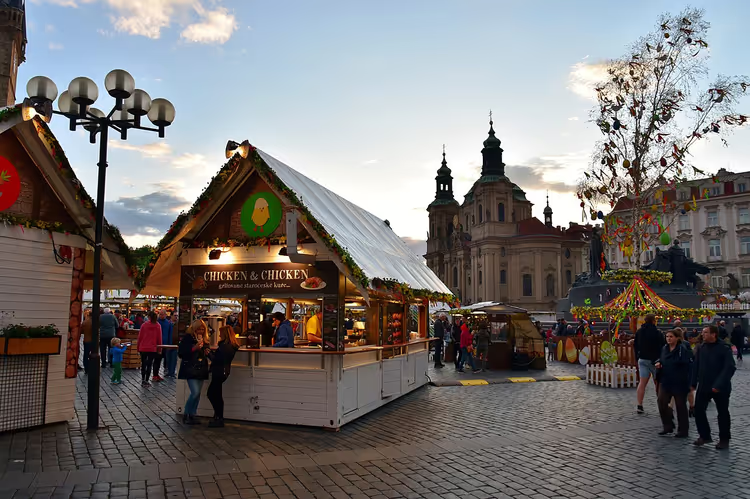
A separate winter peak comes with the Christmas markets on Old Town Square and Wenceslas Square: they open in late November and run until early January. Hotels for those weeks get booked several months ahead.
| Time of year | Weather and crowds | What it suits |
|---|---|---|
| January, February, first half of March | Cold, short days, the fewest tourists | Museums without lines and an almost empty Old Town |
| April | Changeable weather, frequent short showers, a moderate number of tourists | Gardens in bloom by Prague Castle and on Petřín |
| May | Warm, short showers, a moderate number of tourists | A first trip and long walks around the city |
| June | Warm, already a lot of tourists | A long weekend: the first week of the month is calmer than the second half of July |
| July and August | The warmest months, the center is already crowded before noon | Terraces, boats on the Vltava and long evenings; hotel prices are at their highest |
| September | Warm, lines shorter than in summer | A first trip, museums and viewpoints |
| October and November | Cool; in November the days are short and it often drizzles | Day trips out of the city in October, museums in November |
| Late November and December | Cold, dark early, crowded because of the markets | Christmas markets; book your hotel several months ahead |
Twelve months compared: find the best time to go
Our articles on this
Budget: how to work out your own total
We are not writing daily rates here. Spending in Prague falls into four blocks: accommodation, transit, food and admissions. The biggest lever is accommodation: a hotel night easily outweighs transit and admissions combined, so the neighborhood and the dates are what you choose first. A number on an overview page would be either out of date or made up.
Where saving actually gets you something: a neighborhood outside the historic core with a tram close by, a pass for the whole length of the trip instead of single tickets, the lunch menu at midday a few blocks from the tourist center. Most of what you take away from Prague costs nothing: Charles Bridge, the squares, the courtyards of Prague Castle and the embankments are open without a ticket.
You work out your own total in the calculator. It separates accommodation, food, local transport, admissions, travel there and a reserve, so you can see which item is pushing the total up.
Calculate a travel budget for Prague
Our articles on this
Routes for one, two and three days
In one day you can walk Prague along a single line: Prague Castle in the morning, then down through the Lesser Town to Charles Bridge, finishing on Old Town Square. Museums are better skipped on a day like that.
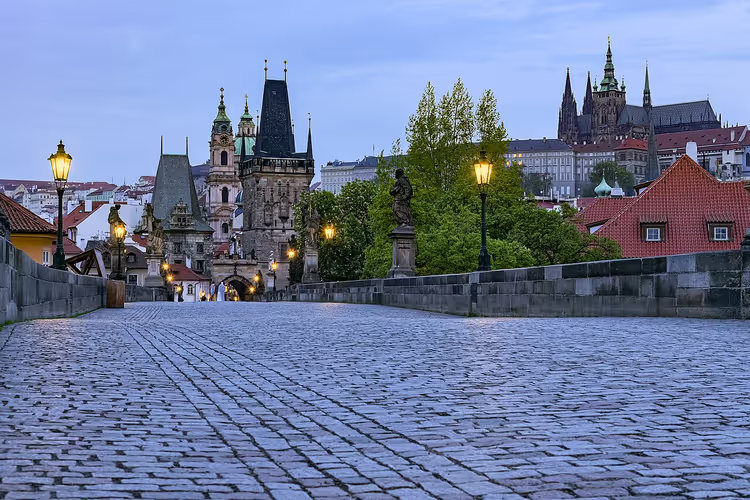
Two days divide up well by riverbank. Day one is the left bank: Prague Castle, Hradčany, Petřín and the Lesser Town, with Charles Bridge and Old Town Square in the evening. Give day two to the right bank: Vyšehrad, Charles Square, the Vltava embankment and the Jewish Quarter. Each day means five to six kilometers on foot.
Three days is the number at which the essentials fit without rushing. Day one: Wenceslas Square, the Powder Tower, Old Town Square and Charles Bridge. Day two, the fullest: Prague Castle, the Lesser Town, the Petřín Tower and Strahov Monastery. Day three is left for a trip out of the city or for Vyšehrad and the museums. Separate half-day walks: the Lesser Town with Hradčany, and the New Town.
Day planner: check what fits into one day
Our articles on this
- Prague in 3 days on your own: day by day itinerary, tickets and queues
- Prague in 2 days: a route along both banks with prices and opening hours
- Prague in 7 days: route by districts, tickets and opening hours
- Prague Castle in half a day: a ten-stop route with prices and hours
- Prague Castle without the queue: half-day route and opening hours
- Prague in half a day on foot: Charles Bridge, Loreta and Strahov Library
- Walking route through Nove Mesto: eighteen spots in one day
Practical matters: money, connectivity, insurance
Validate your transit ticket as soon as you board: without the stamp, the inspector will write you a fine. You can pay by card almost everywhere in hotels, restaurants and stores, and a small supply of crowns comes in handy for kiosks, the market and small vending machines. Withdraw money from an ATM or exchange it at a bank: the exchange offices near Old Town Square and on Wenceslas Square give a poor rate.
Prague has a lot of cobblestones, and they are slippery after rain, so bring comfortable shoes with cushioning. Rain here usually passes quickly, so a rain jacket is more practical than an umbrella.
Check the roaming terms for the Czech Republic with your own carrier before you travel. An eSIM is a backup way to have internet from the first minute: for maps, tickets on your phone and contact with the hotel. Take out travel insurance before you leave and read exactly what it covers.
Build a packing list for the Prague trip
Ad
See eSIM options for the Czech Republic on Yesim
We earn a commission through this link; your price stays the same.
Ad
See travel insurance on World Nomads
We earn a commission through this link; your price stays the same.
Our articles on this