
















Venice: the guide for planning it yourself
Venice stands on the islands of a lagoon, and there are no cars in the historic center: you get around on foot or by vaporetto. The hard part here is not distance but lines: by day St. Mark's Square is packed, and entry to the main sights runs on time slots. This page is meant as the overview you build your own trip from. Each section says in a few sentences what matters and points on to our detailed articles. We deliberately leave prices out: fares, tickets and hotel rates in Venice change too fast for an overview page to carry them honestly. What you get instead is a calculator where you work out your own total.
The highlights and how to arrange them
Most of the essentials are gathered on St. Mark's Square: St. Mark's Basilica, the Doge's Palace, the Campanile, the Clock Tower and the Correr Museum. From the Doge's Palace the covered Bridge of Sighs leads to the prison, and the only way to walk through it is with a ticket to the palace.
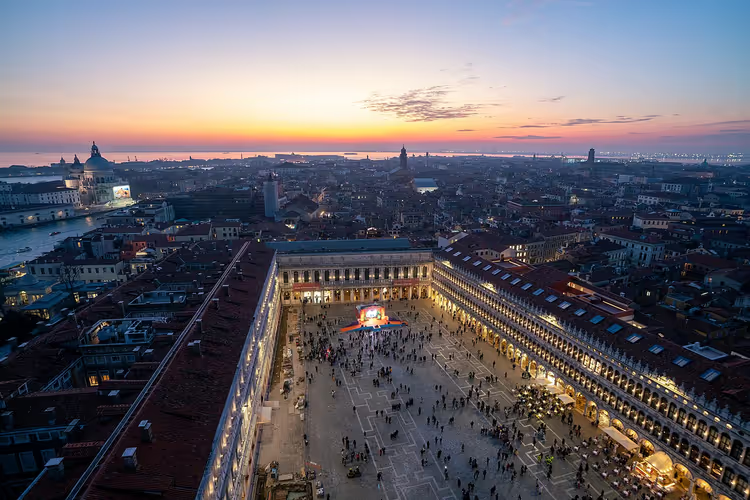
The city's second axis is the Grand Canal. It curves in an S from Santa Lucia station to San Marco, and you cannot walk along it, so the palaces are seen from the water, from the Line 1 vaporetto. At the mouth of the canal stands the Basilica of Santa Maria della Salute; Dorsoduro holds the Accademia Galleries, the Peggy Guggenheim Collection and Ca' Rezzonico; and San Polo has the Frari Basilica with paintings by Titian and the Scuola di San Rocco with its Tintoretto cycle.
Two rules save the most time. First: get to St. Mark's Square before opening time, because by midday the tour groups fill it. Second: check the closing days. The Accademia Galleries are closed on Mondays, the Peggy Guggenheim Collection and Ca' Rezzonico on Tuesdays, and the museum in the Ca' d'Oro palace has been closed for restoration, so check its status before you travel.
Our articles on this
- 35 places to see in Venice: tickets, opening hours and a map
- St. Mark's Square in Venice: tickets, hours and what to see
- St. Mark's Square: tickets, hours and best time to visit
- St. Mark's Square: cathedral, Doge's Palace and opening hours
- St. Mark's Basilica in Venice: tickets, opening hours and what to see inside
- Doge's Palace in Venice: tickets, hours and main halls
- Bridge of Sighs in Venice: best view for photos and how to go inside
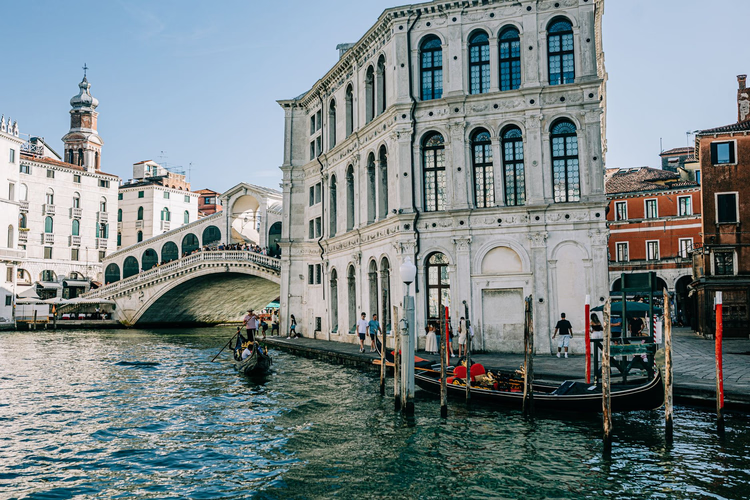
- Rialto Bridge in Venice: legends of the devil over the Grand Canal
- Grand Canal in Venice: palaces from the water and museum tickets
- Santa Maria della Salute in Venice: what to see, hours and tickets
- Gallerie dell'Accademia in Venice: what to see and how to buy a ticket without queue
- Peggy Guggenheim Museum in Venice: tickets, hours and main galleries
- Ca' Rezzonico in Venice: when to come and what to see inside
- Museo Correr in Venice: what to see and how to buy a ticket
- Ca' d'Oro palace in Venice: golden facade and closed museum
Neighborhoods and where to stay
The historic center is divided into six districts, the sestieri. San Marco gives you the main views on your doorstep, the highest prices and the biggest crowds. San Polo lies beyond the Rialto Bridge and is closer to the train station. People choose Santa Croce for the logistics: the station and Piazzale Roma, with its bus terminal and parking garages, are close by. In Dorsoduro the eastern part is busy, while the western part is quieter and usually cheaper.
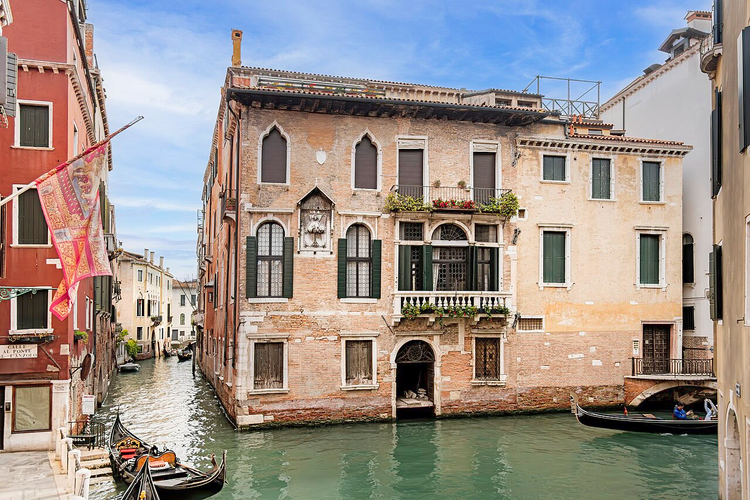
If you are watching your budget but want to stay in the city itself, look at Cannaregio and Castello. Cannaregio is a lively quarter with bars for locals, Castello takes up the quiet eastern edge of the center, and from there you walk to St. Mark's Square.
Outside the center there are options of their own. The Lido has a beach and allows cars, and from there San Marco is about a quarter of an hour away by vaporetto, and prices are lower than in the center. Mestre on the mainland is just as inexpensive: Piazzale Roma is roughly a quarter of an hour away by tram or bus, but the area has no atmosphere of its own, and the ride there and back needs to go into your budget.
| Neighborhood | Who it suits | What to keep in mind |
|---|---|---|
| San Marco | A trip of a day or two: the main views are on your doorstep | The highest prices in the city and the biggest crowds; nobody comes here for quiet |
| San Polo | Anyone arriving by train who wants to stay near the Rialto Bridge | The central part is just as crowded as San Marco |
| Santa Croce | A short visit and arrival by bus or car | The station and Piazzale Roma, with its bus terminal and parking garages, are close by |
| Dorsoduro | Anyone who wants museums nearby and calmer streets | The eastern part is busy, the western part quieter and usually cheaper |
| Cannaregio | Budget-minded travelers who want to stay in the city itself | A lively quarter with bars for locals, without big crowds |
| Castello | Anyone looking for quiet within the center | You walk to St. Mark's Square; the eastern edge takes longer to reach |
| Lido | Anyone combining the city with the beach or arriving by car | About a quarter of an hour to San Marco by vaporetto; the boats are packed in summer |
| Mestre | The smallest budget, a trip by car or onward travel through Italy by train | Roughly a quarter of an hour to Piazzale Roma by tram or bus; no atmosphere of its own |
Our articles on this
Hotels: what to watch for in Venice
In Venice stars guarantee neither space nor a canal view. Hotels occupy old palazzi, and rooms differ even within the same building. Check three things: how far the walk to the vaporetto stop is, which floor the room is on and which way the windows face. You carry your suitcase to the door over bridges, so a hotel near a boat landing saves your strength. Old buildings may have no elevator, and some hotels keep part of their rooms in a separate annex: ask about this when you book.
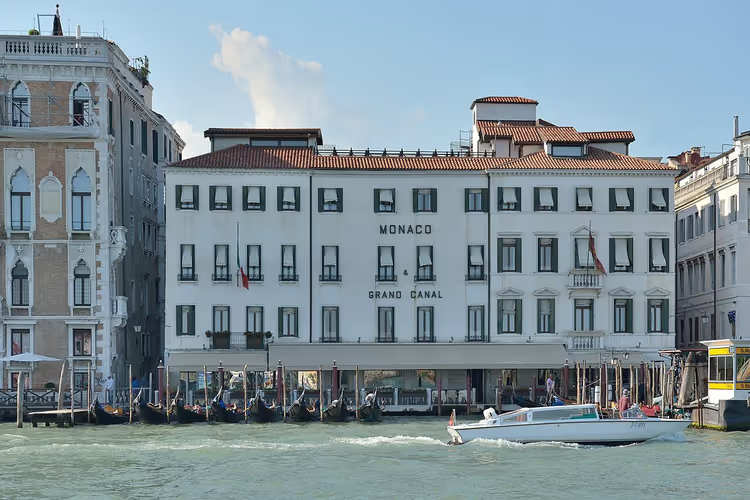
For Carnival, Easter, and May and June, rooms near San Marco sell out months ahead, so book early and with free cancellation. A tourist tax is added to the bill: it is charged per person per night, the amount depends on the category of accommodation, and it is not always already included in the price.
Ad
Compare places to stay in Venice on Trip.com
We earn a commission through this link; your price stays the same.
Our articles on this
Tours, timed tickets and the islands
A timed ticket booked ahead pays off for the Doge's Palace, St. Mark's Basilica, the Campanile and the Accademia Galleries: in summer the line without a reservation costs you an hour or more. The museums of St. Mark's Square are sold on a combined ticket that covers the Doge's Palace, the Correr Museum, the Archaeological Museum and the rooms of the Marciana Library. In the basilica the Pala d'Oro altarpiece, the museum and the terrace are paid for separately, so check exactly what your ticket includes.
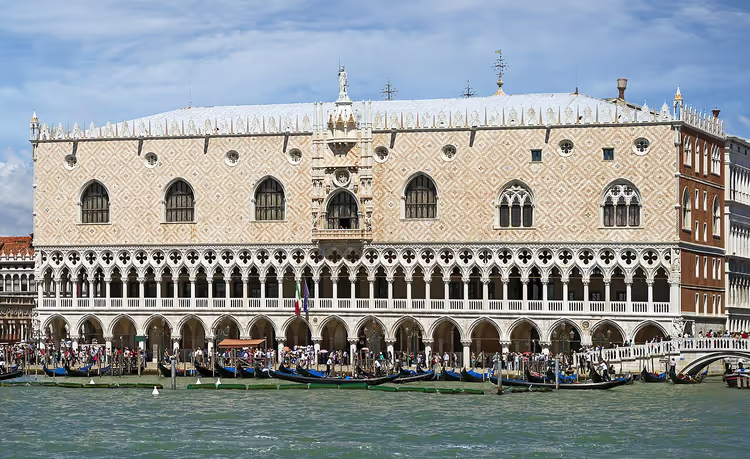
The Clock Tower can only be visited on a small group tour booked in advance, and the “Secret Itineraries” tour of the Doge's Palace shows rooms and prisons that are otherwise closed.
The islands of the lagoon are a separate outing. Murano is where glass is blown, Burano has its brightly colored houses and the Lace Museum, and Torcello preserves an ancient basilica with mosaics. Go on a weekday and in the morning, start with the farthest islands and leave Murano for the way back.
| Sight | Ticket and entry | What to keep in mind |
|---|---|---|
| Doge's Palace | Timed ticket; the combined ticket for the St. Mark's Square museums is valid | With the combined ticket, the entry time you choose is for the palace itself |
| St. Mark's Basilica | Timed ticket | The Pala d'Oro altarpiece, the museum and the terrace are paid for separately |
| Campanile | Timed ticket | Go up in the morning; the schedule depends on the season |
| Clock Tower | Small group tour only, booked in advance | There are only a few tours a day, so reserve your place ahead |
| Correr Museum | Combined ticket for the St. Mark's Square museums, no separate ticket needed | The same ticket covers the Archaeological Museum and the rooms of the Marciana Library |
| Accademia Galleries | Timed ticket | Closed on Mondays |
Ad
See guided tours and tickets for Venice on GetYourGuide
We earn a commission through this link; your price stays the same.
Ad
See museum and attraction tickets on Tiqets
We earn a commission through this link; your price stays the same.
Our articles on this
Food: cicchetti, the bacaro and the coperto
The Venetian way to eat is cicchetti: small snacks bought by the piece at the counter of a bacaro, a small wine bar. You eat standing up and order an ombra, a small glass of wine, to go with them. Among the classics, try baccalà mantecato, creamed dried cod on bread or polenta, and sarde in saor, sardines in a sweet and sour marinade with onions. The display case is at its fullest in the late morning and at aperitivo hour.

The closer you get to St. Mark's Square, the more the same snack and the same coffee cost. Prices are fairer in the residential quarters, in Cannaregio, Dorsoduro and San Polo. Restaurants add a coperto to the bill, a per person charge for a seat at the table; the amount is stated on the menu. At the counter and for takeout it is not charged. Order fish “by weight” only after you have asked the price per hundred grams. Tap water in Venice is drinkable, and you can refill your bottle at the drinking fountains all over the city.
Our articles on this
Transport and getting in from the airport
Trains arrive at Santa Lucia station right in the city, while buses and cars stop at Piazzale Roma. Marco Polo airport is on the mainland: a bus runs from there to Piazzale Roma in about half an hour, and the Alilaguna boats take longer across the lagoon but have stops all over Venice, including Murano and the Lido. From Treviso airport there are only buses, and the trip is longer, so check your arrival airport before you buy the flight.
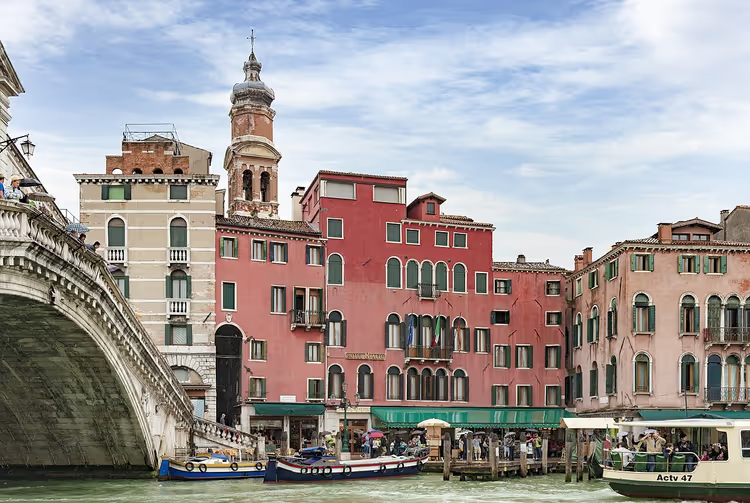
In the city there is one kind of public transport: the vaporetto. Lines 1 and 2 run along the Grand Canal. Line 1 stops at every landing and is the one for looking at the palaces, while Line 2 is faster. Line 12 from Fondamente Nove goes to Murano and Burano. Check the timetable for the way to Torcello: a change on Burano is sometimes needed. A single ticket is valid for a limited time, passes come for one, two and three days and for a week, and the clock starts at the first validation. Tap your ticket on the validator before you board.
A gondola is an outing, not transport: the city sets the fare per boat, not per person, and bargaining is pointless. A transfer booked in advance is convenient with suitcases and with children.
| Route | What to take | What to keep in mind |
|---|---|---|
| From Marco Polo airport to Piazzale Roma | Bus | About half an hour; from there you walk or take the vaporetto to your hotel |
| From Marco Polo airport across the lagoon | Alilaguna boat | Takes longer than the bus but has stops all over Venice, including Murano and the Lido |
| From Treviso airport | Bus | There is no other transport, and the trip is longer than from Marco Polo |
| Along the Grand Canal to see the palaces | Vaporetto, Line 1 | Stops at every landing, the full run takes about 45 minutes; often packed in high season |
| From Santa Lucia station to San Marco | Vaporetto, Line 2 | Fewer stops, the ride takes about 25 minutes |
| To Murano, Burano and Torcello | Vaporetto, Line 12 from Fondamente Nove | The full route takes about 50 minutes, Murano to Burano roughly 35 minutes; for Torcello a change on Burano is sometimes needed |
| From Mestre to the center | Tram or bus to Piazzale Roma | Roughly a quarter of an hour each way |
| With suitcases or with children | A transfer booked in advance or a water taxi | A water taxi goes nonstop right to the address but costs noticeably more than the vaporetto |
Ad
Book a fixed price airport transfer in Venice
We earn a commission through this link; your price stays the same.
Our articles on this
Best time to go and weather
For most travelers the best months are May and September: the days are warm without being hot, and the lines are shorter than in July. In July and August the city is hot and very humid, the lines are at their longest and there are mosquitoes by the water in the evening. The beach on the Lido is the escape from the muggy heat.
Fall brings fog and the risk of high water, acqua alta: it comes most often from October through December, and the flooding season lasts until March. Usually it is a matter of a few hours, and severe floods are held back by the MOSE barrier. Check the tide forecast the day before and bring waterproof shoes.
Winter is quiet and the cheapest season, but cold and damp, with short days. The Carnival days are the exception: prices and occupancy jump then, and hotels are booked up months ahead.
| Time of year | Weather and crowds | What to keep in mind |
|---|---|---|
| April, May, June | Warm without being hot, long days, fewer people than in July | April can bring sudden showers; the city fills up in the second half of June |
| July and August | Heat with high humidity and the longest lines | Arrive at the sights before opening or toward evening; mosquitoes by the water in the evening |
| September and October | September is warm and sunny, October has mild days and cool evenings; lines are shorter than in summer | From late October there is more rain and the risk of high water rises |
| November through February outside Carnival | Cold and damp, the fewest tourists | Short days, the highest risk of high water; some sights close earlier |
| Carnival days | The most crowded period of the winter | Prices and occupancy jump, so book your hotel several months ahead |
Twelve months compared: find the best time to go
Our articles on this
Budget: how to work out your own total
We are not writing daily rates here. The most expensive part of a trip to Venice is not museum tickets but accommodation and transport: a night here costs more than in most Italian cities, and a single vaporetto ride is a noticeable expense. Everything gets more expensive for Carnival, Easter, New Year and on summer weekends, while November works the other way.
Where saving actually gets you something. A one-day pass pays for itself from three rides, and the island trips are best packed into one day. Accommodation in Mestre is cheaper, and the regional train to Santa Lucia takes a few minutes. The combined ticket for the St. Mark's Square museums is better value than separate ones, and the Accademia Galleries let you in free on the first Sunday of the month.
You work out your own total in the calculator: it separates accommodation, food, transport, tickets, travel there and a reserve.
Calculate a travel budget for Venice
Our articles on this
Routes for one, two and four days
One day covers the compact center if you start early, by half past eight. The logic is simple: the Grand Canal on vaporetto Line 1, St. Mark's Square with the Doge's Palace and the basilica, the Rialto Bridge, the Frari Basilica and the Scuola di San Rocco, the Accademia Galleries, and Santa Maria della Salute in the evening. There is no time left for the islands.
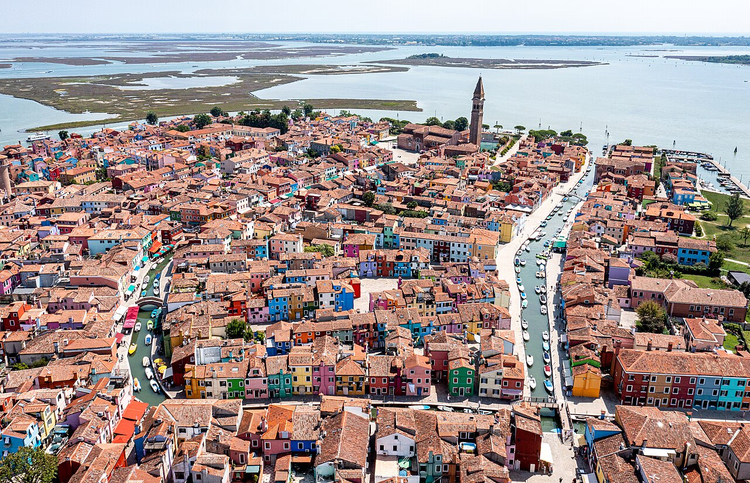
Two days add the neighborhoods. Day one: the Grand Canal, St. Mark's Square, the Doge's Palace and Cannaregio with the Venetian Ghetto. Day two: Santa Croce, Dorsoduro, the Rialto Bridge and the Bridge of Sighs, and in the afternoon the islands of Murano and Burano.
Four days give you both the palaces and the far islands. Day one: St. Mark's Square and Dorsoduro. Day two: the Rialto, the Doge's Palace, the Correr Museum and the Arsenale. Day three: the Accademia Galleries, then Murano or the Lido. Day four: Burano, Torcello and the Ghetto. Add extra museums and the bell tower climb to these routes one at a time, one per day, or the walk turns into a race against the schedule.
Day planner: check what fits into one day
Our articles on this
Practical matters: city rules, connectivity, insurance
Venice fines people for things that pass without consequence in other cities. You may not feed the pigeons and seagulls, sit down with food on bridges, steps and monuments, swim in the canals, or ride a bicycle, scooter or roller skates in the center. You will not be let into St. Mark's Basilica with bare shoulders and knees or with a backpack.
The city is safe on the whole, and the main risk is pickpockets in the crowds near San Marco, on the Rialto Bridge and on packed vaporetti. Bring comfortable, waterproof shoes: there are many bridges and steps, and high water is possible in fall and winter. For day visitors the city has charged an entry fee for the center on certain days; it did not apply to those staying overnight in Venice. The calendar and the rules change, so check them before you travel.
Check the roaming terms for Italy with your own carrier before you travel. An eSIM is a backup way to have internet from the first minute: for maps and tickets on your phone. Take out travel insurance before you leave and read exactly what it covers.
Build a packing list for the Venice trip
Ad
See eSIM options for Italy on Yesim
We earn a commission through this link; your price stays the same.
Ad
See travel insurance on World Nomads
We earn a commission through this link; your price stays the same.
Our articles on this