
















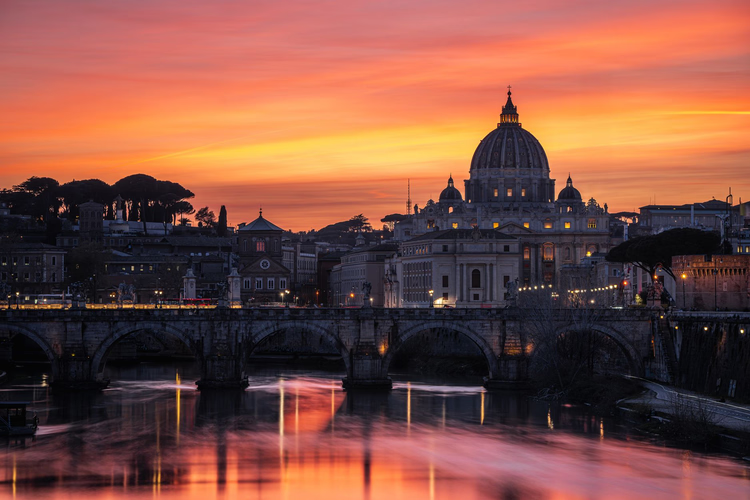
Rome: the guide for planning it yourself
Rome is not a city you work through. Two thousand years sit stacked on a few square kilometers here, and the center is small enough that you can walk almost all of it. That is exactly the trap: because everything is close together, most people overload day one and end up looking at queues. This page is the overview you build your own trip from. Each section says in a few sentences what matters, then points to our detailed articles on it. We deliberately leave prices out: admission and hotel rates change too fast for an overview page to carry them honestly. What you get instead is the calculator you use to build your own total.
The highlights and how to sort them
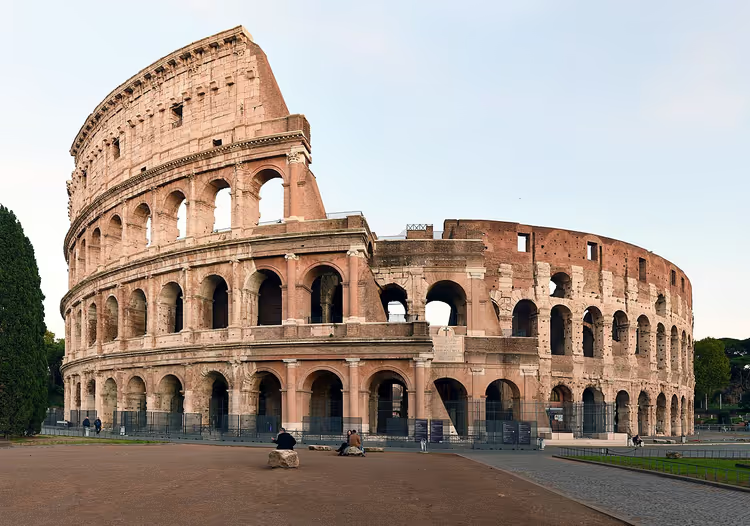
Four blocks carry almost every trip to Rome: ancient Rome with the Colosseum, the Forum and the Palatine; the baroque center with the Pantheon, Piazza Navona, the Trevi Fountain and the Spanish Steps; the Vatican with St. Peter's Basilica and the Vatican Museums; and Villa Borghese as the green counterweight.
The Vatican is its own state in the middle of the city, with its own opening hours and its own security check. So never plan it as an add on to a day that is already full. For the Colosseum, the Vatican Museums and the Galleria Borghese there is a second rule: entry runs on timed slots, and turning up on the day is the worst of all options.
Our articles on this
- What to see in Rome: 35 places from the Colosseum to the Aventine keyhole
- Colosseum in Rome: timed tickets, opening hours and how to get there
- Pantheon in Rome: 7 € ticket, opening hours and what to see inside
- Trevi Fountain: history, tickets 2026 and how to get there
- St. Peter's Square in the Vatican: Bernini's colonnades and opening hours for 2026
- Vatican Museums: ticket price, opening hours and visiting procedure
- Piazza Navona in Rome: what to see and how to get there from the Pantheon
- Spanish Steps in Rome: 135 steps, rules and Piazza di Spagna
- Castel Sant'Angelo in Rome: a route through six levels and tickets
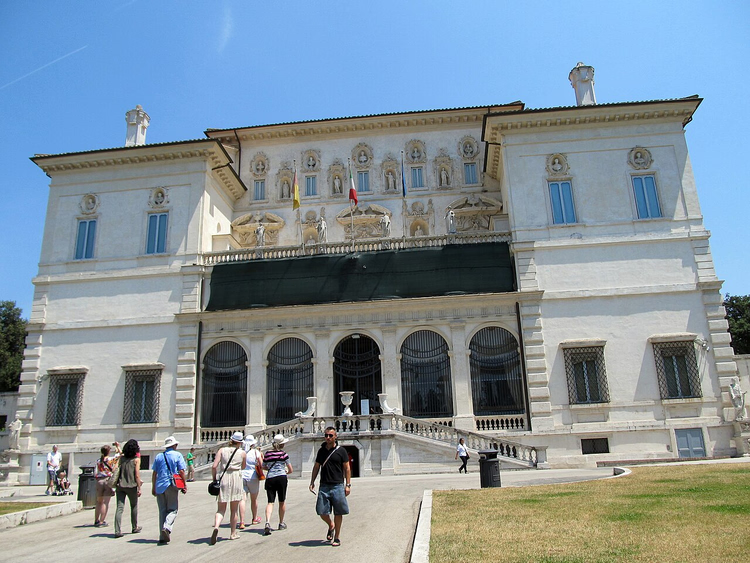
- Villa Borghese in Rome: gallery time slot, free park and Pincio terrace
- 7 Hills of Rome: what to see on each and how to plan a route
- 15 Roman churches with works by Michelangelo and Caravaggio
- 22 Museums in Rome: tickets, hours and what to see in 2026
Neighborhoods and where to stay
Around Termini you get the widest choice and the shortest walk to the trains and the airport line, and the least atmosphere. Monti sits between the Colosseum and the main station and is the compromise many people are looking for: on foot in the ancient center, but sleeping in a residential quarter.
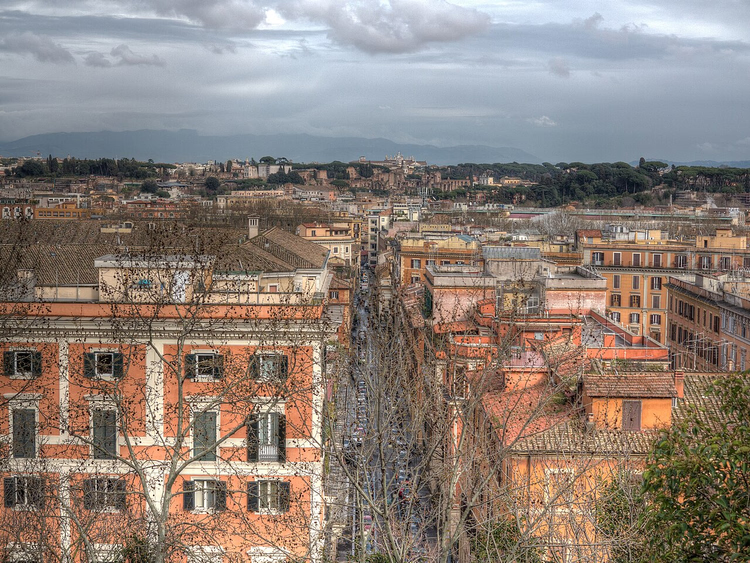
Trastevere is the evening district with the narrow lanes, and loud until late to match. Prati is by the Vatican, quiet and middle class, with short walks to the museums. Testaccio is the eating quarter and already sits outside the usual walking routes, but you stay cheaper there than in the historic core.
The honest rule of thumb: the closer to the Pantheon and Piazza Navona, the more expensive and the smaller the room. If you stay three days, a central location gives you back more than it costs. If you stay a week, you are better off one metro stop further out.
| Neighborhood | Best for | Keep in mind |
|---|---|---|
| Termini | Stopovers, early trains and day trips; the widest choice of places to stay | A noisy station square and the least atmosphere |
| Monti | Walking the ancient center by day and staying in a residential quarter at night | Sits between the Colosseum and the main station |
| Historic center near the Pantheon | A short trip: the main sights are next door and everything is walkable | The most expensive area, smaller rooms, busy streets until late at night |
| Trastevere | Evening strolls and dinners in trattorias | Loud until late at night, no metro station of its own |
| Prati | The Vatican and its museums close by, quiet evenings | A long way from the Colosseum |
| Testaccio | Travelers who care about food and cheaper rooms | Sits outside the usual walking routes |
| Lateran | A tight budget and anyone who dislikes crowds | Far from the historic center; you take the metro to the main squares |
Our articles on this
Hotels: what to watch for in Rome
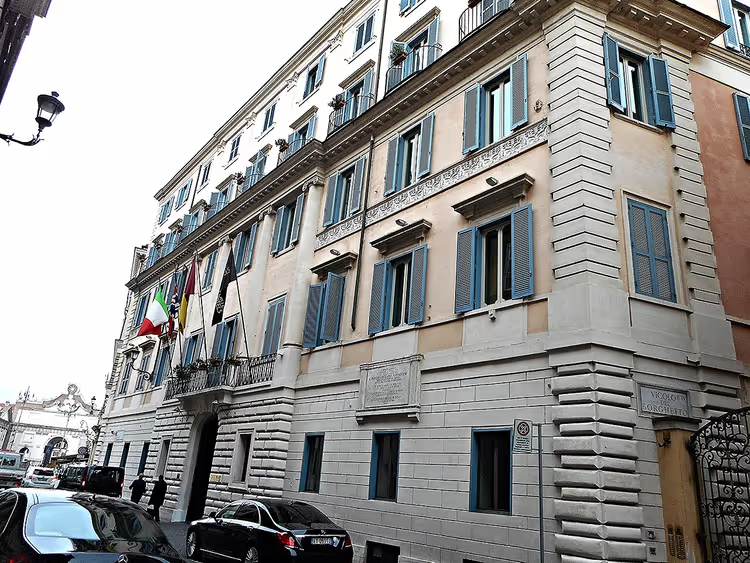
Three things matter in Rome more than the star rating: whether you are inside or outside the historic core, room size and noise. Old buildings in the center often have small rooms and windows onto a lane that is busy past midnight. When in doubt, ask for a room facing the courtyard.
The city tourist tax is charged in Rome per person per night on site and is included in no booking, wherever you book. Budget for it.
Ad
Compare places to stay in Rome on Trip.com
We earn a commission through this link; your price stays the same.
Our articles on this
- Where to stay in Rome: 16 hotels within walking distance of the Pantheon and Vatican
- Where to stay in Rome: 15 4-star hotels near the Colosseum and Trevi
- Three-star hotels in central Rome: 15 addresses and how to choose a district
- 10 Three-star hotels in central Rome: walking distance to the Pantheon and Colosseum
Tours and skip the line tickets
For the three big sites a timed ticket booked ahead pays off: the Colosseum with the Forum and the Palatine, the Vatican Museums with the Sistine Chapel, and the Galleria Borghese, which only lets a limited number of visitors in per slot anyway.
A guided tour makes sense where the site stays mute without explanation: the Roman Forum and the Palatine look like a field of stones without context. For the Pantheon and the churches of the city, on the other hand, you do not need anyone walking beside you.
| Site | How to get in | Keep in mind |
|---|---|---|
| Colosseum, Forum and Palatine | Timed ticket, book ahead | One ticket covers all three and is valid for 24 hours from first entry; a guide helps at the Forum and the Palatine |
| Vatican Museums and Sistine Chapel | Timed ticket, book ahead | Closed on Sundays except the last Sunday of the month, when entry is free and the line is at its longest |
| Galleria Borghese | Only with a time slot reserved in advance | You get two hours for the visit; closed on Mondays |
| St. Peter's Basilica | No ticket, entry through security screening | The dress code is enforced: shoulders and knees covered; the climb to the dome is paid |
| Pantheon | Ticket at the door or on the official website | You do not need a guide; on weekends there are many groups inside |
Ad
See guided tours and tickets for Rome on GetYourGuide
We earn a commission through this link; your price stays the same.
Ad
See museum and attraction tickets on Tiqets
We earn a commission through this link; your price stays the same.
Our articles on this
- Imperial Rome on foot: 12 stops from the Colosseum to the Mouth of Truth
- Langdon's six points in Rome: a walking route through the Illuminati sites
- Capitoline Museums in Rome: what to see and how to get in without a queue
- Borghese Gallery in Rome: timed entry ticket and main masterpieces in two hours
Food: what is actually Roman in Rome
Roman cooking comes from poor origins and is therefore short: cacio e pepe, carbonara, amatriciana, gricia. Add suppli as street food, carciofi in the artichoke season in spring, and saltimbocca as the meat dish.
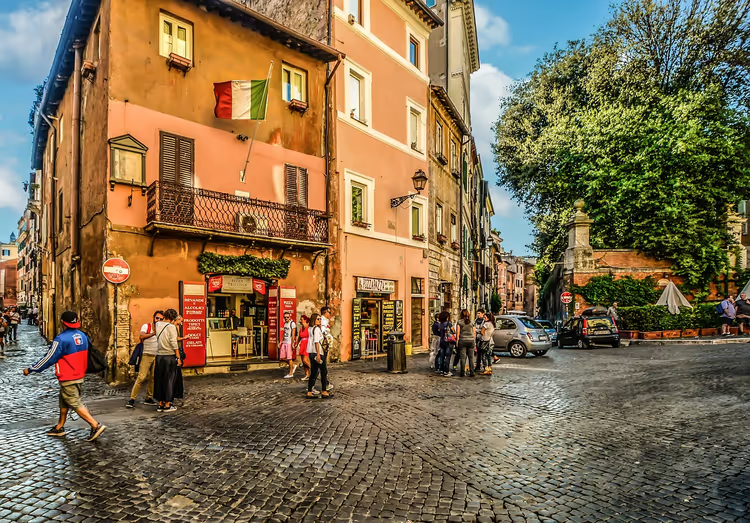
The most reliable rule against tourist restaurants is posted outside: where a menu hangs in six languages with photos and someone invites you in, they are not cooking for Romans. Two lanes further on, no photos, a menu of the day, it gets better and usually cheaper.
Our articles on this
Transport and the way in from the airport
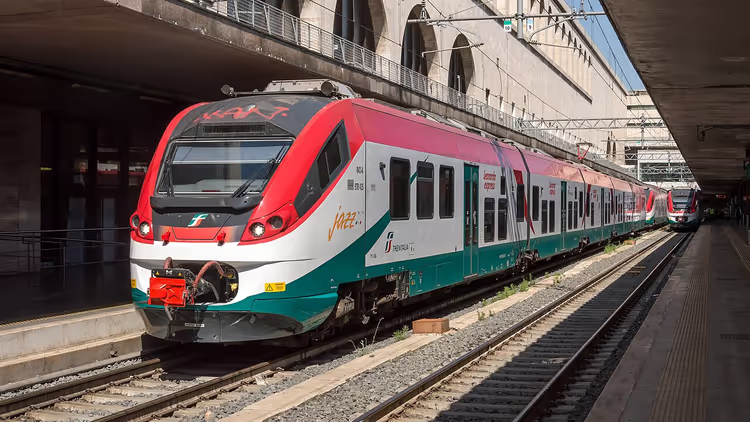
Rome has two airports: Fiumicino in the west for most scheduled flights and Ciampino in the south for part of the low cost traffic. From Fiumicino the Leonardo Express runs non stop to Termini, the main station, and alongside it there are regional trains and airport buses. Ciampino is only connected by bus or car.
In the city itself the metro with its three lines is fast but thin: it avoids the historic core, because every spade there hits antiquity. So you walk more in Rome than in any comparable capital. Bring shoes you can do ten kilometers of cobblestones in.
A fixed price transfer pays off above all at night, with children or with a lot of luggage, when the train is no longer running.
| Option | Where it takes you | When it works and what to keep in mind |
|---|---|---|
| Leonardo Express | Non stop to Termini station | The fastest way, about half an hour; the most expensive ground transport, and it does not run at night |
| FL1 regional train | To Trastevere, Ostiense and Tiburtina stations; it does not stop at Termini | Cheaper than the express, 45-60 minutes on the way; handy if your hotel is in Trastevere |
| Airport bus | To Termini and to the Vatican | The cheapest option; 50-60 minutes, longer at rush hour; at night only Cotral runs |
| Taxi | To any address in the center | Fixed fare inside the Aurelian Walls; take a white cab with the city crest on the door |
| Pre-booked transfer | To your hotel | Late arrival, children, a lot of luggage; the driver meets you in the arrivals hall |
Ad
Book a fixed price airport transfer in Rome
We earn a commission through this link; your price stays the same.
Our articles on this
Best time to go and weather
April to early June and September to October are the two windows where temperature and crowds are bearable at the same time. High summer is hot, and the stone surfaces of the Forum give the heat back; if you travel in July or August, put the open air sites in the early morning.
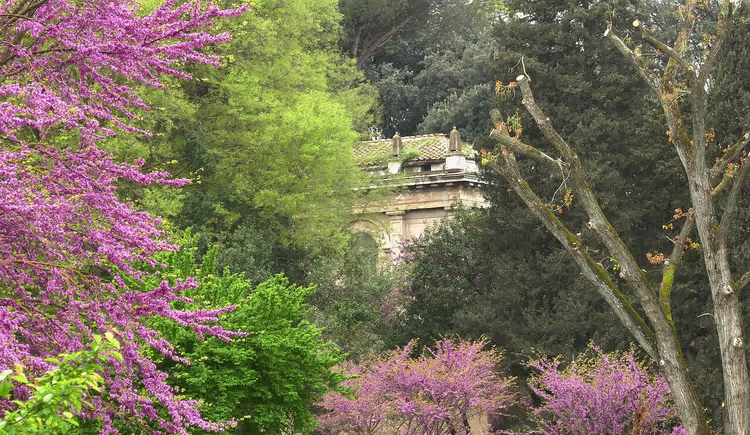
Winter is mild but changeable, and the shortest opening hours of the year fall there. In exchange you stand alone in places where in May you stand in a line. Easter and the week around Christmas are the exception: Rome as a pilgrimage destination is fuller then than in summer.
| When | Weather and crowds | Keep in mind |
|---|---|---|
| April to early June | Temperature and crowds are bearable at the same time | A good time for long walks |
| July and August | Hot, the stones of the Forum give the heat back, lots of visitors | Put the open-air sites in the early morning |
| September and October | Temperature and crowds are bearable again | Fewer people than in high summer |
| Winter | Mild but changeable; the fewest visitors | The shortest opening hours of the year |
| Easter and the week around Christmas | The city is fuller than in summer | The busiest dates of the year |
Budget: how to work out your own total
We are not writing daily rates here. What a trip to Rome costs depends on three levers, each of which can double the price on its own: getting there, the location of your accommodation and the time of year. A number on an overview page would be either out of date or made up.
Instead you calculate it yourself. The calculator separates accommodation, food, local transport, admissions, travel there and a reserve, so you can see which item is driving the total and where saving actually gets you something.
Routes for one day and for three
One day is enough for exactly one line: from the Colosseum via the Forum and the Capitoline to the Pantheon, on to Piazza Navona and the Trevi Fountain. That is walkable and already full. The Vatican does not belong in a single day.
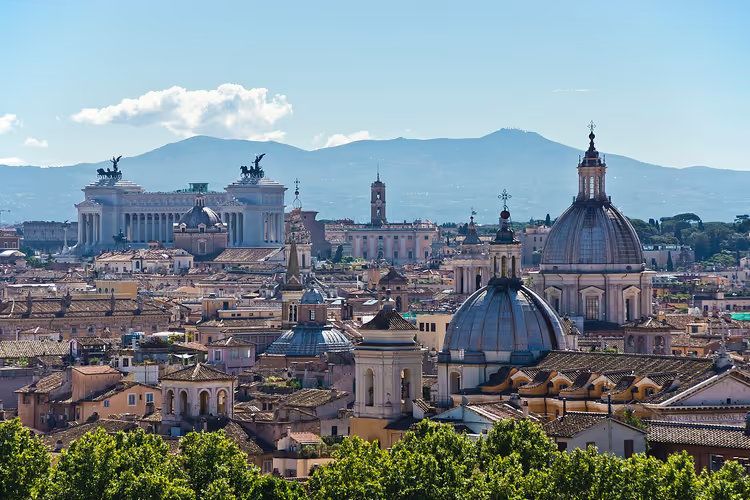
Three days is the number at which Rome starts to make sense: day one ancient Rome, day two the Vatican with Castel Sant'Angelo, day three the baroque center and Villa Borghese, the evening in Trastevere. With four days you add a trip out of the city.
Plan at most one timed ticket site per day. Two fixed slots in one day turn the walk into a schedule.
Day planner: check what fits into one day
Our articles on this
Practical matters: network, insurance, luggage
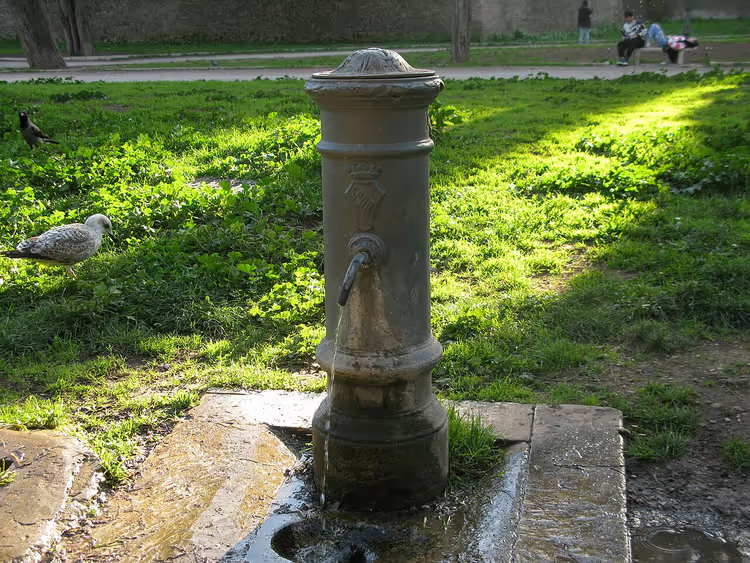
Churches have a dress code, and at St. Peter's it is enforced: shoulders and knees covered, otherwise you queue for nothing. You do not need to buy water in Rome, the city drinking fountains run and it is tap water; bring a bottle.
Italy is in the EU, which does nothing for a US phone plan: American carriers do not include free roaming in the EU, so an international day pass or an eSIM is the choice, and the eSIM is usually the cheaper one. UK plans differ since Brexit, some kept EU roaming inclusive and others reintroduced daily charges, so check your own tariff before you fly.
The EU health insurance card covers state basic care in Italy, and if you are insured in the US there is no equivalent for you at all. UK residents have the GHIC, which gets you state care but not repatriation and not a private clinic. Either way travel insurance is not an optional extra here, it is the part that actually pays.
Build a packing list for the Rome trip
Ad
See eSIM options for Italy on Yesim
We earn a commission through this link; your price stays the same.
Ad
See travel insurance on World Nomads
We earn a commission through this link; your price stays the same.
Our articles on this